The ANCA stands shoulder to shoulder with our brothers and sisters in the Coordinating Council of Armenian Organizations of France (CCAF) - in full solidarity with Armenian hostages illegally held by Azerbaijan.
Human Rights Lawyer Siranush Sahakyan says Armenian captives held in Baku remain in near-total isolation, with no access to relatives, independent lawyers or doctors, consular officials, or representatives of the ICRC.
Their only contact with the outside world is through monitored phone calls, which can be limited in duration or interrupted depending on the content of the conversation. Sahakyan said concerns over inadequate medical care and worsening health conditions have also intensified in recent months.
She warned that proper treatment is not being provided and raised serious concerns about the long-term health consequences for Armenians serving lengthy prison sentences in Azerbaijan.
Attorney Siranush Sahakyan Reveals Armenian Hostages In Baku Have Had Their Christian Cross Tattoos Burned Off, Been Forced To Read The Quran, Suffered Beatings, & Are Held In "Absolute Isolation"
➖➖➖
Attorney Siranush Sahakyan, representative of Armenian hostages before the European Court of Human Rights, disclosed on Thursday that Armenian Christian citizens unjustly imprisoned in Baku have had their Christian cross tattoos burned off their skin through torture, been forced to read the Quran, suffered fractures from beatings, and are held in "absolute isolation" from other prisoners. Her disclosures represent the most detailed public accounting yet of the torture, religious persecution, and psychological pressure that the former Artsakh military and political leadership have endured in Azerbaijani custody. Sahakyan also confirmed that the European Court of Human Rights has officially communicated her application in the case of former Artsakh State Minister Ruben Vardanyan to the Azerbaijani government, advancing the case into full examination.
Sahakyan made the disclosures during a wide-ranging press briefing that touched on the physical and religious torture of the hostages, the legal absurdity of the Azerbaijani charges against them, the diplomatic effort by Armenia to secure third-country consular assistance for its citizens, and the international legal strategy she is now coordinating on their behalf.
The physical evidence of torture is documented and specific. Sahakyan said Armenian hostages have arrived at proceedings with fractures consistent with beatings, and that Christian cross tattoos, common among Armenians as expressions of religious identity, have been burned off the skin of prisoners held in Baku. Armenian Christian hostages have also been forced to read the Quran, while Bibles have been prohibited even as other books have been permitted, and religious symbols have been confiscated. The burning of Christian religious tattoos and the coerced reading of the Quran on the bodies and in the daily lives of Christian prisoners in Azerbaijani custody constitutes both physical torture and religious persecution under international humanitarian law. It fits a broader pattern of Azerbaijani targeting of Armenian Christian identity that has included the systematic destruction of Armenian churches, khachkars, and cultural heritage across occupied Artsakh and, before that, across Nakhichevan.
Sahakyan first raised the prohibition on Bibles publicly in January 2026, saying at the time that religious targeting of Vardanyan and other Armenian hostages was already evident. Thursday's disclosures represent the most detailed picture yet of the pattern. She said the abuse has been documented by the U.S. Commission on International Religious Freedom, which cited Azerbaijan's violations of the religious rights and freedoms of Armenian captives in its most recent annual report, and by the UN Committee Against Torture, which has explicitly addressed the torture of Armenian hostages. Sahakyan noted that international documentation of the religious targeting undercuts any Azerbaijani denial.
The hostages are held in what Sahakyan described as "absolute isolation," a condition confirmed by the International Committee of the Red Cross during the period when the ICRC still had access to the prisoners, before Azerbaijani authorities expelled the ICRC delegation office from Baku in September 2025. The hostages are separated from other prisoners, restricted in family contact, and denied access to independent legal counsel, independent doctors, and any humanitarian monitoring. Their only contact with the outside world is monitored telephone calls. Three of the sentenced hostages are permitted to call approximately once every 40 days. The rest are permitted one call per week. Individual calls range from two or three minutes to as long as ten minutes, and every call is monitored, with calls forcibly interrupted based on their content. Vardanyan's own phone call was cut off when he attempted to discuss difficulties obtaining a copy of his verdict. Family visits, correspondence, packages, and short and long-term visits, all standard rights under Azerbaijani prison law, are denied to the Armenian hostages. Sahakyan characterized the isolation regime as a deliberate psychological pressure tactic, designed to break the hostages' resistance and to obstruct their ability to prepare international legal petitions.
Sahakyan drew a direct connection between the treatment of individual hostages and the political calculation behind their detention. She said the former Artsakh military and political leadership hold significantly greater "hostage value" for Azerbaijan than ordinary civilian prisoners, which is why negotiations for the leaders' release have stalled even as some civilian prisoners have been released in earlier exchanges. The Artsakh leaders, in Baku's political calculus, are bargaining chips of a higher order.
The most detailed portion of Sahakyan's briefing addressed the Vardanyan case, which she filed with the European Court of Human Rights on July 19. On Thursday, she confirmed that the court has now officially communicated the application to Azerbaijan, meaning Baku is required to respond formally and the case has advanced into full examination. The step is a significant procedural escalation, moving Vardanyan's case from filed to actively adjudicated in Strasbourg. The Vardanyan filing is separate from another mass ECHR application Sahakyan filed on August 21 on behalf of the fifteen other former Artsakh leaders and hostages sentenced by the Baku Military Court, in a case that runs to 422 volumes and roughly 105,000 pages of documentation.
The Vardanyan verdict itself, running to approximately 100 pages and only fully released to his defense team after his sentencing, contains what Sahakyan described as unprecedented violations of due process and factual claims that collapse under any scrutiny. Vardanyan was convicted, in part, on the finding that he joined an Artsakh "criminal community" in December 2020, at a time when he was living in Moscow and had no operational role in Artsakh. He was further charged with financing terrorism on the basis of his philanthropic activity, which included, in one specific example cited in the verdict, his financing of the Great Artsakh Wedding, a mass Armenian wedding celebration held as a public philanthropic event, which Azerbaijani prosecutors treated as evidence of criminal conspiracy. His entry into Artsakh through the Lachin Corridor, then the only route open to Armenians reaching their homeland during the Azerbaijani blockade, was characterized as illegal crossing of Azerbaijan's state border.
Sahakyan also disclosed that Armenia has begun negotiations with third countries to secure consular assistance for the Armenian hostages, an unusual diplomatic step made necessary by Azerbaijan's refusal to permit Armenian consular access to its own imprisoned citizens. Under the Vienna Convention on Consular Relations, when a detainee's home state cannot provide consular protection, a third state may be authorized to do so. The Armenian effort to secure such arrangements signals the depth of Azerbaijan's obstruction and the extent to which Yerevan has been forced to work through international mechanisms rather than direct bilateral channels.
Sahakyan concluded her briefing with a public appeal to international lawyers, human rights scholars, academic institutions, and legal defenders of conscience to engage with the hostage cases. She called for international legal briefs, academic research, and expert testimony to be brought to bear on the ECHR proceedings and on the broader effort to document Azerbaijan's treatment of the Armenian hostages as an ongoing violation of international humanitarian law. The appeal reflects a coordinated strategy of moving the cases beyond Armenian and diaspora advocacy into the mainstream of international human rights practice.
Thursday's disclosures follow a series of statements from the hostages themselves that have progressively exposed the Azerbaijani judicial and detention system. In May, Vardanyan marked his 58th birthday in captivity with an address to the Armenian people accusing the Armenian government of doing nothing in any organized way for the hostages. In the same period, former parliament speaker Davit Ishkhanyan issued a statement accusing the Armenian government of not wanting Baku to free the hostages at all. In July, Zonabend, Vardanyan's wife, sent open letters to Azerbaijan's Human Rights Commissioner, ICRC President Mirjana Spoljaric Egger, Armenian Prime Minister Nikol Pashinyan, and EU High Representative Kaja Kallas to advance a women's humanitarian delegation to Baku. Late last month, former Artsakh Foreign Minister David Babayan revealed that the Baku appeals court had upheld the sentences of the Artsakh leadership in a proceeding he called a "theater with the script written in advance," and confirmed that all seven of the former Artsakh leaders sentenced by Baku are preparing to petition the European Court of Human Rights.
Vardanyan is one of 19 Armenian hostages currently held in Azerbaijan, seized in September 2023 when, following a nine-month blockade and a military assault on occupied Artsakh, Azerbaijani forces detained members of the region's former military and political leadership in the days surrounding the ethnic cleansing that forced the entire Armenian population from their homeland. Five former Artsakh leaders are serving life sentences: former President Arayik Harutyunyan, former Foreign Minister David Babayan, former National Assembly Speaker Davit Ishkhanyan, former Defense Army commander Levon Mnatsakanyan, and former deputy commander Davit Manukyan. Former presidents Arkadi Ghukasyan and Bako Sahakyan received 20-year terms, as did Vardanyan, whose case was tried separately and concluded with his sentencing on February 17. Other officials and civilians received prison terms ranging from 15 to 19 years. Amnesty International condemned the verdicts as a travesty and a mockery of justice. Former International Criminal Court prosecutor Luis Moreno Ocampo published a legal opinion in August 2023 concluding that the nine-month Azerbaijani blockade of Artsakh constituted genocide under the Genocide Convention.
@aMonicaBellucci Hi @aMonicaBellucci, certainly you are the most beautiful as I have always said. I hope you come to Toronto and we meet for a great date and see you Babe.
Letters Submitted to Senior UN Officials on Safeguarding the Rights of the People of Artsakh
⸻
During the 61st session of the United Nations Human Rights Council in Geneva, Mario Nalbandian—member of the Committee for the Protection of the Rights of the People of Artsakh, established by the National Assembly of the Republic of Artsakh, Vice President of the Socialist International, and the Armenian Revolutionary Federation’s representative to it—held a series of meetings with senior United Nations officials.
The discussions focused on pressing issues concerning the fundamental rights of the people of Artsakh, including the right to collective return, the release of Armenian prisoners unlawfully held in Azerbaijan, the protection of Armenian cultural heritage, and the ongoing social challenges faced by displaced Artsakh Armenians currently residing in Armenia.
Nalbandian delivered to UN officials formal letters from the President of the National Assembly of the Republic of Artsakh, Ashot Danielyan, along with collective petitions endorsed by the leaders of Artsakh’s communities.
In his letter, Danielyan underscored that the absolute priority for the people of Artsakh remains their safe, dignified, and collective return to their ancestral homeland. He stressed that lasting peace in the region cannot be achieved through the legitimization of ethnic cleansing, but rather requires the full restoration of the rights of the indigenous population, under credible international security guarantees.
In parallel, a joint appeal signed by the heads of more than 60 Artsakh communities emphasized the urgent need to expand humanitarian and social assistance programs, ensure transparency and accountability in the distribution of aid, and mobilize international pressure on Azerbaijan to halt the destruction of Armenian settlements and to create the necessary conditions for a secure and dignified return.
The letters further called for the designation of a dedicated UN focal point or mechanism to facilitate direct engagement and ensure sustained international attention to the evolving needs and rights of the people of Artsakh.
Prime Minister Nikol Pashinyan has faced backlash after calling Nagorno-Karabakh Armenians ‘runaways’ during an argument with a refugee from the region on Sunday. After initially denying that he had used the insult, he later apologised the same evening.
https://t.co/T01uk8lh2y
Coming soon on Groong: our conversation with YoungMin, one of the few independent foreigners to visit Artsakh after Azerbaijan’s 2023 ethnic cleansing, which uprooted more than 150,000 Armenians from their ancestral homeland. For many Armenians, this is not distant history but a living trauma. We discuss his motivations, what he witnessed, and the human aftermath.
To get notified, make sure to subscribe to us on your favorite platform: https://t.co/elX6yygQLU
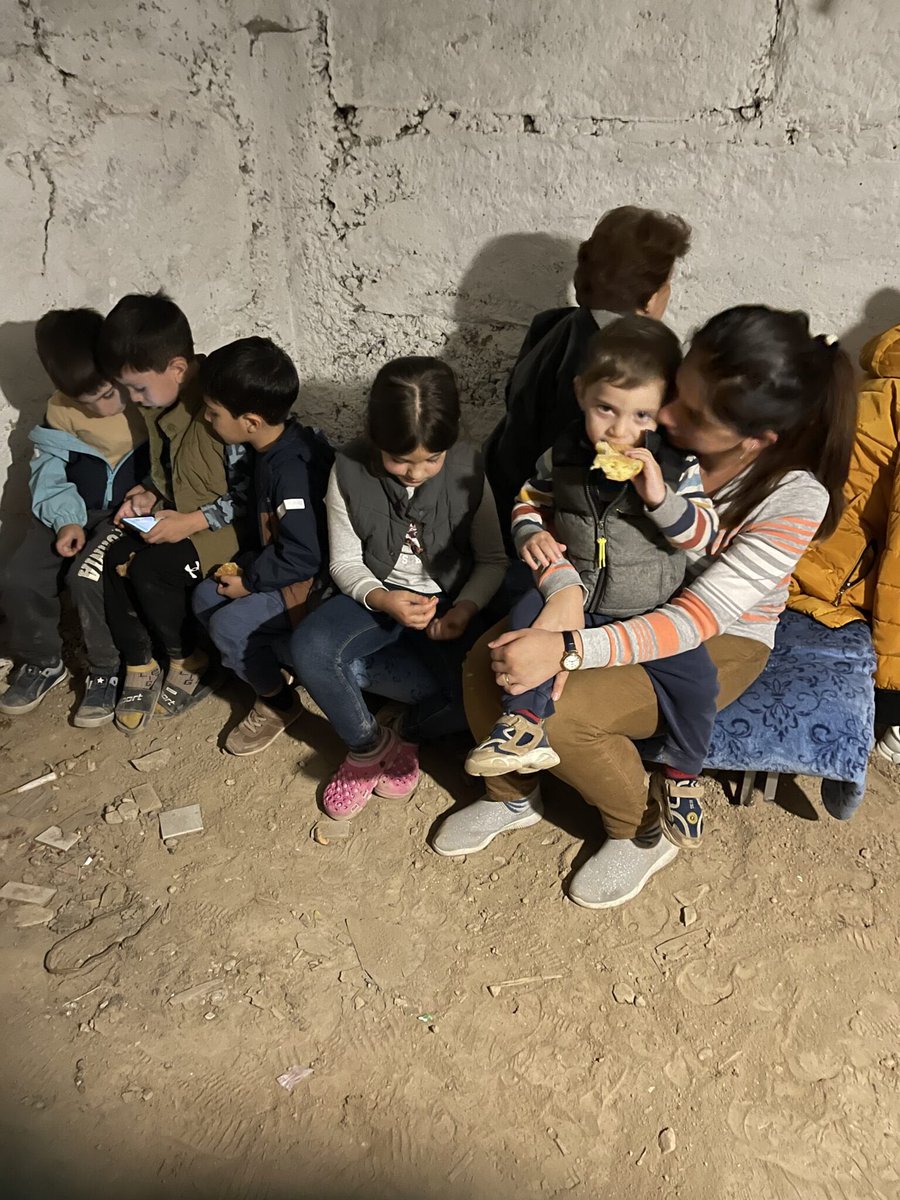
Armine Mosiyan, with her son on her lap, shelters from Azerbaijani rocket fire in a basement on September 19, 2023.
The photo was featured in The @ArmenianWeekly article, “First, I lost my father, then I lost my homeland…,” by Asha Darbinyan, published in September 2024.
This is the woman that Pashinyan insulted and disrespected today in the metro.
Most don’t know that just 6 years ago, Israel helped Azerbaijan commit the Artsakh Genocide and massacre 10,000+ indigenous Armenians. Currently, Azerbaijan is destroying Armenian churches, monasteries, and antiquity and Israel has 3 military posts in occupied Artsakh (Nagorno-Karabakh), to monitor Iran. Did YOU know that?
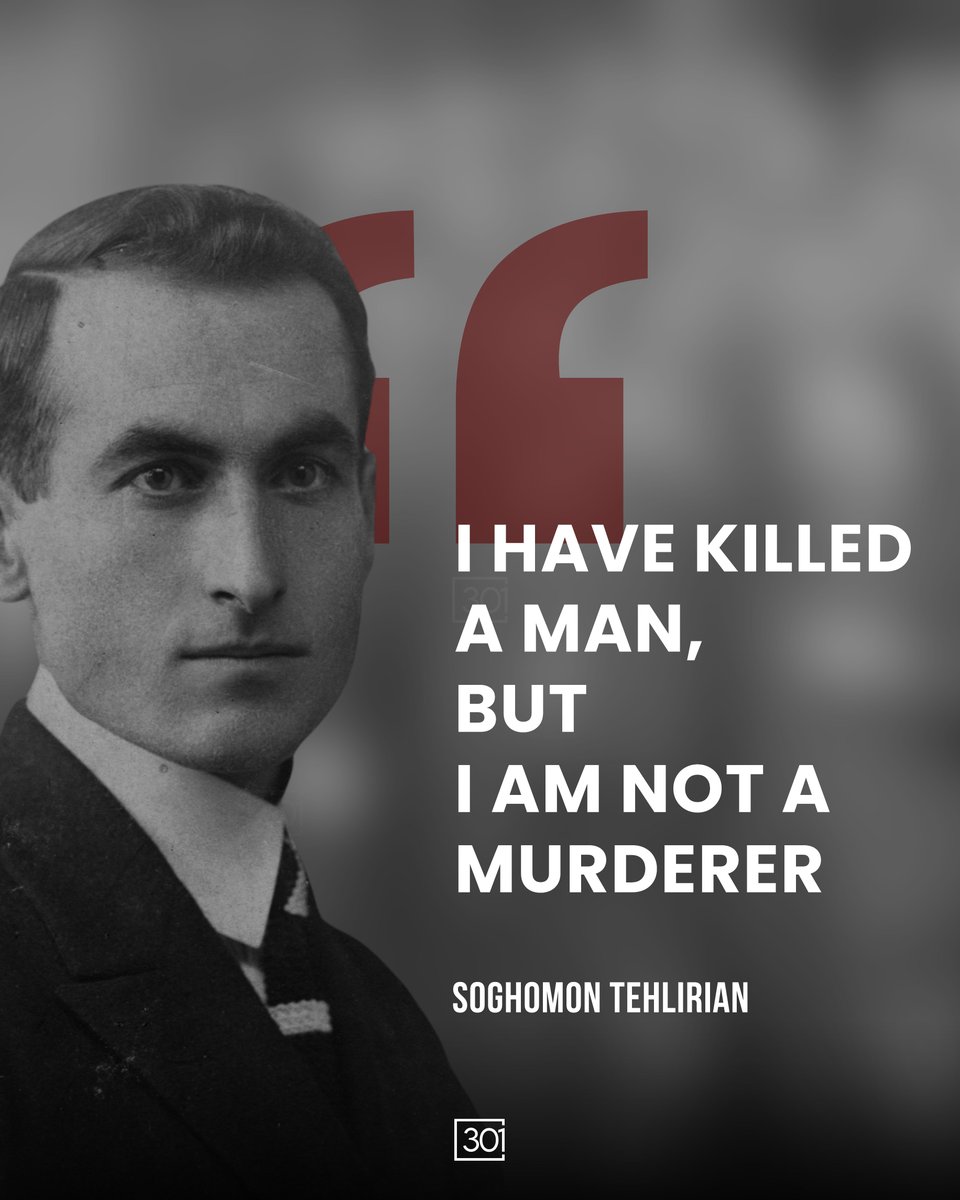
On March 15, 1921, Soghomon Tehlirian avenged the Armenian nation by killing Talaat Pasha in Berlin. Talaat, the former Ottoman interior minister and grand vizier, had been one of the chief perpetrators and overseers of the Armenian Genocide.
The assassination was part of Operation Nemesis, a covert mission organized by the Armenian Revolutionary Federation (ARF) to track down and punish the Young Turk leaders responsible for orchestrating the 1915 Armenian Genocide.
After locating Talaat Pasha’s address at 4 Hardenbergstraße in Berlin’s Charlottenburg district, Tehlirian rented an apartment directly across the street in order to observe his daily movements. On the morning of March 15, 1921, Tehlirian followed Talaat as he left his residence, crossing the street twice to confirm his identity. When the two men finally came face to face, Tehlirian called out, “Hey, Talaat.” It was reportedly the first time Talaat had heard his real name spoken since arriving in Germany.
Realizing the danger, Talaat attempted to flee. Tehlirian fired a single 9mm round from a Luger P08 behind his ear, killing him instantly.
Tehlirian was arrested at the scene and brought to trial in Berlin. After two days of trial, he was acquitted by the German court on June 3, 1921.
A new video message from @MorenoOcampo1‼️👇
"European leaders will visit Yerevan at the beginning of May this year.
@VP Vance is urging President Aliyev to release Nagorno-Karabakh leaders in Baku prisons.
And now, Azerbaijan court convict all the leaders in a decision absolutely illegal.
It's time to put all this information together and request immediate release of Nagorno-Karabakh leaders and all the Nagorno-Karabakh victims, and to recognize the rights of Nagorno-Karabakh people.
President Aliyev could say whatever he wants but cannot change reality.
There are sham trials convicting civilians before military courts that should not be considered proper trials."
#FreeArmenianHostages
#RespectNagornoKarabakhRights
Ce post revient, parce qu’eux ne reviennent pas.
Eux, ce sont les 19 #otages#arméniens affamés, torturés, enchaînés par les barbares #azerbaïdjanais à #Bakou!
Relayez sans relâche leurs noms et leurs visages.
Jusqu’à ce qu’ils rentrent tous chez eux.
En #Arménie!
#France
On World Social Justice Day, we reaffirm that declarations alone are not enough. Social justice must be reflected in budgets, translated into policy, and measured in real outcomes. Implementation is what restores trust and strengthens stability.
More from today's beatdown on protesters by Azeri President Aliyev's security guards on the streets of Washington, DC, during @POTUS@realDonaldTrump@BoardOfPeace meetings. A gruesome reminder of 2017's Erdogan-ordered attacks at Sheridan Circle.
#StopAliyev