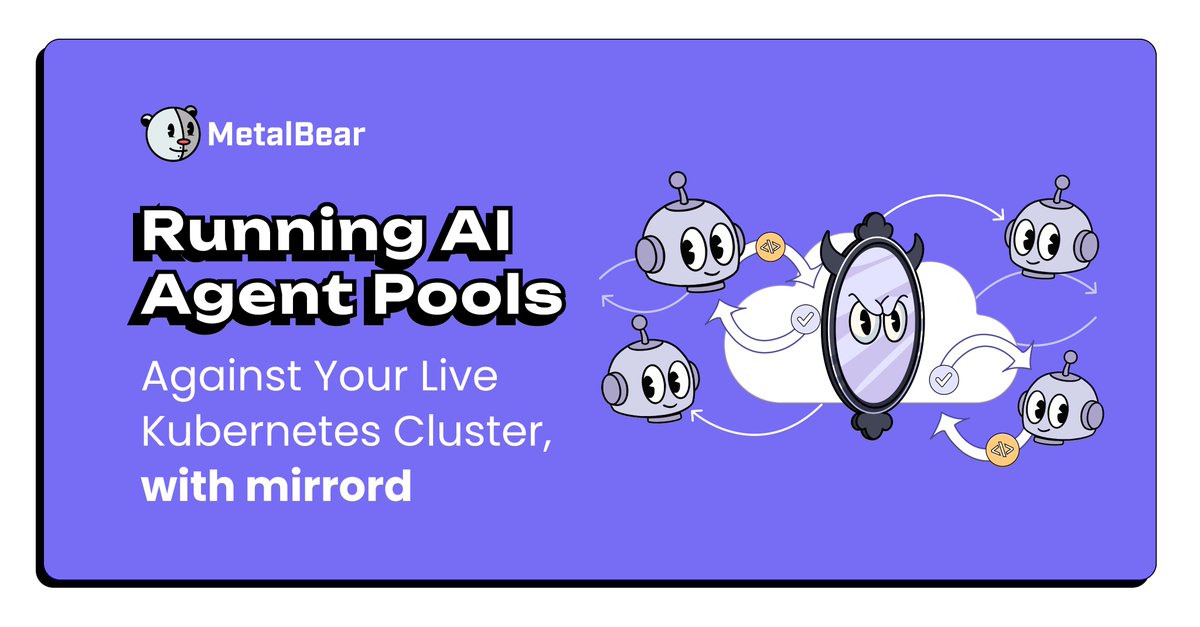
AI coding agents are migrating from IDE assistants to unattended cloud workers (@cursor_ai's self-hosted agents, @cognition's Devin, @claudeai's managed agents).
Once they leave the developer's laptop, they need access to your real cluster's services, data, and queues to write and test code better. And they need this access without trampling each other or blocking on deploy cycles.
Our latest guide walks through the "agent pool with mirrord" pattern that companies like @mondaydotcom and @PodiumHQ are already running in production, allowing them to fully utilize the benefits of AI coding agents.
Learn more about it here: https://t.co/Z3H3YZ71lR
AI agents write code that looks correct. It follows the patterns, passes the linter, and ships.
Then it exposes your API keys. Or skips the auth middleware. Or calls a service that changed its response shape months ago.
Static analysis catches some of this. But it can't catch everything. We wrote up a four-layer approach that closes the gaps:
1. Skills: rules that shape generation before the code gets written
2. Audit commands: static checks that run regardless of how the code was written
3. Integration tests: run tests against real dependencies, not mocks to be sure things work
4. Preview environments: so reviewers see the feature running, not just the diff
Read how to wire them together: https://t.co/Wujor4z8db
We’ll be at @CodemoMadrid tomorrow, 20th April! 🇪🇸
@jakepage91 from our team will be giving a talk where you, as the audience, interact with a real app in #Kubernetes until it breaks. The challenge is to reproduce the bug, debug it, and fix it without redeploying. Join to learn how to speed up your Kubernetes dev loop! ⚡
If you're attending the conference, add the talk to your agenda here: https://t.co/i6EUD5boTu
Is anybody using AI agents to write code that eventually lands in a Kubernetes cluster? Are you just doing regular post-CICD integration testing? Does the agent use pre-existing e2e tests?
Curious how you are effectively using AI code gen without breaking happy paths in k8s.
AI coding agents have joined your team, and they're not going anywhere. But without a realistic feedback loop, they risk quietly building on top of broken changes and burning through your token budget along the way.
Getting it right means giving the agent a way to know whether its code actually works. By running your agents with mirrord, they can execute pre-existing E2E tests against real databases, real queues, and real downstream services, all without deploying. The agent changes code, runs tests, reads the failure, fixes it, and moves on. One or two iterations instead of twenty.
Our new blog post walks through why this matters more than prompt optimization and how to set it up:
https://t.co/RyFUMcR6bA
What better occasion than Easter for this very special and impeccably timed announcement: mirrord now supports @RabbitMQ queue splitting 🐰 🐇 🐰
Queue splitting lets you filter messages from shared queues so your local app only receives the ones meant for you, while the rest of your team keeps working undisrupted. We already supported #SQS and #Kafka, and now RabbitMQ joins the family.
If this made you jump for joy, hop into our docs and give your dev loop a giant leap forward: https://t.co/6aZJSA5aiZ
The MetalBear team has landed in Amsterdam and we're all ready for #KubeCon week! You'll find the crew at booth 1160. Here's what we've got going on:
🇳🇱 Stop by booth 1160 to chat about mirrord, developer experience, or just to trade Kubernetes war stories. While you're at it, grab some of our special Amsterdam-themed swag!
⛳ This year we have not one but two booths — come to booth 580 to take part in our mini golf game for a chance to win both retro and modern gaming consoles.
🍸 Join us for our happy hour on Tuesday, 24/03, at 7PM, co-organized with friends from Backstage by @Spotify, @rootlyhq, @cloudsmith, and more!
“We are not pushing them to use mirrord. Everyone is asking for it.”
This is what Netanel Abergel, Director of R&D at @mondaydotcom, had to say about mirrord.
Read the full case study to learn the impact mirrord has had at https://t.co/DwgEzCPxRb, including:
⚡ Environment setup in 10 seconds (down from 30 minutes)
🚀 New developer onboarding in ~1 hour (down from 3–5 days)
💸 $0 cloud cost for dev environments (eliminated entirely)
👩💻 245+ engineers developing on a single shared cluster
See how https://t.co/DwgEzCPxRb improved developer velocity with mirrord 👇
https://t.co/kW2bh1NVFA
Whether you’re adopting a paid product or a free open-source project, developer tools always come with a cost, and without a clear way to think about ROI, it can be difficult to justify these investments!
Read our latest blog to learn about different frameworks you can use to measure the ROI of developer tools: https://t.co/wE9qNRu1Fj
We just launched mirrord Agent Skills 🤖
It's a collection of skills that let AI coding agents work with mirrord, including generating and validating mirrord.json configs, setting up the mirrord operator in clusters, configuring mirrord in CI pipelines, and enabling isolated database branching for safe Kubernetes development.
Once installed, the agent automatically knows how to use mirrord when you ask things like "create a mirrord config to steal traffic" or "set up mirrord in my CI pipeline".
Try out the mirrord Agent Skills by running: `npx skills add metalbear-co/skills`
Read the docs here: https://t.co/zHY1522cOY
Traditional CI pipelines slow developers down because every run involves building container images, deploying them, and often spinning up ephemeral environments that are costly and slow to become ready.
mirrord for CI changes this by running your changed microservice directly inside the CI runner while connecting it to an existing, real Kubernetes environment, like staging or pre-prod. Incoming and outgoing traffic, environment variables, and files are all proxied, so your tests behave as if they’re running in the cloud, without building images or deploying anything.
Read the full announcement here: https://t.co/T4M9gxRLMW
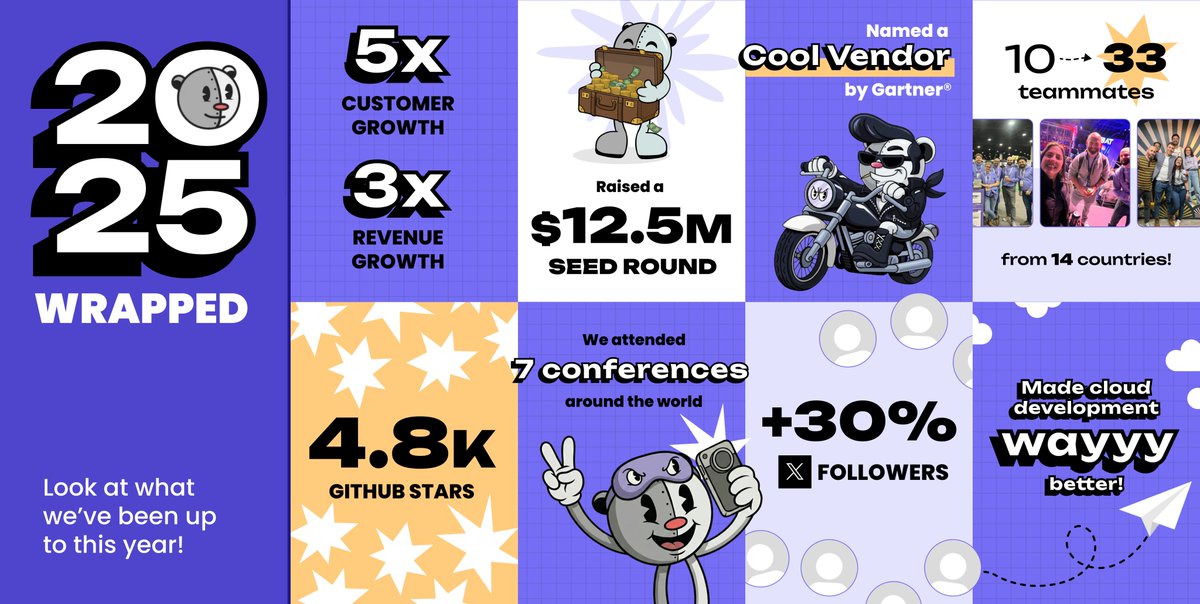
2025 was a great year for us! We hit some really “cool” milestones, grew our customer base and team significantly, and shipped major improvements to mirrord!
A huge thanks to the #mirrord community and users for all the support. We have big plans for 2026, stay tuned 😄
Happy holidays!
Starting your role as a DevEx Engineer in a new organization can be overwhelming. We put together a three-phase guide on what you should focus on in your first 30 days to set yourself up for success!
Read here: https://t.co/74iOXfT3zt
🍸 Wrap up your first day at #KubeCon with us!
We’re co-hosting a Happy Hour with our friends at @diagridio on Tuesday, Nov 11 right after the KubeCrawl. Good food, great drinks, and a room full of interesting people in the Kubernetes space!
It’s the perfect way to unwind after a full day of sessions and connect with folks building the next wave of developer tools.
👉 Sign up for the happy hour here: https://t.co/5jGvkHs2yC
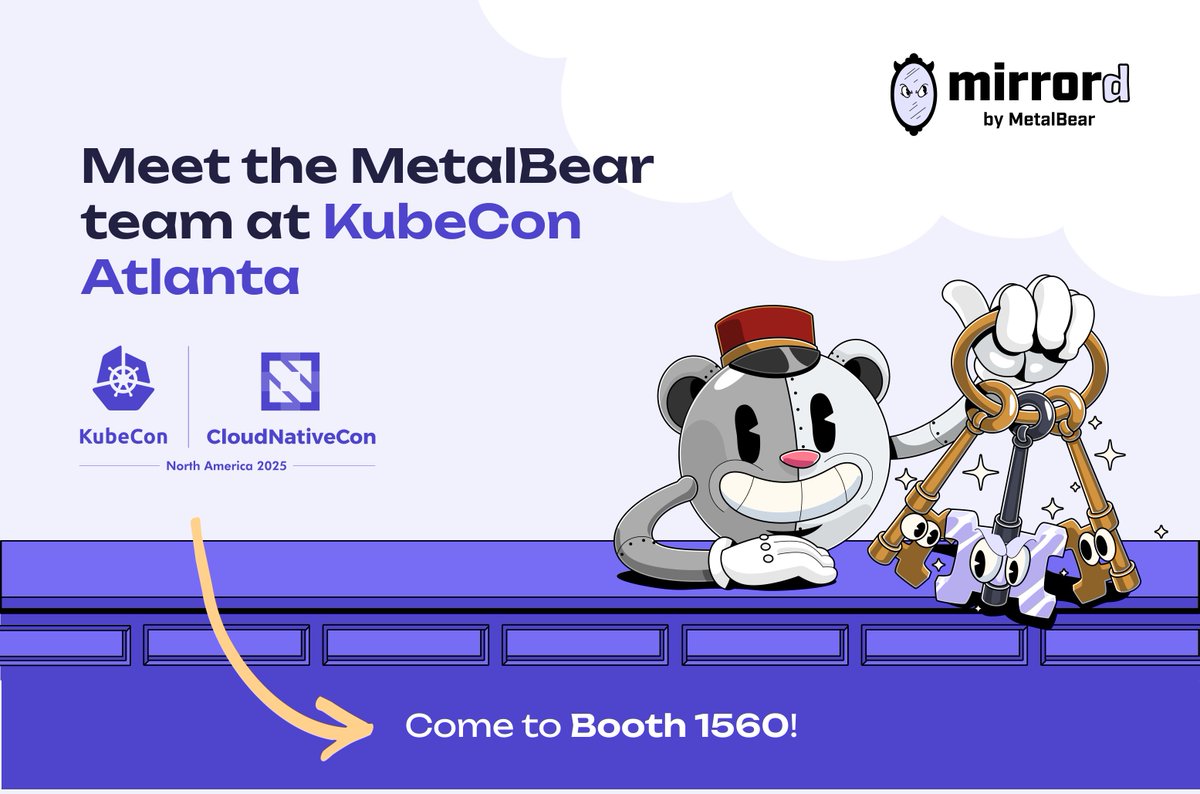
Attending #KubeCon Atlanta next week?
We’ll be at booth #1560, talking about all things developer experience and showing how mirrord helps teams speed up their Kubernetes dev loop.
If you’re attending, stop by to see mirrord in action, grab some cute swag, and enter our Ray-Ban Meta smart glasses giveaway 😎
https://t.co/HOsniHEn8p