At a hyperscaler, an engineer deleted a prod DB. The control plane went down. A few hours later, service was restored.
The retrospective seemed straightforward: someone had made a bad decision. Add guardrails. Require two people to approve critical database operations.
But when the team took a closer look, they noticed they already had a two-person rule. In fact, everyone had agreed to the deletion.
So they asked the question that changed the story: Why did deleting that database make sense at the time?
Suddenly, the retrospective had much more to teach: lost institutional knowledge, upgrade behavior, and the information available to people under pressure.
In his latest article, Casey Rosenthal tells this incident three ways: as a report, an analysis, and an investigation.
AI can help reconstruct events and gather evidence. The deeper understanding comes from talking to the people involved.
Every incident has a story. It just never lives in one place (and it moves fast).
Part of it is in Slack threads. Part is in a call. Part is in alerts and system events. Everyone on the incident holds a different piece, and responders spend half their time stitching them together.
AI Timelines pulls it all into one live view. An AI summary on top, curated key moments below. If the call runs through Scribe, that conversation feeds the timeline too.
Responders, leads, and stakeholders. Same picture, every 5 minutes.
Your team stays in control: pin any message with 📌, tune the summary with your own AI instructions, or switch features off in your AI settings.
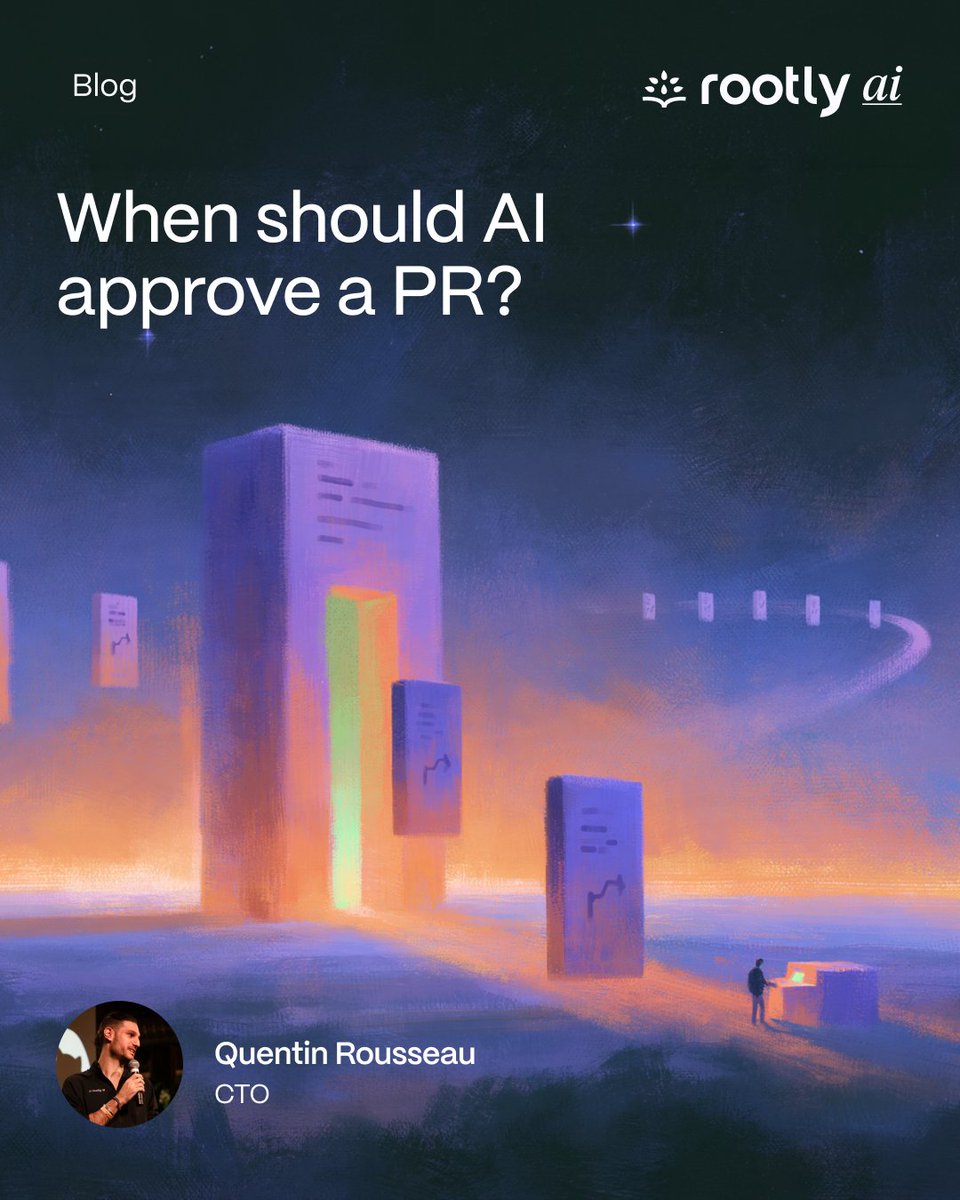
Monthly PR volume grew 5.8×. Approvals per person jumped from 28 to 70 in two months.
As agents write more code, how should we spend human attention?
@quentinrousseau, CTO, analyzed 3,661 PRs to figure where human review adds the most value—and which type of change could qualify for AI approval.
The agent opened a PR. 61 files changed. You clicked Approve.
Then the next one. Then 30 more.
“Human in the loop” is supposed to be the safeguard. Casey Rosenthal, who built Netflix’s Chaos Engineering team, thinks it’s an old idea with a new name.
For years, retrospectives ended with “needs more training” and “pay more attention.” Those action items don’t change the system. They put the weight on the person.
HITL does the same thing at AI speed. Agents write code faster than anyone can review it. Approve becomes a reflex. Automation bias does the rest.
Casey proposes is better path. Ask why the person’s actions made sense at the time. Ask where the system depended on them noticing what they couldn’t. Then change the system.
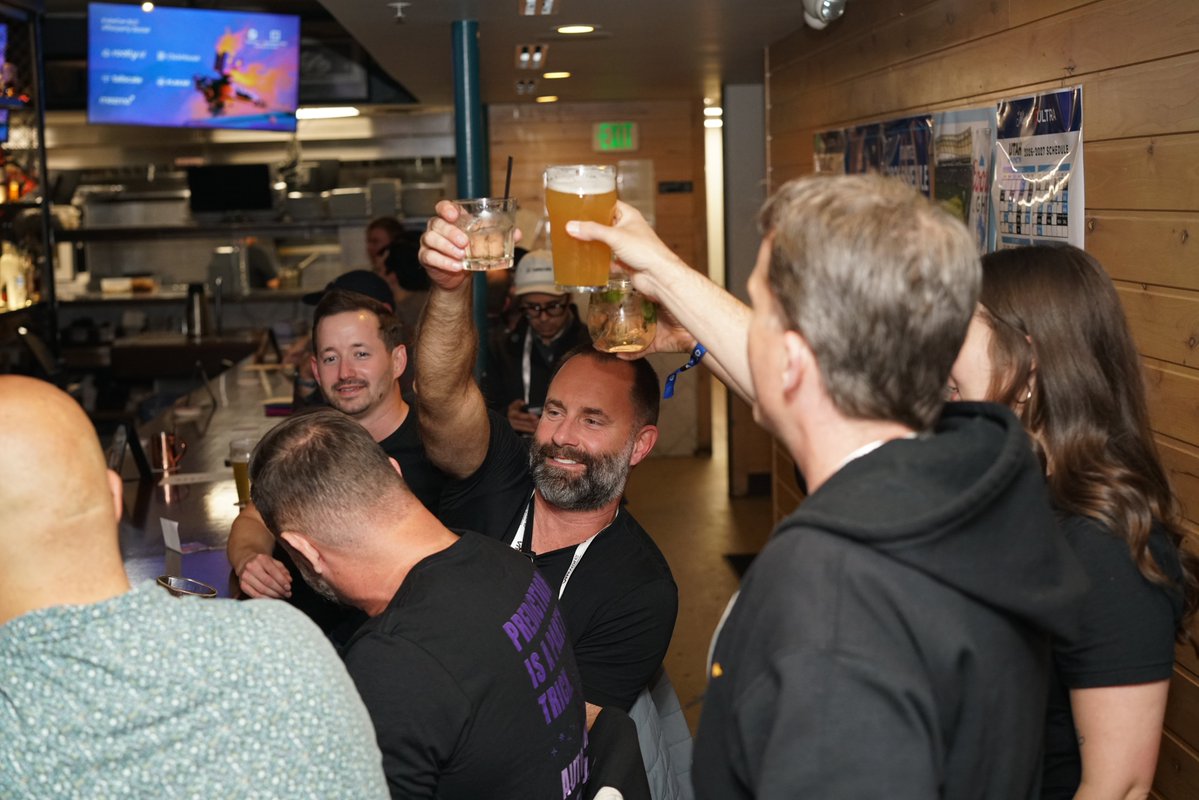
883 engineers joined us across three KubeCon happy hours last week. We had plenty to catch up on after the expo floor closed.
In Salt Lake City, we spent our days meeting people at the Rootly booth and our evenings catching up over food, drinks, and a few games of pool.
Thank you to our co-hosts: @ClickHouseDB, @Tailscale, @TwingateHQ, @MezmoData, @chainguard_dev, @zesty_co, @PlakarKorp, @rwx, and @runpod.
To everyone who stopped by the booth or joined us after hours, it was great spending time with you. See you at the next one!
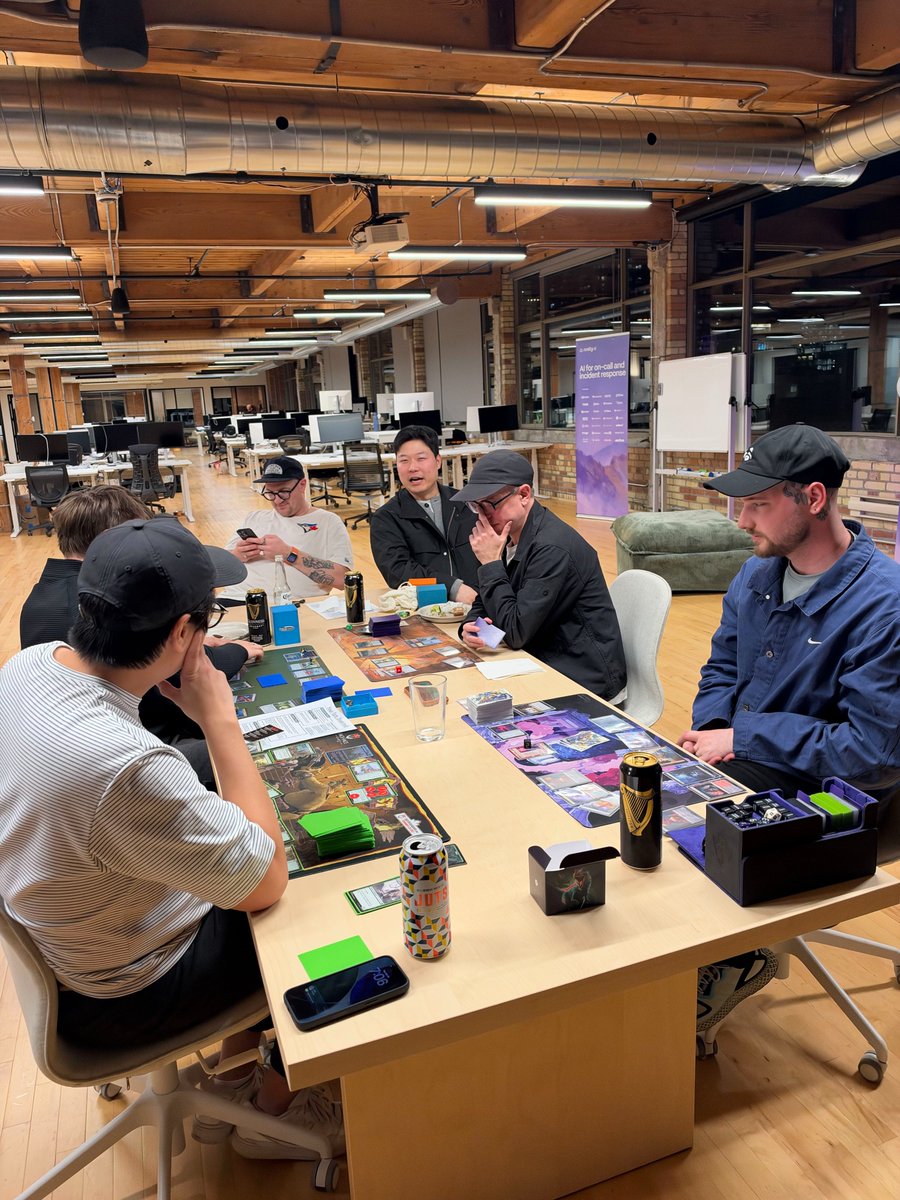
Francis taught us Magic: The Gathering at our last Toronto happy hour. Most of us had never played before, but that didn’t stop us from staying until 10pm trying to beat each other.
You cast spells, summon creatures, and occasionally wonder what just happened. A bit like dealing with incidents, except there’s no “@ Rootly tell me what happened.” Just Francis patiently explaining it over and over again.
Should we get a tournament going between Toronto startups? 👀
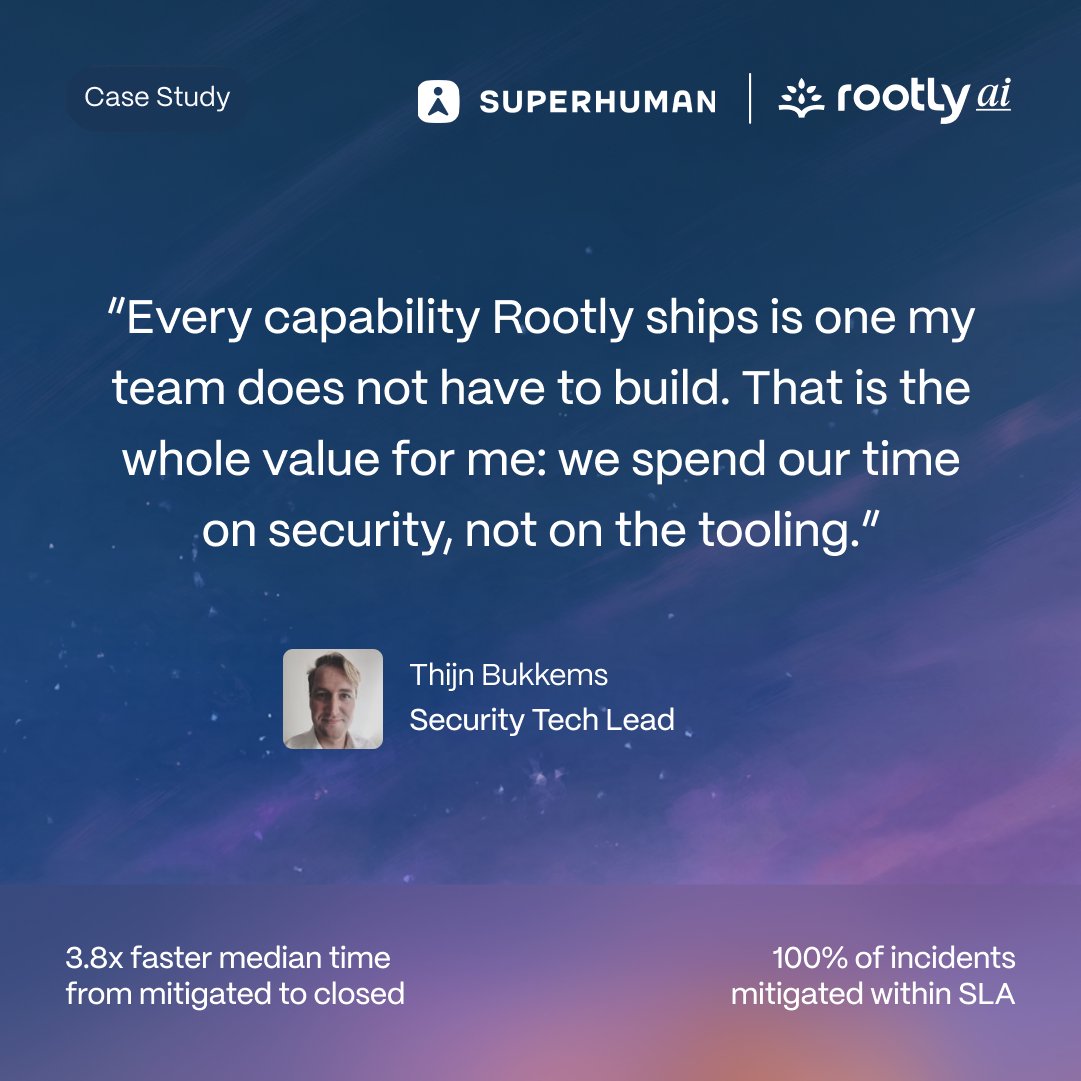
.@Superhuman serves over 40 million people with AI productivity tools including Grammarly, Docs, and Mail.
For the Security team behind those products, time spent building incident tooling is time taken away from security work.
Rootly gives them one place to coordinate responders, capture what happened, and follow through after an incident is mitigated.
And through Rootly’s MCP server, Superhuman connects that incident record to its own AI agents. Those agents help schedule reviews, turn decisions into tracked tickets, and find new owners when follow-up work loses one.
The results:
→ 3.8x faster median time from mitigated to closed
→ 100% of incidents mitigated within SLA
→ 100% of post-incident action items completed
Every capability the team can adopt is one less thing to build and more time to spend on security.
Find Rootly at KubeCon in Salt Lake City! 🏔️
We’re at booth 340 in Hall 4, right on your way to pick up your KubeCon t-shirt. Stop by to meet the team and talk AI and reliability.
How do top-performing teams achieve great incident management?
Our new Rootly report looks at what that takes, drawing on 350K+ incidents across 650+ companies (165 of them past $100M in revenue).
A few figures that stand out on top performing teams:
• Great teams name an incident commander early. Across incidents, 71.5% have one within five minutes.
• They staff on-call like they mean it. Half of paged schedules have five or more people on them (Google SRE’s floor is eight).
• They talk to customers before customers come looking. Nine in ten first status page updates for a SEV0 or SEV1 land inside 20 minutes.
And they write it down beforehand: roles, severity thresholds, rotations, templates. Then they practice. The response gets predictable for engineers, execs and customers alike.
The report also opens up how Rootly runs its own incidents. 70% of alerts close without paging a human. 1 in 25 changes gets flagged as high risk before it ships.
Each recommendation comes with the strongest case against it, so you can argue with the report instead of just nodding along.
Huge congratulations to @mimurchison and @davidhariri their $600M acquisition!
I was Ada's first employee so this is extra special for me!
Mike (CEO) is a once-in-a-generation founder and the mentor I credit most for my success. @rootlyhq would not exist without Ada.
Back in 2015, I was still an intern at Cisco when I cold emailed Mike after hearing him speak at a @TechTO event. He took a chance on me, bringing me into Volley, which would eventually become Ada.
What Mike and David built went far beyond the company itself. Some of Rootly's best talent, including Jason (Head of CS) and Dan (VP Engineering), came from Ada. The ownership, intensity, and customer obsession they bring are second to none.
One of my proudest full-circle moments was when Ada became a Rootly customer. Later, as Rootly grew, we ended up taking over the office directly below Ada. Surreal to be building my own company just one floor below where I got my start.
And even as Ada scaled, Mike never stopped making time for me. From investor intros to going on runs together in SF (he's still faster), he's continued to invest in my success.
I've learned more from Mike and David than they probably realize.
Couldn't be more proud! 🇨🇦