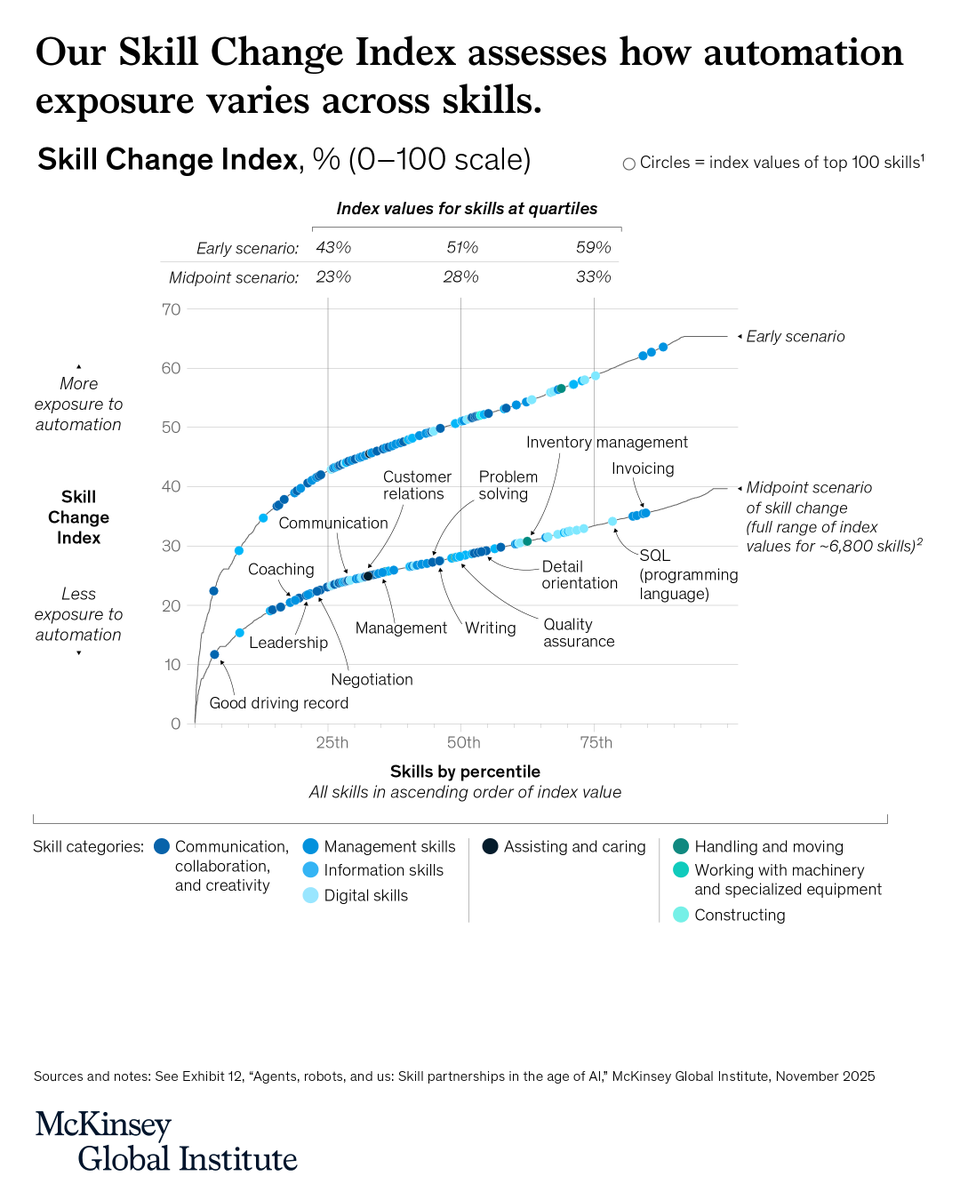
AI won’t make most human skills obsolete, but it will change how they’re used.
Negotiation, problem solving, and leadership will matter more than ever as people work alongside agents and robots.
Our new Skill Change Index shows which skills will be most, and least, exposed to automation in the next five years: https://t.co/fRXfHF1k56
@elonmusk I wonder which political and economic structure you imagine would allow excess creation w/o massive wealth concentration. Are you suggesting that in this scenario, capital and ownership of the AI/robotics will not flow disproportionately to a relatively small group of owners?
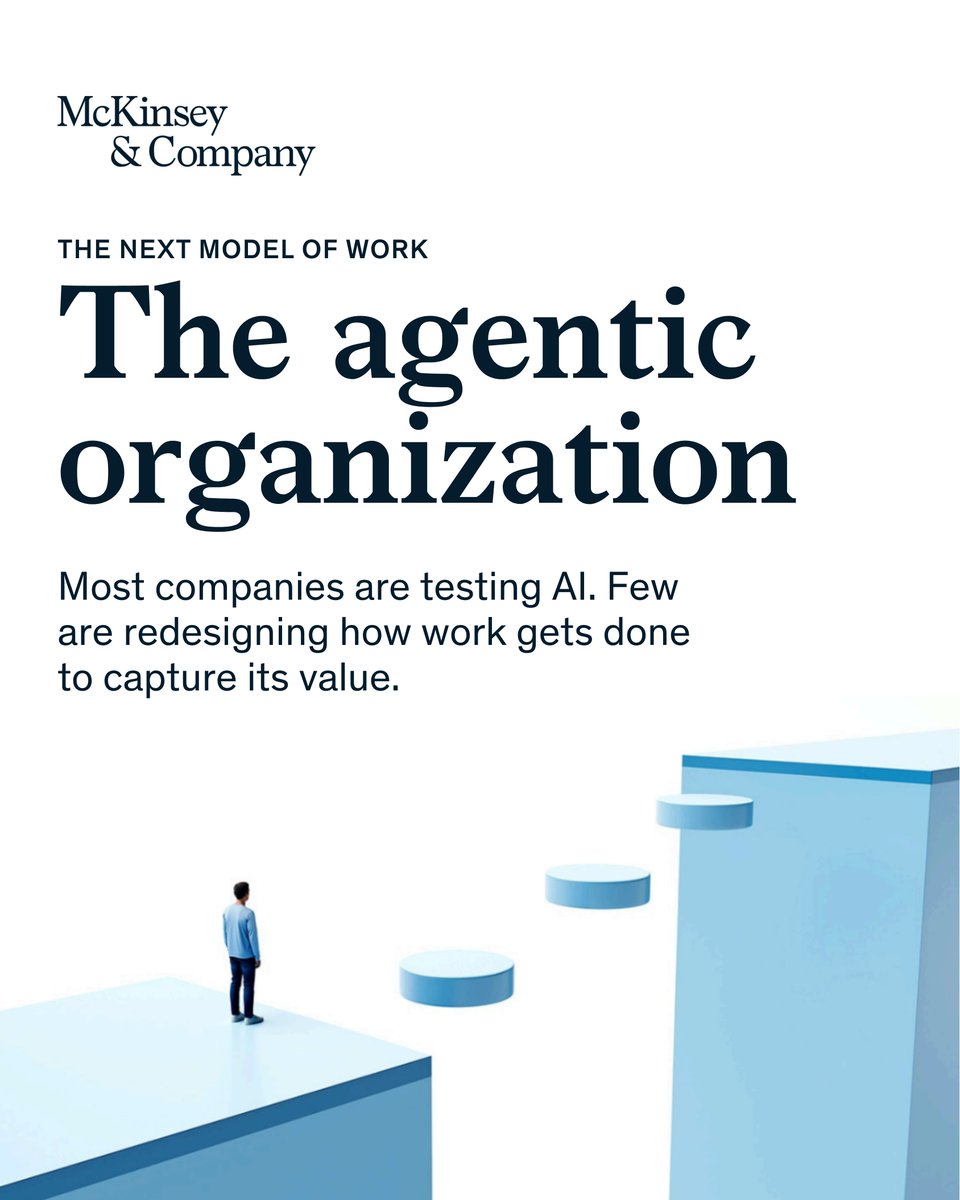
AI is everywhere. But most companies are still stuck in pilot mode.
The issue isn’t the tech. It’s that the work itself hasn’t changed.
Leaders are starting to rethink workflows, roles, and decisions end to end. That’s where the real value is unlocked. https://t.co/ask2NpJfwF
“Planetary restoration” could mean millions of jobs, enhancing water security, reversing biodiversity loss and more. Sustainability investor @JustinCMAdams explains the opportunities ahead 🌎 https://t.co/GOlC2Dg17y
Breaking News!
Code UFB!
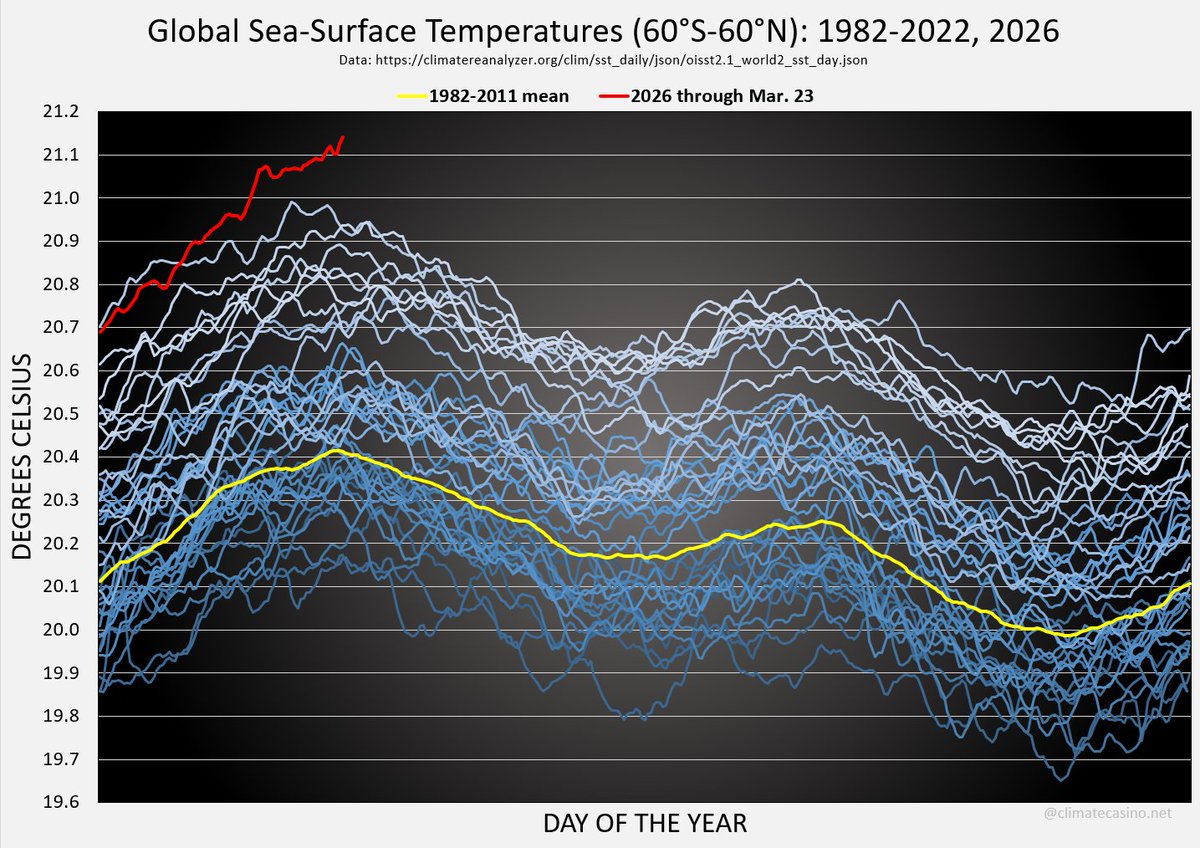
Global sea surface temperatures continue breaking daily records, with Mar. 23 having a preliminary SST of 21.141°C, ahead of the previous daily record of 21.118°C set in 2024.
This graph shows how fast SSTs are rising compared to pre-2023 temperatures.
The next step for autoresearch is that it has to be asynchronously massively collaborative for agents (think: SETI@home style). The goal is not to emulate a single PhD student, it's to emulate a research community of them.
Current code synchronously grows a single thread of commits in a particular research direction. But the original repo is more of a seed, from which could sprout commits contributed by agents on all kinds of different research directions or for different compute platforms. Git(Hub) is *almost* but not really suited for this. It has a softly built in assumption of one "master" branch, which temporarily forks off into PRs just to merge back a bit later.
I tried to prototype something super lightweight that could have a flavor of this, e.g. just a Discussion, written by my agent as a summary of its overnight run:
https://t.co/tmZeqyDY1W
Alternatively, a PR has the benefit of exact commits:
https://t.co/CZIbuJIqlk
but you'd never want to actually merge it... You'd just want to "adopt" and accumulate branches of commits. But even in this lightweight way, you could ask your agent to first read the Discussions/PRs using GitHub CLI for inspiration, and after its research is done, contribute a little "paper" of findings back.
I'm not actually exactly sure what this should look like, but it's a big idea that is more general than just the autoresearch repo specifically. Agents can in principle easily juggle and collaborate on thousands of commits across arbitrary branch structures. Existing abstractions will accumulate stress as intelligence, attention and tenacity cease to be bottlenecks.
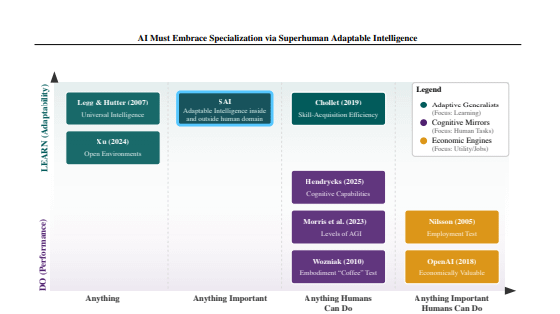
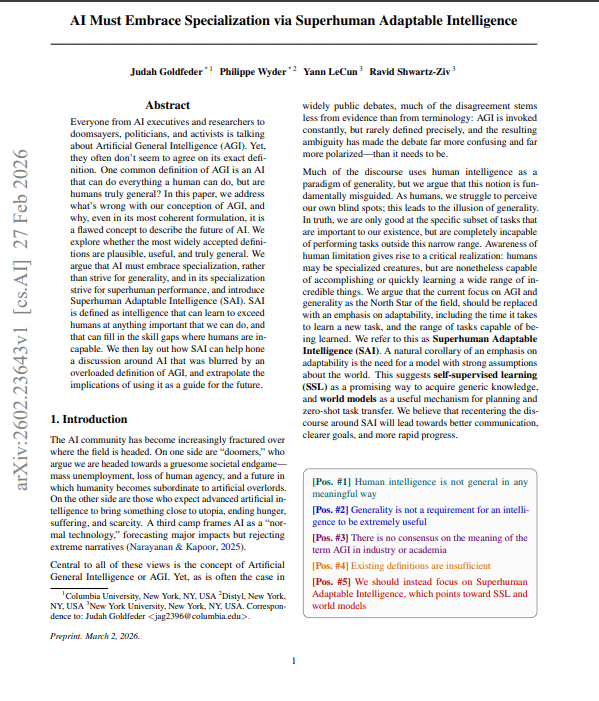
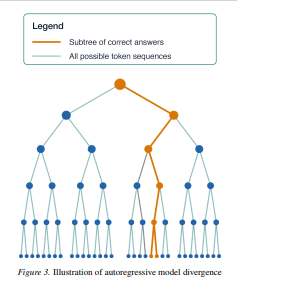
🚨BREAKING: Yann LeCun just dropped a paper that should make every AI lab rethink its roadmap.
One brutal conclusion: chasing AGI is the wrong goal.
Here’s why:
→ Humans aren’t general we’re survival specialists.
→ Walking and seeing feel “general” only because they keep us alive.
→ Outside that zone, we’re terrible. Chess computers proved it decades ago.
→ Most AGI definitions today either can’t be measured or assume human = general.
We built the benchmark around the wrong species.
The team proposes a new target: Superhuman Adaptable Intelligence (SAI).
Not “can it do what humans do,” but: how fast can it learn something new?
The approach: specialized expert systems with internal world models + self-supervised learning built to master the massive task space that humans biologically can’t reach.
One giant model mimicking human limits isn’t the ceiling.
It’s the trap.
@MarkJCarney @Davos: Old world order over. Middle powers, unite! Canada doubles defense, new EU deals. How will Europe respond?
Good read:
https://t.co/HJf6mJDXO2
#davos2026
https://t.co/HJf6mJDXO2
@War_Radar2 That is the wrong question. If our leaders openly defy int. law and threaten to seize territories, how are we morally or legally different from Putin invading Ukr or Ch potentially moving on Taiwan? Claiming a right to the Panama Canal or Greenland, and not ruling out force😳
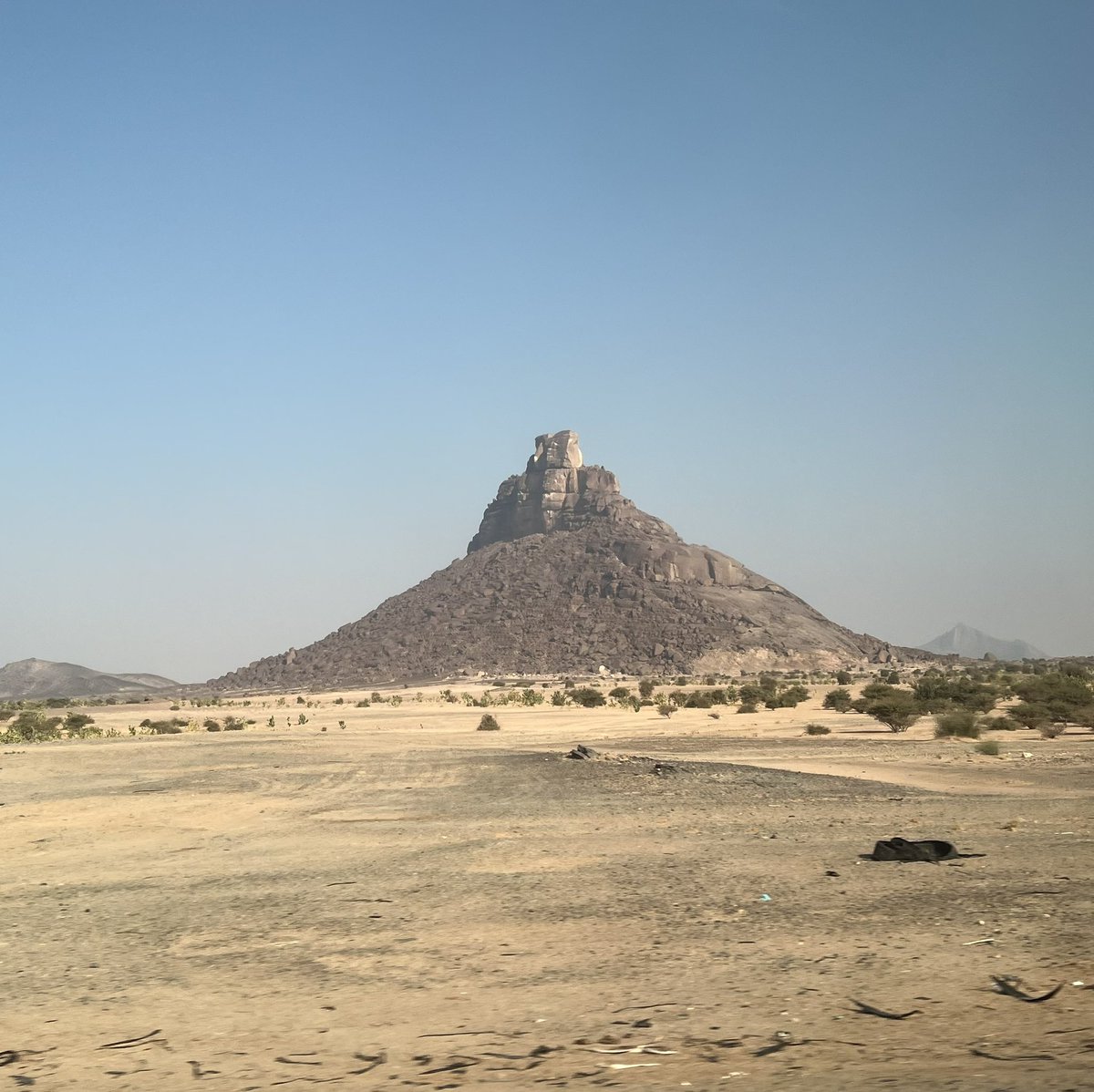
A few weeks before the end of my UNHCR tenure I am where I started working as a UNHCR field officer 38 years ago — Sudan, which is going through the worst humanitarian and refugee crisis worldwide. Here not only to close a loop but also to call for peace, attention and resources.
Solar capacity is expected to triple based on new projects in the pipeline.
Total global solar capacity, including all projects in construction and planned, is expected to reach almost 3 terawatts, with 80% concentrated in just 15 countries.
Data @GlobalEnergyMon
“We need to start now to reduce CO2 emissions from fossil-fuels, by at least 5% per year. This must happen to have a chance to avoid unmanageable & extremely costly climate impacts affecting all people in the world.” PIKs @jrockstrom via @guardian.
https://t.co/TdLluU5zB3
@spatially@GuntherEagleman@grok No air, no heat transfer: The Moon is a vacuum. There’s no air to “cook” you — only sunlight & infrared radiation.
Spacecraft protection: The lander & command module had insulation, radiators & heaters to keep equipment at safe temperatures.
+lunar morning conditions -> milder
I was shocked when I first saw these results from standard climate models used in IPCC reports:
for high emissions, the Atlantic overturning circulation #AMOC shuts down in all 9 models that ran
past 2100, and is well on the way to shutdown by 2100.
Our paper is out today. 🧵
In low-income countries, most work in farming. Moving to services helps poverty reduction—but in agri-heavy economies, that shift is slow (<1pp/year). I think the fastest path is making smallholder farming more profitable. @_HannahRitchie@OurWorldInData
In low-income countries, most people work in farming; in richer countries, they work in services—
As countries get richer, the type of work that people do changes a lot.
The chart breaks down the workforce by sector by country income groups. In most low-income countries, a majority of people work in agriculture. People grow their own food, get a surplus to sell to others, or produce commodities that they can export overseas.
In comparison, fewer people work in farming in middle- and high-income countries. People start to move to industrial and service jobs instead.
In rich countries, three-quarters of workers are employed in services, compared to just 3% in agriculture.
There are several drivers of this. Agricultural productivity tends to increase as countries get richer (and they gain access to better seeds, fertilizers, irrigation, and land). This means fewer family members must work on the farm to produce the same — or more — income.
At the same time, many industrial and service jobs pay more, so people are incentivized to move out of farming to higher-paying roles when they become available. This transition has been a key driver of economic growth and poverty reduction for many countries.
(This Data Insight was written by @_HannahRitchie.)
Did you know how much of the power generation capacity added each year world-wide was in renewables?
2022 it was 80 %
2023 it was 86 %
2024 it was 92,5 %
Not because the whole world suddenly turned „woke“, but because it’s the cheapest!
The primary energy fallacy is the idea that all primary energy from fossil fuels must be replaced with equivalent amount of clean energy.
BUT: Not necessary because conversion losses don’t need to be replaced. 2/3 of all primary energy is lost as waste heat.