Our new paper is now published! We used WOD data and CMIP6 to look at Lab Sea oxygen budgets. Main findings:
- On average, O2 gas exchange is largely balanced by (physical) export - but storage is important interannually
- CMIP6 underestimates O2 variability and mean gas exchange
New Research: Decadal variability of oxygen uptake, export, and storage in the Labrador Sea from observations and CMIP6 models: The uptake of dissolved oxygen from the atmosphere via air-sea gas exchange and its physical transport away… https://t.co/phDNQa3hxy #MarineScience
Working on ocean physics 🌊 or biogeochemistry 🧪in the subpolar North Atlantic? Then we have just the #OSM24 session for you!
Physical transport and biogeochemical cycling in the subpolar North Atlantic (PL005)
https://t.co/M4v5KFedcm
Submission open until Sep 13
Working on ocean physics 🌊 or biogeochemistry 🧪in the subpolar North Atlantic? Then we have just the #OSM24 session for you!
Physical transport and biogeochemical cycling in the subpolar North Atlantic (PL005)
https://t.co/M4v5KFedcm
Submission open until Sep 13
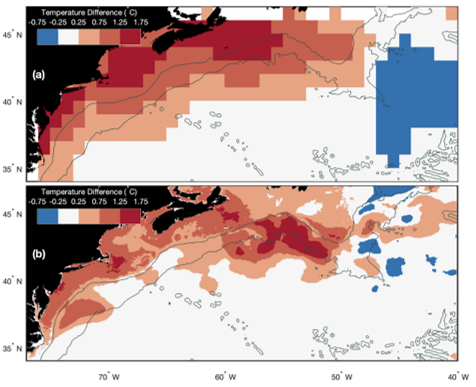
Gonçalves Neto et al., investigate the drivers of recent warming across the New England and Nova Scotia shelves, hotspots of #Globalwarming. They find a key role for eddies in blocking cold Labrador water from accessing the shelf.
#AGUPubs
https://t.co/pju1KWUNgZ
The Labrador Sea “inhales” oxygen and supplies it to deep-sea life across the world. But its breath could be threatened by climate change: https://t.co/pCMYRJ9ET8 @AGU_Eos
The Labrador Sea “inhales” oxygen and supplies it to the world's deep-sea life. For the first time, scientists measured the amount of oxygen exported to the North Atlantic from this ocean lung. @OceanFrontier@DalhousieU@GEOMAR_en.
Story by @JamesDacey.
https://t.co/jvCxMTB0RP
@slinganswers I'm outisde the US for a while so I'd like to cancel my subscription, but can't even access the account management part of the website due to geoblocking, any advice on what to do?