I view @Peggynoonannyc as America’s muse. This piece is just the most recent example.
Here’s her closing thought 25 years after 9/11 (though it’s best read in its entirely):
“And now it’s so many years later, and the son has a son and expects a second soon, and life goes on, and fills you. But never lie about the things that break your heart. I’ll never get over it, none of us will. The line in the tree trunk, the darkened ring, will never go away. And now and then someone will say, “What happened there?” and you’ll tell him.”
https://t.co/yoMI4OJFW2
By angling a shot precisely between two mushrooms in Mario Golf: Toadstool Tour, the ball will be shot directly into the sun at incredible speed. After 2 and a half hours, it will land at a distance of 21 million yards away.
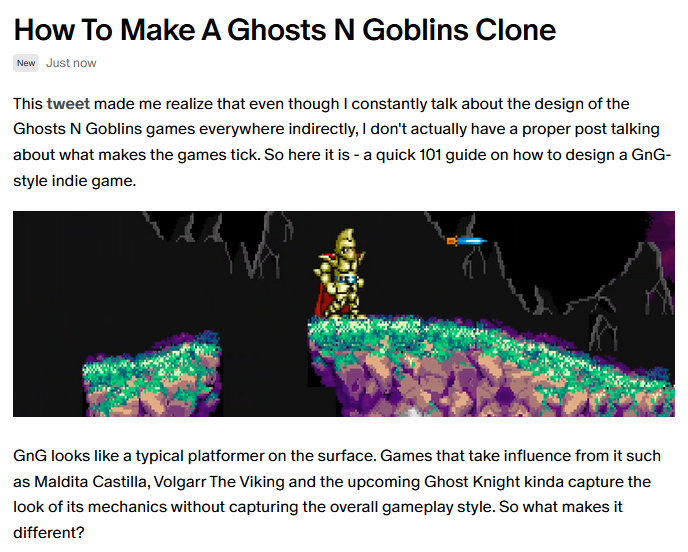
Wrote a post about the design of GnG cause it feels like everyone appreciates & can understand GnG's aesthetics but nobody wants to really dig into how it's designed. Fujiwara himself had to come outta the retirement home to show us how it's done
👇 link
A hidden screen was just found in the Gamecube version of MM showing the credits for engineering (making the N64 emulator for GC) using a secret button combination https://t.co/isPbHF9ohS
The Dreammachine Special Edition. The full movie on a 7" IPS acrylic digital video frame.
Even your pet will enjoy it. :)
Get it here along with the Philips CD-i release, limited quantities left.
https://t.co/CaQ7n08KVi
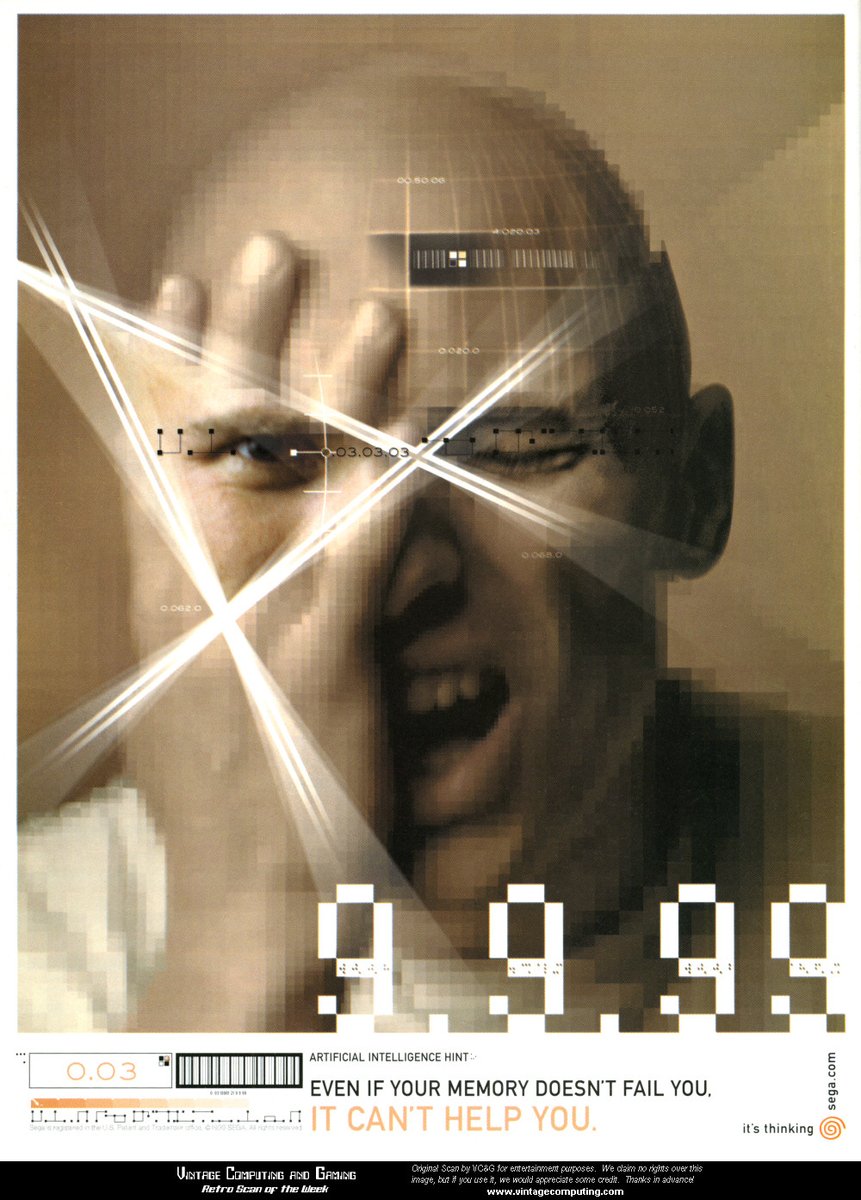
A quarter of a century ago tomorrow, on 9/9/99, we launched the @SEGA Dreamcast here in North America. While the journey did not end the way we wished it had, we remain proud of the path we paved in online gaming, and it remains a console that is beloved by so many.
Here is an extract from my upcoming autobiography that details that wonderful, wacky, groundbreaking period in video game history:
The Dreamcast was going to be the first console in history with online capability, and a broad variety of functions unlike anything that had gone before it. The console had the Windows CE operating system, so it was much easier to program games for than the Saturn, and also possessed a NAOMI mother board, similar to what was found in the arcades, so that those games could easily be transferred for home consumption.
By April 1999, in front of packed house of magazine writers and other media people and gamers in San Francisco, I made the public teaser/pitch for the new console: The Sega Dreamcast would roll out that September, and revolutionize video games. “We’re taking gamers where gaming is going,” was my message. Capitalizing on the industry-wide penchant for numerical shorthand, we announced that the Dreamcast would launch September 9th—9.9.99. By then, we had locked down all the advertising on MTV’s Video Music Awards to be broadcast the night of the Dreamcast’s release. From there, it was a sprint to the day of release.
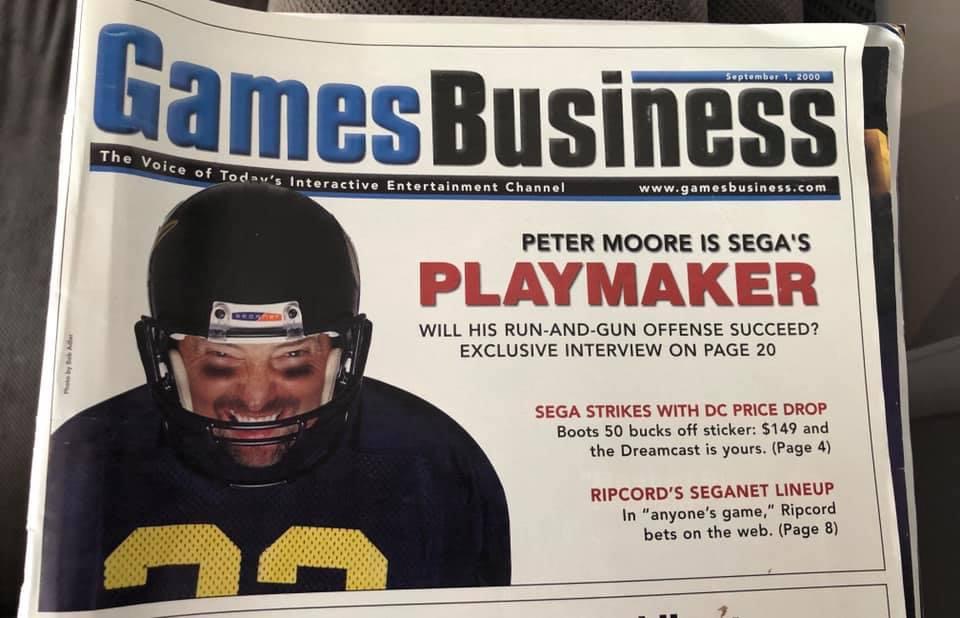
With one jarring bump. In the midst of the intense buildup, in June of 1999, Bernie Stolar was relieved of his duties as president. The official announcement was vague, but it was clear that Bernie’s blunt personality had been rubbing the Japanese the wrong way. So three months before the launch that would make or break the company’s future, the president was out, and the new president was… me. I received a call late one afternoon from Big Sato, who said simply, “I want to let you know that Mr. Stolar is no longer in his position. We would like you to assume his role as president and COO.”
It was a classic case of battlefield promotion. I had been in the video game industry for six months and suddenly I was running Sega of America. Of course, if Sega hadn’t been 90 days out from the Dreamcast launch, they likely would have conducted a more rigorous search and picked someone with more experience. But I had bonded well with the company’s intermediaries—including Makoto Kaneshiro, the embedded executive in San Francisco (who undoubtedly was an informant for Japan), whose office was across the hall from mine—and received good reviews for how we delivered the big rollout announcement in April.
It was clear that this was the chance for Sega to transcend all the bad publicity around the demise of the Saturn. In addition to the launch of the Dreamcast, we also boasted an unprecedented lineup of games. Typically, a new console rollout would be accompanied by eight to ten new games on the day of release. Between our nine in-house studios and the licensed games through third-party developers, the Dreamcast launch would include some 19 new games, the majority of which were based on new intellectual property. Almost every studio of consequence in the business – save EA, which was gearing up for the following spring’s PS2 launch – delivered a game. In addition to Sega’s perennial hit Sonic the Hedgehog (Sonic Adventure, the first 3D Sonic game), there was the epic martial combat game Soul Calibur, racing games like Hydro Thunder, sports simulations like NFL 2K and NBA 2K (with icons like Randy Moss and Alan Iverson signing on for the massive “It’s Thinking” ad campaign accompanying the rollout.)
In the weeks leading up to launch, as we started fielding orders from all the relevant buyers, it became pretty clear that we were going to do a staggering amount of opening-day business. That started me wondering where our opening day revenues would land in relation to other entertainment releases. I did some checking, and realized that the movie Stars Wars: Phantom Menace had enjoyed the biggest opening 24 hours in movie history, grossing over $24 million in ticket sales. Based on our estimates, we were going to go well past that mark. I started talking about the Dreamcast launch being the biggest opening day in American entertainment media history.
On the day of release, 9.9.99, I was in New York City for the VMAs. That morning, I walked into the Toys R Us in Times Square. The executives at the chain were still peeved because they’d received only 30,000 consoles for their initial shipment (they’d wanted twice as many, but we were striving to balance our initial production run of about 300,000 consoles between all our major retailers). The line to get into Toys R Us that morning snaked around the corner, and the sight of people buying as many as a half-dozen games along with their console confirmed all our hopes. The VMAs that night were energetic and revelatory, featuring Ricky Martin livin’ la Vida Loca and Britney delivering a crowd-pleasing Baby One More Time. At almost every commercial break in between, Sega was peppering the audience with variations on the “It’s Thinking” campaign.
By the next day, back in San Francisco, it was clear that we’d not only broken the single-day record, we’d destroyed it, showing $99.4 million in sell-through revenue. This was big news in the mainstream media, which was just then starting to grasp the broad reach of the video-game business. Sega’s numbers remained encouraging all the way through the Christmas season and a bit beyond, as we were selling consoles as quickly as we could produce them.