The Library of Ashurbanipal, also known as the Royal Library of Ashurbanipal, is the oldest known library in the world. It was discovered in the ruins of the Assyrian king Ashurbanipal’s palace in Nineveh, near present-day Mosul, Iraq.
This ancient library contained a vast collection of cuneiform tablets, covering a wide range of topics such as literature, history, law, science, and religion. The tablets date back to over 2,000 years before the time of Ashurbanipal, making them some of the oldest written documents in existence.
The collection is considered one of the most important archaeological finds of the ancient world and provides valuable insights into the culture, society, and intellectual achievements of ancient Mesopotamia.
The Ashurbanipal Library Project aims to digitally reconstruct and preserve this ancient collection, making it accessible to scholars and the public worldwide.
#drthehistories
In 1920s, Leonard Woolley, a British archaeologist, led a series of excavations at Ur, a city that held great significance in the history of Mesopotamia. As Woolley and his team carefully unearthed the remnants of this ancient civilization, they made a remarkable discovery beneath the city streets – a network of remarkably well-preserved 4,000 year old drains.
These ancient drains were not just ordinary channels for wastewater; they represented an advanced system of urban infrastructure that demonstrated the Sumerians' impressive engineering and architectural capabilities. The careful construction and maintenance of these drains provided a glimpse into the high level of sophistication achieved by the ancient society of Ur.
By meticulously documenting and studying these drains, Woolley was able to offer valuable insights into the daily life and urban planning of the Sumerians. The presence of such an advanced drainage system indicated the Sumerians' understanding of sanitation and public health, as well as their mastery of water management techniques.
#drthehistories
One of the most impressive architectural features of the French Renaissance Castle of Château de Chambord, is its famous double helix staircase. The design of this element is popularly attributed to the renowned Italian Renaissance polymath, Leonardo da Vinci :
Château de Chambord’s best-known architectural feature, however, is its double helix staircase. This staircase consists of two intertwining spiral staircases that go all the way up to the castle’s terrace. In practical terms, this design would allow visitors to the castle to ascend and descend without obstruction. One staircase may be used by those going up, whilst the other by those going down, and the two parties would not bump into each other. In addition, this was the place where the French royal court stood when they welcomed important guests to the castle or when they watched the festivities.
This is the staircase designed by the great Renaissance polymath, Leonardo da Vinci, himself. It is known that in 1516 AD, Leonardo da Vinci entered into the service of Francis and settled in the Château du Clos Lucé, another castle in the Loire Valley. Leonardo, reportedly disgusted with the Italian political situation at the time, was lured to France by King Francis I. Leonardo spent his final years at Clos Lucé, continuing with the prolific output of his genius. It was a profoundly moving experience to be in the same rooms where he lived, worked, breathed, thought and died in 1519 AD. With such a brilliant mind living in the vicinity, it is not too difficult to imagine that this ingenious staircase was designed by Leonardo da Vinci. Some have even suggested that Leonardo da Vinci was responsible for the original design of the castle as well. At the very least, there is some agreement that Leonardo da Vinci influenced the design of the castle’s double helix staircase.
Château de Chambord, a castle located in Loire Valley, in French department of Loir-et-Cher. Château de Chambord was commissioned in 1519 AD, by Francis I, King of France. Initially, castle was meant to serve as the king’s hunting lodge, where he would stay for several weeks during each visit and hence was not designed to serve as a permanent residence. Nevertheless, Francis was a great lover of the arts and the Château de Chambord, in spite of being a temporary residence, was elevated to the status of an architectural marvel. Francis’ pride in the Château de Chambord is evident, as he showed it off to visiting sovereigns and ambassadors, including his great nemesis, Holy Roman Emperor, Charles V, who visited castle in 1539 AD.
Between commencement of castle’s construction until death of Francis in 1547 AD (about 28 years), king is believed to have only spent 72 days at Château de Chambord. At the time of the king’s death, only the keep and the royal wing had been completed. But death of Francis did not halt construction of Château de Chambord. Work on castle continued during reign of Henry II, successor of Francis. It was, however, only during 17th Century AD, when France was under rule of Louis XIV, that Château de Chambord was finally completed. It is an archetype of architectural style known as ‘French Renaissance’, which flourished between 15th-17th Centuries AD, in France.
Today, Château de Chambord is a popular tourist destination and its double helix staircase is undoubtedly one of the highlights. It is almost certain that visitors seeing this staircase today would be awed by it in a similar manner as those fortunate enough to see it when the castle was owned by the kings of France.
#archaeohistories
Around 70 and 60 BCE, a Greek ship heading from Asia Minor to Rome sank in the Mediterranean.
When a group of sponge divers discovered the wreck in 1900, they salvaged three pieces of bronze comprising a device known as the Antikythera mechanism.
The artifact, which is roughly the size of a shoebox, puzzled scholars for more than a century, largely because the sophistication of its gears and internal workings are far beyond any known Greek technology of the time.
In fact, the Antikythera mechanism has long been a favorite of fringe academics claiming it as evidence of alien visitations in ancient history.
X-rays of the artifact in the late 20th century revealed, however, that it is designed to track astronomical movements.
The finding was confirmed by 2006 CT scans revealing inscriptions that are instructions for what is, functionally, an ancient computer. While its use as an astronomical measure is no longer mysterious, the Antikythera mechanism's singularly advanced construction and precision still pose questions about Greek technology.
Massive Underground Tunnels Dating Back 12,000 Years, Connecting Scotland to Turkey
Could it be plausible that ancient societies were intricately linked millennia ago? In light of the extensive subterranean passages stretching from northern Scotland to the Mediterranean, the resounding answer appears to be affirmative.
These enigmatic tunnels, originating in Scotland and extending all the way to Turkey, remain shrouded in mystery, leaving researchers bewildered about their purpose and construction.
What amplifies the intrigue surrounding these tunnels is their astonishing craftsmanship and meticulous design.
These millennia-old subterranean networks, hewn during the Stone Age, continue to baffle scientists. Dr. Henrich Kusch, in his book "Secrets of the Underground Door to an Ancient World," contends that these tunnels were constructed beneath numerous Neolithic settlements across Europe.
The fact that these tunnels have endured for over 12,000 years suggests that the initial structures must have been colossal in scale.
Dr. Kusch further postulates that these tunnels served as ancient highways, facilitating travel across Europe.
He explains, "Across Europe, there were thousands of these tunnels – from the north in Scotland down to the Mediterranean. They are interspersed with nooks, at some places, it’s larger, and there is seating, or storage chambers and rooms.
"They do not all link up but taken together it is a massive underground network."
He goes on to mention, "In Bavaria in Germany alone we have found 700 meters of these underground tunnel networks. In Styria in Austria, we have found 350 meters."
While many have likened these tunnels to ancient thoroughfares, others suggest that they were constructed as a means of protecting individuals from predators.
In Dr. Henrich's book, he posits that churches were often constructed near tunnel entrances due to the Church's concerns about the potentially pagan legacy associated with these tunnels and its desire to suppress their influence.
Similar tunnels have been discovered on other continents, including the Americas. Yet, the overarching questions remain: Why were these passages built, and how were they constructed? Despite various legends and theories, concrete answers continue to elude researchers.
'Today is the first day of the rest of my life.' @HenryMcKean was among the 3,000 people from all across the globe who became Ireland's newest citizens.
At the OPW, we are offering a variety of unique apprenticeship opportunities. We are looking for apprentice candidates in four craft disciplines: carpentry & joinery, stonecutting & stonemasonry, construction plant fitting and brick & stonelaying. See https://t.co/ISTS7JVUu3
An exhibit at the Bronx Zoo in New York City with the following caption:
"You are looking at the most dangerous animal in the world. It alone of all the animals that ever lived can exterminate (and has) entire species of animals. Now it has the power to wipe out all life on earth."
The story ran in the Illustrated London News on June 8, 1963, which provided some more context:
"In the Great Apes House at the New York Zoo is to be seen an exhibit of great interest and one which speaks for itself. The exhibit in question is that of 'The Most Dangerous Animal in the World' and it is handled by the Zoo authorities with not unsubtle deftness. Between the Orang-Utan and Mountain Gorilla cages is a compartment with bars and the legend which can be read in the photograph above: Visitors, attracted by the proclamation at the top of the cage, stop and peer into the cage.
What they see is, without a doubt, the most dangerous animal in the world, and the frequent comment by visitors is 'It's true!' for they are looking into a barred mirror. And there is considerable truth in this simple, but effective statement that is made."
Bluetooth technology was named after Harald Bluetooth, a Viking king who died over 1,000 years ago. He unified factions of Denmark with those in Norway, similar to how today's technology unifies different electronic devices. The Bluetooth logo combines Nordic runes for his initials - H.B. The origin of his nickname is debated; some sources suggest he loved blueberries, staining his teeth, while others speculate a dead tooth caused a dark blue/grey hue.
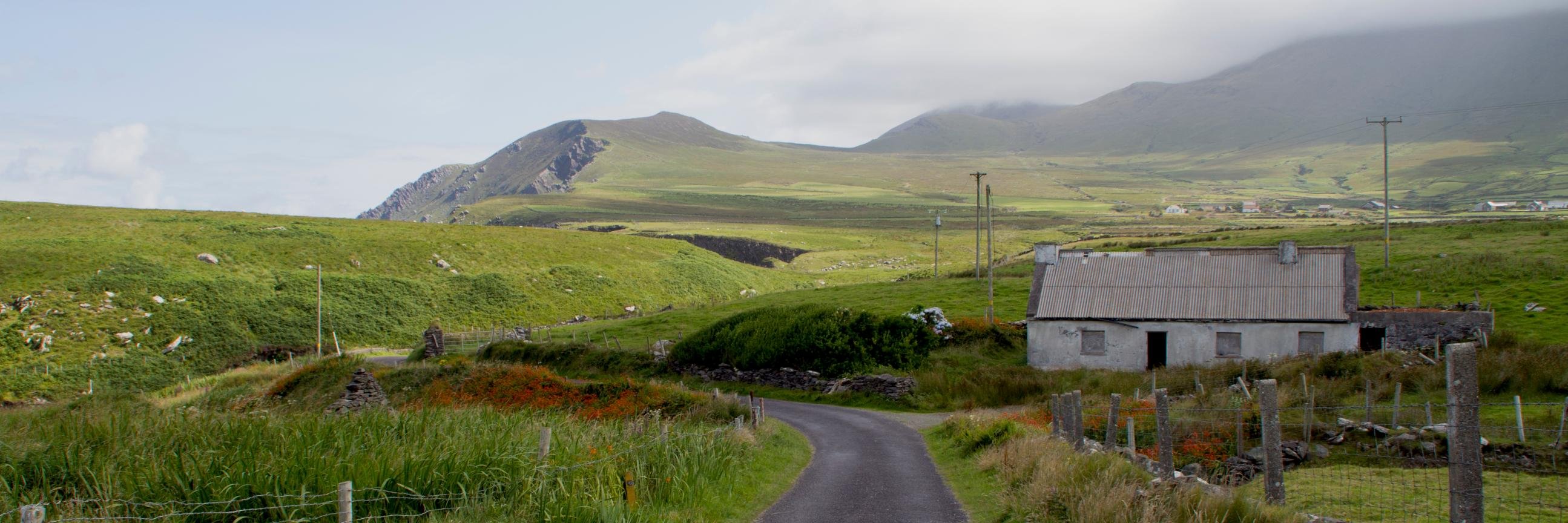
Three days before D-Day, a 21-year-old Irish woman named Maureen Flavin took her hourly barometer reading and sent it to Dublin.
She had no idea this single data point would be sent directly to General Dwight D. Eisenhower and averted disaster by delaying D-Day due to an incoming storm.