In 1979, Madison; Wisconsin, a woman sits in a basement office, writing code line by line on a computer most hospitals don't even know they need yet.
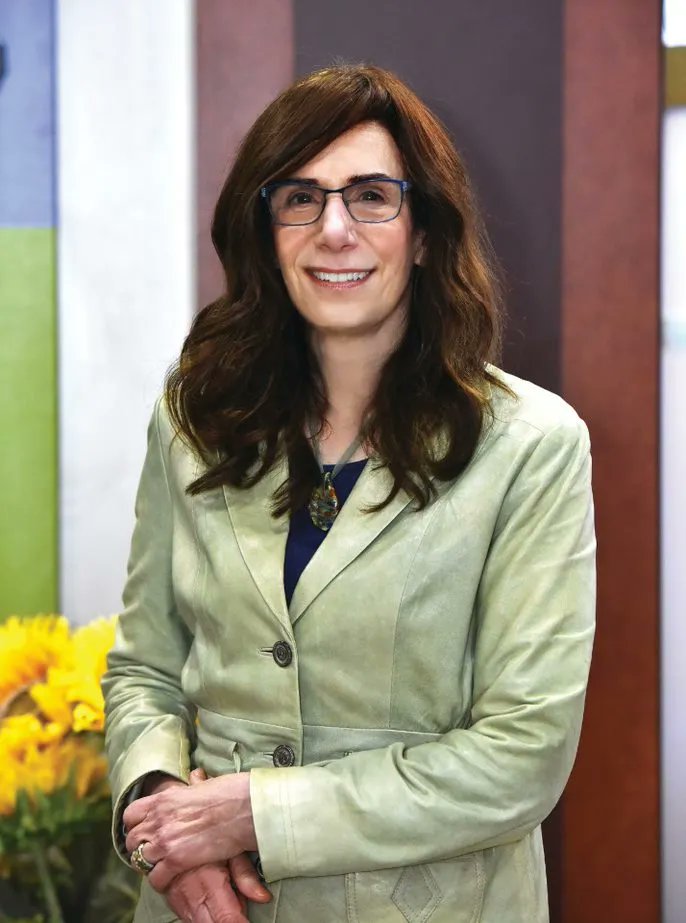
Her name is Judy Faulkner. She's started with $6,000 to $7,000 of her own money, plus contributions from friends and family totaling around $70,000. No venture capital. No Silicon Valley connections. Just a conviction that the American healthcare system is killing people because doctors can't access the information they desperately need.
She had watched it happen. Medical records stayed trapped in filing cabinets and incompatible systems when patients moved between cities and providers. Doctors made critical decisions in the dark, lacking the patient histories they needed. People died from preventable mistakes.
That systemic failure became her mission. Faulkner began building software that would let patient information follow the patient, no matter where they went. It was a radical idea in an era when most hospitals still relied on paper charts and metal drawers.
Decades later, she controls Epic Systems, the most powerful health technology company in America. Her software manages medical records for over 300 million patients worldwide. Roughly half of all U.S. hospital beds run on systems she created. Her wealth sits between $7 and $8 billion.
And almost no one knows her name.
She never took Epic public. Never accepted venture capital. Never sold out. She believed Wall Street would force her to chase quarterly profits instead of patient outcomes. So she kept control, kept her wealth locked in private shares, and kept building.
Now in her eighties, she's methodically dismantling that fortune. In 2015, she signed the Giving Pledge. Then went further, committing to give away 99 percent of her wealth. She and her husband created the Roots & Wings Foundation, named after advice she once gave her children when they asked what they needed most from her.
"You need roots and wings," she told them. Values to anchor you. Freedom to grow. Everything else is noise.
Today, that foundation distributes tens of millions annually, aiming for $100 million a year. Food security. Healthcare access. Education. Housing. She's not waiting until she's gone to make an impact. She's converting ownership into action right now, while she's still here to see it work.
In an age of billionaire spectacle, Judy Faulkner built an empire in silence, accumulated unimaginable wealth without chasing it, and is now giving it all away with the same quiet determination she used to write that first line of code in a Wisconsin basement.
Faulkner still runs Epic Systems from its headquarters in Verona, Wisconsin, where the campus has become legendary for its design. Buildings are themed after famous works of literature and fantasy, with conference rooms modeled after Hogwarts, Alice in Wonderland, and Star Trek. Employees traverse tunnels decorated like subway stations and walk through spaces that feel more like theme parks than corporate offices. It's Faulkner's way of making grueling work feel a little more human.
Unlike most tech billionaires, she lives modestly and avoids the spotlight. She doesn't own yachts, doesn't collect estates, and rarely seeks media attention. Her focus remains on Epic's mission: building software that saves lives by making sure critical information is always available when it matters most.
Faulkner majored in mathematics and computer science at a time when women made up less than 10 percent of the field. Before founding Epic, she taught herself programming languages and worked on developing systems for hospitals while teaching at the University of Wisconsin. Another fascinating detail: Epic remains one of the largest privately held software companies in the world, with thousands of employees and zero outside investors. Faulkner retains control by design, ensuring the company answers to patients, not shareholders.
#archaeohistories
Robert Mueller died last night.
He was 81 years old. He had a wife who loved him for sixty years. He had two daughters, one of whom he met for the first time in Hawaii, in 1969, on a few hours of military leave, before he got back on the plane and returned to Vietnam. He had grandchildren. He had a faith he practiced quietly, without performance. He had, in the way of men who have seen real things and survived them, a quality that is increasingly rare and increasingly mocked in the country he spent his life serving.
He had integrity.
And tonight the President of the United States said good!
I have been sitting with that word for hours now. Good. One syllable. The thing you say when the coffee is hot or the traffic is moving. The thing a man who has never had to bury anyone, never had to sit in the specific silence of a room where someone is newly absent, reaches for when he wants the world to know he is satisfied. Good. The daughters are crying and the wife is alone in the house and good.
I want to speak directly to the Americans reading this. Not the political Americans. Just the human ones. The ones who have lost a father. The ones who know what it is to be in that first hour, when you keep forgetting and then remembering again, when ordinary objects become unbearable, when the world outside the window seems obscene in its indifference. I want to ask you, simply, to hold that feeling for a moment, and then to understand that the man you elected looked at it and typed a single word.
Good.
This is not a country having a bad day. I need you to understand that. Countries have bad days. Elections go wrong. Leaders disappoint. Institutions bend. But there is a different thing, a rarer and more terrible thing, that happens when the moral center of a place simply gives way. Not dramatically. Not with a single catastrophic event. But quietly, in increments, until one evening a president celebrates the death of an old man whose family is still warm with grief, and enough people find it acceptable that it becomes the weather. Just the weather.
That is what is happening. That is what has happened.
The world knows. From Tokyo to Oslo, from London to Buenos Aires, people are not angry at America tonight. Anger would mean there was still something to fight for, some remaining faith to be betrayed. What I see, in the reactions from everywhere that is not here, is something older and sadder than anger. It is the look people get when they have waited a long time for someone they love to find their way back, and have finally understood that they are not coming.
America is being grieved. Past tense, almost. The idea of it. The thing it represented to people who had nothing else to believe in, who came here with everything they owned in a single bag because they had heard, somehow, across an ocean, that this was the place where decency was written into the walls. That idea is not resting. It is not suspended. It is being buried, in real time, with 7,450 likes before dinner.
And the church said nothing.
Seventy million people have decided that this man, this specific man who has cheated everyone he has ever made a promise to, who has mocked the disabled and the dead and the grieving, who celebrated tonight while a family wept, is an instrument of God. The pastors who made that bargain did not just trade away their credibility. They traded away the thing that made them worth listening to in the first place. The cross they carry now is a costume. The faith they preach is a loyalty oath with scripture attached. When the history of American Christianity is written, this will be the chapter they skip at seminary.
Now I want to talk about the men who stand next to him.
Because this is the part that actually breaks my heart.
JD Vance is not a bad man. I have to say that, because it is true, and because the truth matters even now, especially now. Marco Rubio is not a bad man. Lindsey Graham is not a bad man. They are idiots, but not bad, as in BAD! These are men with mothers who raised them and children who love them and friends who remember who they were before all of this. They are not monsters. Monsters are simple. Monsters do not cost you anything emotionally because there is nothing in them to mourn.
These men are something more painful than monsters.
They are men who knew better, and know better still, and will get up tomorrow and do it again.
Every small compromise they made had a reason. Every moment they looked the other way had a justification that sounded, at the time, almost reasonable. And now they have arrived here, at a place where a president celebrates the death of an old man and they will find a way, on television, to say nothing that means anything, and they will go home to houses where children who carry their name are waiting, and they will say goodnight, and they will say nothing.
Their oldest friends are watching. The ones who knew Rubio when he still believed in something. Who knew Graham when he said, out loud, on the record, that this exact man would destroy the Republican Party and deserve it. Who sat next to Vance and thought here is someone worth knowing. Those friends are not angry tonight. They moved through anger a long time ago. What they feel now is the quiet, irrecoverable sadness of watching someone disappear while still being present. Of watching a person they loved choose, again and again, to become less.
That is what cowardice costs. Not the coward. The people who loved him.
And in the comments tonight, the followers celebrate. People who ten years ago brought casseroles to grieving neighbours. Who stood in the rain at gravesides and meant the words they said. Who told their children that we do not speak ill of the dead because the dead were someone's beloved. Those people are tonight typing gleeful things about a man whose daughters are not yet done crying. And they feel clean doing it. Righteous. Because somewhere along the way the thing they were given in exchange for their decency was the feeling of belonging to something, and that feeling is very hard to give up even when you can no longer remember what you gave for it.
When Trump is gone, they will still be here.
Standing in the silence where the noise used to be. Without the permission the crowd gave them. Without the pastor who told them their cruelty was holy. They will be alone with what they said and what they cheered and what they chose to become, and there will be no one left to tell them it was righteous.
That morning is coming.
Robert Mueller flew across the Pacific on military leave to hold his newborn daughter for a few hours before returning to the war. He came home. He buried his dead with honour. He served presidents of both parties because he understood that the institution was larger than any one man. He told his grandchildren that a lie is the worst thing a person can do, that a reputation once lost cannot be recovered, and he lived that, every day, in the quiet and unglamorous way of people who actually believe what they say.
He was the kind of American the world used to point to when it needed to believe the story was true.
He died last night. His wife is alone in their house in Georgetown. His daughters are learning what the world is without him in it. And somewhere in the particular hush that falls over a family in the first hours of loss, the most powerful man and the biggest loser on earth sent a message to say he was glad.
The world that loved what America was supposed to be is grieving tonight. Not for Robert Mueller only. For the country that produced him and then became this. For the distance between what was promised and what was delivered. For the suspicion, growing quieter and more certain with each passing month, that the America people believed in was always partly a story, and the story is over now, and there is nothing yet to replace it.
That is all it needed to be.
A man died. His family is broken open with grief.
That is all it needed to be.
Instead the President said good.
And the country that once stood for something looked away 🇺🇸
Gandalv / @Microinteracti1
James Carville to Trump: “You do not determine who in the fuck is gonna be successful in this country because you are a model for the theory that a fat stupid sack of shit can get elected president because that’s what you are — fat stupid sack of shit. I love that I have dyslexia, I love that I have a short attention span. The only thing that I’ve ever been able to concentrate on in my whole life is how much I fucking hate you”
Arrived in Melbourne ahead of concerts this Friday and Saturday and I’m utterly obsessed with this organ…!!! Just wait for the pedal reed at the 20 second mark 🥹
Candace ON FIRE. I just LOVE that woman!
FUCK all that liberal bullshit we have been hearing about 'Israel' - THIS is how you're supposed to talk about those bastards!
They attempted to speak over Joy Reid, but she wouldn't tolerate it; she was ready to state the facts whether they approved or not. The United States has tried this in various countries around the world, but it never ends well.
Charlie Munger’s 1998 Harvard speech is the ultimate cheat code for life.
He compressed 74 years of billionaire wisdom into just 30 minutes.
Most people spend 4 years in college and learn less than what’s in this video.
Save this video, you will come back to this.
In 1998, Warren Buffett explained how to never lose money. MUST BOOKMARK🔖
The lecture was 1 hour 24 minutes long.
The company built on those ideas is now worth $1 trillion.
This is the closest thing to a cheat code that exists.
I'm sharing my latest viral find with you - watch even 5 minutes and your trading mindset will shift forever.
Share it. You'll thank yourself later.
An Iranian man left this comment on my YouTube channel. This is without a doubt the single best explanation of the reality facing Iranian people today👇
"As an Iranian, I can tell you the situation is no longer just political—it's existential. We are trapped between two collapsing structures: one internal, one external. On one hand, we face a deeply dysfunctional government, led by the Supreme Leader and the Islamic Republic’s unelected institutions.
Decades of economic mismanagement, suppression of dissent, and brutal ideological control have alienated multiple generations. No one believes in reform anymore—because every attempt has either been co-opted or crushed. But here's the paradox: We are also terrified of regime collapse—because we've watched the aftermath of Western intervention in countries like Iraq, Libya, Syria, and Afghanistan. Each was promised freedom; each descended into chaos, civil war, or foreign occupation.
So no, we don't trust the U.S. or Israel. Not because we support our regime—but because we know how imperial powers treat ‘liberated’ nations in the Middle East.
Freedom, in their language, often means vacuum, fire, and permanent instability. Right now, many Iranians live with three truths at once: The Islamic Republic is morally and politically bankrupt. The alternatives offered by foreign actors are not liberation—they’re collapse.
A bad government is survivable. No government is not. We are not silent because we agree. We are cautious because we’ve learned—too well—what happens when superpowers decide to "help." In a sentence: Iran is a nation held hostage by its own regime, but haunted by the fate of its neighbors. We are stuck in a house we hate, surrounded by fires we fear more."
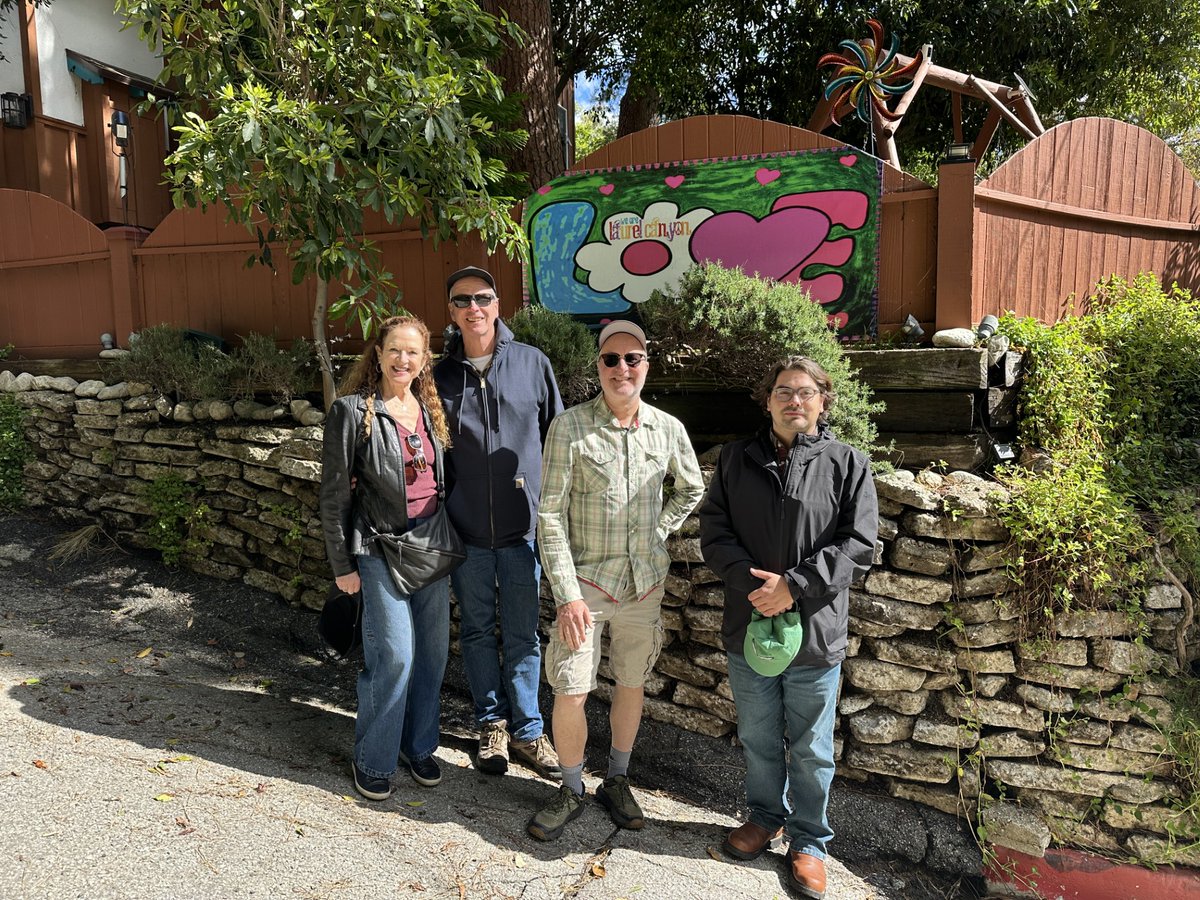
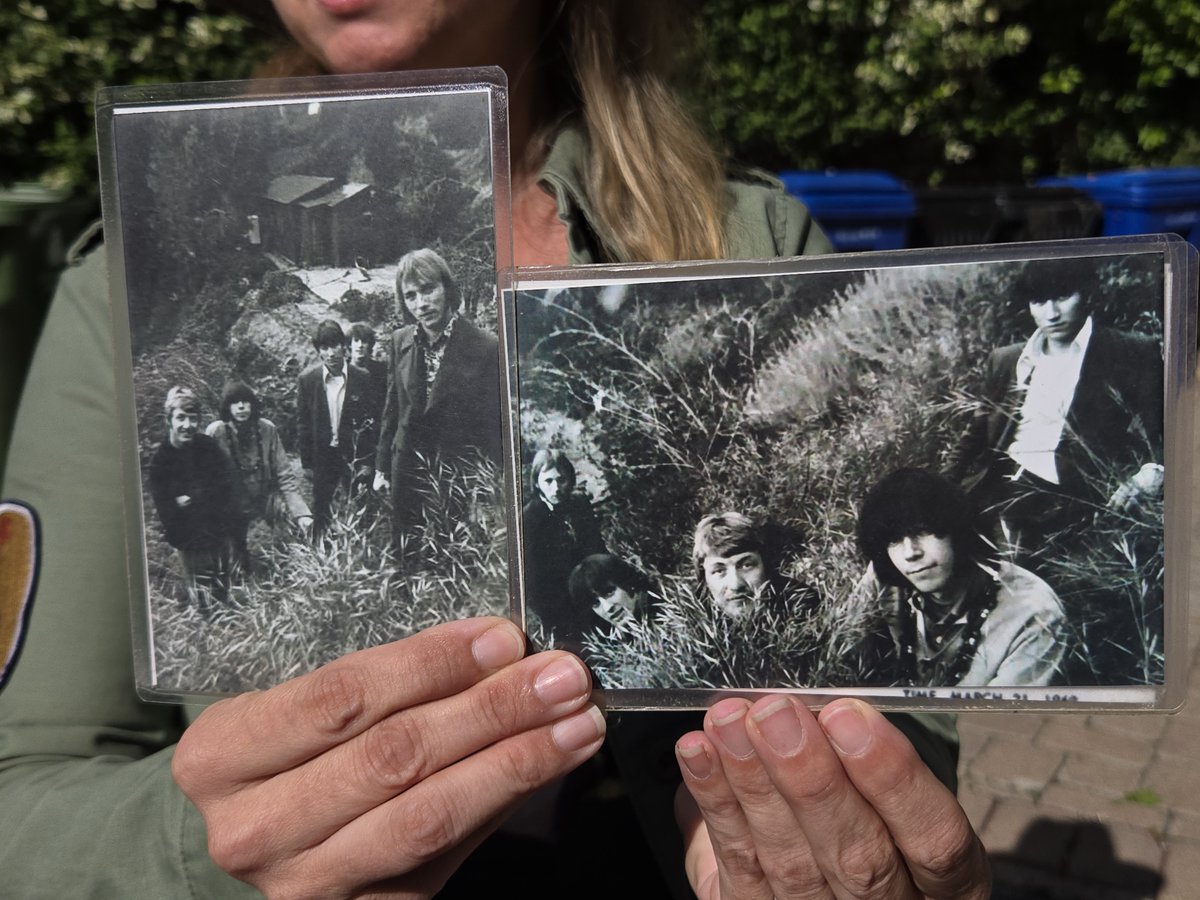
Music lovers: Wanna do a fun, unique LA tour? Sign up for the Laurel Canyon Hippie Hiking Tour, led by a husband/wife team. It's a 3-hour trek past iconic Laurel Cyn homes, hearing the stories behind '60s/'70s rock royalty. I had a blast, learned a lot!
https://t.co/px54ziIrIs