💫Highlights from @hpbjournal: Optimal cancer risk treashold (CRT) for BD-IPMN 🍇
🇺🇸decision model
Base case: surgery 🔪 preferred over surveillance 🤔
📈Optimal CRT depends on age👵👴 and compl risk
@ihpba@ProfW_edinsurg@gregDsacks
https://t.co/B1HTARZ2ei
Clearing of mutant KRAS in ctDNA with RMC-6236 monotherapy in 2nd line & beyond metastatic #PancreaticCancer.
>90% of patients with either G12D or G12X see a greater than 50% reduction in mutant allele fraction from baseline, & nearly 50% have cratering of mutant KRAS. #GI25
New paper on spatial transcriptomics (using GeoMx and CosMx platforms) of Intraductal Papillary Mucinous Neoplasms (IPMNs), precursor lesions of #PancreaticCancer.
BY @YhernandezMD & colleagues @MassGeneralNews
This study identifies the transcriptomic features of pancreato-biliary, intestinal, and gastric IPMN subtypes (and in particular, basal versus classical lineage compositions, the proportion of CAF subtypes by histology, and immune admixtures in the tumor microenvironment). For example, PB IPMNs are mostly basal predominant and have Treg infiltrates, while intestinal IPMNs are mostly classical predominant and have macrophage infiltrates.
This study also investigates repeat expression in IPMN progression (@davetingmgh
special) and finds repeat upregulation correlates with progression to high grade dysplasia.
Use of aspirin 💊 to lower risk of pancreatic cancer and cancer-related mortality in patients with diabetes mellitus
🇭🇰 15 years / 350k pts / 0.2% died of PDAC
💡 Aspirin associated to ⬇ mortality, cancer related and PDAC
🍭 Indicated for T2DM!? 🧐
https://t.co/GsIUDIwEvO
New @JAMANetworkOpen study by @GarridoLagunaMD in collaboration with @FoundationATCG@flatironhealth on the impact of KRAS allelic status on outcomes in #PancreaticCancer.
In ~2500 patients, those with wild type KRAS have the most favorable outcomes followed by G12R and then G12V/G12D (“favorable” is relative). The co-mutation frequencies of each KRAS allele is highlighted, which reiterates KRAS WT (often alternative driver with fusions) is a pretty much different disease with low frequencies of CDKN2A, p53 & SMAD4 mutations (the big three TSGs).
Acute pancreatitis and IPMN 🍇 a dangerous association!
⚡️ 800 resected / 20% had AP (other causes excluded)
🎯 AP associated with HGD (OR 2)
💡 Careful! Is it TRUE AP!? Gallstones 🥑 excluded?!
Then you found a WF... 👍
https://t.co/hSLumlJoDn
⚕️Pancreatic cysts are seen in up to 40% of cross-sectional abdominal imaging studies!
⚕️The vast majority represent branch duct IPMNs
⚕️ What is the utility of EUS for evaluating IPMNs?
Check out our latest study!
https://t.co/0sbm04V2or
For researchers interested in the functional basis of new onset #diabetes occurring in the context of #PancreaticCancer, a preclinical study nominates sorcin (SRI) as a candidate that might cause paracrine beta cell dysfunction & hyperglycemia.
https://t.co/Uynl6hi8gs
Interesting findings from #PancreaticCancer screening
⭐️Incidental findings noted in 84.4% with MRI compared to 20% with EUS (RR=4.9; P < 0.001)
⭐️Potentially serious incidental findings found in 16.7% patients with MRI compared with 6.7% with EUS (P = 0.005)
@BilalMohammadMD
#OpenAccess in @JofSurgOnc
Screening high-risk individuals for #PancreaticCancer leads to earlier detection & significantly improved survival. Patients in surveillance programs were more likely to be diagnosed at stage 0 & showed better long-term outcomes post-surgery.
#pancsm 💜 @Onco@OncoAlert 🚨
https://t.co/gLktZacWGS
Pancreatic cancer arising in intraductal papillary mucinous neoplasms (IPMN): emerging data warrants further research @BJSurgery https://t.co/GrCCsKuPyc
Predictive genomic and transcriptomic analysis on endoscopic ultrasound-guided fine needle aspiration materials from primary pancreatic adenocarcinoma: a prospective multicentre study - eBioMedicine https://t.co/XsHx3Ma2rM
Wonderful working with Apostolos Gaitanidis and the team on this:
A Genome-wide Association Study Reveals a Novel Susceptibility Locus for Pancreas Divisum at 3q29 - ScienceDirect https://t.co/t0kgD1zWgv
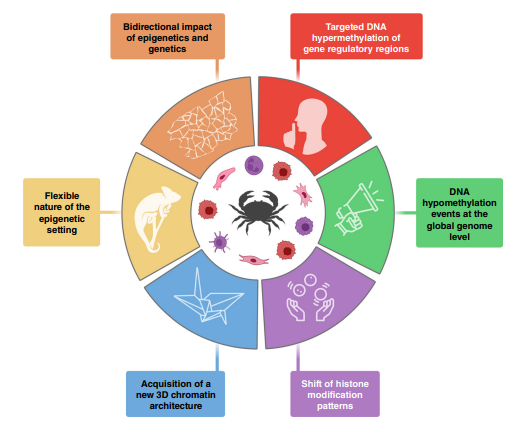
🥁Out today in the October issue of @CD_AACR: ⭐️The Epigenetic Hallmarks of Cancer⭐️ - by @ManelEsteller, @MAF_Dawson, @CKadoch, Feyruz Rassool, Peter Jones, and Steve Baylin https://t.co/Yv48EXBxz5
Dr. James Farrell of @YaleDigestive published a review on the current state of clinical care & research for pancreatic cysts in @NEJM.
Learn more about research around pancreatic cysts & why he is inspired to learn more about this field in the Q&A below.
https://t.co/6wBMBQbQ0l
Incredible work in @CellCellPress from @RongFan8@Zhiliang_Bai & colleagues @YaleCancer - they took the biggest Achilles heel of formalin fixed archival tissues & turned it on its head for comprehensive spatial RNA profiling.
https://t.co/ZSfiTd9MUE
Organoids for Functional Precision Medicine in Advanced Pancreatic Cancer @AGA_Gastro @AndrewMWaters @krushnacpatra @NinaSteele17 https://t.co/hjHjRaoEzi
Very excited to share our latest manuscript looking at metaplastic reprogramming and glycolytic dependency in GNAS mutant IPMNs! @MDAndersonNews@Gut_BMJ
https://t.co/Yy4zj0boec