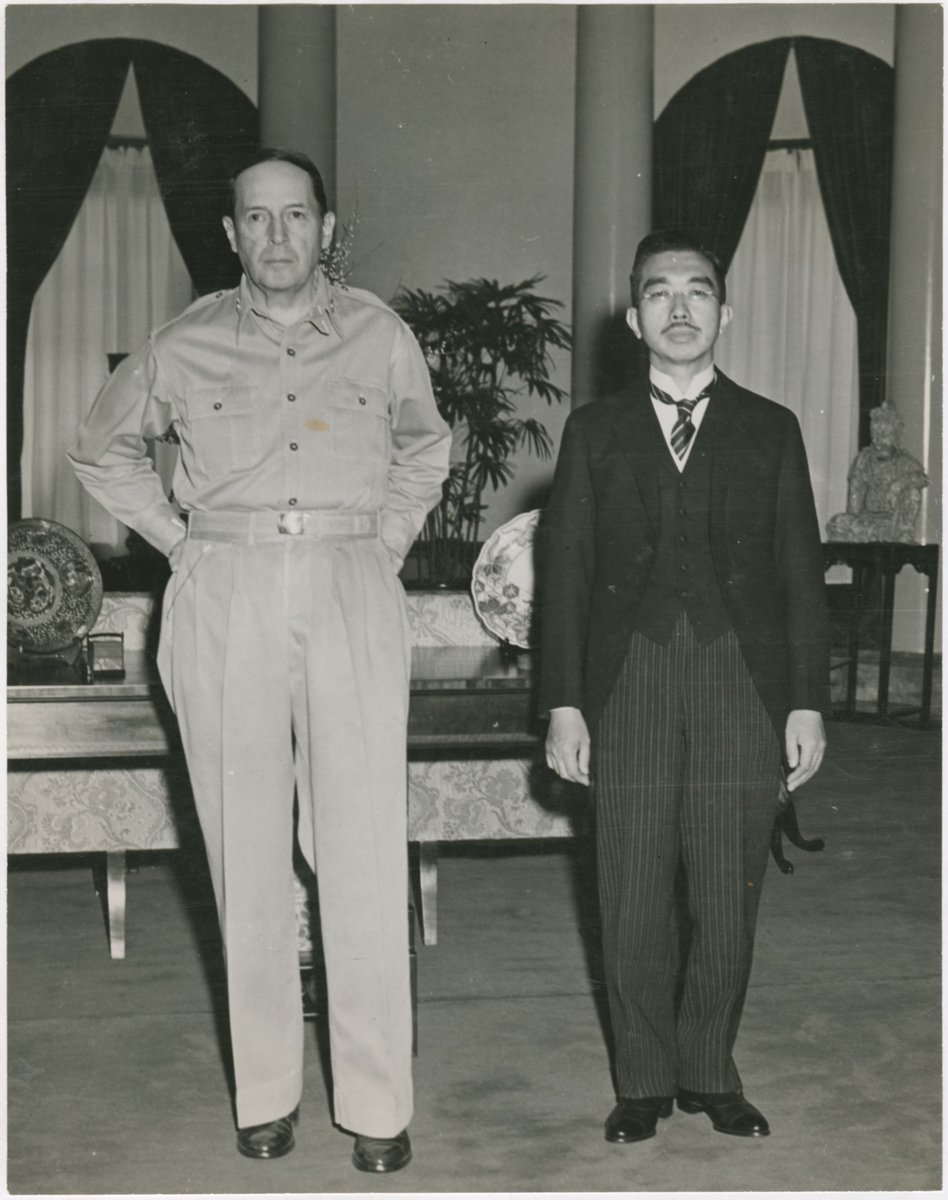
Look at the posture of the two men in this photograph, taken in Tokyo on September 27, 1945.
Twenty-five days earlier, World War II had ended. Across Allied capitals, politicians and newspapers were demanding that Emperor Hirohito be indicted as a war criminal and hanged.
When the Emperor asked to visit the U.S. Embassy in person, General Douglas MacArthur stood in an unbuttoned khaki shirt with no tie, hands on his hips. As MacArthur later confessed in his memoirs, he braced himself for an awkward plea: throughout history, conquered rulers almost always blamed their advisors and begged to save their own necks.
Everyone left the room except the Emperor's interpreter. MacArthur offered him an American cigarette and noticed the Emperor's hands trembling slightly as he lit it.
Then came the words MacArthur never forgot.
In his autobiography Reminiscences, MacArthur wrote that the Emperor told him he had come to offer himself to the judgment of the powers MacArthur represented, as the one to bear sole responsibility for every political and military decision made and action taken by his people in the conduct of the war.
MacArthur wrote that a tremendous impression swept over him, chilling the marrow of his bones. Standing before him was a man willing to lay his own life on the chopping block so his starving, bombed-out nation would not be torn apart.
In that single thirty-five-minute meeting, the Supreme Commander decided no trial would touch him. When their talk ended, breaking his own initial protocol, MacArthur personally escorted the Emperor out to his car.
Two fierce enemies walked into that room in 1945. Eighty years of peace across the Pacific walked out.