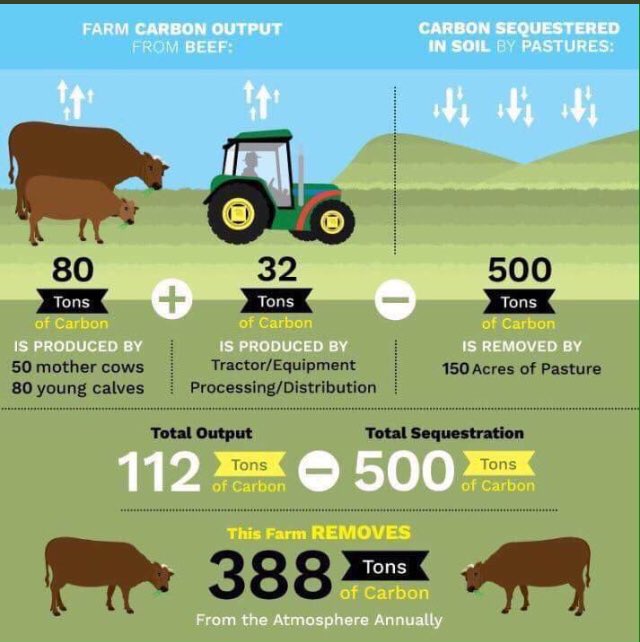
Paris Olympics 2024: Shortage on chicken and eggs. Imagine that, the athletes don’t want plant based meals! 👇
“Paris Olympic officials attempted to offer more plant-based foods in an effort to reduce the Games' carbon footprint. While there is a variety of cuisine available to accommodate the tastes of different countries — and an abundance of baguettes in France — vegan meals aren't in line with what the athletes prefer to eat while competing.”
https://t.co/7rpNJCyS4S
@msmyth04 Some people are putting out bait blocks for them. But you may want to anchor them down. And still be ready to buy shares in the bait block manufacturer.
A large majority of Canadians now view the carbon tax as just a tax that makes life more unaffordable and does nothing for the environment.
Share if you agree it’s time to axe the carbon tax in 2023.
#carbontax#cdnpoli#abpoli
How you know you are from a small town.
1. If you have to go run a load of grain to the elevator at lunch in high school you may be from a small town.
2. If you buy halls, beef jerky, Red Bull, beer, pizza for supper & rent a movie from the same place, you may be from a small town.
3. If you can’t buy beer, not because you are underage but because the bar owner is a family friend, you may be from a small town.
4. If you learnt to drive on a standard you may be from a small town.
5. If you are told to take the garbage to the rock pile on 7 and you know exactly where it is, you may be from a small town.
6. If you hear, at least once a day, “don’t tell your mother about this” you may be from a small town.
7. If you knew about welders flash when you were 5, you may be from a small town.
8. If you know how certain people wave when you meet them down a back road, you may be from a small town.
9. When people come up to you and congratulate you for taking the grain truck to the elevator and dumping it when you are 12, you may be from a small town.
10. When you hear the name Robertson or Phillips and immediately think of a screwdriver you may be from a small town.
11. If you leave everything unlocked, all the time, you may be from a small town
12. If you go a mile south and then 2 miles west to see your closest neighbor, you may be from a small town.
13. If you have seen your teacher shitfaced, more than once, while playing Kaiser with your parents, you may be from a small town.
14. If the sound of trucks driving keeps you awake but the sound of frogs and crickets put you to sleep, you may be from a small town.
15. If you have a gun cupboard instead of a gun safe, you may be from a small town.
16. If you look up at night, and see the stars, you may be from a small town.
17. If you see smoke and can with certainty name whose land it’s on, what they are growing, and how long it will take to get the water truck there, you may be from a small town.
18. If the bar is full when it rains, you may be from a small town.
19. If you have a fuel truck that is the worst truck on fuel you have, you may be from a small town
20. If your bus drivers wife picks you up that day because the bus driver woke up early to spray, you may be from a small town.
#BREAKING In the wake of record-breaking inflation rates and a startling surge in home prices, the Trudeau and Freeland administration faces heavy criticism. The June 2022 report from the Financial Consumer Agency of Canada paints a disheartening picture of the Canadian economy under their watch.
The increasing difficulty Canadians are experiencing in keeping up with their financial commitments is the first telling sign of the failure of the Trudeau-Freeland administration. This financial strain is most prominently seen in homeowners, with only one in three mortgage holders now able to meet their financial commitments without difficulty.
Under the Trudeau-Freeland administration, debt among Canadian homeowners has skyrocketed. Homeowners with mortgages saw a staggering 16.1 percentage point increase in reported debt, from 31.6% to 47.7%. Even homeowners without mortgages were not immune to this trend, with a 13.1 percentage point increase in debt, from 27.9% to 41.0%.
But the economic turmoil does not end there. The number of Canadians spending more than they earn, particularly among mortgage holders, has reached its highest point since the survey began. This escalation of overspending speaks volumes about the inadequate financial management and policies under the Trudeau-Freeland administration.
Similarly, the increasing number of Canadians who need to draw on their savings due to the current economic context is deeply concerning. The proportion of mortgage holders who need to use their savings is now the same as that of renters, demonstrating the widespread economic strain.
All of these economic indicators paint a grim picture of Canada's financial landscape under the Trudeau-Freeland administration. The growing proportion of renters and homeowners alike under financial stress reflects the failure of the current administration to provide for the financial wellbeing of its citizens.
The figures from the Financial Consumer Agency of Canada's report are not just statistics; they are a direct reflection of the lives of Canadians. They indicate an economy strained to its breaking point, with an increasing number of citizens living under the shadow of financial stress.
Inflation, debt, overspending, the depletion of savings, and financial stress are not the markers of a successful economy. They are instead the telltale signs of a floundering administration that has failed to effectively manage the economy, protect its citizens from financial hardship, or create a sustainable environment for economic growth and prosperity.
Let's turn our attention to Finance Minister Chrystia Freeland recent press conference last week where she patted her and her fellow liberals on the back for their financial leadership
It was a certainly a unique perspective from Finance Minister Chrystia Freeland to term her government's approach to fiscal policy as "responsible." The realities confronting Canadians tell a completely different story.
The Trudeau government’s introduction of one-time grocery rebates feels like putting a small band-aid on a rapidly growing wound. While it might momentarily help soothe the sting of escalating costs, it does little to address the root cause – inflation – which, ironically, has been accelerated by the very policies of the government she represents.
The 2023 deficit ballooned to a staggering $40 billion, almost $10 billion higher than originally forecasted. It seems the Trudeau government has trouble staying within its budget, having overshot its own projections by $18 billion in 2023 alone. And the average Canadian household bears the brunt of these missteps, as they've faced costs of $402 to $847 from the carbon tax, even after factoring in rebates.
Yet, in the face of these hard truths, Freeland maintains a baffling narrative of fiscal responsibility. This narrative is not grounded in the reality experienced by Canadian families and businesses grappling with the burden of escalating costs and economic uncertainty.
It's time for a reality check. Praise and self-congratulations should be reserved for administrations that effectively manage fiscal policy, not for those that keep moving the goalposts. Canadians deserve leadership that acknowledges the true state of affairs, not one that dismisses it with platitudes of fiscal responsibility.
Canadian taxpayers are looking for true fiscal stewardship, not fiscal negligence dressed up as responsibility. And, most importantly, they deserve better than empty reassurances and short-term fixes. After all, they're the ones footing the bill.
In a recent discussion before the Commons finance committee prior to the summer break, Freeland evaded providing direct answers regarding the $43.9 billion interest taxpayers will pay in the 2023 fiscal year on Canada’s $1.22 trillion public debt.
Instead, she countered by accusing Conservative MPs of "fiscal fear-mongering" and insisted on focusing on the context of the numbers. She maintained that Canada's debt service charges are low in the historical context and compared to other G-7 nations. Freeland also emphasized the recent reaffirmation of Canada's Triple A credit rating by Standard and Poor's, claiming this as proof of the nation's economic health.
Yet, these defenses ring hollow when juxtaposed with the realities that Canadian citizens are facing. Yes, Canada may have a Triple-A credit rating, and yes, we may be seeing record low employment. However, these facets do not detract from the rising financial strain on Canadians, which is escalating at an alarming rate.
The fact is, a high credit rating and low unemployment do not necessarily equate to a strong economy if the citizens within it are struggling. It is becoming increasingly clear that there is a disconnection between the Trudeau-Freeland administration's narrative of economic health and the actual lived experiences of Canadian citizens.
While the government may tout its Triple A credit rating, it does not mitigate the reality that more Canadians are having difficulty keeping up with their financial commitments, with many spending more than they earn and drawing on their savings to make ends meet. This is a clear indication that despite the favorable statistics the administration may parade, the average Canadian is experiencing significant financial stress.
The fact that Freeland and Prime Minister Justin Trudeau seem to be out of touch with these struggles is concerning. Instead of addressing the financial strain that many Canadians are feeling, they choose to focus on arguably less representative economic markers. This inability to connect with and respond to the real financial struggles of their citizens casts a long and concerning shadow over the Trudeau-Freeland administration's economic governance.
So, here's a hearty cheers to the Trudeau-Freeland administration! Under their deft leadership, the average Canadian can now look forward to juggling skyrocketing living costs, draining their hard-earned savings, and bearing the burden of a trillion-dollar public debt. And all this while being assured that the financial distress they're experiencing is just a figment of their imagination—after all, haven't they heard about our triple-A credit rating? It's truly a golden age for Canada, if we're measuring in terms of fiscal gymnastics and out-of-touch governance. #cdnpoli