I know a couple who pulled off the ultimate academic "golden ticket": two tenure-track offers in the same department at an R1. Everyone thought they won the lottery.
It was a trap.
He was the PI. She was given a "Research Assistant Professor" title. Because she didn't have her own startup package,
she got quietly absorbed into his lab. She wrote 80% of his grant proposals and co-authored half his papers, but couldn't be PI on any funding due to conflict-of-interest rules.
When he went up for tenure, she realized she had spent five years being a glorified postdoc for her own husband.
She quit academia entirely last month and took a remote data science job just to get her name off his roster.
The "two-body problem" isn't just about geography.
It's a system that will happily turn your marriage into an exploitative unpaid postdoc position.
📖 Published 📖
Applied to empirical datasets, deepSTRAPP provided critical new perspectives to macroevolutionary questions inaccessible to currently available methods 📈 🧬 🐠
Read more 👉️ https://t.co/gbNYkvy4ht
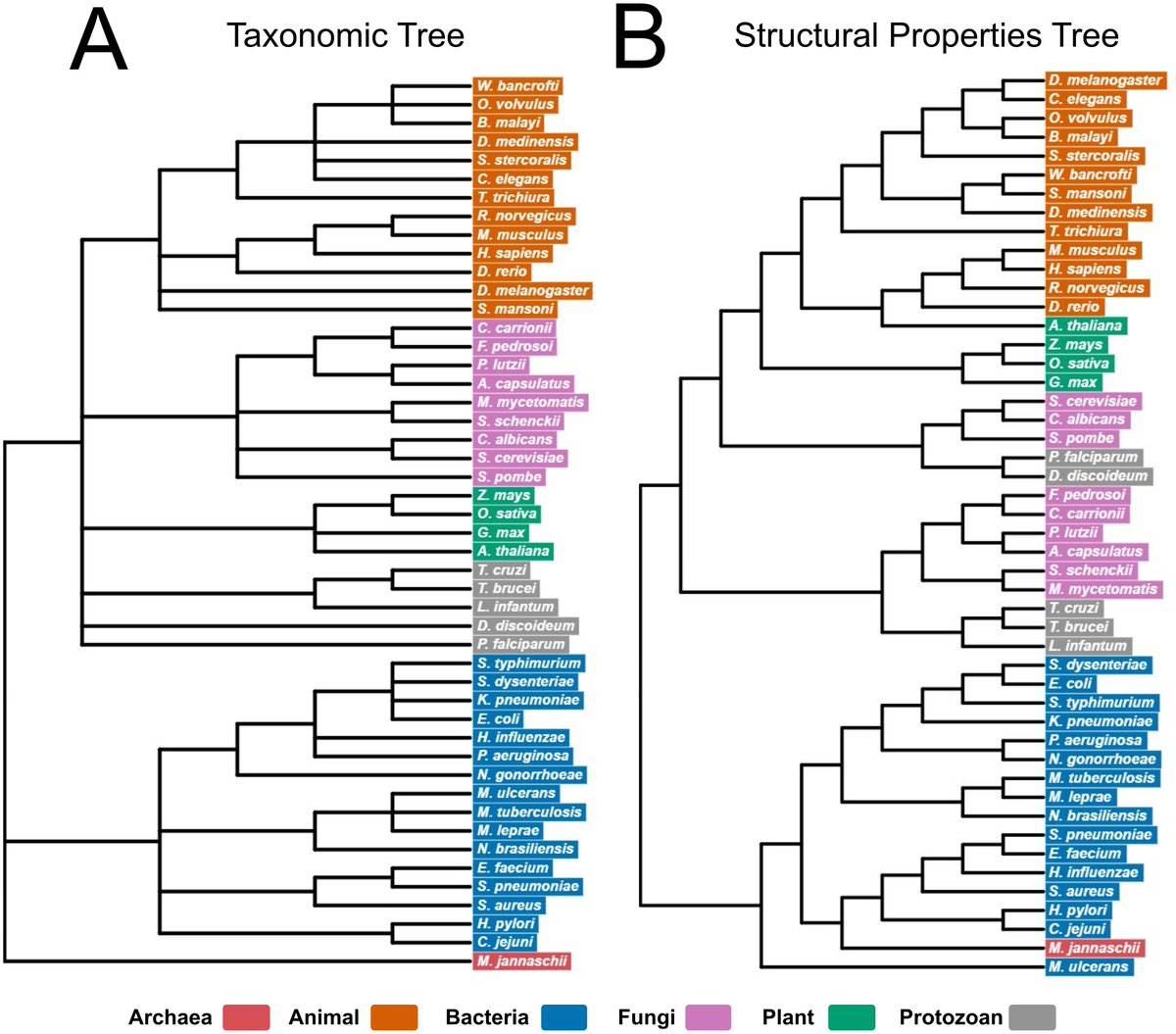
Do proteins carry information about the organism they come from?🦠🍄🌽🐁🧍
In the final paper of my PhD, we analysed AlphaFold structures for hundreds of thousands of proteins across 48 organisms.
1/5
The biggest trap of a PhD is thinking you’re still a student.
A PhD is a job—specifically, an underpaid startup where you bear all the downside. Your advisor isn't your teacher; they’re your investor.
Stop optimizing for being a "good student" and start sharpening two instincts:
Research taste: Ask yourself—if compute, data, or base tech scales 10x next year, does my work still matter? Stop spending 2 years polishing clever hacks on a sinking ship.
Situational awareness: Follow the resources, not the promises. Understand your advisor's real incentives, track where funding and first-author slots actually go, and be ruthless about cutting sunk costs.
Your advisor has 10 students. A failed project or a delayed graduation is a rounding error to them.
To you, it’s your twenties. Take the wheel.
A fourth-year PhD walks into his advisor’s office with 46 slides.
For nearly two years, he has been working on the same idea.
He has rerun the experiments, rewritten the method twice, added three datasets, and spent an entire summer chasing a 1.7-point improvement because every meeting ended with some version of:
“This is promising. Keep pushing.”
He opens the deck. His advisor looks confused.
“Wait, you’re still working on this?”
That sentence does more damage than any rejection email could.
The lab had quietly moved on months ago. A new grant came in, the GPUs were reassigned, two new students were put on the hot direction, and the advisor’s attention followed the money.
Nobody ever formally killed his project, so he kept treating every old comment like homework that still had to be finished.
A year earlier, a first-year student had noticed what was happening.
He dropped his original idea, joined the new project, and now had a first-author paper under review.
The fourth-year student had thought that was “giving up too early.”
He went back to his desk, opened the folder where the project started, and checked the creation date.
He had been 25. His 29th birthday was next month.
#phdadvice
I'm a CS professor at a major US university. This is the top advice for students applying to a CS PhD program:
"Do not use AI to write your email, period."
Re gender dynamics in academia: we (MIT women in physics) joked we all wanted wives/girlfriends because the wives/girlfriends of the male-hetero PhDs fully edited & proofread their theses, checked and did the bibliographies etc. The reverse? NEVER. EVER.
Invisible infrastructure labor: Women are expected to build relationships, mentor generously, be emotionally accessible, create opportunities for others, absorb conflict--while maintaining high output. And others feel entitled to the fruits of their labor.
https://t.co/DsXRfLMMUm