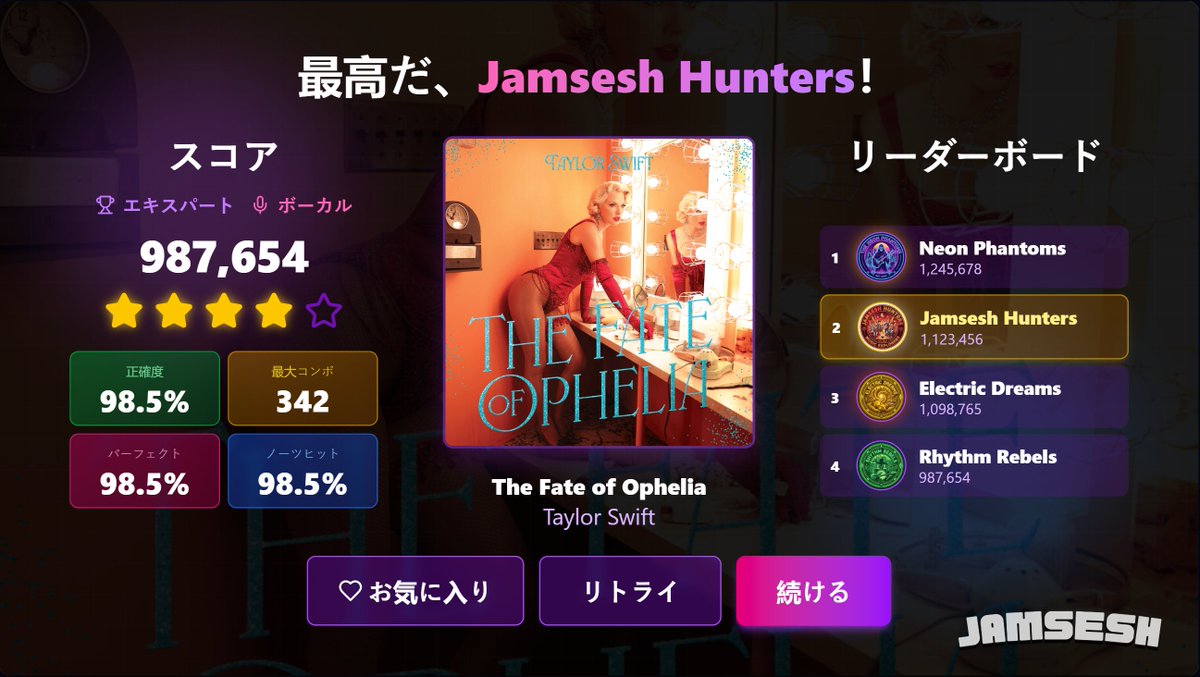
Introducing Jamsesh 🎤✨
We're on a mission to revolutionize how the world experiences music together.
At Jamsesh, we believe music is meant to be shared, celebrated, and lived—not just listened to. That's why we're building the future of social music experiences in virtual reality, where you can Play, Create and Perform like never before.
Imagine stepping into immersive worlds where you're not just singing along to your favorite songs, but performing them as the star you've always wanted to be. Whether you're jamming with friends across the globe or creating unforgettable moments with people right next to you, Jamsesh transforms every session into a concert-worthy experience.
Help Shape Our Journey 🚀
We're building this for music lovers like you, and we need your voice to make it extraordinary:
📋 Share Your Vision - Take our quick survey at https://t.co/Kfb0Q5xB7B and receive an exclusive VIP pack in-game
🎯 Join the Movement - Sign up for our waitlist at https://t.co/gssb4lFcYo and secure your exclusive founder pack
Your feedback will directly influence how we craft these magical musical moments. From song selection to social features, every detail matters in creating the ultimate music experience.
Ready to be part of the future of music? Let's make some noise together!
Introducing Project Backstage Pass: an urgent initiative to help secure the world's most critical bands. 🎤
It's powered by our newest frontier model — the Jump-In™ Engine — which can find empty instrument slots better than all but the most skilled audience members.
Critical vulnerabilities detected:
1 unattended drum kit (severity: HIGH)
Bassist mysteriously absent since chorus (severity: CRITICAL)
Keyboardist "just needs a second" (severity: unknown)
No band should suffer a silent stage. Jump in. 🥁🎹🎸🎤
#ProjectBackstagePass #JumpIn #VRMusic
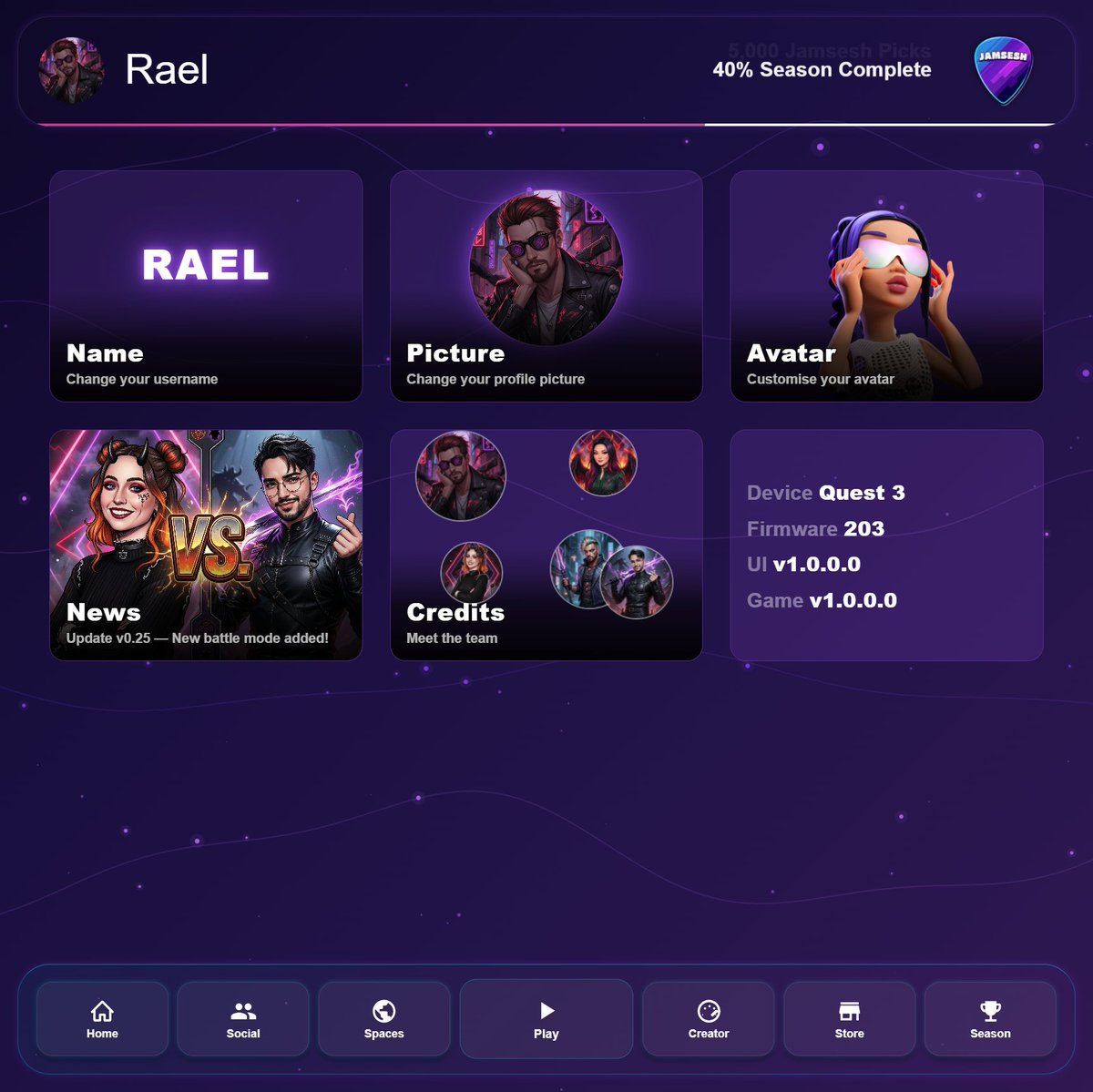
UI stack workflow for @jamseshgame over the past 2 weeks:
🎨 Figma Make → Figma Design → Unity native via Figma Importer ❌ Looks good but slow iteration, hover states/transitions need adding manually
🔌 Figma Make → Figma Design → HTML/CSS via Anima plugin → Vuplex WebView ❌ Slow process, designs came out wonky, and Anima is $50/mo lol
🔗 Figma Make → Figma hosted prototype URL → Vuplex WebView. Felt promising but hooking Unity calls into Figma's JavaScript engine was complex. Also doesn't scale — not designed for production.
☁️ Figma Make → GitHub → self-hosted on DigitalOcean VPS. Solves the scaling problem but had to optimise the build from 300MB down to 150MB with Claude Code — still bloated for a UI. Plus the Unity-to-JS issue persists 😔
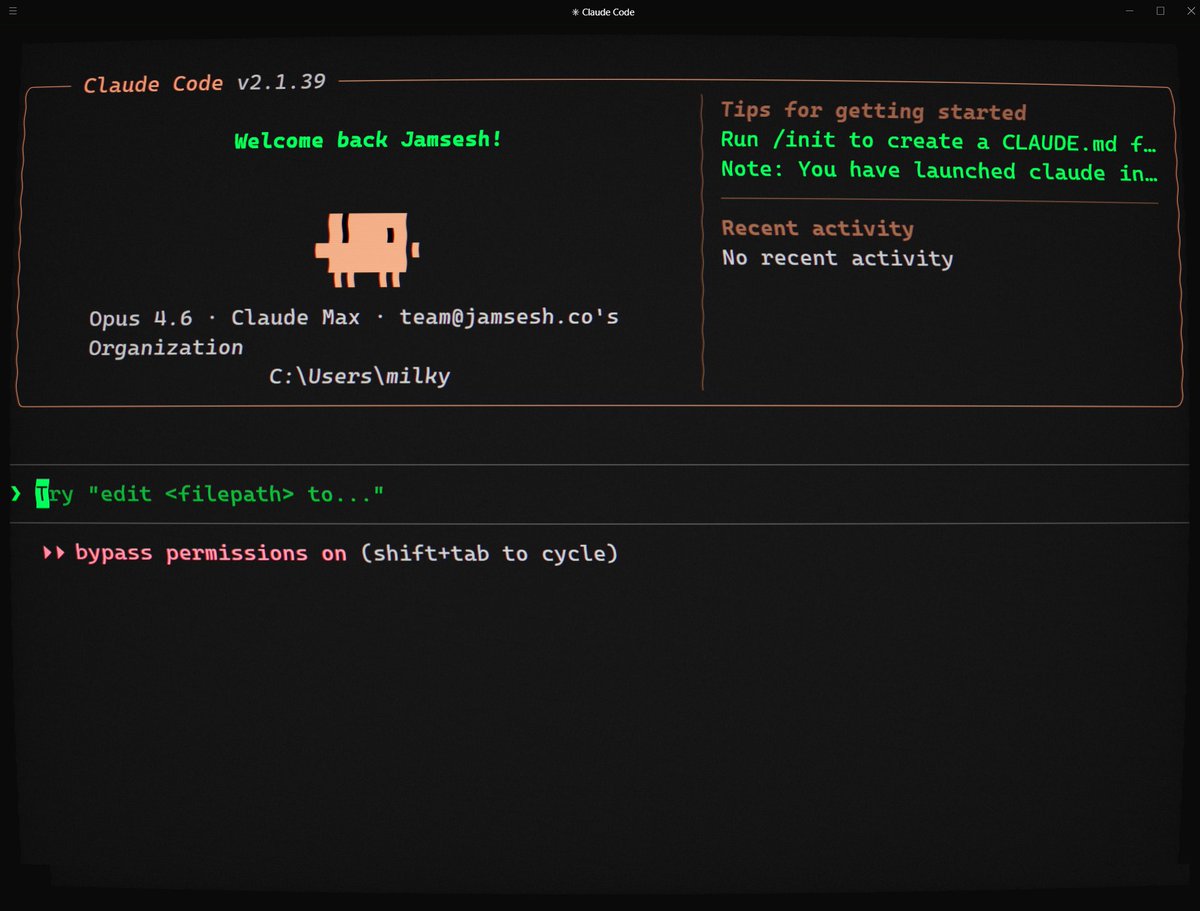
⚡ Ditched Figma Make entirely → pure Claude Code → HTML/CSS. Make already helped me find a solid design foundation anyway. This is working super smooth and very lightweight. BONUS: told Claude Code we're using Vuplex and it analysed the restrictions and is setting up buttons to hook straight into Unity callbacks.
🧠 What we learned:
The Unity Figma Importer plugin was $95 and non-refundable. It's tempting to keep forcing a tool to work because you've already paid for it — but sunk cost fallacy will cost you way more in dev time than the price of the plugin.
Pick your stack for two things: speed of iteration NOW and ability to scale LATER. We went through 5 approaches in 2 weeks, but the final one ships faster, weighs less, and scales cleanly. Sometimes the best stack is the one that removes a dependency entirely.
It was a huge week for #XR for if you follow earnings calls - couldn't be more bullish on the segment right now:
1. Meta - AI glasses sales tripled YoY again and FY26 expectations increased to 20-30m headsets. "Some of the fastest growing consumer electronics in history"
2. Snap - spun out spectacles as a sub to specifically focus on their XR glasses
3. Apple - second largest acquisition in their history of https://t.co/HTqJvO6xEY - apple typically only acquires to accelerate product roadmap and the tech is perfectly suited for not just airpods but for the glasses they are aiming to get out by start of next year.
VR has always suffered from a lack of inherent use case - still bullish on the form factor but you need to continually build out the content and apps ecosystem to attract in different users similar to early days of PC.
The new wave of AI glasses come as headphones and cameras by default, and are the de facto form factor for multimodal AI so are instantly useful. Much in the same way the iPhone was replacing an existing phone and ipod and you could explore the "internet communications device" use case after.
This is the type of move that will help push spatial computing into the mainstream beyond gaming, really strong move by apple and looking forward to similar announcements for their deals with F1 and La Liga!
VR lacks an inherent use case for adoption like smart phones had but the more diverse content and functionality it has brings much stronger network effects as people land and expand into other use cases (gaming, spatial media, work, fitness)
This not only brings in sports fans to VR (good for @Gymclassvr@ThrowbackVR and @golfplusvr ) but helps bring the cost down for pushing other brands in.
@Rengle820 - when can we watch PGA in Golf+?