Dänemark hat als erstes Land einen kompletten Kalendermonat (März 2026) ausschließlich mit inländischer Wind- und Solarenergie versorgt:
78 % Offshore-Wind,
14 % Onshore-Wind und
8 % Solar.
In keiner Stunde wurde fossiler Strom benötigt.
Quelle: Energinet-Daten via https://t.co/syA3Zp1Z3g
Dies unterstreicht die Bedeutung eines starken europäischen Stromverbunds, der Überschüsse aufnimmt und bei Bedarf ausgleicht – als virtueller Speicher ohne zusätzliche Infrastruktur.
Ein starker europäischer Stromverbund!
🚨 Breaking: Release Datum für FSD Supervised in Europa!🇪🇺
Ab dem 20. März werden die Niederlande 🇳🇱 als erstes europäisches Land Zugang zu FSD Supervised erhalten.
Jetzt wird es spannend:
Wie schnell folgt der Rollout in die restliche EU?
Das bayerische Start-Up #Reverion hat eine Anlage hergestellt, mit der das Gas aus Biogasanlagen nicht mit einem Gasmotor, sondern mit einer Hochtemperatur-#Brennstoffzelle verstromt wird.
Dabei wird ein Wirkungsgrad von über 70% bei der...
1/7
https://t.co/JvajwcRCvH
100 % der neuen #Taxis in #Hamburg müssen seit 2025 elektrisch sein. 700 E-Taxis rollen schon – mit eigenen Schnellladepunkten. So geht #Verkehrswende💡 Auch andere Städte könnten längst nachziehen!⚡️
https://t.co/rYTB8gu4tp
Wenn das der künftige Kurs der Energiepolitik ist, dann war der Altmaier-Knick im Vergleich eine Lappalie.
Es widerspricht dem Koalitionsvertrag, deutschen & europ. Klimazielen sowie der Rechtsprechung des BVerfG.
Das braucht Widerstand auf der Straße, in Parlamenten...
1/2
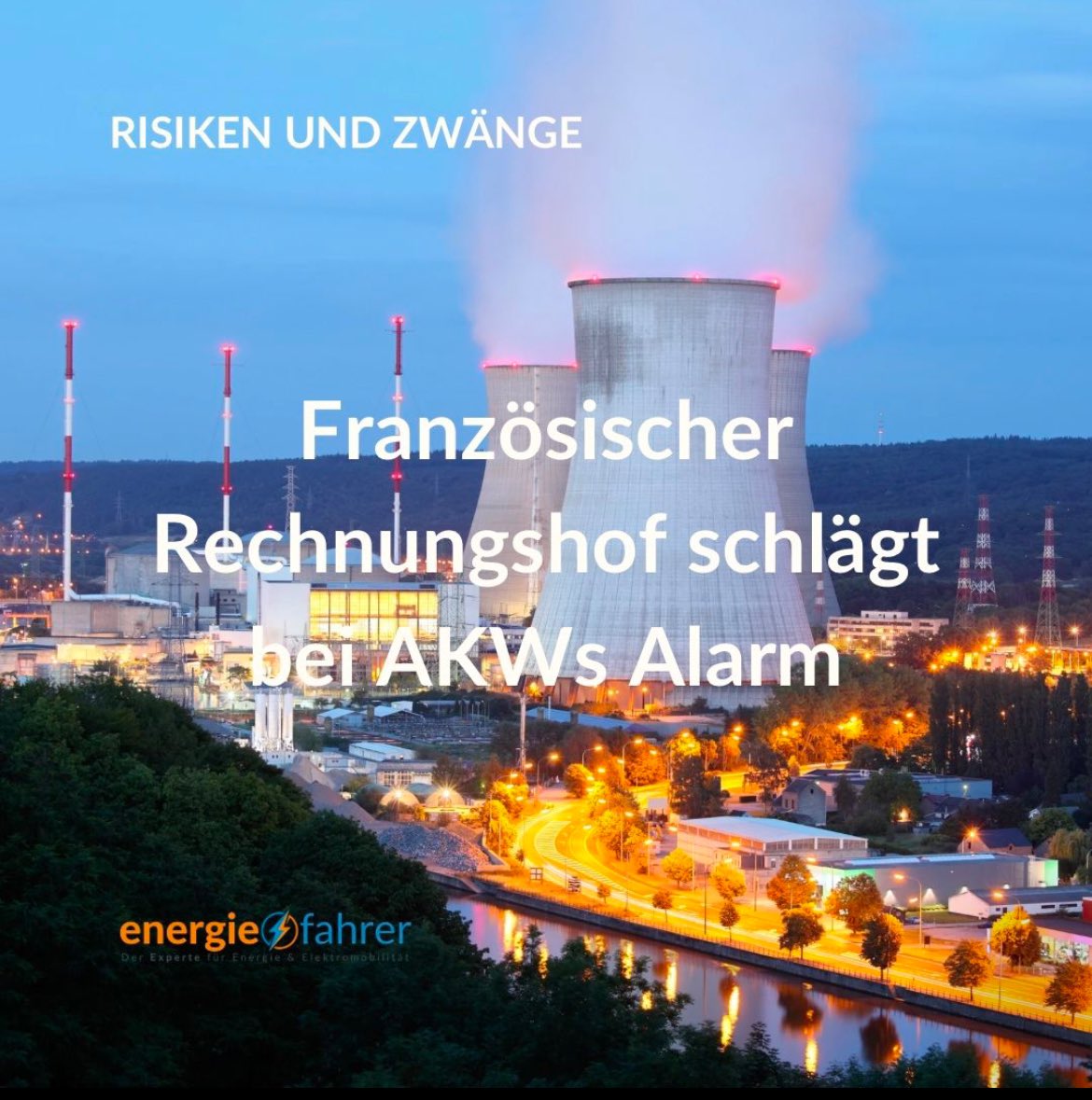
„Der französische Rechnungshof hat sich überraschend gegen jegliche zukünftigen Investitionen in die Atomkraft ausgesprochen – einschließlich der bereits geplanten Neubauten.“
Wenn da mal wieder nicht unser Wirtschaftsminister #Habeck seine Finger im Spiel hatte☝️
This week a new nuclear power plant in 🇫🇷 France connected to the grid after 17 years of construction and 13X costs of the same capacity in photovoltaic!
The new reactor in Flamanville has an output of 1600 MW, it is the most powerful nuclear reactor in France and at the same time a symbol of the challenges of nuclear power. The construction costs: a whopping 13.2 billion euros. This means that the power plant costs €8,250/KW of installed capacity. Construction time 17 years.
The reactor has 4 times of the costs originally planned.
In comparison: ground-mounted photovoltaic systems cost less than €600/kW to build today. In other words, you could build PV systems with over 22 gigawatts of capacity for the cost of the Flamanville reactor - that's more than 13 times the capacity of the reactor.
The nuclear power plant also has high operating costs (OPEX) for personnel, fuel, disposal, etc., approx. 4 cents/kWh.
With photovoltaics, on the other hand, the operating costs of approx. 1.5% of the investment sum per year are marginal, as no fuel has to be purchased.
Economically nuclear power plants are the stupidest decision you can make, - geopolitically too.
Es geht jetzt wirklich los:
Die Stromspeicher sind zwar noch nicht riesig, aber sie werden immer öfter gebaut.
Geschäftsmodell:
Strom kaufen und einspeichern, wenn er günstig ist (z.B. mittags PV) und ausspeichern und verkaufen, wenn er teuer ist (z.B. morgens/abends).
2023 wurde in Deutschland erstmals die Hälfte des Stroms aus Erneuerbaren Energien erzeugt.
Im Klimaschutzland Nr. 1 #Niedersachsen sind wir schon weiter.
Wir haben mehr Strom aus Biogas, Sonne Wind erzeugt als verbraucht.
Damit sind unsere Wärmepumpen und E-Autos klimaneutral.
Die Stromampel steht aktuell (6:59 Uhr) auf 118,4% Erneuerbare Energien an der Last.
Der Börsenstrom ist extrem billig und extrem CO2-arm.
Es ist eigentlich völlig egal, wann ihr den Strom nutzt, der schlechteste EE-Wert heute wird ca. 18:00 Uhr mit "nur" 92% Ökostrom erwartet.