Journalist. Reporting for NPR in Lebanon, Syria, Iraq and Jordan. former NYT, Christian Science Monitor, Jazeera English, CNN, Reuters in lots of places.
🚨Important: Asked three times whether he'd let the House vote on bills to cut off US bombs to Israel or sanction its illegal settlement expansion, Speaker-designate Hakeem Jeffries (D-N.Y.) refused to say.
On the New York Times' "The Interview," Lulu Garcia-Navarro asked about two bills:
➤ The Block the Bombs Act from Rep. Delia Ramirez (D-Ill.), with 82 cosponsors, would bar the US from sending Israel specific offensive weapons, including 2,000-pound bombs, guided bomb kits, tank rounds and 155 mm artillery shells, including white phosphorus.
➤ The Stop the Settlements Act from Rep. Joaquin Castro (D-Texas), with 76 cosponsors, would sanction the people and companies building or expanding Israeli settlements in the West Bank and ban imports of settlement goods.
Jeffries instead pledged to move the much narrower West Bank Violence Prevention Act early next year. It would only sanction individual settlers who attack Palestinians or seize their property, putting into law the Biden-era executive order that Trump revoked, but would leave the entire illegal Israeli settlement project, its expansion, and US weapons untouched.
➤ Pressed on calls to stop sending the US weapons used in Gaza and Lebanon, Jeffries said only that it's "a conversation that we are going to have." He didn't mention the $3.8 billion in military aid the US gives Israel every year.
ANALYSIS | Will Iraq’s return to Jurf al-Sakhar weaken Iran-backed Kataib Hezbollah
The town and surrounding agricultural area had been under the control of Iran-backed armed factions since 2014. https://t.co/H2HjnPuczh
Even @nytimes is beginning to understand:
"The Obscenely Simple Question at the Heart of Israeli Politics:
Is there a force stronger than anti-Arab racism? The answer seems to be no" https://t.co/BZ1UcHiGi4
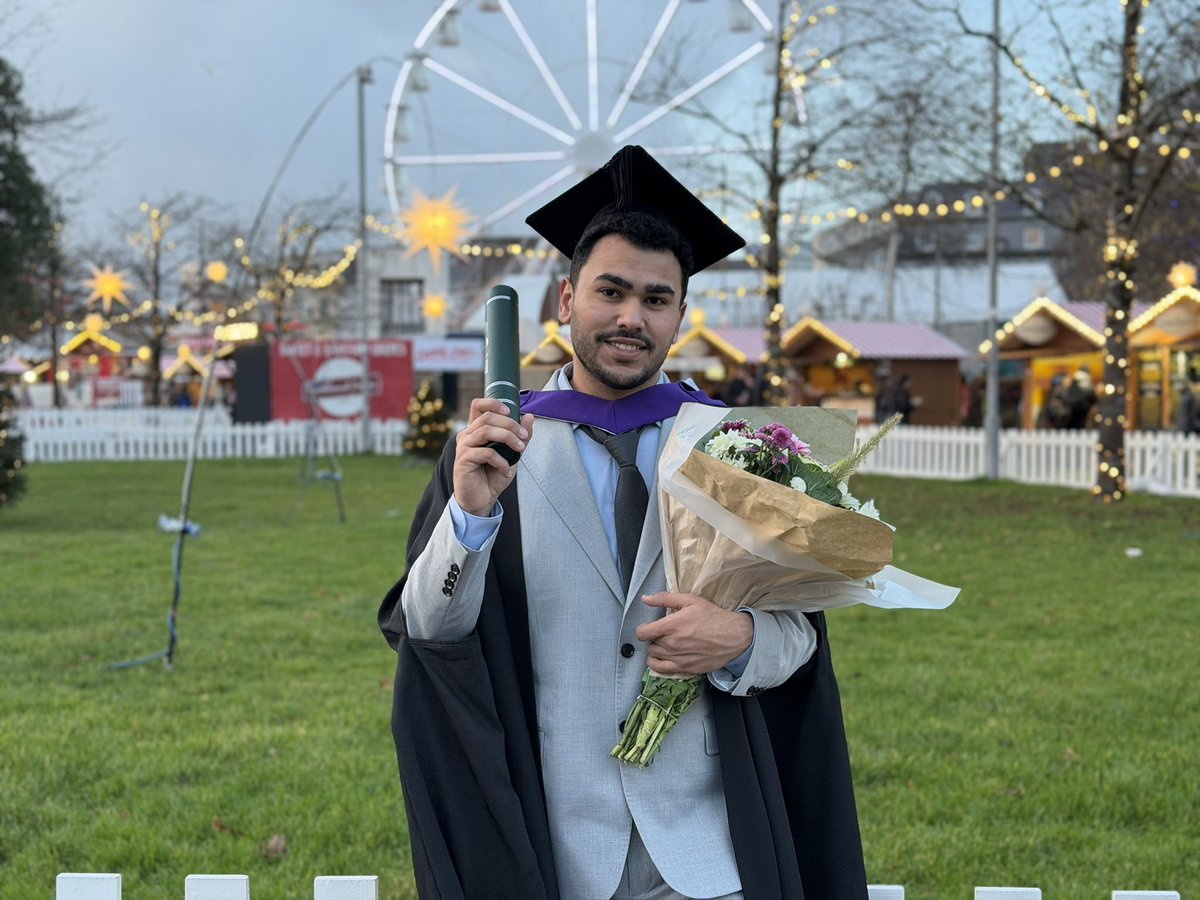
I was supposed to be a name among the dead. Instead, they called my name among the graduates.
I come from Gaza, where we learned the geography of death before we could imagine the geography of our futures. Where dreams became obituaries, streets became graveyards, and surviving another morning was sometimes our greatest achievement.
For 691 days, I lived through a genocide. I documented what no human being should ever witness. I watched friends become photographs, families disappear, and an entire people endure unimaginable destruction while the world debated the language of their suffering.
And somehow, I reached Ireland.
On 17 November, I graduated with a Master’s degree in Creative Practice (Cinema) from Atlantic Technological University.
But how does one celebrate a future that thousands of others were denied?
I crossed that stage carrying my childhood friend Hassan Matar, my extraordinary friend and artist Mohammed Sami, killed in the Al-Ahli Hospital massacre, and the countless voices silenced before their dreams could become real.
This degree bears my name, but it belongs to far more than me.
To my mother and father, who taught me to dream beyond the violence. To those who kept me alive, helped me escape, and welcomed me into Ireland when I had lost almost everything.
And above all, to Gaza.
I refuse to turn my survival into an inspirational story that comforts the world. There is nothing inspiring about being granted a future your friends were murdered before they could reach.
I did not survive a genocide to spend the rest of my life merely celebrating survival.
Nor will this graduation be the end of my education. I am searching for an opportunity to pursue a PhD, to deepen my research, make films, and continue learning with the urgency of someone who knows how easily a future can be stolen. I do not know where that opportunity will come from, but I hope someone, somewhere, will open that door.
Because knowledge, too, is a form of resistance against erasure.
I want to make films that refuse oblivion, preserve the names of those we have lost, and challenge a world that has learned to watch our destruction without interrupting its ordinary life.
Yesterday, I stood among the graduates. In Gaza, thousands more should have stood beside me.
I dedicate this degree to them, and everything I have yet to become to the land I will return to.
Gaza, I have not mistaken my escape for your liberation.
I am still alive. I am still learning. And I am nowhere near finished.
Imagine writing a whole editorial about the targeting of journalists and not having the courage or moral clarity or journalistic responsibility to namecheck Israel as the top killer of journalists.
The free press is under attack indeed.
https://t.co/xCew7O5KEr
Cate Blanchett using her voice to read from our book, The Blood on My Hands is extraordinary.
Don't look away. Get your copy of the book and bear witness: https://t.co/KDaDqv0Fho
The widespread backlash against the @NYTimes report drawing an unproven link between Iran’s dams and missile sites reflects two realities: the ongoing war on Iran and the US media’s dark history of manufacturing consent for wars in the Middle East.
First, context matters. We do not live in normal times. We are in the midst of an illegal war of aggression launched by the US and Israel on Iran without congressional authorization or a UN Security Council mandate. A war that opened with the bombing of a school full of children in Minab, has killed thousands of civilians and destroyed or damaged hundreds of civilian sites, with staggering disregard for international humanitarian law. Meanwhile, the US president, commander in chief of the most powerful military in human history, openly threatens to wipe out an entire civilization.
It is against this backdrop that the New York Times published its report, promoted with the hashtag #MissileCity and terms such as “dual-use”, language long invoked to justify attacks on civilian infrastructure on grounds of alleged military use. The insinuation is clear, despite the lack of conclusive evidence. The question is not whether such a hypothesis warrants investigation, but what it means to publish and promote it when civilian infrastructure is already under attack, risking legitimizing further attacks. Imagine the reaction if similar speculative claims were published about water infrastructure in the US, Israel or Europe while those countries were under bombardment.
Second, history matters. The mainstream US media has a troubling record of manufacturing consent for wars in the Middle East by uncritically amplifying US government claims. The New York Times, in particular, lent credibility to the Bush administration’s false claims about weapons of mass destruction, helping manufacture consent for the US invasion of Iraq and the devastation that followed. That history inevitably shapes how such reporting is received, particularly in the region.
This is not about shielding Iran from journalistic scrutiny. It is about evidentiary standards and editorial responsibility when the stakes are measured in human lives.
In wartime, the distance between an unsubstantiated allegation and a justification for bombing can be dangerously short. The New York Times, of all institutions, should know this from its own history.
Our NPR story from the Iraqi marshes on the extraordinary Jassim al-Asadi - kidnapped, tortured and still devoting his life to the marshlands https://t.co/LjhpgfG3pK
Nearly, 30 years ago, the New York Times published a front page report citing unnamed "engineers" claiming that Libya's water infrastructure was a "conduit" for military activity. There was no evidence cited. After Libya's govt was toppled 14 years later, it turns out the water infrastructure was.... water infrastructure. H/T: @gert_lang_ https://t.co/r5YOL65Ghr
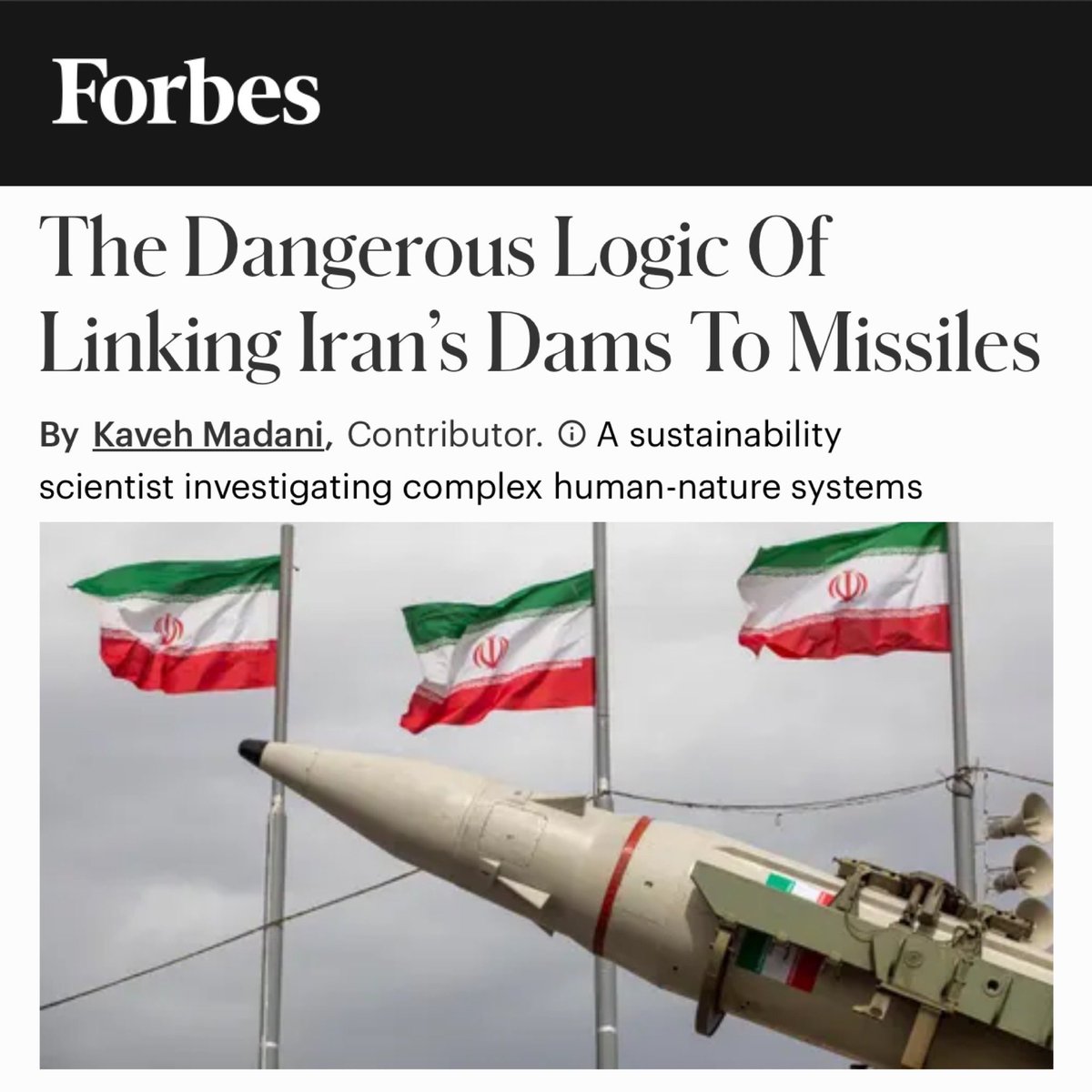
My response in Forbes to the recent New York Times article linking Iran’s dams to missiles, in which I was also quoted, but my comments were unrelated to the alleged connection:
https://t.co/BZFLqO5JDV
Journalism carries a responsibility to distinguish evidence from speculation, especially during armed conflicts when misleading narratives can endanger civilian lives and infrastructure.
Remember all the articles about how Biden shouted at Netanyahu? Here’s what Biden said to Netanyahu in their last call:
“I still love you pal”
“You’re a good man”
“I admire you. It took a lot of courage to do what you did.”
“I can’t tell you how much I appreciate you”
CJPME confirms that the @TimHortons app is sending sensitive user data to Forter, an Israeli cyber-tech company founded by alumni of the Israeli military’s infamous Unit 8200.
A story by @CBCNews omitted the company name and its location, despite experts describing the data grab as "excessive" and "beyond the pale."
Several of the cited experts have repudiated the article's premise, and more disturbingly, publicly questioned the context in which the interviews were apparently made.
You messed up. Own it.
Don't pin a widespread and legitimate backlash on "Iranian officials".
I’m perplexed by the NYT story on Iran’s dams.
Fewer than 50 of Iran’s 500+ large dams have turbines installed to generate electricity. This is an easy fact to check. The notion that Iran built hundreds of dams to provide electricity for military facilities does not hold up.
The reason there are so many dams in Iran is because there are vested interests, including IRGC construction companies, that use infrastructure budgets to generate rents. Lots of other countries have more dams than they need for this exact reason—China has constructed thousands of “unnecessary” dams yet we don’t jump to the conclusion that these are military facilities in disguise.
If you want redundancy for a clandestine military site, you install cheap diesel generators underground and drill a well. Why would you build tens or hundreds of expensive dams that can be easily blown up?
This is a classic case of a third variable problem. To the extent that there is a pattern of missile strikes near dams, it is because dams are built in mountainous areas and military sites are located in mountainous areas.
Amid talk of a potential impending clash between Iraqi govt and Kata'ib Hezbollah, useful to consider that Iran and its allies are aware of changing conditions and adapting.
For students of history, there's also "Charge of the Knights" and its lessons.
https://t.co/FGB2JyzOvt
The historical revisionism is disgraceful.
Thomas Jefferson bought a copy of the Qur’an in 1765, when he was 22 and studying law. The Library of Congress says he most likely acquired it to study Arabic law and Islamic legal traditions.
And here’s the bit these Islamophobes keep conveniently skipping: Jefferson explicitly included Muslims in his vision of religious freedom, alongside Jews, Christians, Hindus and people of every denomination.
But sure, let’s pretend he bought it because he wanted to learn how “horrible” Islam was.
Imagine being so desperate to demonize Muslims that u have to make up motives for a 250-year old historical figure. Go read a fucking book, Liz.