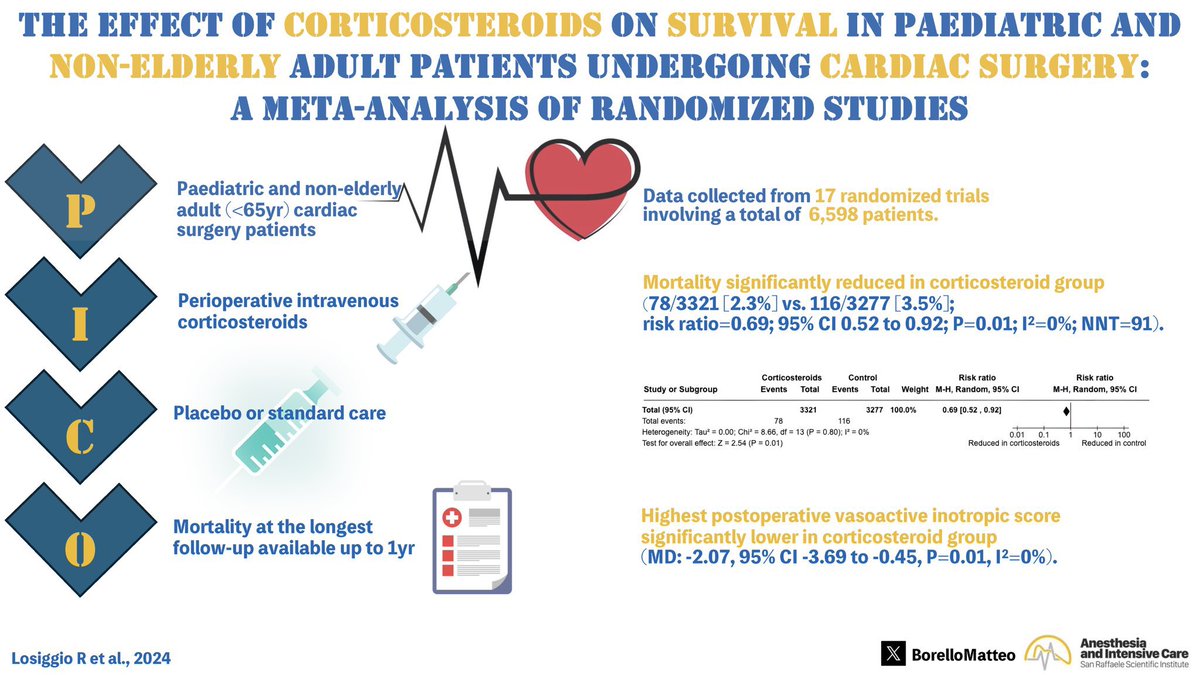
#Corticosteroids in #CardiacSurgery
17 RCTs and 6,598 cardiac surgery patients <65yr
Potential beneficial effect of prophylactic corticosteroids on #survival in children and non-elderly (<65yr) adults
Bayesian meta-analysis showed a 99% probability of mortality reduction
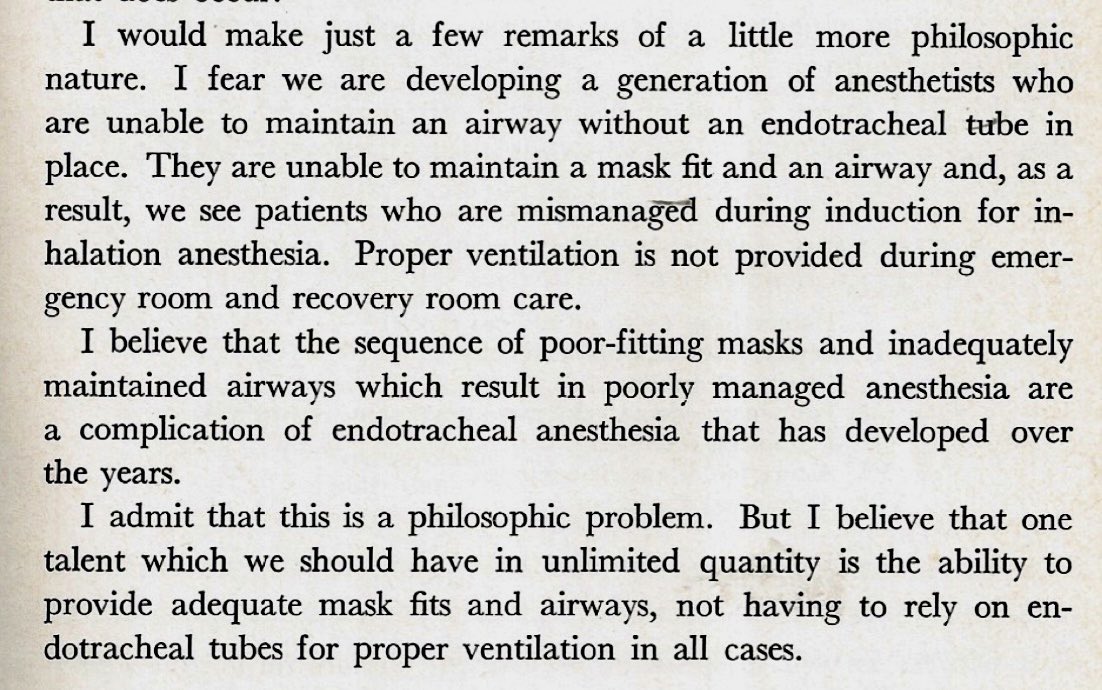
75 years ago an anesthesiologist could hold a tight fitting mask for several hours (either hand). William Hamilton thought this skill was lost after tracheal intubations became popular in the 1940s (see text from his 1970 lecture). Did the LMA (1983) accelerate the problem?
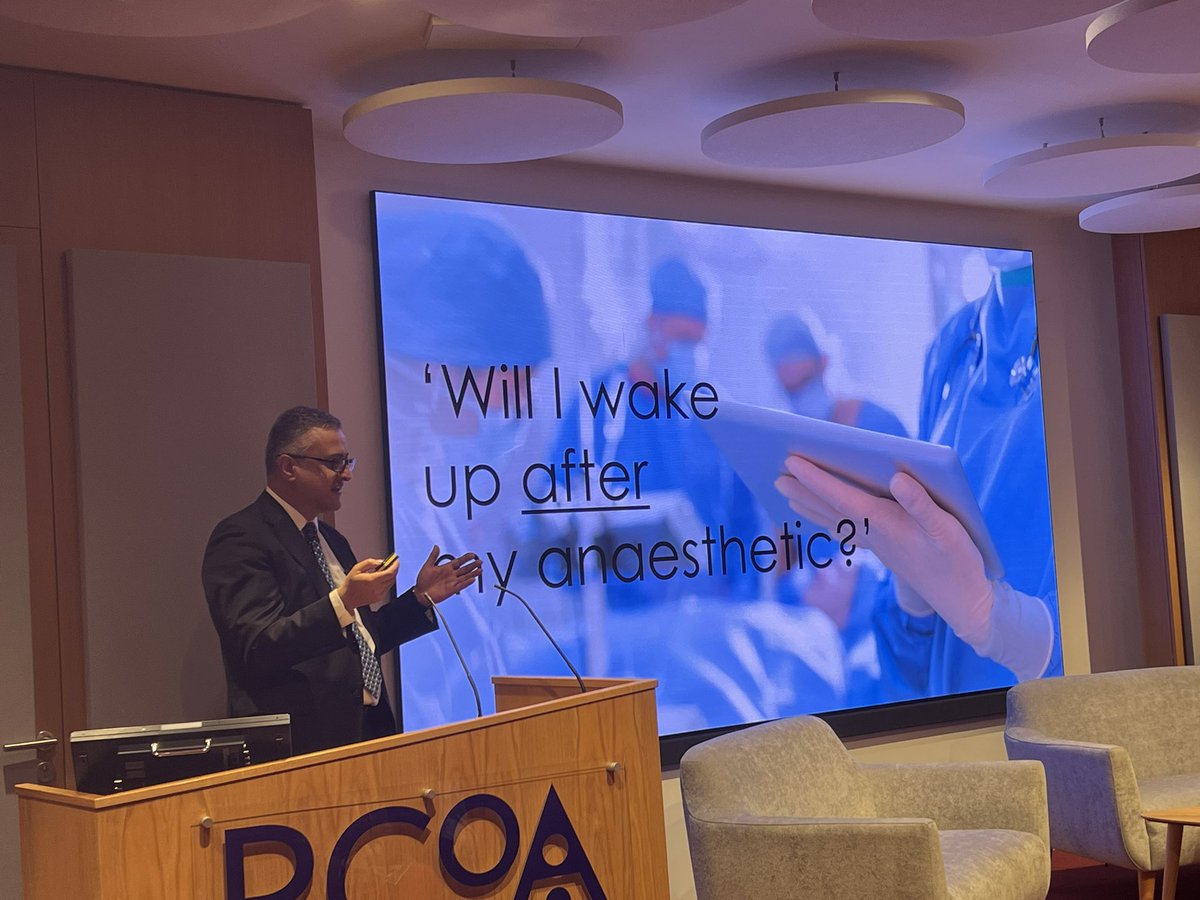
What patients fear most about operations
‘Will I wake up?’
#NAP7 report answers this.
-who will
-who is at risk of not
-what are the numbers?
Eg cardiac arrest during all surgery
1:3000
Fit & well, elective surgery
Cardiac arrest <1:10,000
Death <130,000
Frail patients
Cardiac arrest 1:1200
Death 1:2000
#NAP7
‘where numbers tell stories’
https://t.co/lt44XltSZt
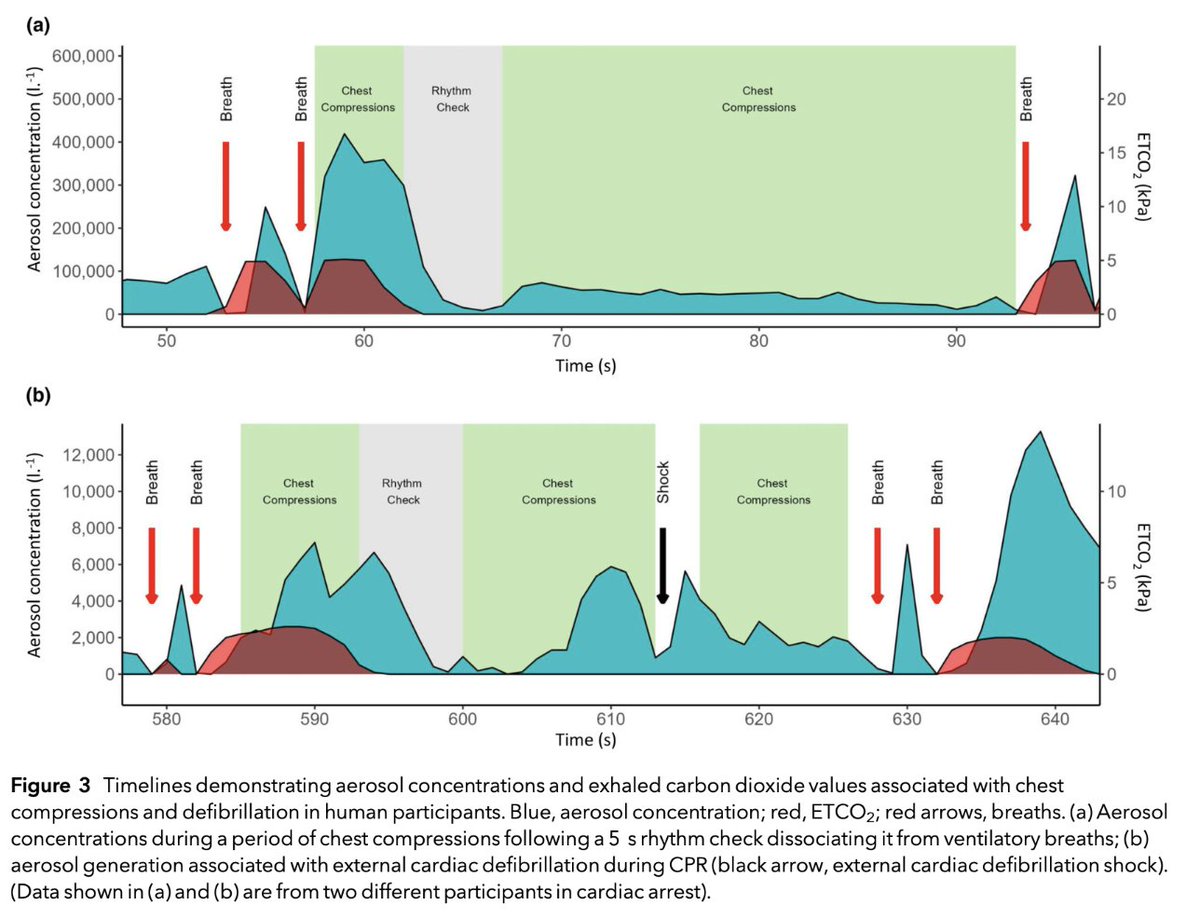
Peri-operative cardiac arrest is most prevalent in orthopaedic trauma. Overrepresented in cardiac, vascular and cardiology. 39 NAP7 chapters – something there for everyone.
@MaryannCTurner @jas_soar @doctimcook@drrichstrong@RCoANews@NAPs_RCoA#NAP7
https://t.co/Y9cgo6s3A1
@doctimcook@ashwani_doc@NAPs_RCoA@RCoANews @HSRCNews @IainMoppett @RegionalAnaesUK Have just sent in my proposal on LAST and nerve injury, although a comprehensive major complications audit for non-neuraxial RA (akin to NAP3) might be a good idea too! Fingers crossed! 🤞