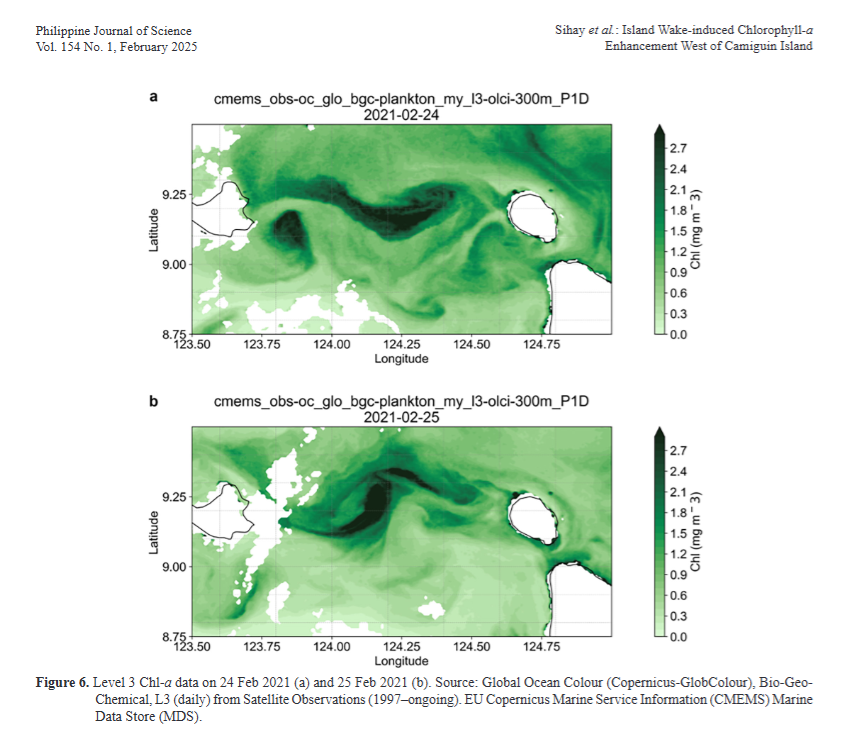
Introducing......the Camiguin Island wake! Happy to share that our paper is published in the Philippine Journal of Science Vol. 154 No. 1, February 2025.
Read more: https://t.co/x80Exfm72S
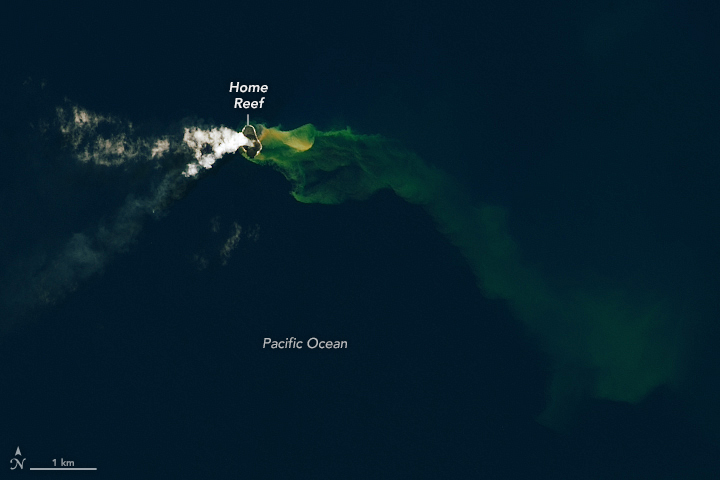
The complex interplay between coastal flow, the Gulf of Mexico "Loop Current" (dark red) & its eddies (bright red) is shown in this night-time sea-surface temperature scene seen by @CopernicusEU#Sentinel3 SLSTR on 29 March 🌡️🌊
(With @NASA Blue Marble land overlay for context.)
Zamboanga Peninsula upwelling, Camiguin and Siquijor Island wakes! 💚
Chl data source: @CMEMS_EU E.U Copernicus Marine Service Information (https://t.co/wAZACrx2uZ)
South Central #philippines Chl patterns😍 Panay eddy, Zamboanga upwelling, and Camiguin Island wake!
Chl data source: @CMEMS_EU E.U Copernicus Marine Service Information (https://t.co/wAZACrx2uZ)
Closer look at the Panay eddy 🌀 (Read: https://t.co/gUU5rTb20R)
Chl data source: @CMEMS_EU E.U Copernicus Marine Service Information (https://t.co/wAZACrx2uZ)
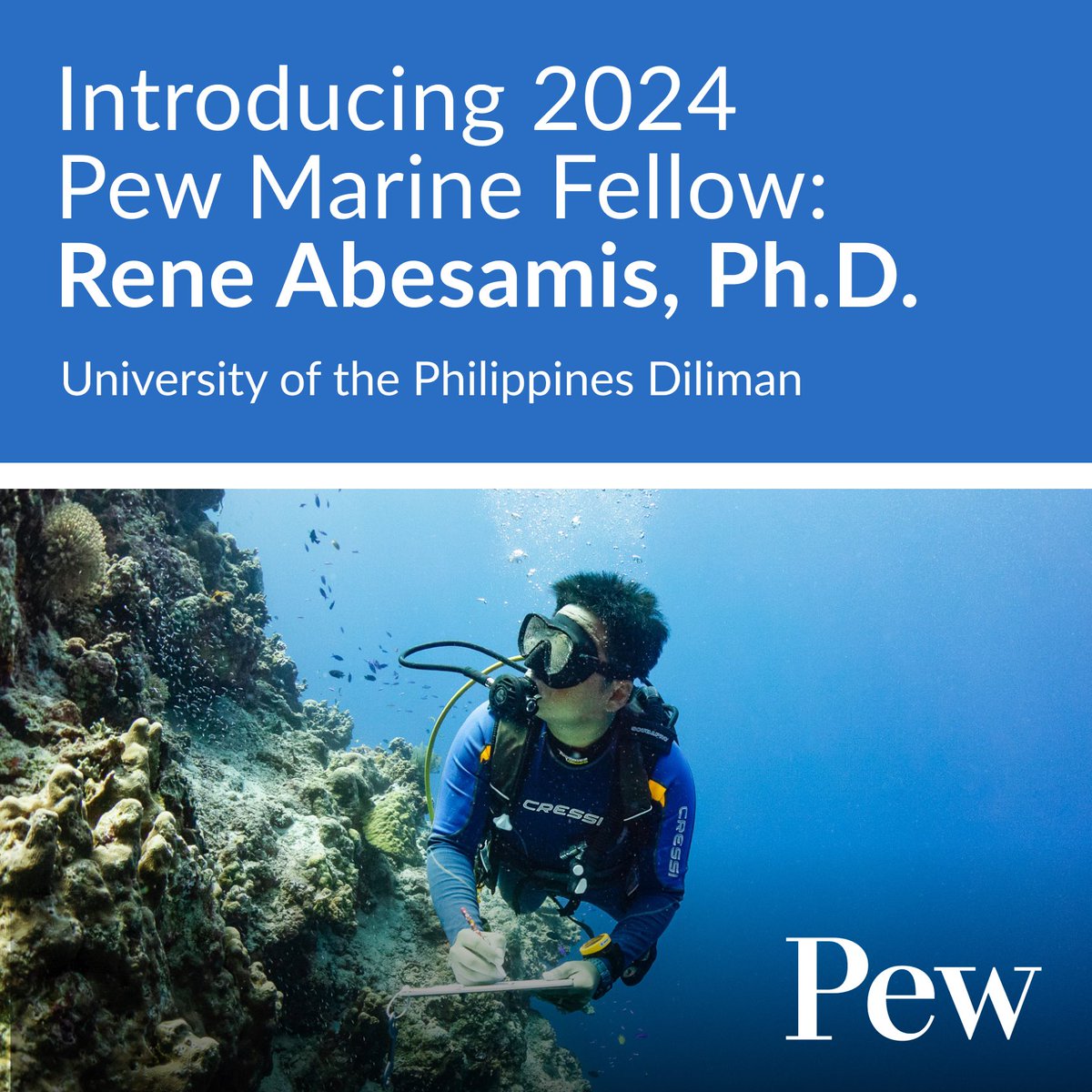
Congratulations to our very own Dr. Rene Abesamis for being named a @PewEnvironment 2024 marine fellow!
Read the press release here: https://t.co/6A3fky7ECj
#PewMarineFellow
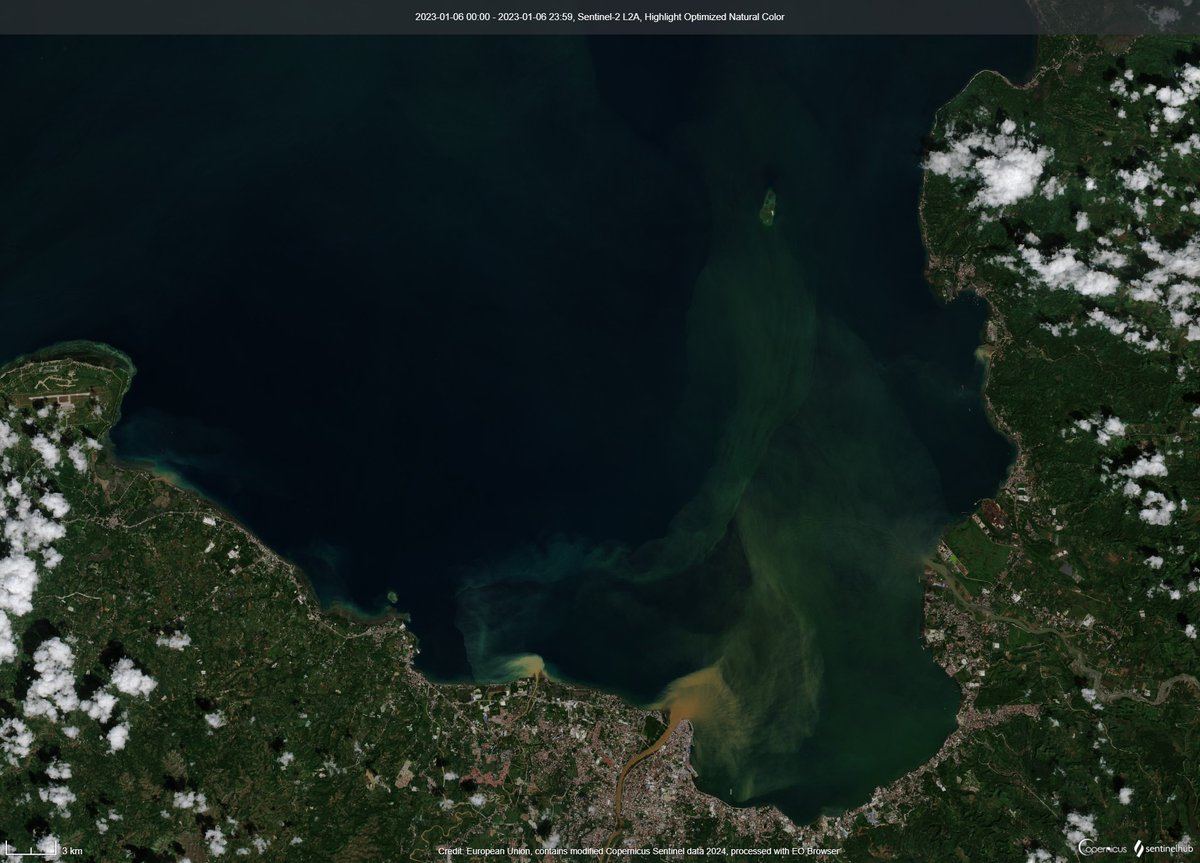
Sediment plumes of Iponan, Cagayan, and Tagoloan rivers in Macajalar Bay (Misamis Oriental, Northern Mindanao, Philippines)
Captured by #sentinel2@CopernicusEU processed in @sentinel_hub
Beautiful patterns of Chl in the central Philippines💚🇵🇭
Chl data source: E.U. Copernicus Marine Service Information @CopernicusEU https://t.co/wAZACrx2uZ