𝗠𝗲𝘁 𝗢𝗳𝗳𝗶𝗰𝗲 𝗥𝗲𝗺𝗮𝗶𝗻 𝗦𝗶𝗹𝗲𝗻𝘁 𝗔𝗯𝗼𝘂𝘁 𝗧𝗵𝗲𝗶𝗿 𝗢𝘄𝗻 𝗥𝗲𝘀𝗲𝗮𝗿𝗰𝗵 𝗧𝗵𝗮𝘁 𝗨𝗻𝗱𝗲𝗿𝗺𝗶𝗻𝗲𝘀 𝗧𝗵𝗲𝗶𝗿 𝗔𝗴𝗲𝗻𝗱𝗮
The Met Office is staying silent on their own research showing Europe's hot summers are driven by reduced aerosol emissions, not greenhouse gases from fossil fuels.
Their Hadley Centre scientist co-authored the paper, but the agency has ignored it on their site and feeds for weeks.
This directly clashes with their claims that human-induced warming caused thousands of recent heat deaths.
Why the blackout?
Read the full article:
https://t.co/4CLv5cTIcU
The reason climate alarmists don't show climate trend data, is because it always shows that climates were worse in the past -- especially when CO2 levels were lower.
Elon Musk just spent seventeen billion dollars to make every cell tower on Earth a relic.
Musk: “It will allow SpaceX to deliver high bandwidth connectivity directly from the satellites to the phones.”
Not through towers. Not through cables. Not through any infrastructure on the ground.
Directly from orbit to the phone in your pocket.
For over a century, connectivity followed the same blueprint. Build a tower. Run a cable. Expand the network one piece of ground at a time.
Coverage went where the money was. Where the population density justified the investment.
Everywhere else got silence.
Four billion people still don’t have reliable internet.
Not because the technology doesn’t exist. Because no one could justify building a tower where they live.
Connectivity was never a technology problem. It was a geography problem disguised as one.
Musk: “The phones that are able to use the spectrum that was acquired probably start shipping in around two years.”
Two years. Then the phone in your hand connects straight to space.
No tower required. No carrier infrastructure between you and the signal.
The entire telecom industry was built on one assumption. That connectivity requires ground infrastructure.
Every carrier. Every contract. Every coverage map. All products of that assumption.
Starlink just bypassed it from orbit.
From orbit, every point on Earth is equidistant.
The word “remote” only exists because connectivity was built from the ground up.
From space, there is no remote. There is no coverage gap. There is no place on Earth harder to reach than any other.
The ground decides who gets connected based on where they are.
The sky doesn’t know the difference.
Human potential was always distributed evenly across the planet. Access to information never was.
The gap between those two facts is the greatest waste in human history.
We spent a century deciding who deserved access to information based on where they happened to be born.
Musk just made that question obsolete from 550 kilometers above the answer.
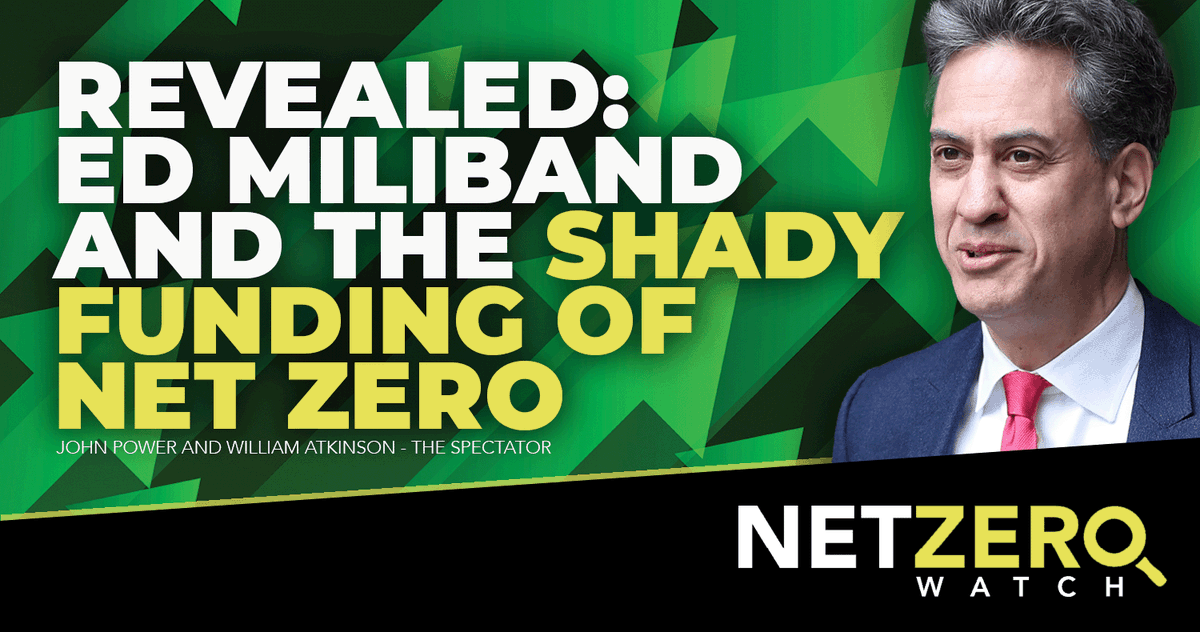
"Net zero has given the left a new means of controlling and constraining capitalism and growth. It has given international billionaires a cause to signal their virtue while they asset-strip and price-gouge elsewhere..."
It seems counter-intuitive to say, but on a geological time scale, Earth remains in a period of long-term cooling.
We are still in the Quaternary Ice Age, which began some 2.58 million years ago. Today's warm pulse is real, but it's temporary. Global temperatures remain significantly lower than the planet's deep-time geological average of 18–26°C.
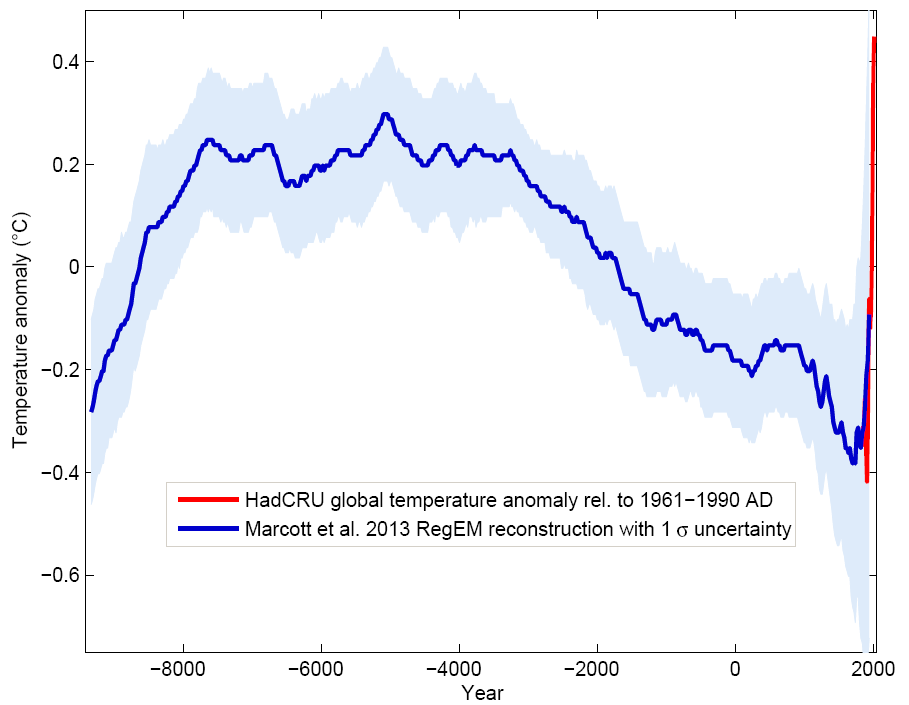
While warmth returned during our current Holocene interglacial, proxy records show temperatures peaked 9,000 to 5,000 years ago during the Holocene Thermal Maximum — based on the landmark Marcott et al 2013 synthesis of 73 proxies. From there, the trusty Milankovitch orbital cycles drove a gradual cooling of around 0.7°C, culminating in the Little Ice Age (c. 1300–1850 AD).
Industrial-era warming (about 1.4°C since 1750) has abruptly broken that multi-millennium cooling trend. This highlights the famous 'Holocene temperature conundrum': physical proxies show a warmer mid-Holocene, while computer models insist on an ongoing linear warming trend.
If history is to be our guide though, orbital cycles dictate that interglacials inevitably end and then the glaciations resume. The reality is that nature operates on her own mechanisms, which even our best computer simulations struggle to reliably forecast.
Greenland was ice-free 100,000 years ago, when CO2 was at pre-industrial levels. Scientists have known this for decades.
Nuuk, the island's capital, hasn't warmed in a century. Since the 1990s, the island has actually been cooling.
Back during the Medieval Warm Period, western Greenland was 2C warmer.
In fact, ice cores reveal Greenland is colder today than for most of the past 10,000 years.
Melt runoff is far lower than climate models claim, as much as 58% less. And most recently, snowfall during the 2024-25 season came in far above the long-term average.
Greenland's ice tells a story of natural cycles, not man-made catastrophe.
Everybody is screaming about the upcoming, so-called unprecedented El Nino, but no one is talking about the unprecedented Tonga volcano which ejected an unprecedented amount of water-vapor into the Stratosphere and is causing a series of unprecedented after effects.