[5] First year into my studies at @UNSW_ED and this, co-authorship with my supervisors in an article abt teacher data literacy published in a Q1 journal. Link: https://t.co/U2KGGUZUy4 @SpringerEdu
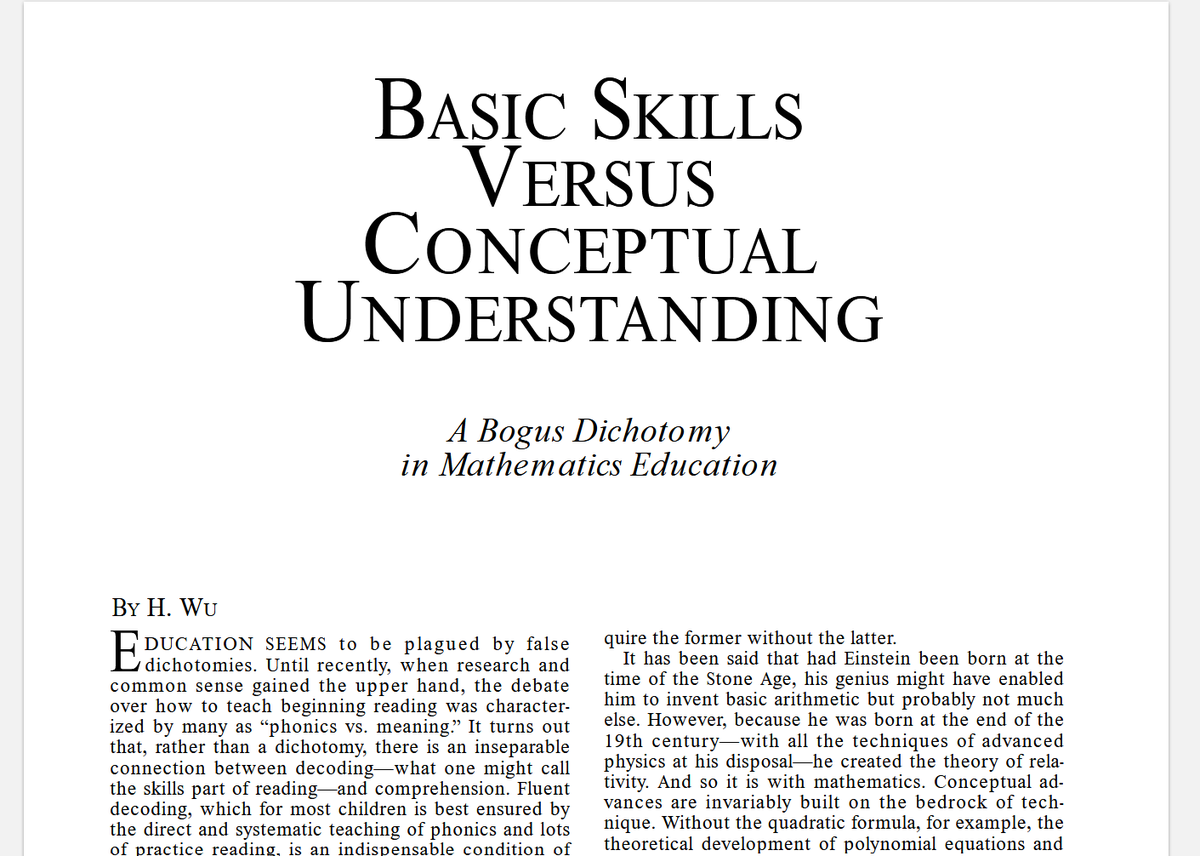
Robert Pondiscio: 19 reasons that knowledge-rich curricula have not been broadly adopted in the US, despite strong research support. I'd add this one: "educators underestimate what young children can learn, and the joy with which they will learn it." https://t.co/NQPakMfP3B
Happy 278th birthday to our spiritual founder, Jeremy Bentham! 🏛️🎂
Ahead of the big day, we had the (spiritual) chance to chat with him about everything – from his trip to NYC to his cat to his ideas on equality.
Read the full interview: https://t.co/3szcYQUFNP
NEW! I'm pleased to share the - Distilled Playbook for Rosenshine's Principles of Instruction — a practical tool designed to help teachers and leaders translate evidence-informed instructional design into consistent practice.
This 50 page playbook:
1. Breaks Rosenshine's Principles into actionable strategies
2. Provides clear examples and prompts for use in planning and coaching
3. Supports both individual and team implementation
https://t.co/qubgzi1btP
200 years of innovation was just the beginning.
#HereItWillHappen is the catalyst for our most ambitious chapter yet – shaping a better future through collective action. ✨
See the vision unfold: 📽️👇
Learn more and be part of the change: https://t.co/uQW9GPZb8o
Here, it will happen ✨
As we mark 200 years of UCL, we are thrilled to launch #HereItWillHappen – a campaign to solve global challenges through research, education, and the power of our community.
Learn more: https://t.co/Vym39ymJon
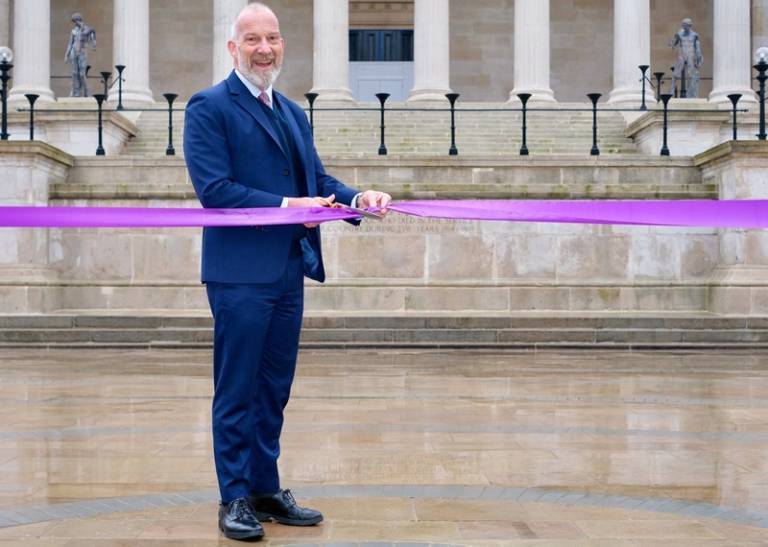
Setting the stage for UCL200 🏛️
We’ve officially reopened our Main Quad, the historic heart of our Bloomsbury campus, to kick off our bicentennial.
Be sure to join in for the celebrations and stay tuned for more ✨
Read the full story ➡️ https://t.co/21TODtZDya
New research on spacing, practice, early instruction, and reading shows that durable learning emerges through delayed effects, structured practice, and well-organised knowledge, not ease or intuition. Link in reply ⬇️
Cognitive load theory is often discussed but not always deeply understood. Building on a previous conversation, I spoke with Dylan Wiliam to further explore what it explains and what it does not.
@DylanWiliam@bamradionetwork https://t.co/EtP0MFhrpJ
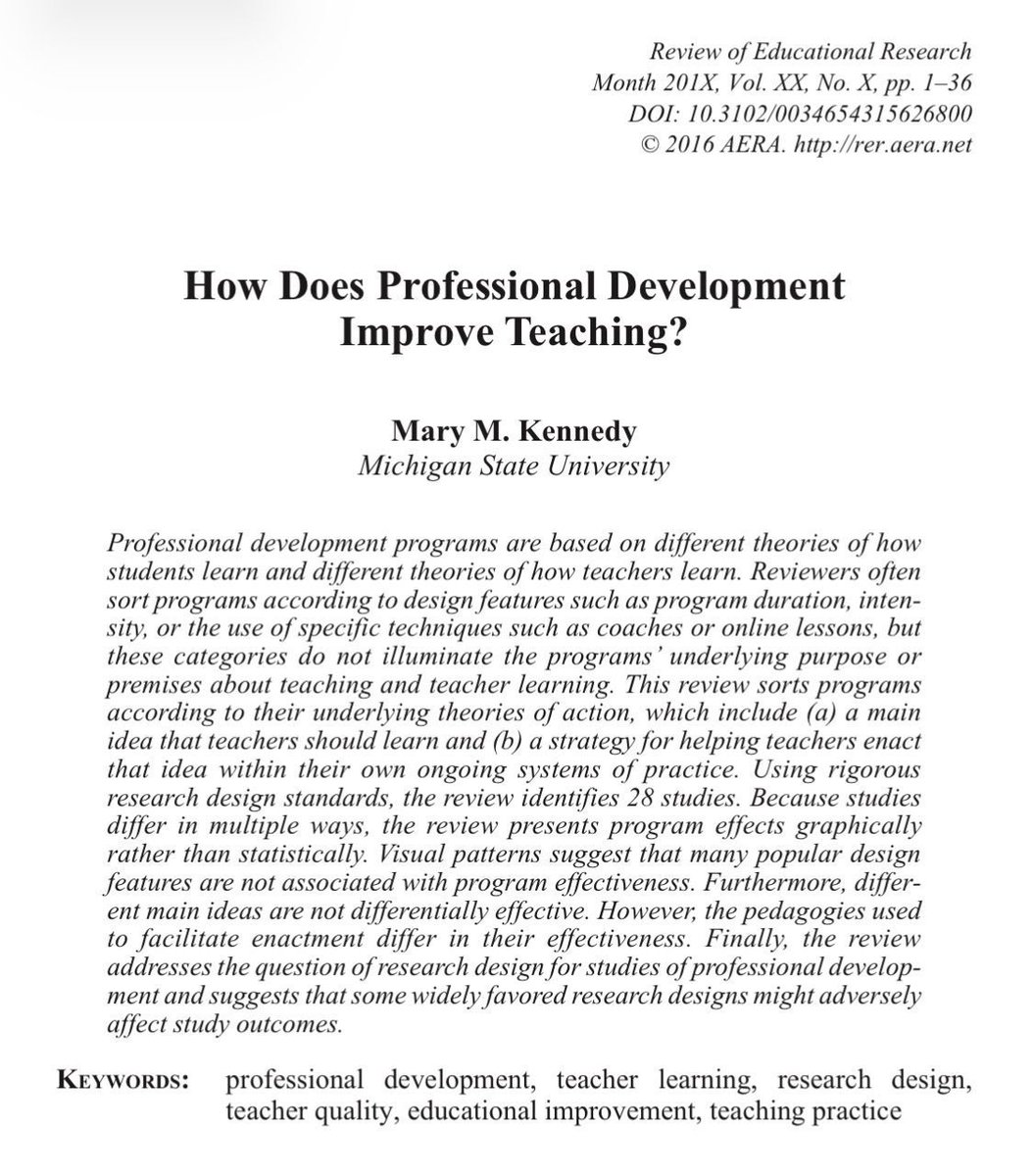
Mary M. Kennedy reviewed 28 studies on teacher professional development to find out what actually works. She discovered that the best programs help teachers think strategically or discover insights on their own, rather than just giving them step-by-step instructions to follow. Programs where teachers had to participate often didn't work at all, even when they were expensive and time-consuming.
Intellectual engagement means teachers actively think through new ideas instead of just being told what to do. In successful programs, teachers discussed research together, watched videos of teaching, and figured out solutions as a group. They talked about why certain approaches work and when to use them. This is very different from having a coach watch you teach and tell you what you did wrong.
The least effective programs treated teachers like robots who just needed better programming. They gave detailed scripts and checklists for teachers to follow exactly. Kennedy found these often failed, especially when teachers were forced to participate. Teachers are professionals who need to understand the "why" behind new methods and decide for themselves how to use them with their specific students. When they get to think, discuss, and problem-solve together, they actually improve their teaching.
https://t.co/Et1KiHqEAS
🗣️ 'The well-being of students is not only important in and of itself, but the correlation we see in TIMSS Longitudinal between student well-being and growth in achievement also demonstrates its academic importance' - Dirk Hastedt, Executive Director of IEA
Join the livestream: https://t.co/KPeJDLig5O
Here's yet another study showing that kids who get smartphones earlier have worse mental health as teens.
So what's the right age for a first smartphone? I'd say its whatever age you want them to cut back on sleeping, reading, exercise, and socializing. I advise not doing that before 14, at the earliest.
Let's make that a new norm, to break out of the collective action trap together. Some parents may then wait even longer. But lets try to get all kids through middle school in the real world, before exposing them to the many harms of adolescence lived on a phone.
Note that this research use the ABCD study, which is the highest quality longitudinal study going.
It confirms an earlier finding by @sapien_labs that found the same thing
https://t.co/eTWs0LM3BE
"Statistics for Non-Statisticians" by Birger Stjernholm Madsen (Springer, 2nd Edition)
The book title every PhD student wishes they'd found in Year 1.
If you're a researcher who needs to understand statistics without becoming a statistician, this is your roadmap.
What makes it valuable:
Written specifically for people who need to use statistics in their research, not people who want to become stats experts.
Perfect for:
- PhD students analyzing data
- Researchers reviewing statistical methods
- Anyone who needs to interpret p-values without a math degree
- People who freeze when they see regression analysis
The reality:
Most researchers aren't statisticians. But most research requires statistical analysis.
This book bridges that gap - explaining statistical concepts in ways that non-specialists can actually understand and apply.
No shame in needing help with statistics. The shame is in using methods you don't understand and publishing questionable results.
Better to learn it properly than fake it badly.
Download link in Comment:
I've met tons of researchers who hate stats!
If you're one of these, this book is for you ⤵️
Save (with 𝘤𝘭𝘪𝘱𝘱𝘦.𝘮𝘦) & Repost
The author says it perfectly:
"The most important concepts of statistics can be explained, so that ordinary people can understand it."
— No complex formulas.
— No expensive software needed.
— Just spreadsheets & clear thinking.
The book covers:
— Sample surveys
— Data presentation
— Confidence intervals
— Statistical tests
Written for people who need to collect data.
— Analyze results.
— Present findings.
But don't want to become mathematicians.
Real examples throughout.
— Like the Fitness Club survey with 30 kids.
Shows you exactly how to spot bias.
When to use different tests.
How to avoid common mistakes.
Perfect for public health researchers.
Statistics doesn't have to be scary.
(𝘢𝘵𝘭𝘦𝘢𝘴𝘵 𝘪𝘯 𝘵𝘩𝘦 𝘣𝘦𝘨𝘪𝘯𝘯𝘪𝘯𝘨)
💬 Comment if you'd like a link to download this book!
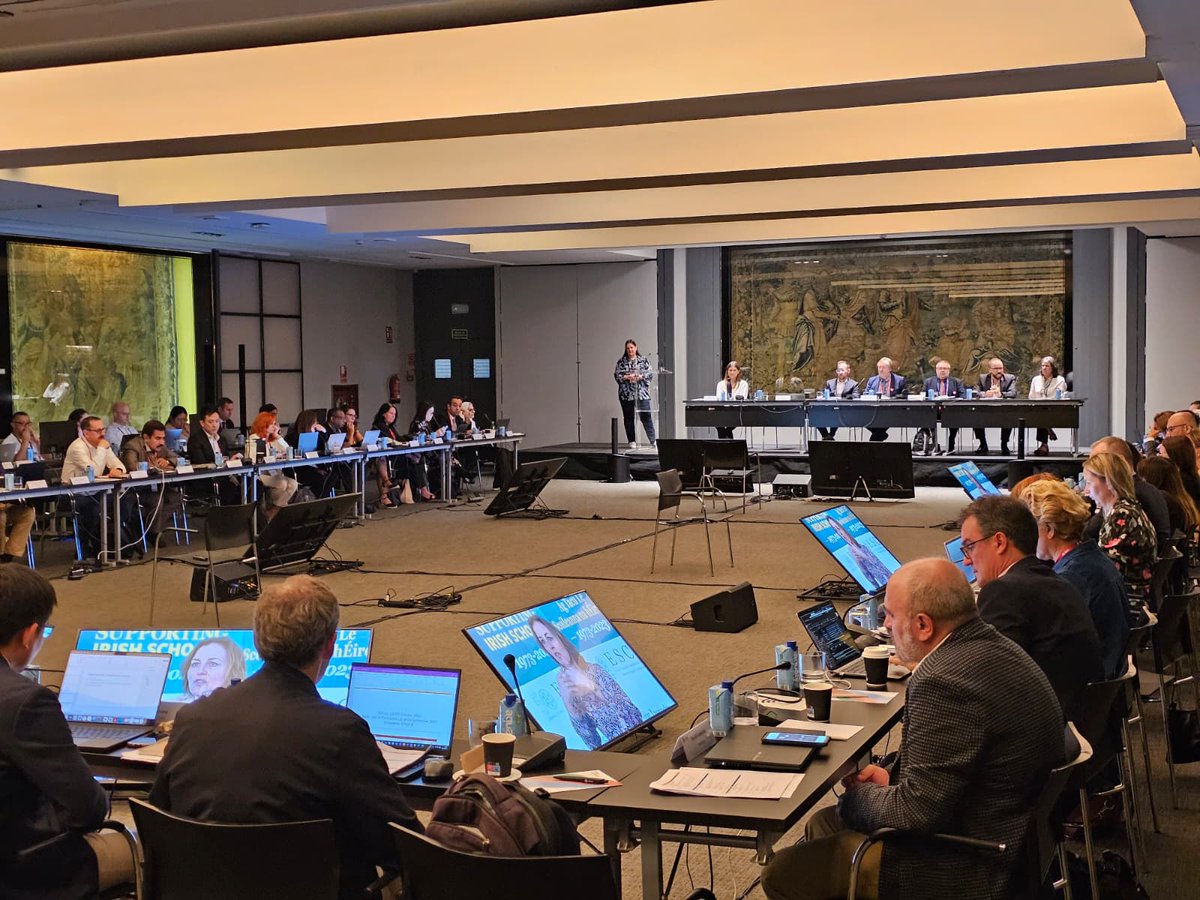
📘Dr. Andrea Netten, Director IEA Amsterdam, updates the 2025 IEA General Assembly about the latest strides IEA has taken in connecting research to educators.
IEA's GA is very supportive of efforts to bring research from large scale assessments to teachers in classrooms.
Check out our teacher materials here: https://t.co/QOqgM60dpP
🤝 IEA is pleased to welcome Prof. Dr. Gabriel Nagy to the professorship supported by IEA at the University of Hamburg, marking an important step in furthering the long-standing collaboration between IEA and the university.
Further information about the Professorship can be found in the new IEA Insider: https://t.co/u7kDR0jyxH
🏛️Next up, updates on the progress of ICCS 2027 from the international study center at the University of Bath.
This included hearing about the exciting new grade 11 module that will be part of this cycle and the great work being done on instrument development.
More about ICCS 2027: https://t.co/zcKT0zAk1E





![janmichaelabril's tweet photo. [5] First year into my studies at @UNSW_ED and this, co-authorship with my supervisors in an article abt teacher data literacy published in a Q1 journal. Link: https://t.co/U2KGGUZUy4 @SpringerEdu https://t.co/Ehoa7fCmIh](https://pbs.twimg.com/media/GM5FFAPaUAAqDe8.jpg)