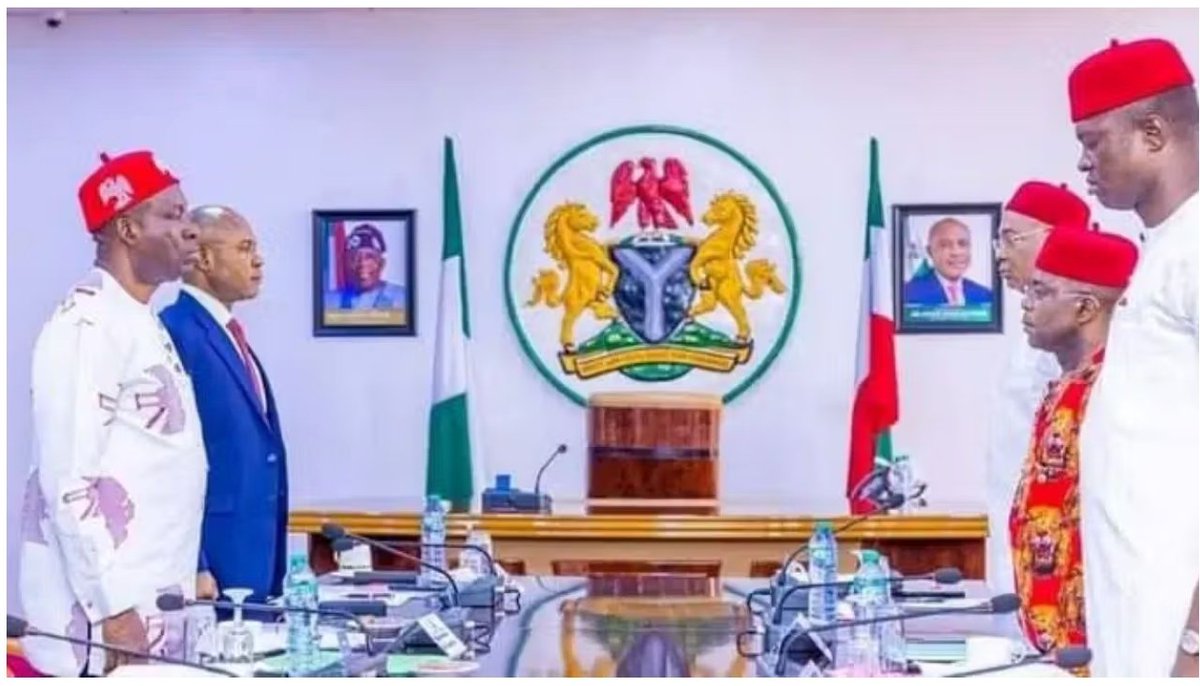
JOSHUA OCHEJA: "I was in Umuahia in Abia State these past few days for the first time. I experienced something different and unique. The people, the weather, and the food were pleasant. But what took me there was beyond these. It was the security of the South East region. What were the issues, and what were the best ways of addressing the security situation in the region? The maiden South East Regional Security Summit, organized by the Ministry of Defence in collaboration with the Office of the Senior Special Assistant to the President on Community Engagement (South East), provided a platform for this conversation, and the International Conference Centre in Umuahia came to life with the array of A-list guests that graced the occasion with their accoutrements, experiences, and commitment. I think South Easterners are genuinely interested in addressing the security situation in the region. Mention a heavyweight name in the five states in the region within the security and political class, and I will tell you he or she was present at the summit. Yes, it was called a summit. But in my estimation, it was beyond a summit. It was a gathering of a people who felt that enough was enough and that the solution to the security challenges in the region was local, and therefore the solution was also local. This necessitated the theme “Collaborative Approaches to Strengthening Regional Security and Stability” and, indeed, at the end of the summit, the anthem was the “Whole of Society Approach” to achieving sustainable peace and prosperity in the South East region."
https://t.co/JTgcaS00ml
Cc: @alexottiofr, @Hope_Uzodimma1, @CCSoludo, @DHQNigeria@HQNigerianArmy, @NGRPresident
JOSHUA OCHEJA: "Strength and responsibility are not common attributes. Strength attracts attention, and responsibility bears the burden. The post was an attempt to turn logic upside down by mistaking strength as vulnerability and not responsibility. It would be wishful thinking that a war-tested infantry general wouldn’t discern easily. This is without sentiment, because in the military, Generalship is not just a rank. It is the intersection of operational art, strategic judgment, and absolute accountability towards institutional trust. Historical accounts are replete with General Musa’s exploits while in uniform. As his uniforms were briskly starched, so were his command and operational strategies. This is the “Gwabin” effect that easily overrides distraction. It is also infectious. It is a perfumery that tells a deeper story that resonates with resilience and innovation. It is a story reminiscent of resourcefulness in war policies and strategies."
https://t.co/aznBX0p2bB
JOSHUA OCHEJA: "In the ten green bottles rhyme, after the first fall, other bottles could not stand. They fell one after the other until there were no more bottles standing on the wall. When interpreted along our present security challenges, the overarching objective is not to let any fall occur in the first place; if it does, everything else will fall. It goes further to highlight again the principle of structural functionalism. Two things must be done urgently for the “ten green bottles” to serve as our wall of security. The government must launch a sustained national campaign on the theme “Security is Everybody’s Business.” This is necessary to create that reawakening on the concept of security and insecurity. The tragedy would be when a green bottle falls and we assume there would be no consequences. This is the equilibrium of deficit. It states that “security is treated as the exclusive burden of the uniform, but it is permanently shattered the moment we realize that closing this gap is a shared, collective responsibility of every single citizen.” This is also the position of Prof. Thomas Imobighe, a renowned expert in defence and security. In one of his seminal works, he argued that “national security is concerned with the individuals and groups, not just states alone. When individuals are not secured, then the state is not safe."
https://t.co/BDGN2qrtpL
Cc: @DHQNigeria, @HQNigerianArmy
JOSHUA OCHEJA: "Very early in the morning in one of the months of 1985, Johnson, my kid brother, who was a few months old, was glued to the back of my mother. I was barely five years old. My mother held my hand, and we walked carefully behind Mr. Alabi, a police officer and friend to my father. I was too young to know what was amiss as we crossed Bourdillon Road from our barracks apartment, which overlooked the Police Hospital in Falomo, Ikoyi, Lagos. Mr. Alabi led us through the wards until we entered a particular ward where my father lay with a bandage wrapped around his waist. He had been shot by armed robbers. The bullet pierced the lower part of his abdomen but missed any vital organs. He was the only survivor of a brutal attack on their unbranded Peugeot 504 station wagon while trailing robbery suspects in the Ikorodu part of Lagos state."
https://t.co/luaMWi45DR
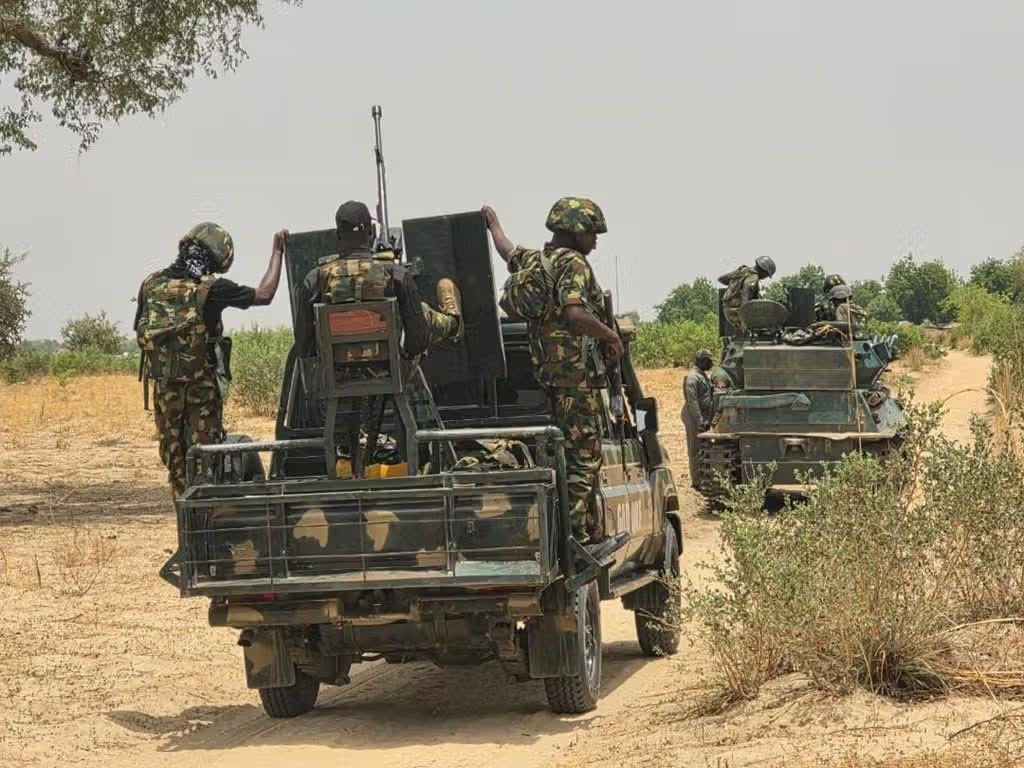
JOSHUA OCHEJA: "This article is an abstract rendition of the dynamics of war. When two warring factions engage in battle, their ultimate aim is victory. How that victory is achieved is a combination of factors. Tactics, strategy, and execution form the tripod that makes or mars an operation. Have we wondered why small nations can win big wars? Why are we still in battle with insurgents and terrorists? Do these non-state actors have a better arsenal than our Armed Forces? What do we think is at play? Let me attempt to explain why small nations can win big wars, using Boko Haram as an example. The Armed Forces of Nigeria boast of an outstanding war arsenal. Boko Haram does not have a fraction of what we have in this regard, yet they have sustained the war for 17 years. They get more daring every passing day. What could be responsible for this? I have read several commentaries on concepts like internal sabotage, money-making ventures, complacency, and several other conspiracy theories. Philosophy and logic in war are not about military strength. It is about strategy and execution. This can be explained using the culinary example of preparing a pot of jollof rice."
https://t.co/UAJDczHRB7
Cc: @DHQNigeria@HQNigerianArmy
JOSHUA OCHEJA: "Why is the conversation around border security not loud? The northern region of Nigeria is like a house without mosquito nets in a forest. All sorts of insects gain access easily. When the insecticides (military operations) are sprayed, they kill the insects (bandits, insurgents, terrorists, kidnappers) in the house, and not those outside the house. The occupants of the house spend a fortune on insecticides, also with the risk of getting infected by malaria and other illnesses occasioned by insect bites. Play back the scenario. The house in the forest was fitted with mosquito nets and insects could not gain access and the occupants of the house lived in peace and without fear. The case of Nigeria is a unique one. There is no mosquito net installed, which is why all sorts of criminal elements gain access easily. Our borders are not only porous, but we also have swathes of ungoverned spaces, especially in the North West and North East regions. This is why the regions have become a hotbed of criminal activities. The emphasis has been on military might to dislodge, repel, and kill insurgents and bandits, just like what an insecticide does to mosquitoes. For every insurgent that is killed within our territory, there are several others on the queue to get in because of our porous borders."
https://t.co/jDbiQ1Q6Be
Cc: @DHQNigeria, @HQNigerianArmy, @NigerianNavy
JOSHUA OCHEJA: "If asymmetric warfare were as simple as preparing “jollof rice,” the Boko Haram insurgency would have been history. But unfortunately, it is not. The complication is that the war is against a people whose identity is confusing. There is no marker that differentiates the good guy and the bad guys. This skill is not taught; it is learnt from field experience. Boko Haram/ISWAP members do not have a distinct identity. The only time that they could be rationally identified is when they are in possession of weapons of war. For example, a non-state actor can elect to drop his arms somewhere and walk freely among the people and sometimes past military formations without being suspected. It is a case of an unknown enemy lurking around without detection. This is why sometimes it is possible for military bases to come under surprise attacks."
https://t.co/BblRRl68Fy
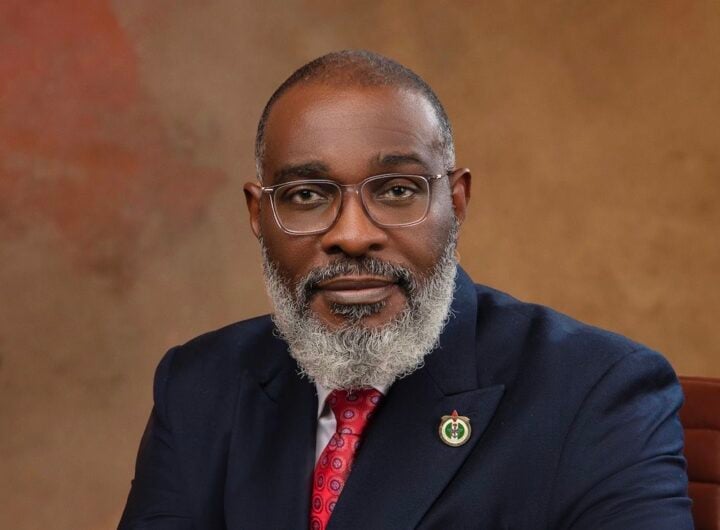
Tinubu's homeland security office key to tackling porous borders, says Joshua Ocheja
Joshua Ocheja, a military historian, says border security is Nigeria’s fence against the world.
In an op-ed published on Sunday, Ocheja described border security as the core of homeland security, a portfolio created by President Bola Tinubu earlier this month.
Tinubu appointed Adeyinka Famadewa, a retired major general, as his special adviser on homeland security.
https://t.co/2ccgKqD5jX
JOSHUA OCHEJA: "It has been whispered in some quarters that the decision of the president to appoint a Special Adviser on Homeland Security was a signal that he has lost faith in his National Security Adviser. This is an assumption. It is illogical to take an assumption for reality. The president made an appointment. The notice didn’t state that the president had lost faith in his National Security Adviser, hence the appointment of a Special Adviser on Homeland Security. Fairness demands we give the president the benefit of the doubt. The present commentary on this appointment is not necessary, in my opinion. The commentary should be about what homeland security is and what difference it would make in the security architecture of the country. I am not privy to the motives of the president in this regard. He might have his reasons, and of course, it is entirely within his purview as Commander-in-Chief of the Armed Forces of the Federal Republic of Nigeria."
https://t.co/PmEZ85HJ3a
JOSHUA OCHEJA: "Who would have thought that the second-in-command of ISIS was a Nigerian? This is a very dangerous realization. This is why ISWAP has remained daring in the Northeast. ISWAP is not an offshoot of Boko Haram as widely believed. It was created by ISIS to challenge Boko Haram for control of territory. ISIS was already present in the Sahel region, and it was very easy for it to slip into Nigeria. These fighters are the same. They use and employ the same methods. The only difference is their psychological affiliations. Religion plays a very insignificant role. They are not pious Muslims. Theirs is more of a psychological distortion in their thought process."
https://t.co/2FNLItiCbR
Cc: @NuhuRibadu, @DHQNigeria
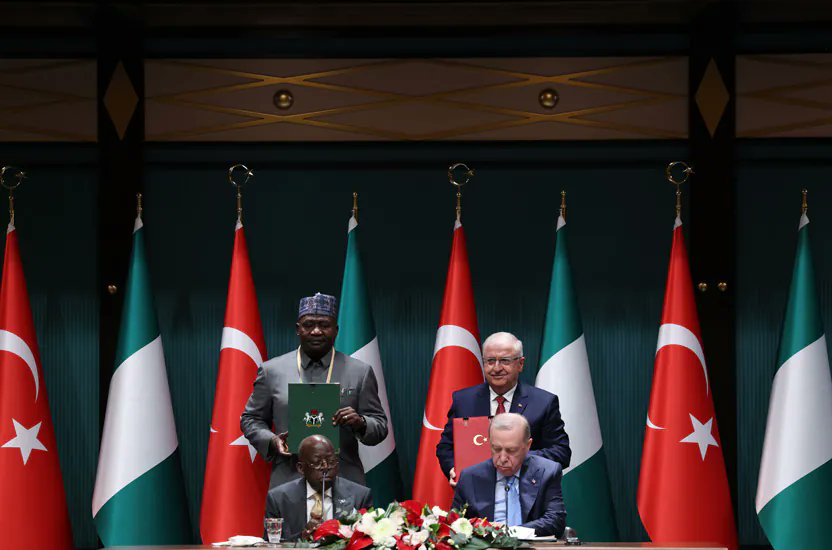
Turkey-Nigeria military pact will help tackle terrorism, says Joshua Ocheja
Joshua Ocheja, military historian, says the recent bilateral security agreement between Turkey and Nigeria will be effective in tackling terrorism in Africa’s most populous country.
In January, Nigeria and Turkey signed nine agreements to strengthen bilateral ties during President Bola Tinubu’s state visit to the Middle Eastern country, including one on defence cooperation.
https://t.co/asRIHuYAUl
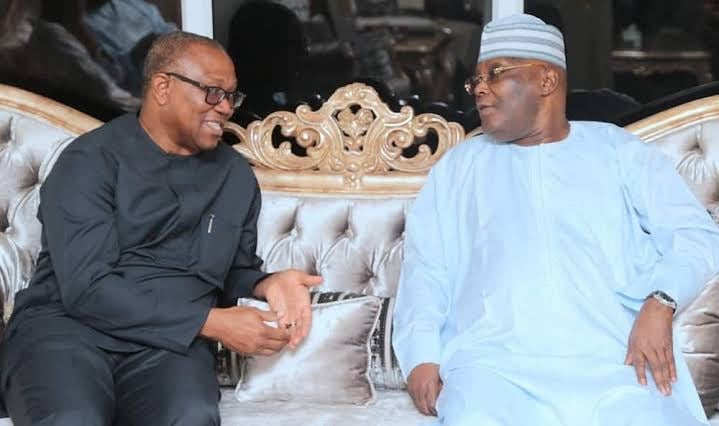
JOSHUA OCHEJA: "@atiku, @PeterObi and Kwankwaso are very religious, but they are not miracle workers. If they were, the political outcome of the 2019 and 2023 presidential elections would have been different. I can only imagine Obasanjo’s game plan with how things stand politically. He is bent on stopping Tinubu and Atiku. But the race for the presidency of Nigeria is not a popularity contest. It is a game akin to Russian Roulette. The gamble is not about who the odds favour, but the reality that a single miscalculation in “timing or alignment” can end a career. When you pull the trigger, you miss or hit the target. Atiku and Obi have missed the target after pulling the trigger. Tinubu’s first pull of the trigger hit the target. Russian Roulette is a game of winner takes all. Obi has decamped from the ADC because it’s obvious, he won’t get the ticket. And as usual, it came with the sort of emotional speech that led to the birth of the Obiedients in 2022. He left the PDP for LP when it was obvious he was not getting the ticket. Obi’s electoral value has dwindled since 2023. He could not manage the fame that came with his first and impressive political outing. It became about him and not the platform that he used. The platform was enmeshed in crisis, but it was not his business and he left, as usual."
https://t.co/PXsNGn03b7
JOSHUA OCHEJA: “Politics is not a love story. Its affections are not unconditional. There is collateral. Written or unwritten. In politics, a reciprocal regime is the most strategic. It is of mutual debt and benefit. In Tinubu’s political bank, when you take a political loan, you are bound to repay. He doesn’t care about your name, religion, ethnicity or political affiliations. His doors are always wide open for those who wish to come in. This is a profound attribute of a political venture capitalist, “who treats power as an investment portfolio in exchange for a long-term equity stake in future loyalty and influence.” This is worth reminiscing about.”
https://t.co/VR8zOAR6Hl