Today the EU made American AI illegal in 27 countries.
The reason is ONE sentence Microsoft's own lawyer said under oath:
This morning in Brussels, EU Tech Chief Henna Virkkunen unveiled the Cloud and AI Development Act. It's the most aggressive anti-American tech move from Europe since GDPR.
The law forces EU public sector procurement in banking, healthcare, defense, and energy to apply mandatory non-price factors favoring software and hardware built inside the EU. Microsoft Azure can be cheaper, AWS can be faster, Google Cloud can have the better model, and EU governments MUST legally prefer European alternatives.
AWS, Microsoft, and Google currently control roughly 70% of the European cloud market. Brussels is now openly targeting greater independence from US providers in cloud, AI, and semiconductors.
The largest regulatory market-share transfer in tech history is being written into law right now.
But the real story is how this happened...
On June 10, 2025, a man almost no one outside Brussels had heard of walked into the French Senate. His name is Anton Carniaux, Director of Public and Legal Affairs at Microsoft France.
Senator Dany Wattebled asked him under oath whether he could guarantee that data belonging to French citizens, stored on Microsoft European servers, would never be transmitted to US authorities without explicit consent from the French government.
Carniaux answered honestly. He admitted he could not guarantee it, because Microsoft must comply with the US CLOUD Act regardless of where European data physically sits. One sentence of sworn testimony from Microsoft's own counsel killed every sovereign cloud defense Big Tech had spent five years building.
It became the legal foundation for the law unveiled today.
Then Trump accelerated the divorce.
January 2025 brought executive orders expanding US surveillance authorities. Vance went to Munich and attacked European democracies on stage.
The tariffs followed and so did the Pentagon's $200 million AI contract war that ended with OpenAI replacing Anthropic after Hegseth labeled it a supply chain risk. So did OpenAI's Stargate and yesterday's Trump AI Executive Order, whose Section 3 lets the White House pick which AI companies get 30-day early access to frontier models. American AI was officially declared a US government strategic asset.
Europe heard every word of it.
On May 12, Mistral CEO Arthur Mensch told the French National Assembly that Europe had 24 months to build sovereign AI infrastructure or become a permanent US VASSAL state.
And the response came fast:
April 24: Cohere acquired Germany's Aleph Alpha for $20 billion with both Germany's and Canada's digital ministers in the room at the Berlin announcement. May 30: SoftBank committed up to $87 BILLION for French nuclear-powered data centers, the largest AI infrastructure project in European history.
Yesterday: EU Parliament announced it's dropping Google for French search engine Qwant tomorrow. France ordered every government workstation off Windows and onto Linux.
Today the Cloud and AI Development Act made all of it law.
- Mistral is building a 1.4 gigawatt AI campus near Paris by 2028 with Nvidia, MGX, and Bpifrance
- SAP's EU AI Cloud, launched last November, runs on Cohere, Mistral, and SAP's own sovereign infrastructure
- McKinsey forecasts $600 billion in sovereign AI needs by 2030
None of that money is going to Silicon Valley.
The America First AI policy built a wall around the world's most regulated economy, and American companies are on the wrong side of it.
Microsoft's lawyer told the truth in a Senate hearing nobody watched. Trump turned that admission into a national security narrative while the EU turned that narrative into procurement law.
And one entire continent walked away from the American tech stack...
If you are an Opendoor shareholder, I have an ask.
Proxy advisors at ISS and Glass Lewis have recommended shareholders to vote against me at our Annual Meeting. I don’t take this personally. This is the fifth time in my career these same people have told people to vote against my team.
These proxy advisors have built no companies and are not meaningful shareholders of OPEN. They're a checkbox industry charging fees to tell other people what to do with shares that aren't theirs.
Usually most companies can’t do anything about this since many institutional shareholders will just vote the way ISS tells them to.
But Opendoor has the Open Army! It is important that we stand up against this separation of management from shareholders.
If you are so inclined, help tilt the world in favor of shareholders and away from bureaucrats.
Find out how (ask your broker, check your emails) and vote your shares. Our board is excellent. We are back on mission and we are winning.
Don't outsource your vote. Read the proxy. Vote your shares.
BREAKING:
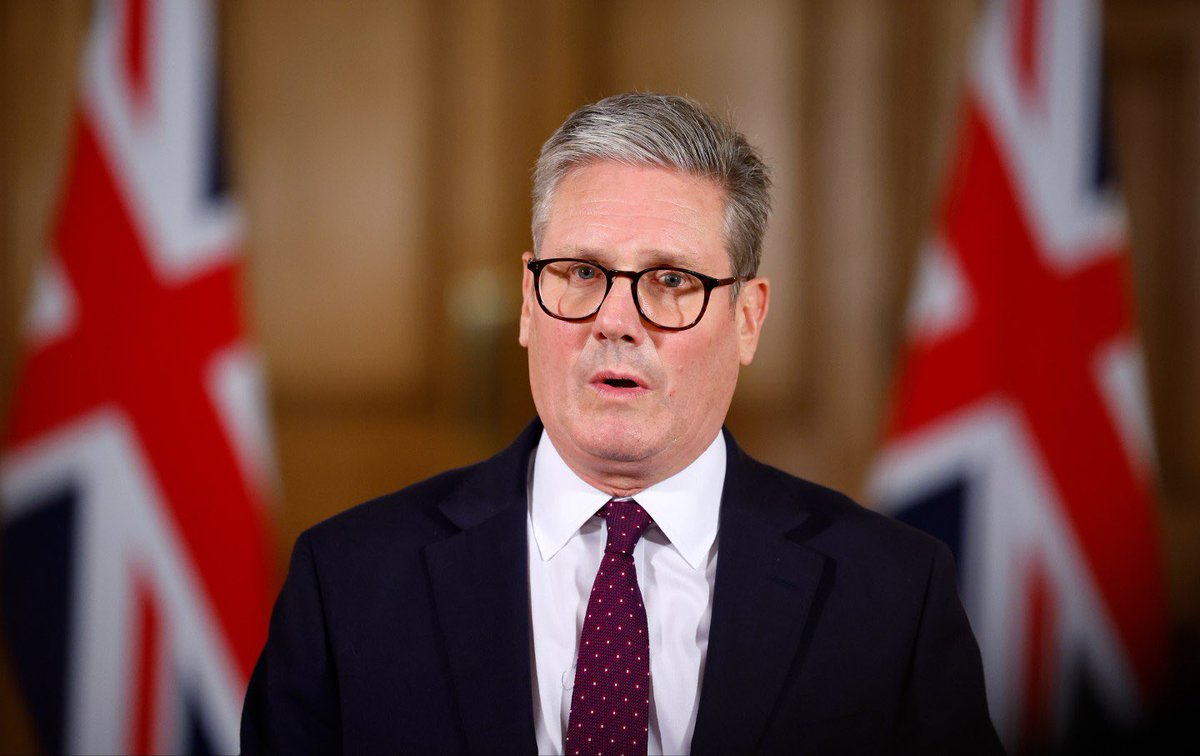
Keir Starmer says he won’t remove the exemption which allows Sikhs to carry large ceremonial knives on them.
Meanwhile, English women are being prosecuted for carrying regular pepper spray on them when out on the streets at night
Today a crazy quantum story just got wilder.
On March 31, the Google Quantum AI team published a landmark result on Shor's algorithm for elliptic curve cryptography. Technically, the paper was a bombshell: a dramatic 10x improvement over the state-of-the-art. As a stunt and wakeup call to the blockchain space, those optimisations were illustrated on secp256k1, the elliptic curve underlying Bitcoin and Ethereum signatures.
But perhaps the most striking part of the paper was sociological, not technical. Instead of following standard academic process, the optimisations were kept secret, hidden behind a zero-knowledge (ZK) proof. Google's accompanying blog post mentions they "engaged with the U.S. government". The ZK proof demonstrates the existence of algorithmic improvements without leaking details. Academic censorship with ZK, a historic first!
As a co-author of the Google paper I witnessed some of the context surrounding this censorship. To be honest, multiple aspects of that context don't sit well with me. As much as I believe the general public ought to know more, I am limited in my ability to whistleblow. Though let me be clear about one thing: the Google team's professionalism has been absolutely exemplary, and they deserve nothing but praise.
Censorship has a way of backfiring. The Streisand effect, where an attempt to bury something only draws more attention to it, is exactly what's unfolding today. First, Google's key optimisation has been rediscovered by the French. And in a thrilling turn of events, a collaborative Shor-at-home challenge just launched. The initiative, available at ecdsa[.]fail, breached a new Shor world record in a matter of hours.
Let's start with the rediscovery. Just two months after Google's paper, French quantum expert André Schrottenloher cracks the main secret optimisation. His paper, titled "Optimized Point Addition Circuits for Elliptic Curve Discrete Logarithms", landed on the arXiv today. Big congrats to André, who beat several other nerdsnipped experts to it. In a blog post also published today, Craig Gidney, the world expert on Shor optimisations, revealed that he'd been sitting on this very optimisation for a whole year under censorship pressure.
Interestingly, André missed a handful of minor optimisations, both from Google's original publication and from improvements found since. It's plausible there's still plenty of juice left to squeeze out of Shor, and this is exactly what the ecdsa[.]fail challenge is about. The verifier program developed for the ZK proof does double duty, automatically filtering for valid submissions. Dozens of compounding small and micro improvements are rolling in. As of the time of writing there's an 8.4% improvement to Google's circuit, as measured by the product of logical qubit count and Toffoli gate count. Nice!
The nerdsnipping ran deeper than anyone expected. Over the last few weeks it became clear it extended well beyond André and other quantum experts. Behind the scenes, a small army of amateurs quietly got to work. Inspired by Karpathy-style autoresearch, they turned AI on Shor. Ironically, the verifier program for the ZK proof makes an ideal reward function for AIs. The barrier to entry for this modern style of research is refreshingly low, with several non-experts, even a teenager, finding nice optimisations. Get in touch if you'd like to join a Telegram group with fellow autoresearchers :)
Part 2: neutral atoms and qday
The story doesn't end with Google. On the same day Google went public, a stealthy startup called Oratomic published its own Shor paper in a coordinated release. It made a splash, ultimately becoming the most upvoted paper on scirate[.]com, a website ranking arXiv papers.
Oratomic's claim was wild. By building on Google's logical optimisations and applying custom physical optimisations for neutral atoms, they claimed just 10K physical qubits were sufficient to run Shor's algorithm on secp256k1. That number is mind-bogglingly low.
Knowing essentially nothing about neutral atoms when Oratomic's paper landed, I was intrigued and decided to learn more about the tech. I fell straight down the rabbit hole and spent a couple hundred hours on the topic. I got a little obsessed and watched every YouTube video I could find and spoke to a bunch of experts.
My conclusion? The tech is real, very real. Even Google recently decided to start a neutral atom lab, a notable pivot from their sole focus on superconducting qubits. If you care about qday, i.e. the day a quantum computer will break the first piece of cryptography in production, neutral atoms demand your attention. I shared some of my learnings on Shor and neutral atoms in a 30min talk at the ZKProof cryptography conference. You can find it on YouTube by searching "zkproof neutral atom".
Here's an interesting observation about this duo of breakthrough papers: neither Google nor Oratomic say a word about what their results mean for qday. No timelines. Zero. Nada. That is especially baffling given that the whole point of whitehat quantum cryptanalysis is to inform qday estimations and help the general public make good decisions.
So let me attempt to partially fill the silence, similarly to what Scott Aaronson did in his April 29 post. Given everything I know, including scary non-public information, I now put the odds of qday by 2032 at 50%. 10% by 2030.
Anecdotally, the US government has its own date: 2035. Originating at the NSA and later adopted by NIST, it's when branches of the US government will be disallowed from using quantum-vulnerable cryptography. In plain language: with hindsight, that date is a joke and should be discounted entirely. I don't see how NIST avoids being forced to pull it forward by years.
Part 3: post-quantum cryptography
There are good reasons to sound the alarm today, but please do not panic. Rushing carelessly towards immature post-quantum cryptography is a recipe for disaster. IMO a good target date for migration is 2029, roughly 3.5 years out. 2029 happens to be the date selected by Google, Cloudflare, and the Ethereum Foundation.
These days most of my time goes to safely migrating Ethereum towards post-quantum cryptography as part of the broader lean Ethereum effort. There's a lot to do. We need to rip out and replace BLS signatures at the consensus layer, KZG commitments at the data layer, and ECDSA signatures at the execution layer.
The plan to get there is compelling, and is based on hash-based cryptography. Within the Ethereum Foundation we've developed a Swiss army knife called leanVM (github[.]com/leanEthereum/leanVM) powered by the magic of hash-based SNARKs. Thanks to truly exceptional work by Emile, Thomas, and others, its performance is derisked. Regarding security, leanVM is a jewel, a minimal zkVM crafted for end-to-end formal verification and maximum security.
Want to help? There are two $1M initiatives. First, the Proximity Prize (proximityprize[.]org). Solve a long-standing mathematical conjecture in coding theory, improve hash-based SNARKs, and go home a millionaire. Second, the Poseidon Initiative (poseidon-initiative[.]info), offers $1M for breaking Poseidon, the SNARK-friendly hash function.
Plans released for a $16 billion mile-long ship capable of carrying 80,000 people.
The 'Freedom Ship' would be home to about 50,000 people, with space for 10,000 tourists and 20,000 crew members.
"The Freedom Ship is envisioned as a permanently mobile city at sea designed for long-term residence rather than short-term travel," the company says.
The ship would be about 8 times the size of the current largest ship in the world, the Royal Caribbean’s Icon of the Seas.
The plans include a 15,000-seat stadium, schools, colleges, shops, clubs, a water park, a music hall, museums, parks, and more.
The ship, which would run on nuclear, would be too large to dock and would remain in international waters.
Freedom Cruise International says it would go around the world every two to three years.
Insane.
The AI Industry Has Reportedly Spent $1.4 Trillion and Still Isn’t Profitable
A website called https://t.co/K0HJo0WWtq is tracking the economics of the AI boom to determine if it is profitable, and the answer is no.
As of May 2026, the AI industry has spent roughly $1.4 trillion on model development, data centers, chips, networking, and other AI infrastructure. Over the same period, it has generated about $613 billion in revenue.
The biggest losses belong to the leading companies:
- Amazon: -$291 billion
- Google: -$262 billion
- Microsoft: -$235 billion
- Meta: -$227 billion
- Oracle: -$39 billion
- OpenAI: -$27 billion
- Anthropic: -$26.5 billion
- xAI: -$19.2 billion
Only one company is profitable: Nvidia.
According to the dashboard, Nvidia has generated an estimated $478 billion in AI revenue against $225 billion in AI-related spending, for a profit of roughly $253 billion.
The figures are compiled from public filings, earnings reports, analyst estimates, leaks, and industry reporting. The site’s creator describes the project as a best-effort snapshot rather than a formal audit and updates the numbers monthly.
The estimates also exclude indirect benefits from AI, such as improved search, advertising, and software sales.
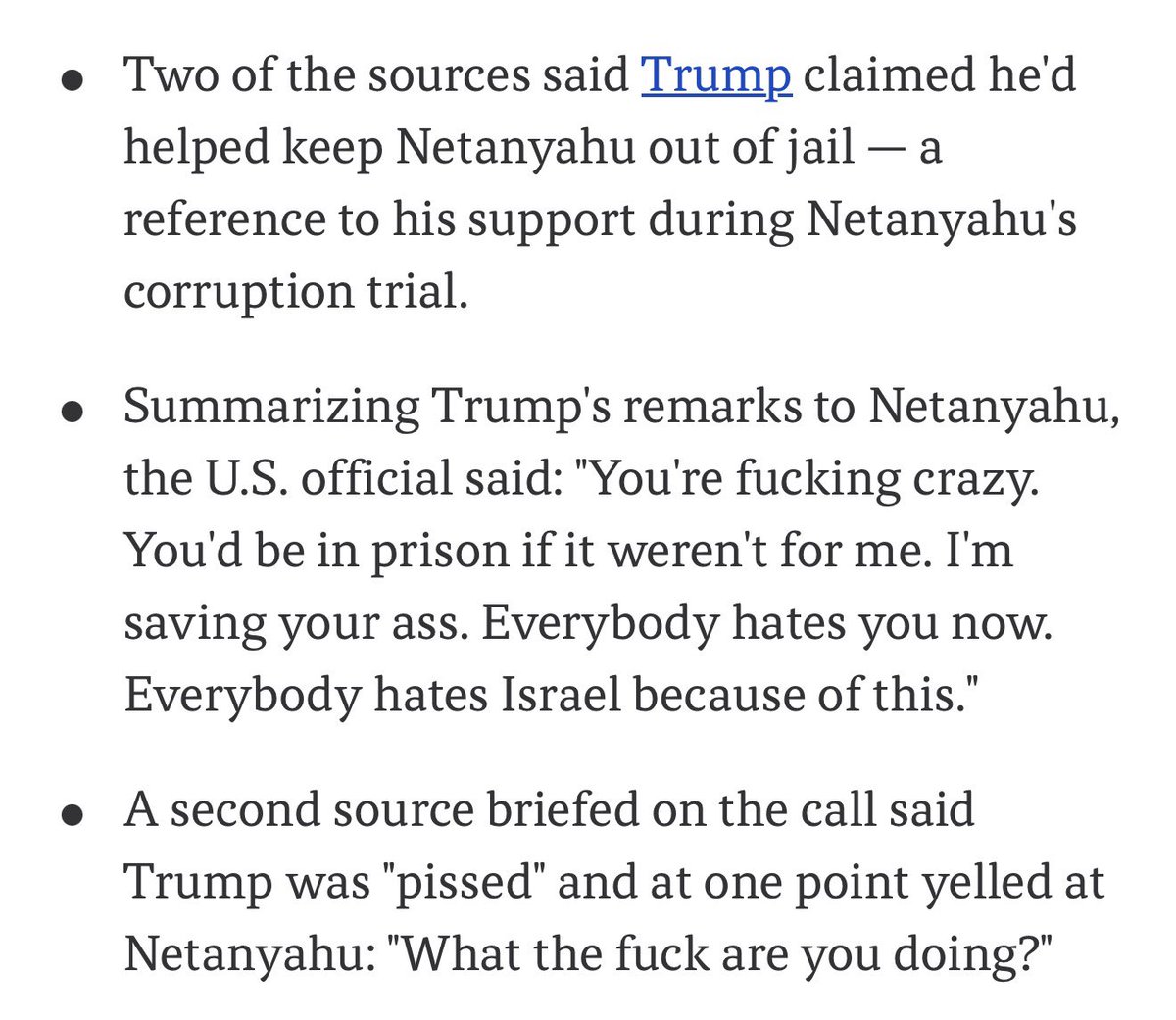
During a call between the two leaders earlier today, President Trump lashed out at Israeli Prime Minister Benjamin Netanyahu over Israel’s escalation in Lebanon and its chance at damaging peace talks with Iran, at one point calling Netanyahu “crazy” and accused him of ingratitude, two U.S. officials and a third source briefed on the call told Axios.
Summarizing President Trump’s remarks to Netanyahu, a U.S. official said to Axios: “You're fucking crazy. You'd be in prison if it weren't for me. I'm saving your ass. Everybody hates you now. Everybody hates Israel because of this.” While a second source briefed on the call said Trump was “pissed” and at one point yelled at Netanyahu: “What the fuck are you doing?”
BUSINESSES ARE NOW USING PREDICTION MARKETS TO HEDGE PROMOTIONS LOL
A BAR IN NYC HAD A PROMO IF THE KNICKS WIN, THEY COVER EVERYONE’S DRINKS FOR THE NIGHT
THE BAR PLACED A $5K HEDGE ON KALSHI THAT PAYS OUT IF THE KNICKS WIN
THE BAR WINS EITHER WAY
Commentary is one of the most important pillars of X. And sometimes the best way to share your thoughts is with video.
Today we're launching a whole new way to make them:
React with Video
Tap the repost button and start recording with green screen, split screen, or picture-in-picture.
Now available on iOS
Anonyme : Je suis pompier et ce que j’ai vu hier dans les rues de Paris m’a brisé le cœur.
On est intervenus vers 22h, après l’appel pour un feu de poubelles qui dégénérait. On pensait à un simple incident de soirée. On est arrivés sur place et c’était l’enfer. Paris, ma ville, celle où j’ai grandi, où j’ai fait mes premières gardes, était devenue une zone de guerre. Des fumées noires partout, des cris, des explosions de mortiers. Des groupes de jeunes, souvent issus de l’immigration, cagoulés, organisés, qui chargeaient les forces de l’ordre comme sur un champ de bataille.
J’ai vu des collègues policiers se faire lyncher à coups de barre de fer. J’ai vu une voiture de police caillassée alors qu’on sortait juste pour éteindre un feu qui menaçait des familles. On a été pris à partie par des émeutiers qui nous hurlaient dessus, nous traitant de “chiens”. On essayait juste de sauver des vies, et on devenait des cibles.
J’ai ramassé un gamin de 14 ans, le visage en sang, qui pleurait en disant qu’il avait suivi “les grands” pour “s’amuser”. J’ai vu une mère de famille, volets fermés, qui nous suppliait de protéger ses enfants pendant que ça cassait tout en bas. Les vitrines défoncées, les commerces pillés, les voitures brûlées… tout ça sous prétexte de “fêter” quelque chose.
Fêter, ce n’est pas casser.
C’est ça, la France en 2026 ? Un pays où on ne peut plus sortir le soir sans risquer sa vie ? Un pays où des quartiers entiers sont livrés à des clans qui ne respectent ni nos lois, ni notre histoire, ni nos pompiers, ni nos policiers ? Où on regarde impuissant notre capitale, symbole de lumière et de culture, transformée en terrain de jeu pour des barbares qui crachent sur la main qui les nourrit ?
Cette nuit, en rentrant chez moi à 6h du matin, encore couvert de suie et de sueur, j’ai pleuré comme un gosse. Pas de fatigue. De rage et de tristesse. Pour mes enfants. Pour mes collègues blessés. Pour ce pays que j’aime et qui se laisse mourir.
Réveillez-vous. S’il vous plaît. Avant qu’il ne reste plus rien à sauver.
BUSTED on camera: Karen Bass and Nithya Raman spend millions of your tax dollars on these NGOs to hand out fentanyl needles, crack pipes, and DRUGS to addicts on your streets, to keep them high and homeless so they can profit off everyone's misery. VOTE NOW!!!
Most people have no idea what President Trump’s new election-mail Executive Order USPS rule actually does.
1. Plain English: it creates a chain-of-custody system for mail ballot envelopes in federal elections.
2. Not the vote, the envelope.
3. Under the proposed USPS rule, states using mail-in or absentee ballots for federal elections would have to use standardized ballot envelopes:
-Official Election Mail logo
-Automation-compatible design
-Unique Intelligent Mail barcode
-USPS review of envelope/barcode placement
4. That means the ballot envelope becomes trackable.
5. States or election mailers would also submit key data through a USPS portal:
-Voter name
-Voter address
-Outbound envelope barcode
-Return envelope barcode
-Originating election office state
6. So officials can know: this ballot envelope was sent out, and this return envelope came back.
7. USPS would review outbound ballot mail before accepting it.
-Is it in the right envelope?
-Does it have the proper barcode?
-Is it going to someone enrolled on that state’s mail-
ballot participation list?
8. If not, the mailing goes back to the election mailer to fix.
9. The broader Executive Order also directs DHS + SSA to help create State Citizenship Lists using federal citizenship, naturalization, SSA, SAVE, and related data.
10. Those lists go to state election officials before federal elections.
11. Important: states still run voter registration. The federal list does not register anyone by itself.
12. Bottom line: this is not “tracking your vote.”
13. It tracks the envelope, creates a sent-vs-returned audit trail, helps flag discrepancies, preserves ballot-envelope records, and leaves states responsible for their voter rolls.
14. Chain of custody is not suppression. It is basic election accountability.
15. I used “proposed rule” because USPS has not finalized the rule yet.
16. The proposal says it applies to general, special, and runoff federal elections, not primaries or UOCAVA military/overseas ballots, and it requires unique barcodes on outbound and return envelopes.
17. The rule would require voter name/address plus outbound and return envelope barcode data through a USPS portal, with updates allowed until the last day ballots may be mailed under state law.
18. It also says USPS does not alter voter eligibility or manage state voter rolls.
19. The EO separately directs DHS/SSA to create State Citizenship Lists and directs DOJ enforcement and five-year preservation of participation records, excluding cast ballots.
20. There is one more thing it does, all I'll say is, watch out ballot mills. 😎
The BBC have run a sneering attack piece insulting both myself and Elon Musk...
A Restore Britain Government will defund the BBC, day one.
Let's see who's laughing then.