As useful as my carefully curated feed is to me, I can't justify sticking around here anymore with the policy changes. Check my updated name and you'll know where to find me.
@salavatov I ran into the same thing on a fresh W11 install. You may be missing the current cumulative updates, and I had to reboot an extra time after installing that.
Following up, since I had to do a new installation.
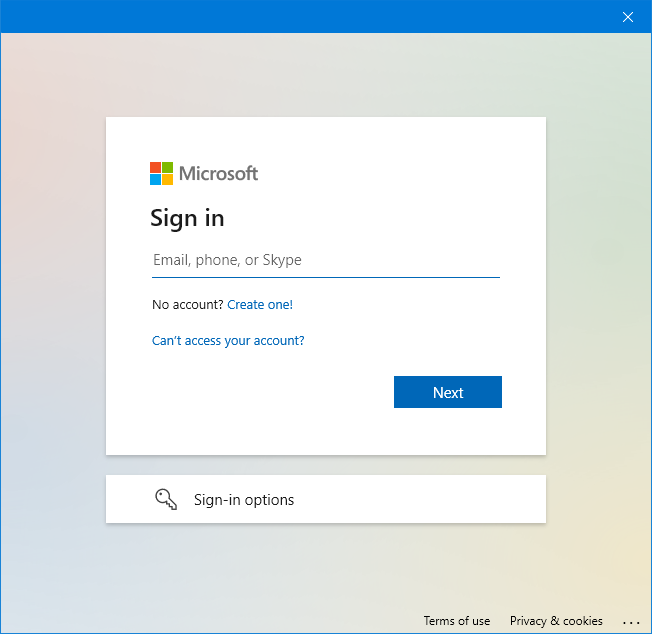
Target must be AzureAD member and have Oct 2022 or later Cumulative Update. Had to do extra reboot *after* CU was installed & rebooted for login to work or else got AADSTS293004 error. Edit RDP file as below and it should work.
RDP using FIDO2 from W10 22H2 local login to W11 22H2 AzureAD login. Create RDP file, add enablerdsaadauth:i:1 & redirectwebauthn:i:1 to config. Click Sign-In Options -> Security Key, then follow prompts. Thanks to @_DanielWep and @merill for WVD details that gave needed hints.
Running VMWare Workstation on a Hyper-V-enabled system? Is your VM running slower over time? Try dropping to a single CPU core instead of 2+ and see if the problem continues. It worked for me when changing RAM settings and other performance options did not.
@SamRuben8@ostap_kozak@NOELreports Until very large bombs can be individually delivered with reasonable chances of success, it makes little sense to use smaller stuff that has a high chance of interception when they can be used on targets less likely to be effectively defended.
@SamRuben8@ostap_kozak@NOELreports The bomb that partly destroyed the Kerch Bridge is estimated to have been between 1000-2000 kg. Recall the HIMARS strikes on the Nova Kakhovka Bridge and the limited damage they did. The amount of small ordinance required to severely damage Kerch would deplete inventory too much.
@chang_koo@SwiftOnSecurity I've read in a few places that a big reason for broken or limited functionality is that they're trying to uncruft 30 years of code, much of which was poorly- or undocumented.
@titivilis@SwiftOnSecurity No one can blanket the US or even just its major cities at the moment, if they ever could before. No, the worry isn't dying in nuclear fire. It's watching your friends and family die of starvation from the completely collapsed supply network and nuclear winter that would follow.
@grimsr3ap3r79 @elonmusk@johnkrausphotos@DJSnM@ThePrimalDino In addition, the last three FH missions had the center core separate at 120 km or lower and 14,500 km/h or slower, both well short of what's required to get into orbit. You need to be about 170 km up and 25,000 km/h to achieve a minimally stable orbit.
@grimsr3ap3r79 @elonmusk@johnkrausphotos@DJSnM@ThePrimalDino Each core is a fully functional Falcon 9 core with all the avionics necessary to fly a regular F9 mission. They have to guide themselves back to landing, for example. Center core likely handles things until BECO. Stage 2 has avionics for post-MECO orbital insertion.
@grimsr3ap3r79 @elonmusk@johnkrausphotos@DJSnM@ThePrimalDino Center stages don't have enough velocity to reach orbit, and coordinating a collection point *and* the customer's desired orbital entry point would make launches far more difficult, if not impossible.