A blood test designed to detect multiple cancers identified cancer signals across 17 broad cancer types, such as ovarian, lung, breast and colorectal cancers, and many which do not have recommended screening tests.
Learn more: https://t.co/YXGGoOaMCi
This is the first result from our new molecular biology lab, where a team of Anthropic biologists is using Claude to explore and accelerate fundamental biology research. There, Claude works through data and literature to generate hypotheses and candidate biological systems to study. After our scientists review Claude’s hypotheses, they test the most promising ideas, with all lab work done by our scientists.
We’d like to extend this approach to a broad range of problems—in genomics and in other fields. If you have a proposal for a research question, we’d like to hear from you.
This is wild.
Claude just found something humans missed.
It spotted a hidden repeat pattern in raw bacteriophage DNA…
…and uncovered a previously unknown enzyme system in bacteriophages with CRISPR-like repeats. 🤯
950 agents. 21 hours. 210M tokens.
“A guy who’s putting the city on his back...”
After earning All-NBA First Team honors and leading the @DetroitPistons to their third-ever 60-win season, Cade Cunningham keeps taking his game to new heights 👏
Cade opens Year 6 vs. Boston, Oct. 20 on NBC and Peacock!
Just in: Detroit Pistons All-Defensive forward Ausar Thompson has reached agreement on a five-year, $155 million rookie-scale contract extension, sources tell ESPN.
Muscle loss during glucagon-like peptide-1 (GLP-1) receptor agonist therapy was the focus of a lively debate at the American Diabetes Association (ADA) 2026 Scientific Sessions held in June. Here is a brief recap of the debate and its clinical implications: https://t.co/Z2jIfA6Ic2
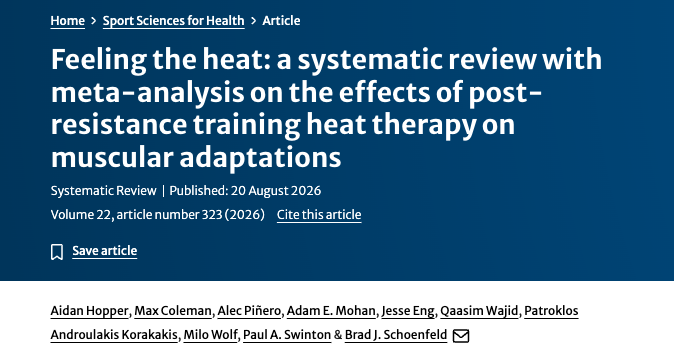
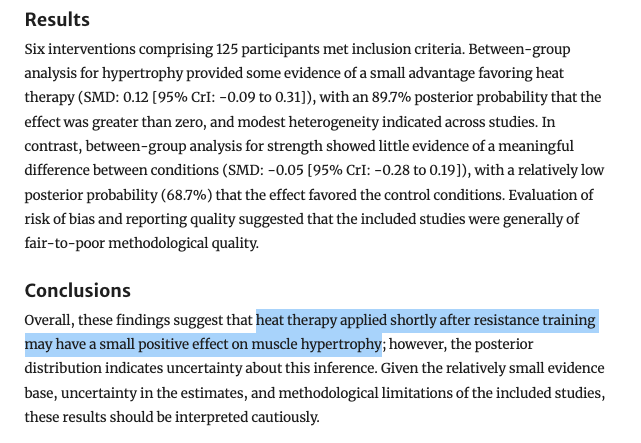
Passive heat exposure after resistance training may lead to greater muscle hypertrophy.
There's not yet conclusive evidence, but this new meta-analysis by @BradSchoenfeld suggests there may be some benefit!
Heat itself is a cellular stressor, and research has shown that adding whole-body heat after exercise can increase heat-shock protein expression and activate mTOR signaling. That provides a plausible mechanism.
My protocol lately has been about 20 minutes in a 180-degree F sauna after lifting. I do it for the muscle adaptations along with the well-evidenced cardiovascular and brain health benefits.
MIT published a brutally honest report on what AI is doing to students.
A committee of professors and students spent five months studying how AI changed learning on campus, and the findings read like a warning to every university on the planet.
Study groups are disappearing. Office hours are emptying out. Problem sets and take-home exams no longer prove anything, because AI can produce credible solutions to almost any written assignment in the undergraduate curriculum. Students who lean on chatbots lose mastery and confidence, and some slip into what the report calls cognitive surrender, reaching for AI at the first hint of struggle.
The numbers are rough. 46 percent of surveyed MIT undergrads use LLMs daily. 90 percent worry about their own overreliance. Undergrads who feel AI makes them replaceable now outnumber those who feel it makes them capable.
The committee's answer surprised me. They refused to fight AI with surveillance. The report calls AI detectors unreliable, says lockdown browsers feel like spying, and warns that policing students builds a classroom atmosphere of mutual distrust.
Instead, MIT wants to rebuild education around the things AI can't replace. That means oral exams, semester portfolios, in-person project work, and a required social component in every subject. The report even floats the idea of rethinking grades entirely, since without a GPA to optimize, much of the incentive to cheat with AI evaporates.
The committee warns professors against replacing undergrad research assistants with AI agents just because they're cheaper, because a university exists to grow people, not output.
The most famous tech school on earth admitted the machines broke its way of teaching. Its answer is more humans, not more software.
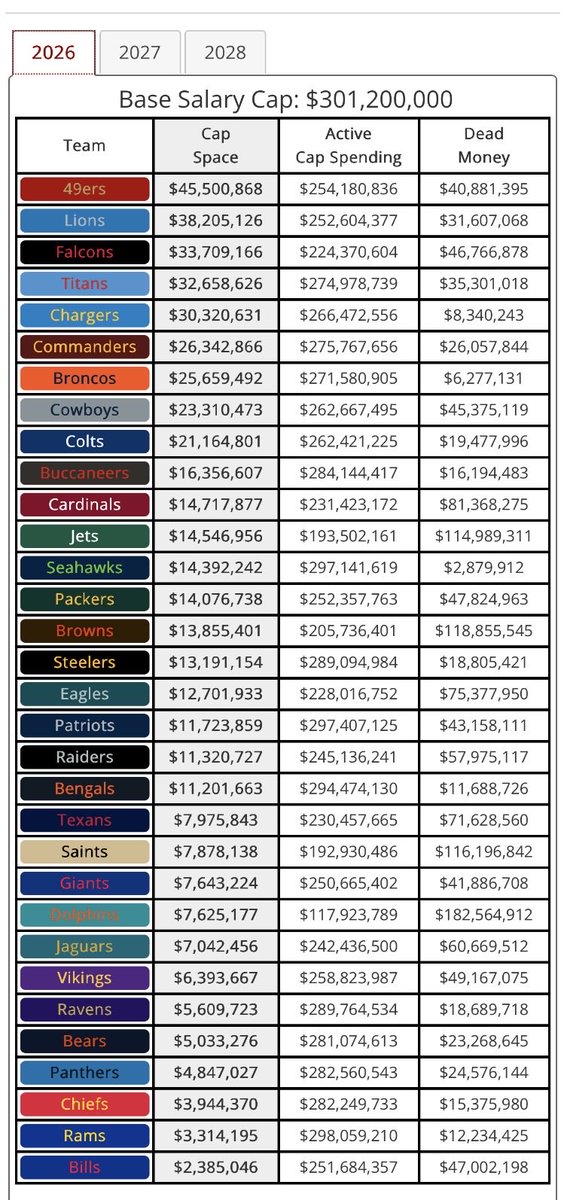
Lions cap situation for the 2026 and 2027 seasons. This is just incredible work by ownership and management, while maintaining one of the top 5 rosters in the NFL. Not to mention one of the youngest rosters in the league. Major props.
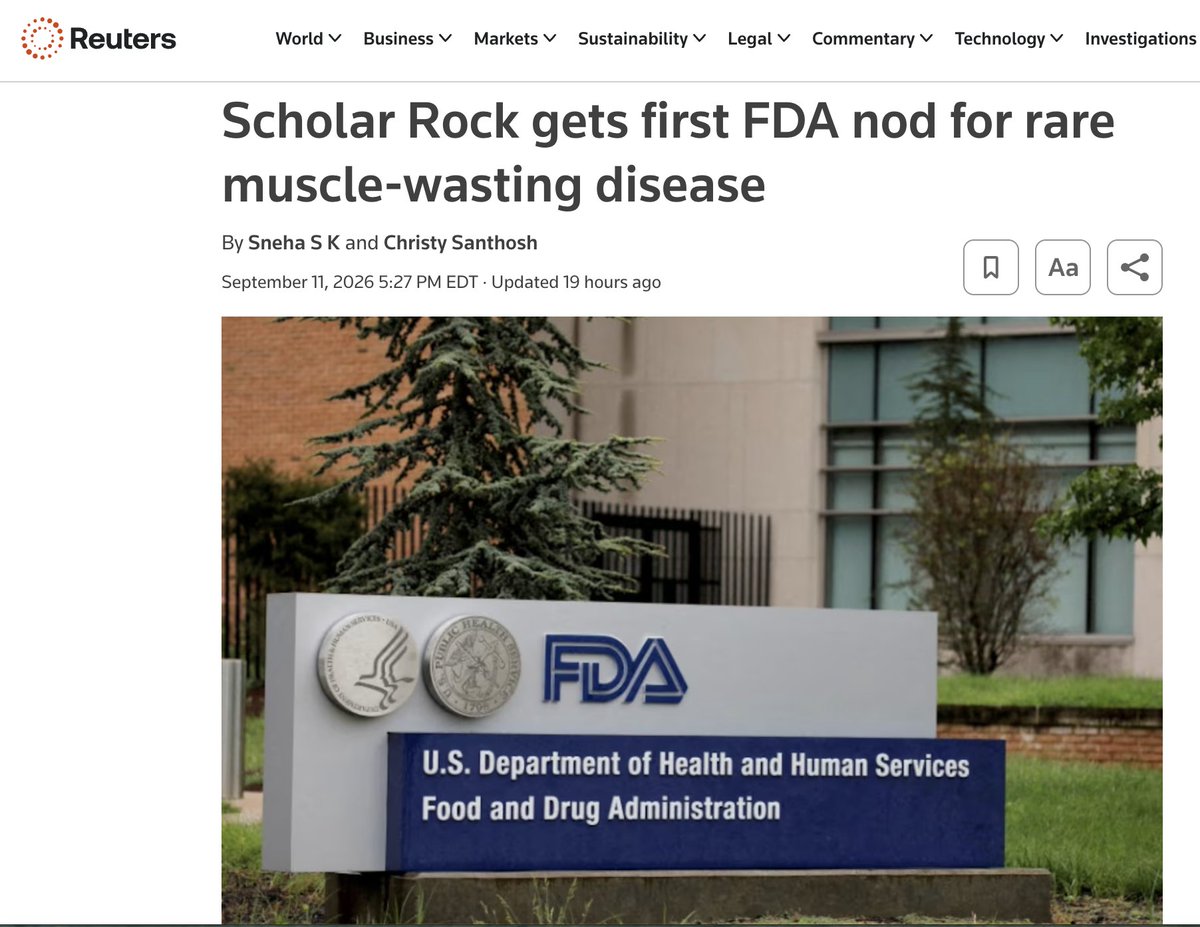
The FDA just approved a myostatin inhibitor for a rare muscle wasting disease to prevent muscle loss.
Guaranteed this will be approved soon to be taken with GLP-1s.
Myostatin inhibitors will be as big as GLP-1s.
Is AI changing how we think? 🧠
New research links frequent AI use with lower critical thinking scores, particularly among younger adults. The big question: Is AI causing it?
Read more in Lifespan Magazine at https://t.co/sSsfjkkyDR?
A Thursday release from the Branch County Sheriff’s Office that a scammer is calling Branch County residents and posing as a Sergeant within the Sheriff’s Office, using their real name and badge number to “appear legitimate:" https://t.co/DDpuyLeCUJ
Anthropic’s Economics team is sharing a new model of how AI might affect economic growth, jobs, wages, and more by 2030.
Explore the scenarios, tell us what you think will happen, and see how your answers compare to more than 10,000 Americans. https://t.co/AvQlEZNxR0
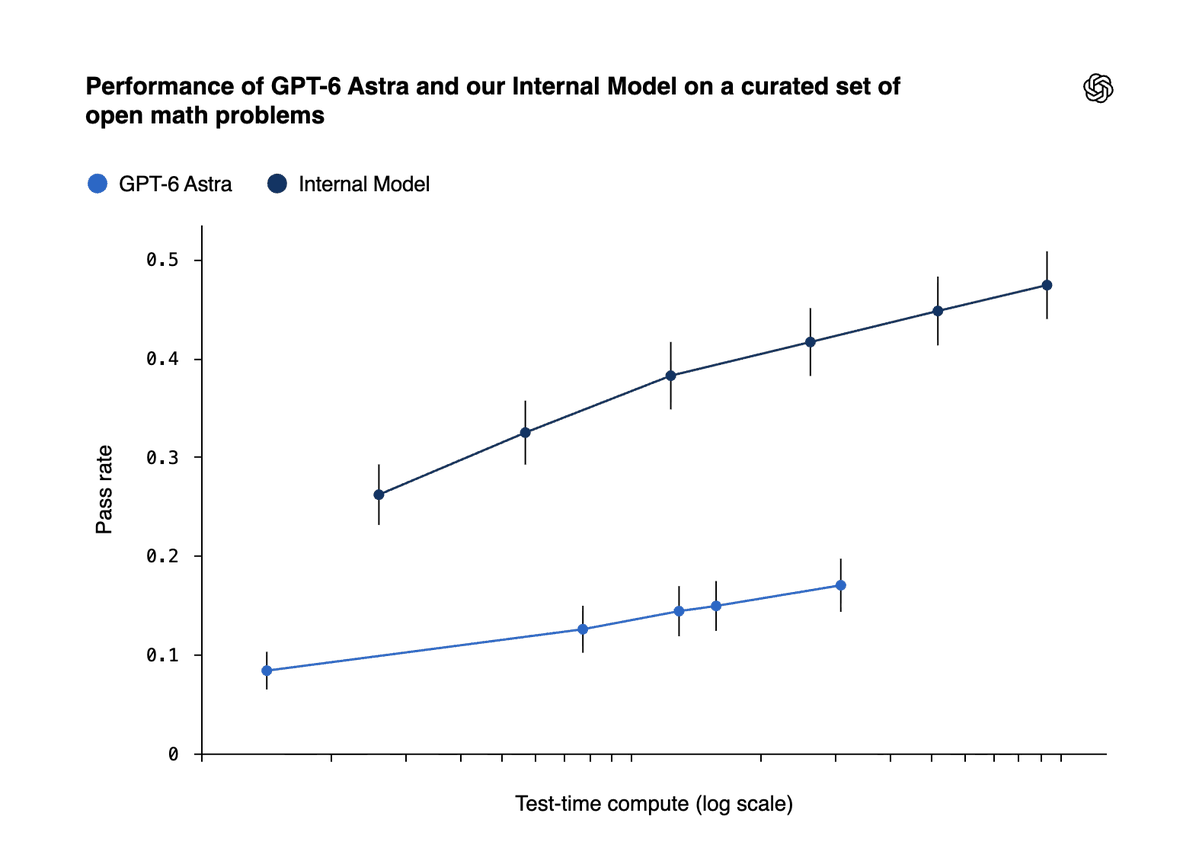
This model represents a step-function improvement on many benchmarks, and its training is ongoing.
Our internal model group arrived at the Navier–Stokes solution in 88 hours, using around 10,000 coordinating AI agents.
Throughout the effort, we maintained the strict safeguards—including monitoring and isolation—that we apply to all our frontier evaluations.
We’re sharing a solution to the Navier-Stokes Millennium Prize Problem, one of the deepest problems at the frontier of mathematics.
The proof was produced by a group of agents, using an OpenAI next-generation model significantly more capable than GPT-6 Astra.
The problem concerns whether the description of smooth three-dimensional fluid motion modeled by the Navier-Stokes equations can break down. It has remained unresolved for roughly 90 years.