@cenkkirdaal@vedatyilmz@PelinBtn567@AkifAkmee Kelime oyunları yalnızca şeytanın sizi ikna etmek için kullandığı kılıflar. Siz günün sonunda İsa’ya şükür diyorsanız, İsa’ya dua ediyorsanız, onun heykelleri önünde el açıp ondan bir şey istiyorsanız, İsa bizi cennete götürecek, İsa bizi korur diyorsanız, dümdüz ŞİRK oluyor.
@PelinBtn567@AkifAkmee@vedatyilmz@cenkkirdaal İsa’nın babadan farklı olması tabiiki tanrı olmadığı anlamına gelir. Neden isa’nın tanrı olduğuna inanmak için kendinizi zorluyorsunuz? Bu yol bu kadar bariz bir şekilde şirk ve şeytan yoluyken kendinize bu kötülüğü yapıyorsunuz? Bu konu ebedi hayatı kaybedecek kadar ciddi.
To interpret “I and the Father are one” in John 10:30–33 as a claim that Jesus shares an ontological unity with God is to make the text say something it does not say. Jesus’ words should be understood in light of his own explanations:
“For I have not spoken on my own authority. The Father who sent me has himself commanded me what to say and what to speak. And I know that his commandment is eternal life. So whatever I say, I say just as the Father has told me.” (John 12:49–50)
Jesus explicitly states that he does not speak on his own behalf but conveys the commandments of the God who sent him. This, then, is the explanation we should turn to when interpreting “I and the Father are one”: what Jesus says is what the God who sent him has told him to say. The unity in question is a unity of message and will. To move from this to the conclusion that “Jesus is the same being as God” requires a further argument. The fact that his opponents accused him of making such a claim does not, by itself, provide that argument. Should we understand someone’s words through the accusations made against him, or through his own explanations?
The same problem arises with John 5:18. The passage explains why Jesus’ opponents wanted to kill him. But their accusation that he was “making himself equal with God” is not the same thing as Jesus actually making that claim. Reporting an accusation should not be treated as Jesus accepting it.
Moreover, inferring divinity directly from the terms “Father” and “son” is inconsistent with how these terms are used throughout the texts. Neither calling God “Father” nor describing people as “sons of God” is unique to Jesus:
• Matthew 5:9: “Blessed are the peacemakers, for they will be called sons of God.”
• Matthew 5:45: “So that you may be sons of your Father in heaven.”
• John 1:12: “But to all who received him, who believed in his name, he gave the right to become children of God.”
• Romans 8:14: “For all who are led by the Spirit of God are sons of God.”
• Luke 3:38: “…the son of Enosh, the son of Seth, the son of Adam, the son of God.”
If these expressions do not make the other people to whom they refer divine, then calling Jesus “the Son of God” cannot, on its own, establish his divinity either. If a distinction is to be drawn, it must be demonstrated separately.
Furthermore, Jesus does not merely speak of other people’s God; he explicitly states that he himself has a God:
“I am ascending to my Father and your Father, to my God and your God.” (John 20:17)
Here, Jesus identifies the God to whom he turns as the very same God to whom his followers turn. How can we conclude from “I and the Father are one” that Jesus is God while failing to account for his words “my God”?
Jesus is equally clear when identifying who God is:
“This is eternal life: that they may know you, the only true God, and Jesus Christ, whom you have sent.” (John 17:3)
Here, Jesus identifies the Father as “the only true God” and himself as the one sent by that God. Likewise, when explaining the most important commandment, he says:
“Hear, O Israel: the Lord our God, the Lord is one.” (Mark 12:29)
Paul’s statement that “for us there is one God, the Father” fits this same framework. (1 Corinthians 8:6)
The point, then, is not to isolate a few expressions from their context and construct a doctrine of divinity around them. It is to read those expressions alongside Jesus’ own explanations. Jesus describes himself as someone sent by God, someone who speaks what God commands, and someone who addresses God as “my God.” Turning those statements into evidence for a theology that identifies Jesus as God is precisely the contradiction that needs to be explained.
@vedatyilmz@Ihunanya_chi Çok güzel açıklama. Temiz akıl ve temiz kalp sahiplerini ikna edebilecek kadar iyi. Diğerleri ise görmezden gelecek bu açıklamayı maalesef. Post sahibi yorum bile yapmamış. Çünkü yapamaz. Tüm düşüncesini değiştirmesi gerekir ama bunu çok az kişi yapabilir.
جريمة حرب جديدة موثقة:
قوات الاحتلال الإسرائيلي تختطف طفلا فلسطينيا يبلغ من العمر 9 سنوات، في مشهد يجسد وحشية الاحتلال وانتهاكاته بحق أطفال فلسطين.
برسم المحكمة الجنائية الدولية، إلى متى سيبقى أطفال فلسطين ضحايا لجرائم الاحتلال دون محاسبة؟
@ManyFindus@dailyafganistan Allah müslümanların müslümanlığından memnun değil diye de düşünülebilir. (Savaşı ve Gazze’yi doğal afet olarak düşünemeyiz) Türkiye’nin müslümanlığı beğenilecek gibi değil. Birçok kadın sokakta çıplak dolaşıyor. Çok fazla şirk var. İçki, büyü, fal gibi günahlar da çok fazla.
@Leonizm351 Dünya sandığınızdan daha büyük. Bir aracın kalkışını izlemiştim. Ciddi uzaklaştıktan sonra ancak başlıyor eğim görülmeye. Çok daha fazla uzaklaştı ve eğim arttı. km veremem ama dünyadan çok yukarı çıkmak gerekiyor eğimi görebilmek için. Videolar fotoğraflar var değişik ülkelerin.
@ozgup@ulanburki Ben de diyorum bu sapıtmış kadınların hayatında erkekler yok mu? Nasıl tepki göstermiyorlar? Senin gibi erkekler varmış demekki destek olan. El birliğiyle mahvettiniz yozlaştırdınız dünyayı. Ahlak diye bir şey kalmadı
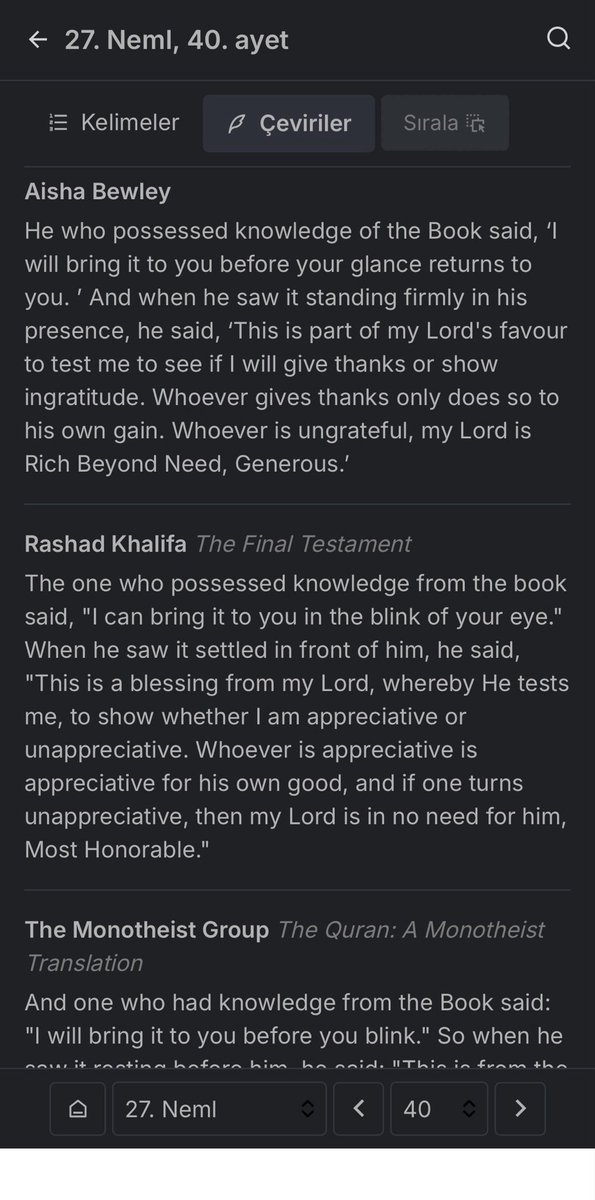
@AshtonForbes Işınlanma Kuranı Kerim’de yazıyor: https://t.co/uwrU3wzEbv en altta ingilizcesi var okuyun ve düşünün. Önceki ve sonraki ayetleri de okuyun.
@19891989can@haluklevent Saflıkla aptallık arasında da bir sınır olmalı canım. Sizinki aptallığa girmiş artık. Kusura bakmayın. İnsan tamam saf ve iyiniyetini kaybetmesin ama aptal ve enayi olmamak için de aklını kullansın. Bu kafa kötü niyete çok açık bir kafa. Ama sorun şu ki kötüyü savunuyor!
@19891989can@haluklevent Sayısız insandan borç aldığını kendisi söylüyor. Bu kadar para konusunda geniş birisi, kendi elinin altındaki paraları kumara kullanmayacak yani? Cidden böyle düşünen varsa mantığından ve hayat bilgisinden şüphe etmek lazım.