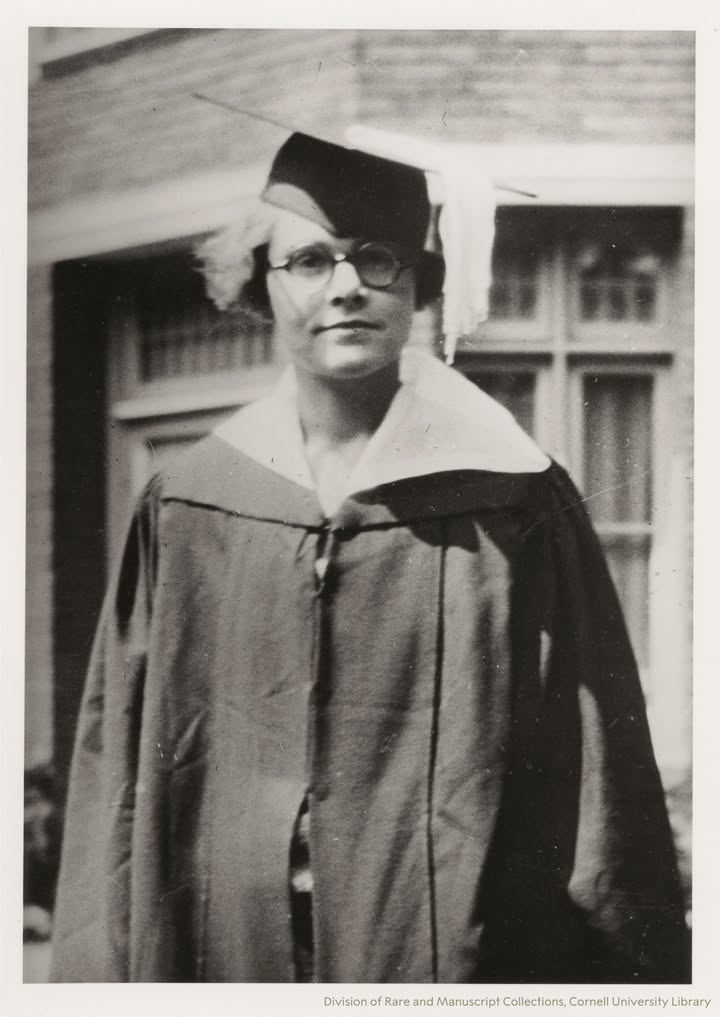
Barbara McClintock almost didn’t go to college. She was a talented student, but her mother believed a degree would harm her chances of marriage and vetoed her plan to study.
Luckily, her father intervened and McClintock was able to attend the Cornell College of Agriculture, where she took the course that would change her life: genetics. It kickstarted her interest in the field of cytogenetics – the study of chromosomes and their genetic expression.
McClintock began to study the mosaic colour patterns of maize at the genetic level. She showed that parts of the corn's genetic code can shift from one place to another within its chromosomes. These so-called 'jumping genes' explain why corn kernels have different colours.
When she presented her findings - which departed from common wisdom - at a symposium, members of the audience were perplexed or hostile. As a result, McClintock stopped publishing and lecturing, but she retained her self-belief.
“I just knew I was right,” she said later. “Anybody who had had that evidence thrown at them with such abandon couldn’t help but come to the conclusions I did about it.”
It took years for the scientific community to come to the same conclusions. McClintock was awarded the Nobel Prize in recognition of her work – even if she had to wait 30 years after making the discovery.
Learn more: https://t.co/VjbOygSU5K
GenZ daily routine:
- Wake up
- Stare at 6.7 inch screen
- Work on a 16 inch screen
- Relax with a 55 inch screen
- Stare at 6.7 inch screen
- Sleep
Repeat
Dato curioso: los pingüinos machos “proponen matrimonio” ofreciendo la piedra más lisa que puedan encontrar, y si la hembra la acepta, se convierten en pareja.
Este caracol fue invadido por Leucochloridium, un parásito que se instala en sus tentáculos oculares, los hace latir como orugas y altera su conducta para que sea devorado por un ave. Así completa su ciclo. La naturaleza es cruda y fascinante.
https://t.co/jl8PJdAlKm
"As a scientist, I was trained to seek evidence, test hypotheses, and adjust based on data. However, in the classroom, I was teaching without any feedback. It felt like speaking into the void, without an opportunity to make adjustments. I needed a way to gauge students’ understanding before it was too late." #ScienceWorkingLife https://t.co/rI2eGs2tDm