I love my family and technology. Founder and CTO @ Software Mobile Solutions, entrepreneur, guitar player, associated professor @ Universidad del Cauca and more
🗣️Acaban de publicarlo directo desde el Telegram de mi comunidad
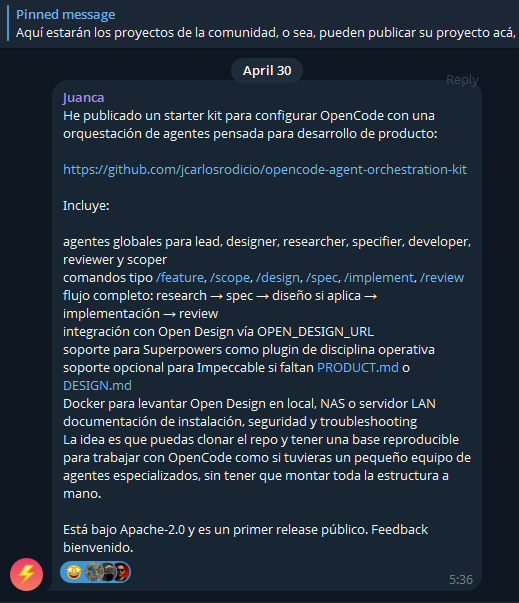
Imagina clonar un repo y tener de inmediato un equipo completo de agentes IA especializados (Lead, Designer, Researcher, Specifier, Developer, Reviewer y Scraper) trabajando en flujo real:
- Research → Spec → Diseño (si hace falta) → Implementación → Review
- Comandos mágicos: /feature, /scope, /design, /spec, /implement, /review
- Integración nativa con Open Design
- Soporte para Superpowers e Impeccable
- Todo con Docker listo para local, NAS o servidor LAN
Sin montar nada a mano.
Solo clonas y tienes tu mini-equipo de élite reproducible.
REPOOO👇
Instead of watching Netflix tonight.
Spend a day mastering Claude here: https://t.co/Vn60ElPZ2i
→ Level 1 - 24 min: The basics.
Claude For Dummies: https://t.co/HNa5MrCLVU
Claude Setup: https://t.co/jw2qdIcjnh
→ Level 2 - 1 hour: Real workflows.
Claude Cowork: https://t.co/uWTpOI3Woc
Claude for teams: https://t.co/qxlcqhf8bM
Claude Design: https://t.co/ZY8Fg5D2ea
Cowork + Projects: https://t.co/Q7AN9CZAbO
Claude for slides: https://t.co/L0bPMgXci6
Claude Skills: https://t.co/6cHYYfjXEA
→ Level 3 - 3.5 hours: The pro moves.
Avoid sycophancy: https://t.co/5i8xSJBGUl
Claude Code: https://t.co/UgE9xBXVbE
Claude 101: https://t.co/OvBmlvnVqL
Stop hitting Claude limits: https://t.co/j5fEzSH5br
Stop Prompting: https://t.co/j1LATSJiat
→ Level 4 - 8 hours: Expert mode.
Claude Computer: https://t.co/TxYuHPjgbV
Build with Claude API: https://t.co/RcCbfNjlzz
Pro tip: Don't binge it. Do one level per sitting.
Actually apply each guide before moving to the next
If I had to become an AI engineer in 90 days, I would not start with courses.
I would build projects from these 10 GitHub repos.
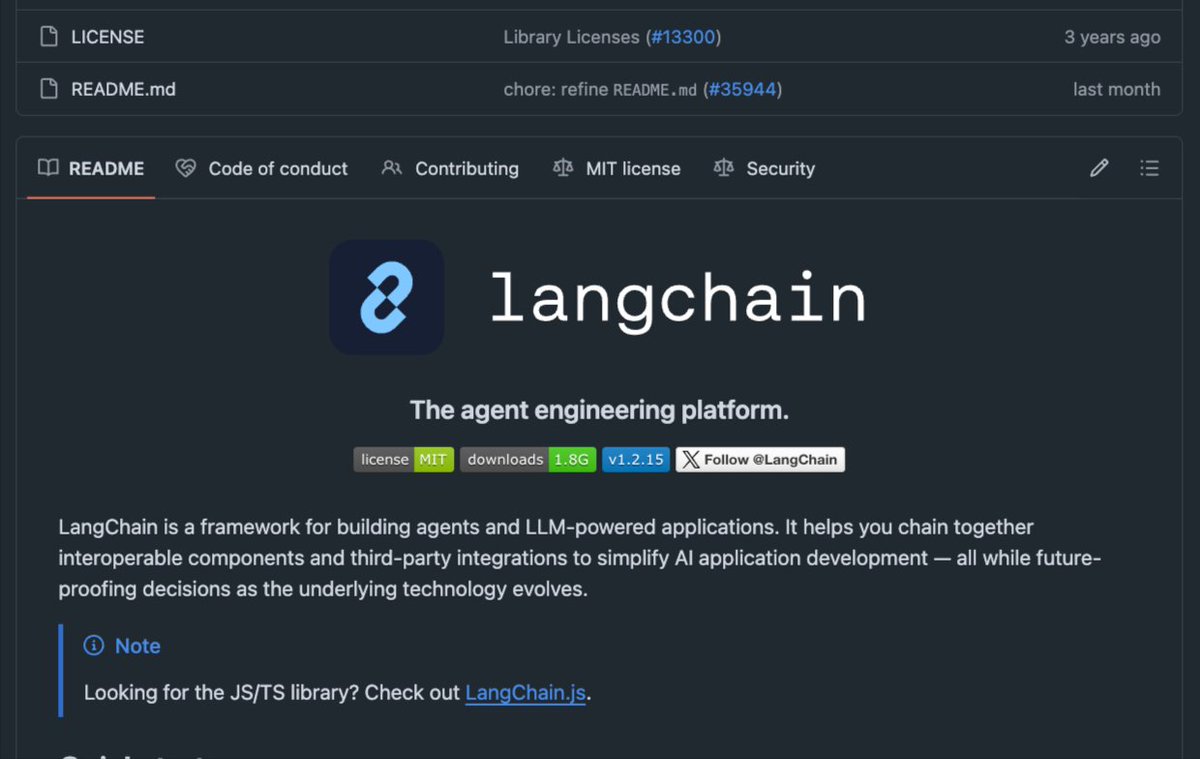
1. LangChain
The LLM application framework on almost every AI engineer JD. If you want to build production LLM apps, start here.
repo → https://t.co/alIh6rDDIu
2. LangGraph
Stateful agents as graphs. The repo JDs mean when they say "agentic workflows."
repo → https://t.co/bzVBn9uecV
3. LlamaIndex
The go-to framework for RAG and document agents. Every "retrieval pipeline" JD points here.
repo → https://t.co/m4oJ9FiCrX
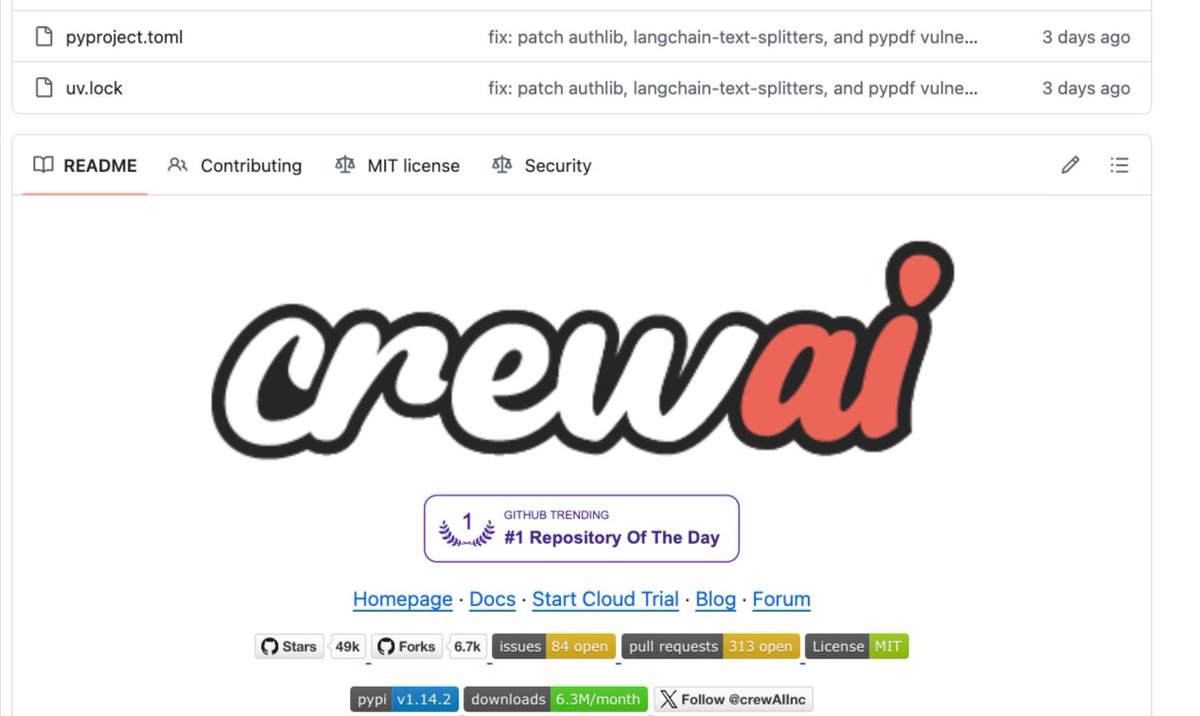
4. CrewAI
Multi-agent teams with roles and tasks. Used in production by enterprises across the Fortune 500.
repo → https://t.co/0xohE065sD
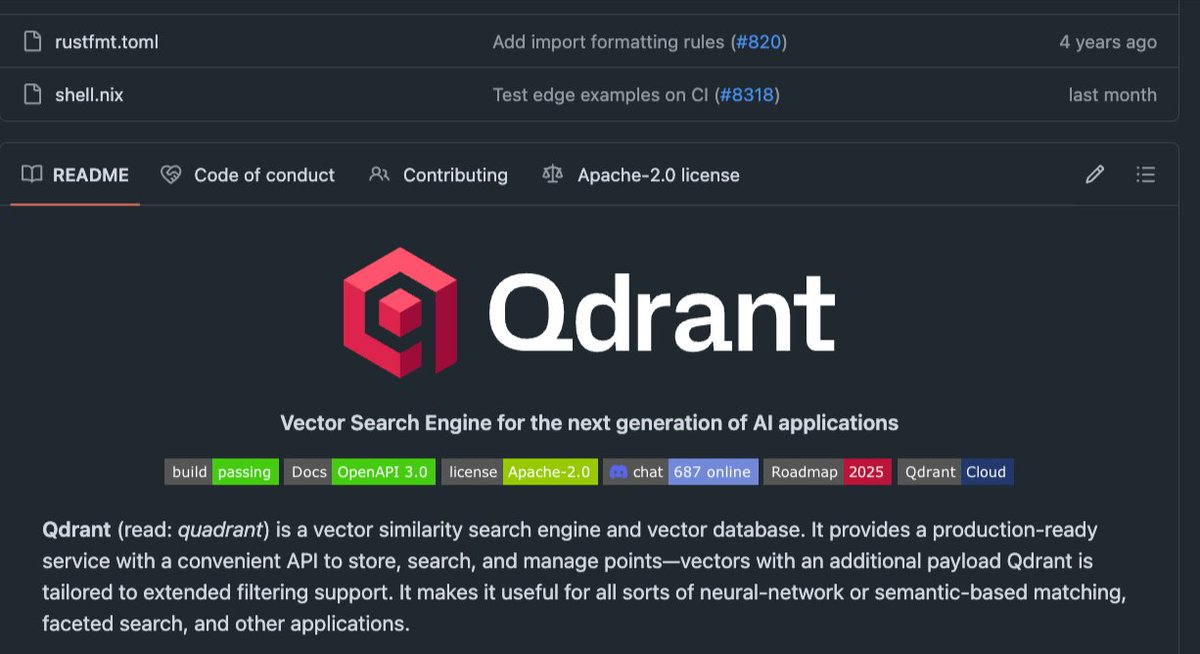
5. Qdrant
A production vector database written in Rust. JDs name it alongside Pinecone, Chroma, and FAISS.
repo → https://t.co/ziSSXW2dzZ
6. Ragas
The standard framework for evaluating RAG pipelines. Hallucination, faithfulness, relevancy, all measurable.
repo → https://t.co/vgOInvREU5
7. Ollama
Run open-source LLMs locally in one command. JDs ask for local inference for cost and privacy reasons.
repo → https://t.co/gyZhUdzsnZ
8. Awesome MCP Servers
Model Context Protocol is the newest skill on JDs. This repo indexes every production MCP server out there.
repo → https://t.co/ejVOgkRJDX
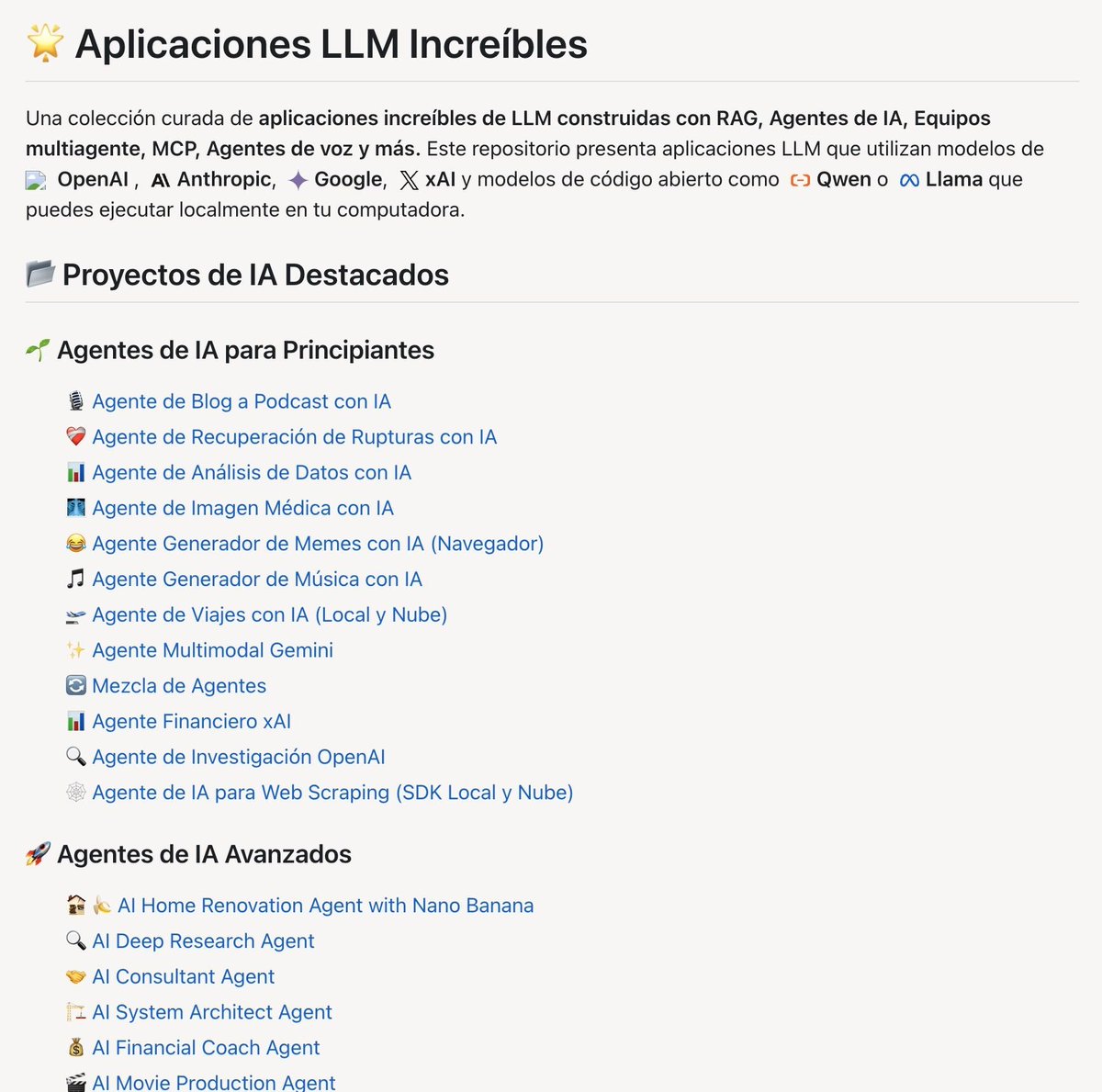
9. Awesome LLM Apps
100+ end-to-end templates for RAG, agents, multi-agent teams, voice agents, and MCP. Real working code.
repo → https://t.co/oXrD5A8K6a
10. AI Agents for Beginners
Microsoft's free 12-lesson curriculum covering the full AI agent stack. No paywall, no signup.
repo → https://t.co/7dNsDw6bTj
AI engineer job descriptions in 2026 keep asking for the same things: RAG, agents, vector databases, evals, MCP.
These 10 repos teach all of it.
Pick one. Build one project. Push it to GitHub. That's how you start.
100% free. 100% open source.
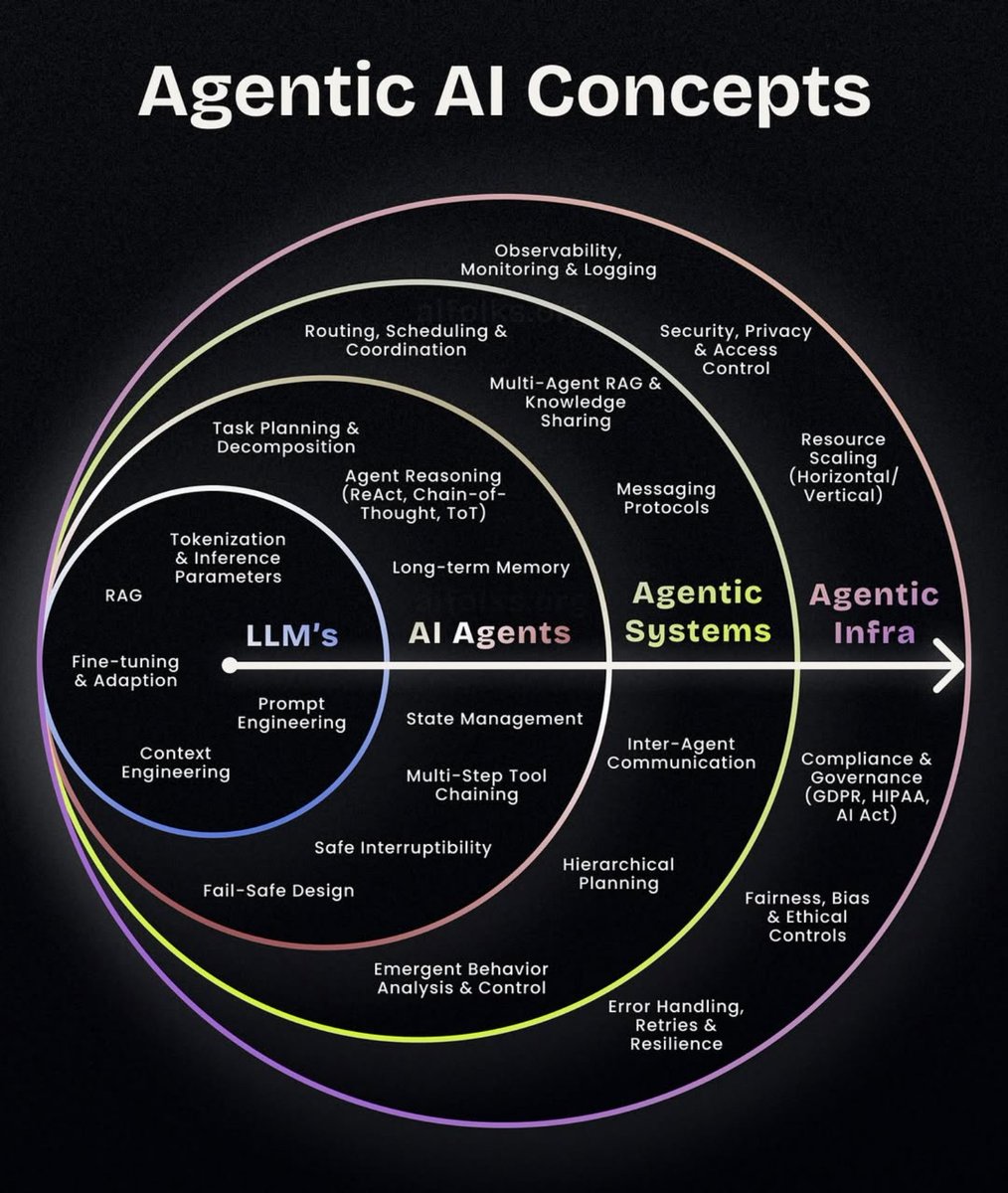
Agentic AI Concepts are reshaping how AI moves from passive models to active, autonomous systems.
At the base, LLMs handle tokenization, fine-tuning, and prompt engineering.
Building on this, AI Agents bring reasoning (ReAct, Chain-of-Thought, ToT), memory, and multi-step tool use. When combined,
Agentic Systems enable inter-agent communication, planning, and resilience at scale.
Finally, Agentic Infrastructure ensures compliance, governance, security, fairness, and ethical use.
Together, these layers form the foundation of the next generation of autonomous AI ecosystems.
Cada vez agradezco más estos artículos escritos desde el sentido común y el conocimiento del sector.
"La incómoda verdad sobre el vibe coding"
¿Estamos construyendo software o castillos de arena digitales?
Desde su aparición cada vez se habla más del vibe coding. Esa práctica de "programar por sensaciones", describiendo lo que quieres en lenguaje natural y dejando que la IA haga la magia. Y, para qué engañarnos, funciona. He visto (y creado) prototipos en un fin de semana que antes llevaban meses.
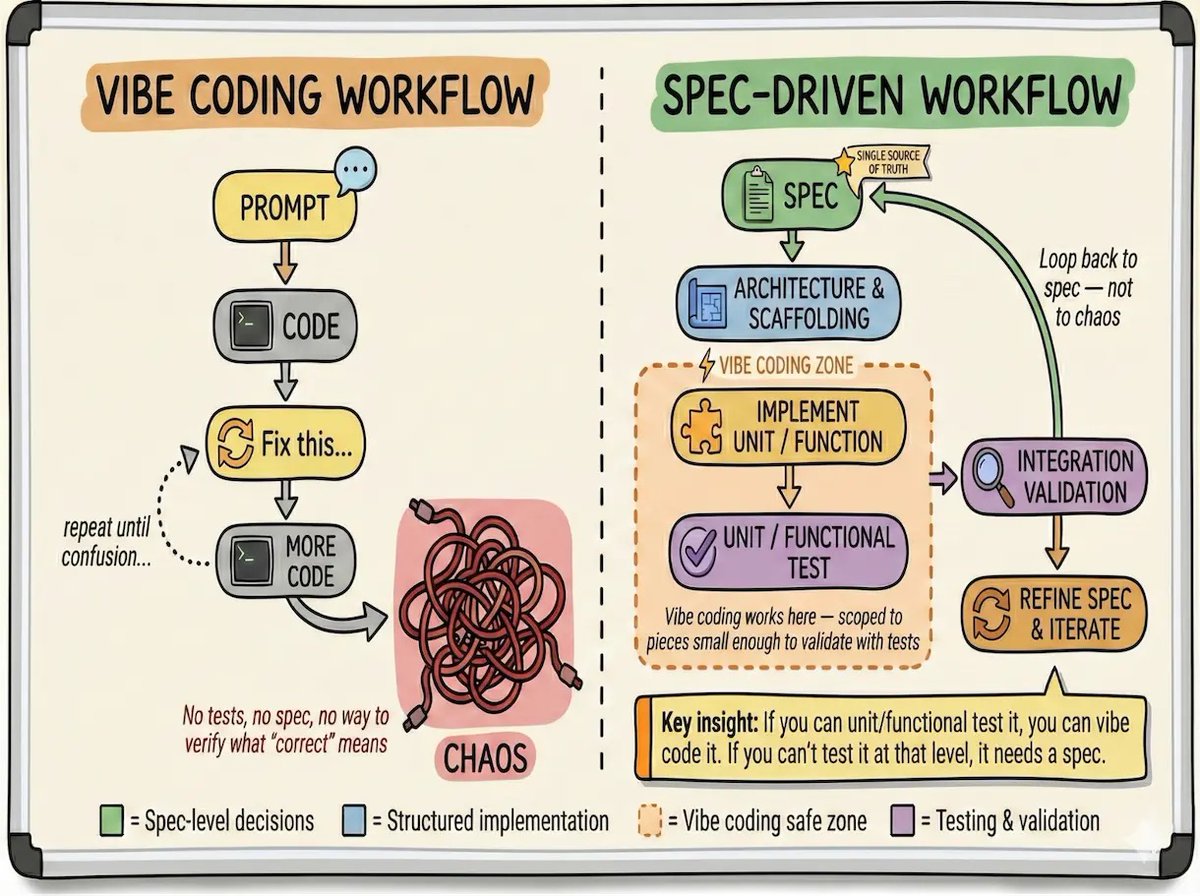
Pero hay una realidad incómoda que el hype no te cuenta: el vibe coding no escala.
Hay un patrón que se repite: a los tres meses, el proyecto choca contra un muro. Cambias un botón y se rompe el login. Le pides a la IA que lo arregle y rompe tres cosas más.
¿Por qué pasa esto?
Porque construir sin especificaciones hace que la intención se pierda. El código generado se convierte en la única fuente de verdad, y la IA (con su ventana de contexto limitada) deja de entender el "porqué" de las decisiones.
La solución no es dejar de usar IA, es usarla con criterio:
1️⃣ Spec-Driven Development: Deja de tratar tus prompts como notas de usar y tirar. Tus especificaciones deben ser la fuente de verdad al que el código tiene que obedecer. Si algo falla, no parches el código: refina la spec y regenera.
2️⃣ La técnica sigue importando: La IA baja la barrera de entrada, pero no elimina la necesidad de saber arquitectura, dependencias y buenas prácticas. Una especificación escrita por alguien que no entiende esto lo que hace es escribir una carta a los Reyes Magos.
3️⃣ Vibe para explorar, Spec para construir: El vibe coding mola para prototipar rápido o para tareas minúsculas a nivel de unidad. Pero para sistemas que deben mantenerse y durar, necesitas guardarraíles.
La magia no está en las "vibraciones", está en saber exactamente qué quieres y expresarlo con tanta claridad que ni una IA pueda malinterpretarlo. Fin 😁
Untalked Microsoft course teaching AI agents from scratch:
Start Fast – LangChain setup, first LLM call, local/cloud ready
Build Conversations – Memory, streaming, structured outputs
Give AI Superpowers – Function calling, type safety, autonomous agents
Connect Everything – External APIs, multi-server patterns
Make AI Search Docs – Vector embeddings, semantic search, RAG systems
Repo: https://t.co/mphvYhd4aa
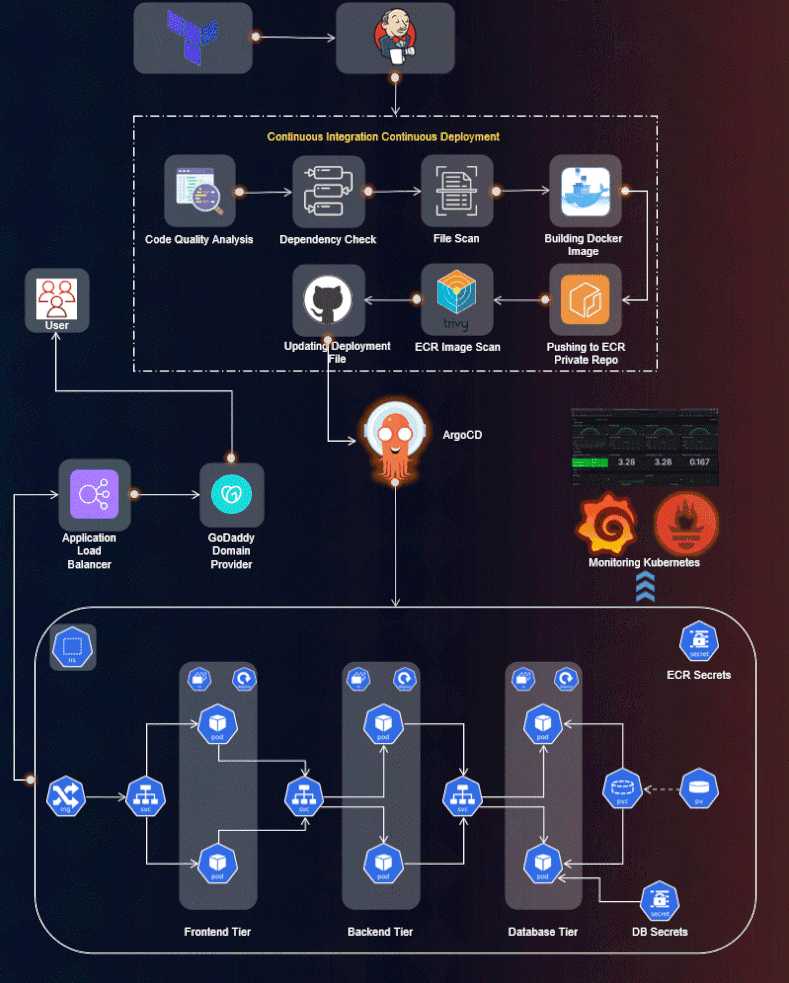
End-to-End CI/CD Pipeline for Kubernetes Deployment:
This project demonstrates a complete, secure, and automated CI/CD workflow for deploying applications on Kubernetes using modern DevOps tools and GitOps practices.
🔧 Terraform
Infrastructure as Code (IaC) for provisioning and managing cloud resources.
🤖 Jenkins
Automates build, test, and deployment pipelines.
🛠️ CI/CD Pipeline Includes
✅ Code quality analysis
✅ Dependency vulnerability scanning
✅ Filesystem security scans
✅ Docker image build
🔍 Trivy
Scans Docker images for vulnerabilities before pushing to the registry.
📦 Amazon ECR
Stores and manages Docker images securely.
🌍 GitHub
Source control and GitOps repository for deployment manifests.
🚀 Argo CD
Automates Kubernetes deployments using a declarative GitOps approach.
🌐 Application Load Balancer (ALB)
Distributes incoming traffic efficiently across services.
🌐 GoDaddy
Handles domain and DNS configuration.
🎛️ Application Architecture
Frontend, backend, and database deployed as separate Kubernetes pods
Secure secrets management for ECR and database access
📊 Monitoring & Observability
📈 Prometheus for metrics collection
📊 Grafana for visualization and insights
This CI/CD pipeline ensures scalability, security, and reliability for cloud-native applications running on Kubernetes.
Este repositorio tiene una colección de Agentes de IA, LLMs y MCPs tremenda. Muchos además se pueden usar en local, sin pagar suscripciones.
→ https://t.co/Hbyoy64g9c
Prompt engineering is dead.
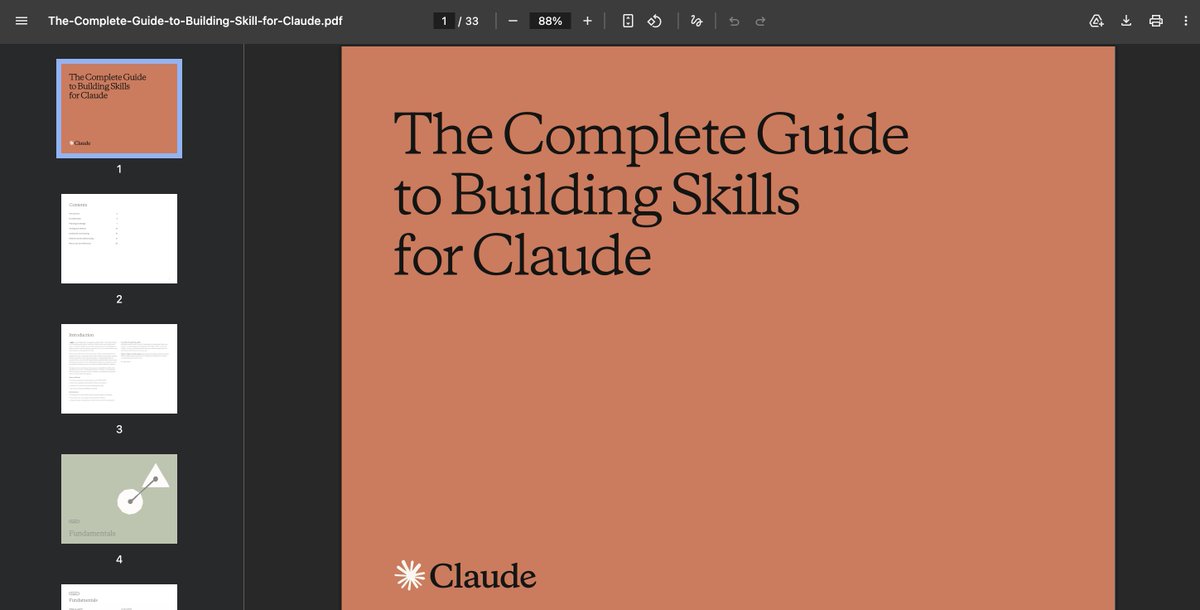
Anthropic recently released the real playbook for building AI agents that actually work.
It’s a 30+ page deep dive called The Complete Guide to Building Skills for Claude and it quietly shifts the conversation from “prompt engineering” to real execution design.
Here’s the big idea:
A Skill isn’t just a prompt.
It’s a structured system.
You package instructions inside a https://t.co/ayF9XmnQpU file, optionally add scripts, references, and assets, and teach Claude a repeatable workflow once instead of re-explaining it every chat.
But the real unlock is something they call progressive disclosure.
Instead of dumping everything into context:
• A lightweight YAML frontmatter tells Claude when to use the skill
• Full instructions load only when relevant
• Extra files are accessed only if needed
Less context bloat. More precision.
They also introduce a powerful analogy:
MCP gives Claude the kitchen.
Skills give it the recipe.
Without skills: users connect tools and don’t know what to do next.
With skills: workflows trigger automatically, best practices are embedded, API calls become consistent.
They outline 3 major patterns:
1) Document & asset creation
2) Workflow automation
3) MCP enhancement
And they emphasize something most builders ignore: testing.
Trigger accuracy.
Tool call efficiency.
Failure rate.
Token usage.
This isn’t about clever wording.
It’s about designing an execution layer on top of LLMs.
Skills work across https://t.co/pDY56kadwE, Claude Code, and the API. Build once, deploy everywhere.
The era of “just write a better prompt” is ending.
Anthropic just handed everyone a blueprint for turning chat into infrastructure.
Download the guide here: https://t.co/xEZ78RGkYu
10 GitHub repositories that will teach you more practical AI engineering than most paid courses:
1. AI Agents for Beginners (Microsoft)
https://t.co/TpqemxagHJ…
2. Awesome Generative AI Guide
https://t.co/fAWUhshIxu…
3. Designing Machine Learning Systems (Resources)
https://t.co/cfg33EgnL8…
4. GenAI Agents
https://t.co/3wJRL08RA8…
5. Hands-On AI Engineering
https://t.co/QFp5tPJ1kR…
6. Hands-On Large Language Models
https://t.co/abzek3Ks0W…
7. LLM Course
https://t.co/a8oANtHJsM…
8. Machine Learning for Beginners (Microsoft)
https://t.co/O0R27RXnII…
9. Made With ML
https://t.co/b4Pb45RB6O…
10. Prompt Engineering Guide
https://t.co/H4Obrmwvot…
Follow @DipanshuKu55175 for more