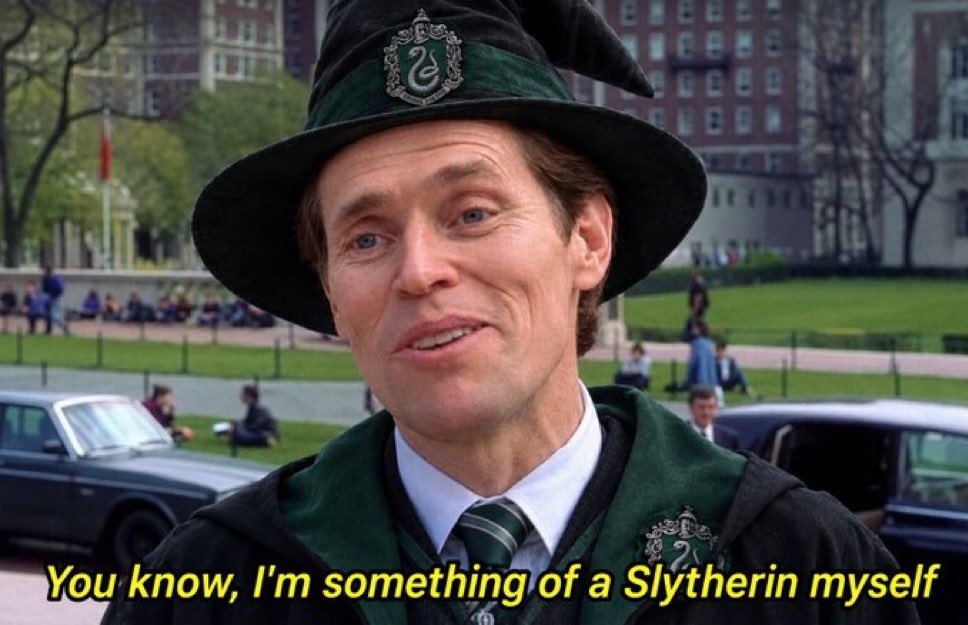
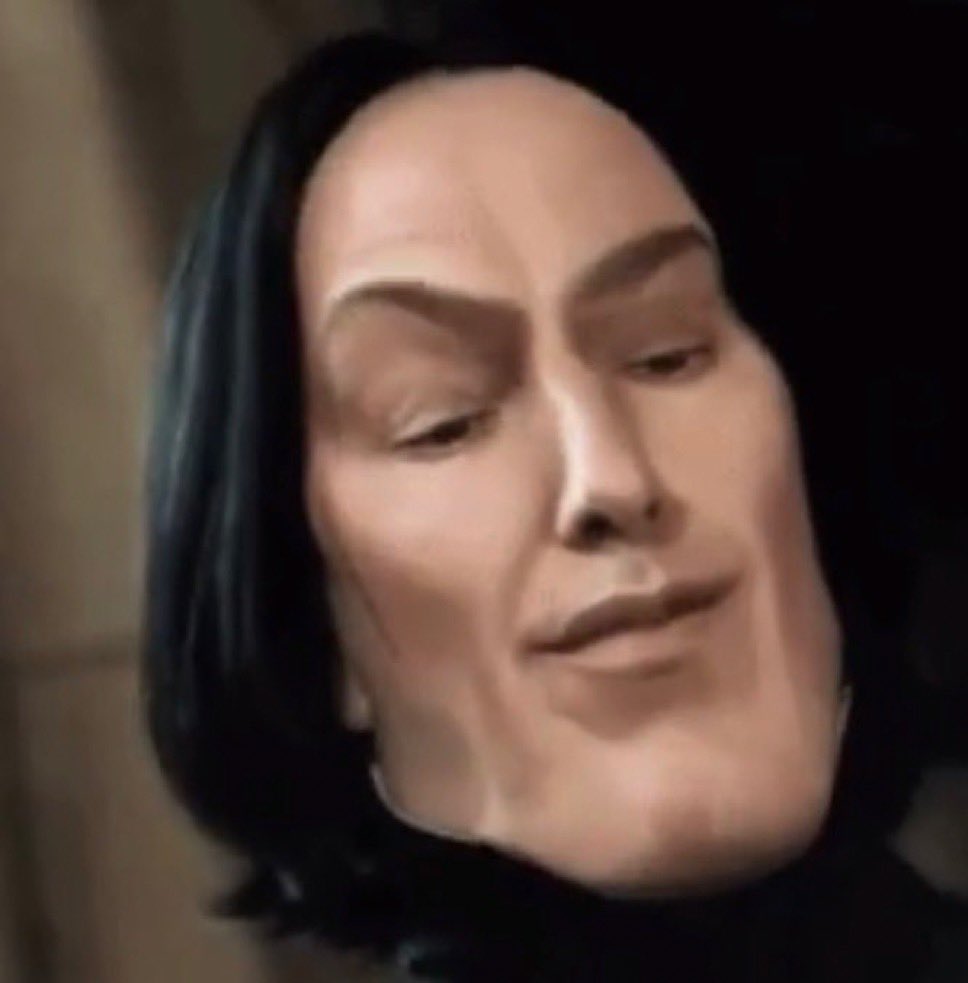
@Salty_Waters_@kevinleguillou He had spent years dreaming of his redemption arc as sensei to some child hero son of Lily’s, in her memory, only to see he’s the spitting image of James and realise he’s stuck as the chaperone in an enemies to lovers romcom all at once
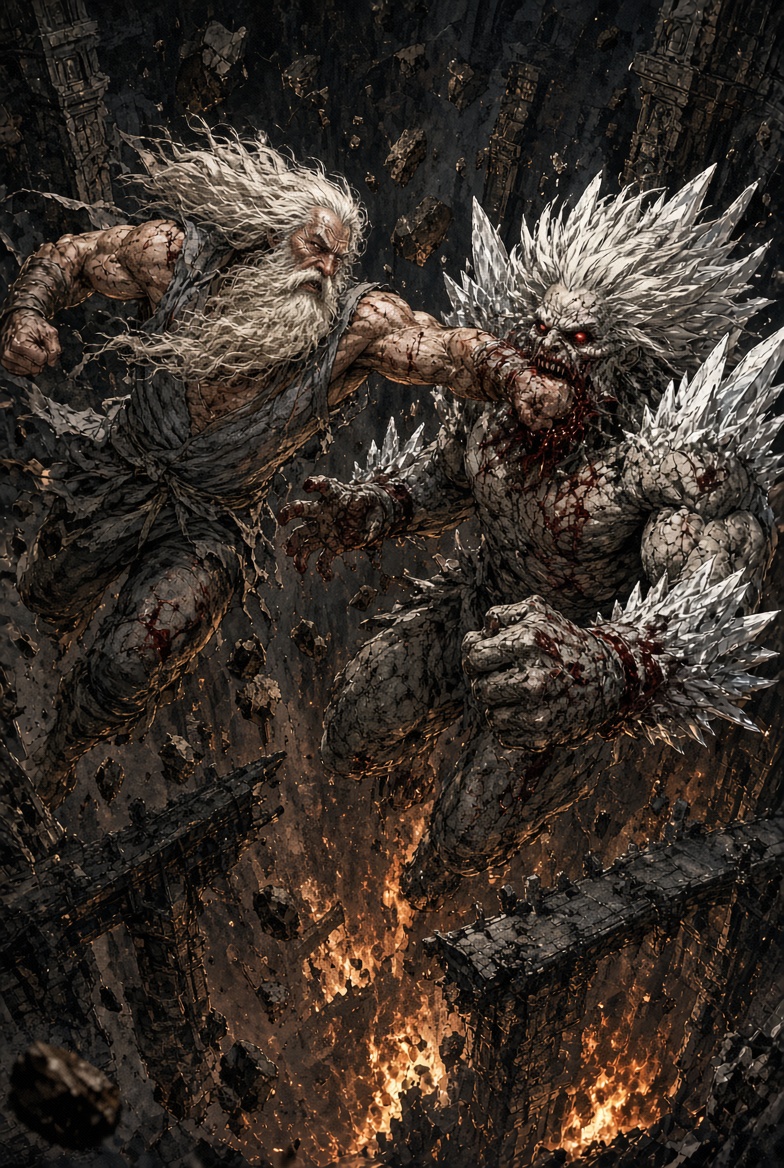
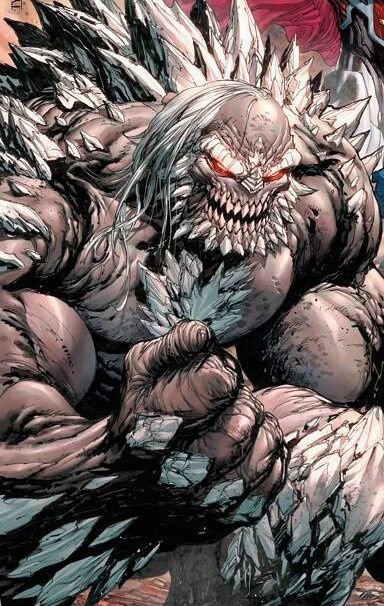
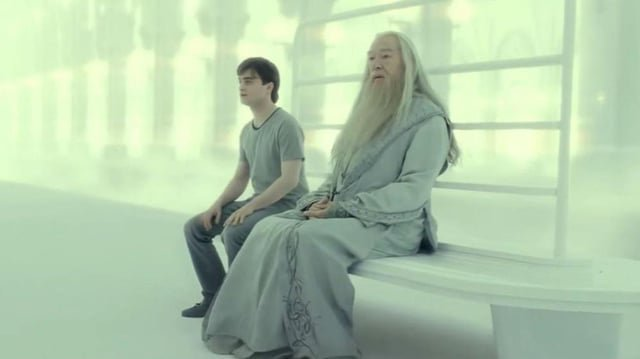
@Fatiu_onchain Exactly! It’s like when you see Whis and Bulma having a cup of tea and a conversation while Goku and Vegeta beat the living daylights out of each other to train in the background, only funnier
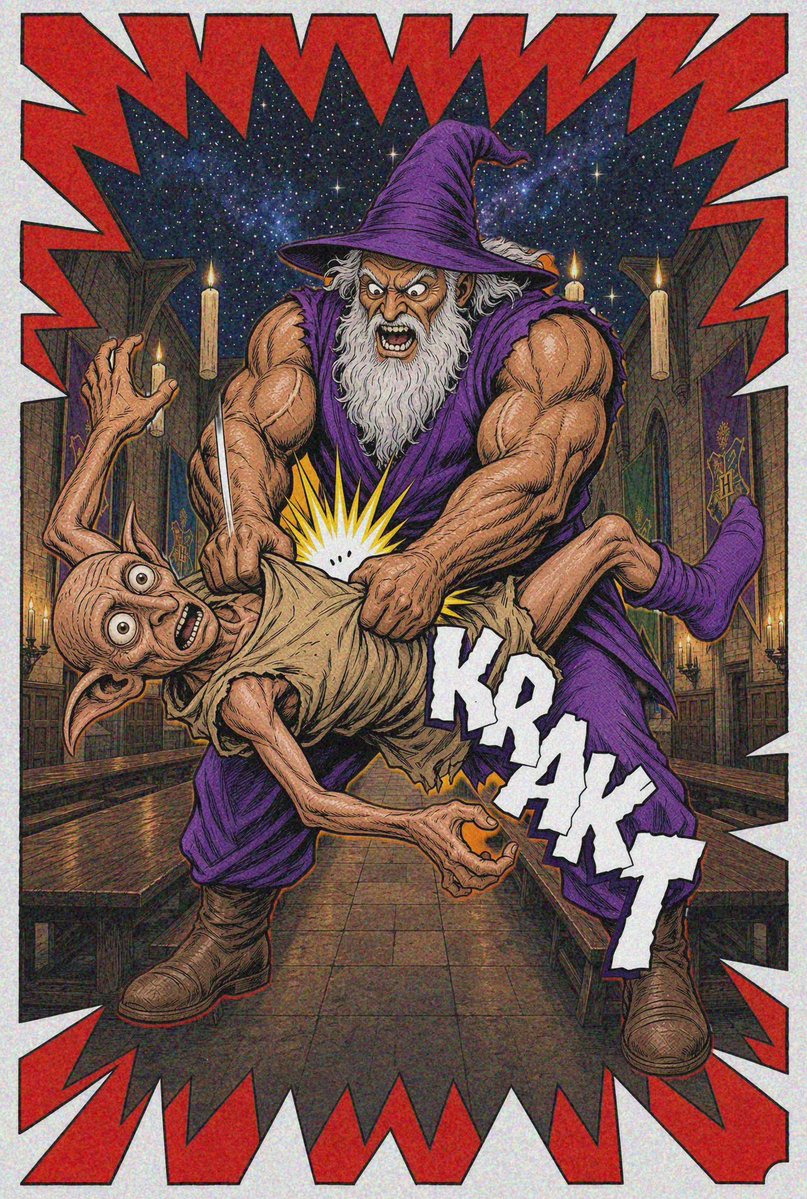
Headcanon is that in the Malfoid timeline most things proceed more or less as canon but in many scenes the characters are pointedly trying to ignore Dobby and Dumblethor’s eternal battle; they’re potting mandrakes and Dumblethor suplexes Dobby through the roof-they just sigh
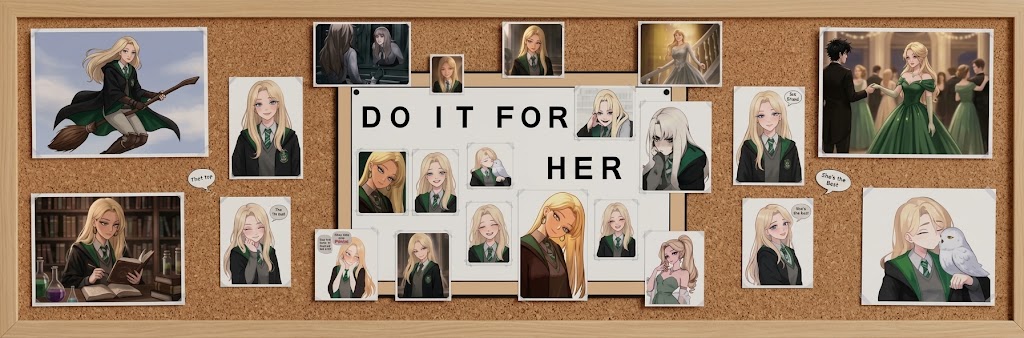
Now that I've dabbled in this trend a bit, and played around with what's possible, I'm going to put on my *other* Serious Professional Author Hat, and explain why you like her so much.
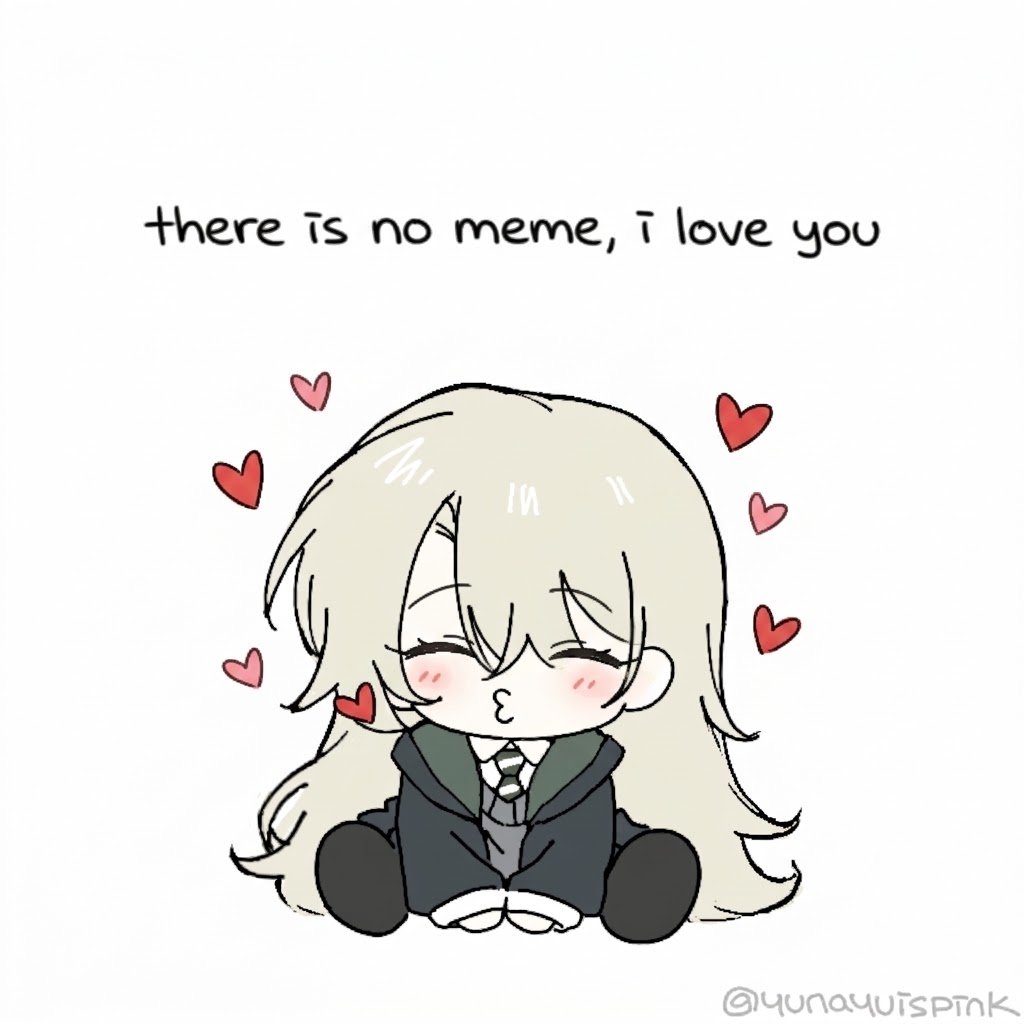
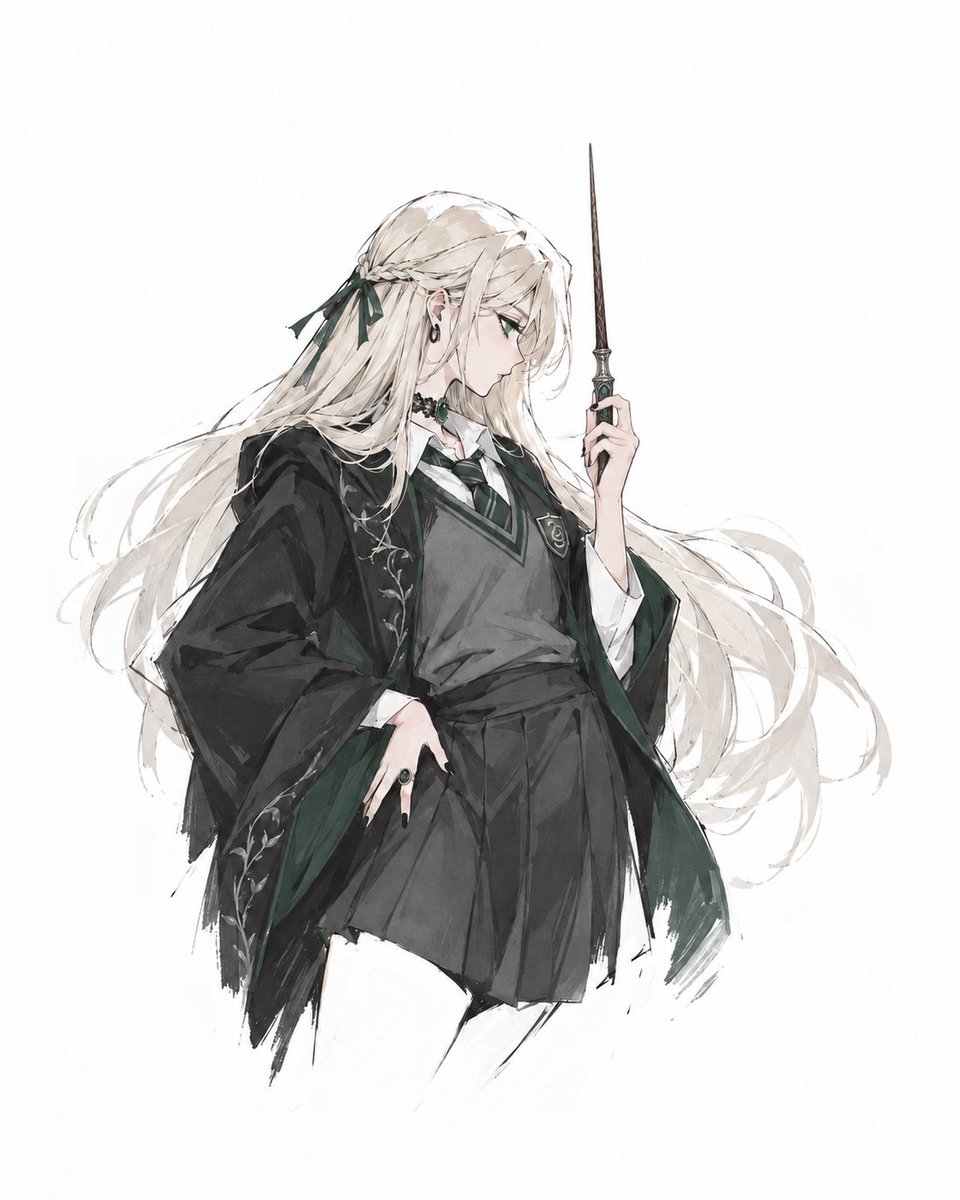
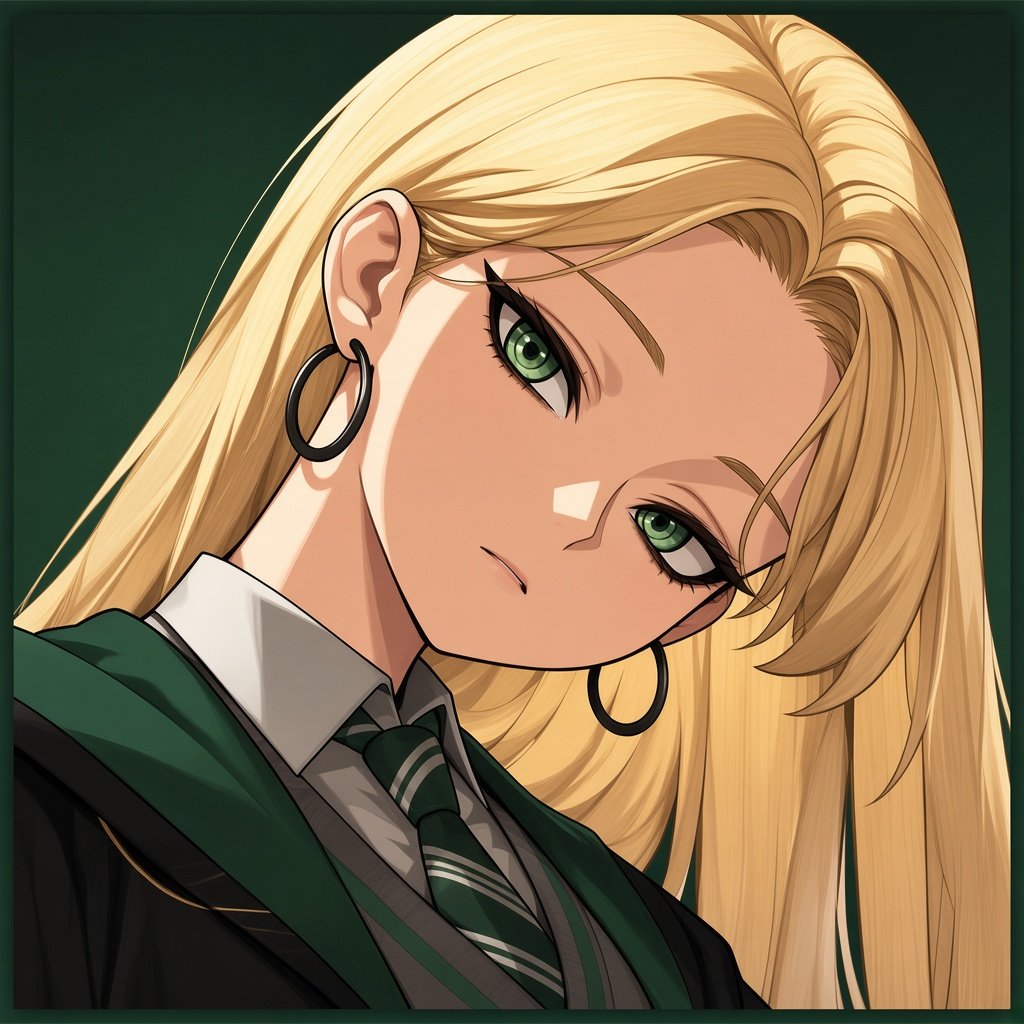
Draecena, or Draconia, or Drakenia, Malfoy — the "Mal-foid" — is NOT a gender-swapped version of Draco Malfoy. That's why her eyes are green and not grey.
She's a completely different character.
She fits into the socket that Draco fills in the story, but for an author, characters are defined by their wants. Because their wants determine their choices, and their actions, and these determine the ultimate outcome of the story.
Draecina is a different person from Draco, because she wants different things.
Draco, as written, is a simple creature, created for a simple utilitarian role in the story. He wants power and attention. He wants to advance his family's political agenda. He wants to defeat Potter. Rowling may have put a little spin on the ball in the later books, but he never strays too far from this.
Draecina is completely different. She not only wants more things, she wants conflicting things, and she is torn between them.
She is split between duty, love, and pride.
She wants to advance her family's cause and political agenda, to help them, to earn their love and make them proud. And for this, like Draco, she must defeat Harry Potter and everything he represents.
But she is also a teenage girl. And she wants to kiss the most popular boy in the school. The hero, the sports star, the celebrity.
No, she takes that back, she doesn't just want to kiss him. She wants him to kiss her. And more fundamentally, she wants him to yearn for her, as she yearns for him. Look at me, Harry Potter, her soul cries. See me. Do you think I'm beautiful? Please think I'm beautiful. Please want me.
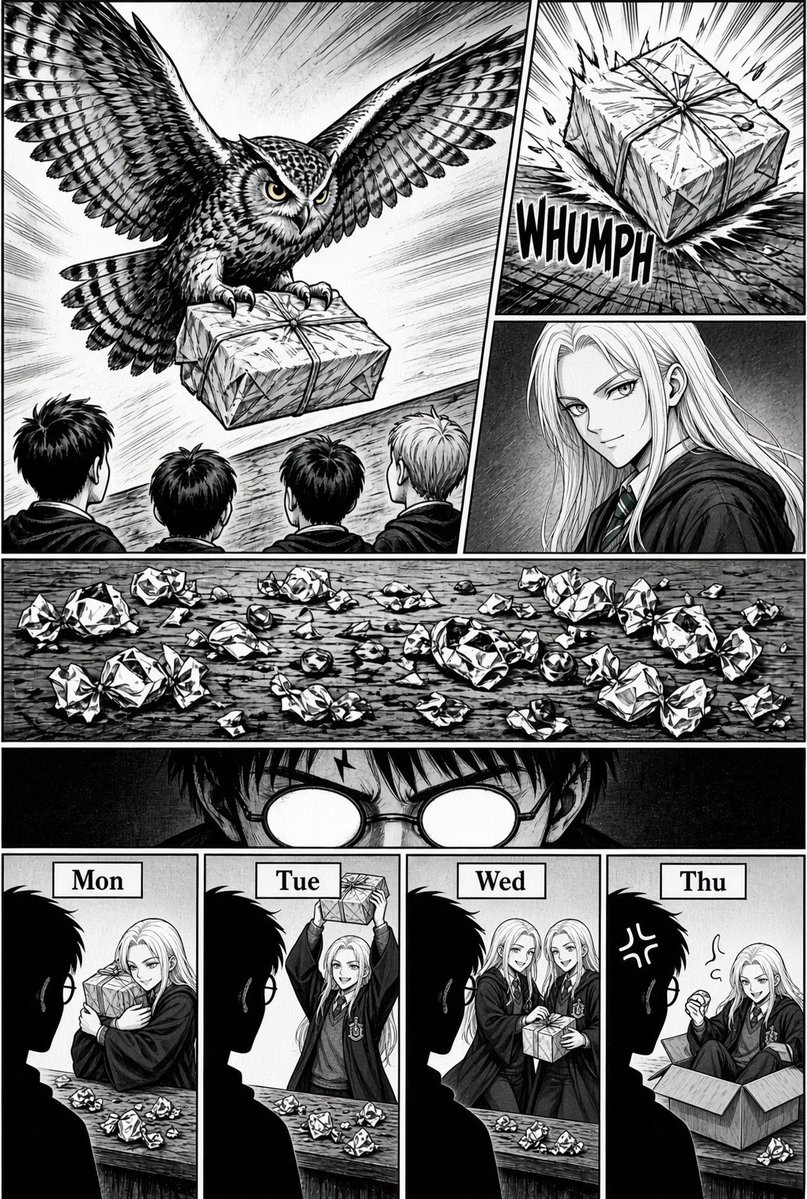
But she cannot say a word of this. Because she also has pride. She cannot, she will not face the humiliation of anyone else knowing how she worships her mortal enemy. No one must ever see the stolen scarf she presses to her face, in the darkness of her bedroom.
But if she is to say nothing, how will he ever know? How will he ever look at her?
This is the rack she is stretched upon, torturing herself inside her head late at night, tossing and turning when she should sleep.
Conflicting wants make the best, deepest, most living characters, and drive the best stories.
Through the alternate set of books (that exist now only as a shared idea in scattered heads) these drive her actions towards Potter himself... not simply opposition and aggression, but a dance of approach and avoidance, of fights and arguments and timid, plausibly deniable bids for something more.
Until, as in the originals, the two are driven to crisis point, a violent confrontation, each desperate not to hurt the other, but also driven to violence by the fear that this other holds no goal but lethal hate.
And Harry, seeking only to defend himself, strikes her down with a magic that does not merely disable but *cuts* with lethal force, tearing into her body, almost killing her, and leaving her with a terrible scar across the smooth, soft, perfect white skin that his eyes used to devour the merest glimpse of.
This is the worst point, the pit, the long dark night of the soul that every author must eventually walk a character into.
Draecina curses herself for a fool. None of it meant anything. He never cared for her. He hates her with every fiber of his being, and why would he feel otherwise? But try as she might, she cannot actually blame him. He overheard her plotting his death. They fought. Is it any wonder that he struck at her with whatever weapon he had to hand? She cannot stop loving him, even though she knows now that it is utterly hopeless.
In her hospital bed, left unable by her injuries even to toss and turn, she stares at the ceiling and weeps in despair.
Harry feels... sick. He fought for the right cause, he knows that. But this doesn't feel like goodness, and it doesn't feel like winning. It feels wrong, like he has destroyed something beautiful. He has left her with terrible scars, and terrible memories, that she will carry for the rest of her life.
More than anything he wants to go to her, to kneel beside her hospital bed and beg her forgiveness. But that is foolish. She hates him. He is the last person she would ever want to see, and she would never, ever forgive him. It's hopeless.
This is the greatest task of the author, to create this terrible moment, and then, somehow, perform some magic to walk these characters to the ending the story demands, where the day, the hero, and the world are all saved by the very thing that started the story to begin with... the love of a woman who would give her life to save his.
Except this time, that love is not an inheritance, for Harry is no longer a child. He is a man now, facing a dark and terrible enemy, and that love is not simply given, nor can it even be earned.
It must be inspired.
And the two lovers must defeat their enemy together... not through a cheap magic trick, nor through a vague and sappy appeal to ill-explained abstraction like "the power of love", but for the very real and concrete reason that heroes have friends and allies, families and lovers, while tyrants have only reluctant and fearful slaves.
And from that first inflection point, the pit of despair, it is difficult to see the second, the moment of triumph.
In all the best stories, the ones that really matter, there is a moment so dark that sometimes we don't want to go on, because how could the ending ever be happy?
But we must go on, because that is the third moment the story demands, the moment we must reach. And it is not Harry, but Draecina, who must give it to us, that happy ending.
Look at me, Harry Potter, she must say. Look at my scars. I will not hide them from you, not anymore, though they make you flinch with guilt and turn away. Look at me. I forgive you, my love, not merely because I love you, but I because I understand in my very soul the impossible trap you were caught in, the conflicting forces that tore you apart inside.
But you must look at me, all of me, and see me as I am, flawed and scarred and imperfect, for I must know if I am still beautiful in your eyes, if you can accept my love and forgiveness as I have accepted yours.
We must bury the anger and bitterness that passed between, and pass on only good to the next generation. Because I have just learned that the next generation is coming very soon now, and I hope we are ready.
It takes a wise character to say this, so she must grow throughout the story from a scared and lonely little girl to a woman who can face the future, even though she is afraid.
This is why you love this character. Because she makes a beloved story into something that is even more about the things that matter, the universal experience of what it feels like to be a human.
And it's why I'm not ashamed, nor embarrassed, to "fix" a billion-dollar success story. Because humans are a pack animal. We hunt together, and build on each other's work. Everything we have achieved as a species, from great stories to great civilizations to rockets to the stars, was built on foundations laid down by others, and will be the foundation for others to build on.
Frodo carries the ring across Middle-Earth, through Mordor, and halfway up the mountain.
And then it's your turn to carry him the rest of the way.