1/10 The cell cycle mediates cell growth & division. Each phase has distinct biosynthetic requirements that are necessary for successful progression, indicating that phase-specific control of metabolism is essential. But how this occurs is largely unknown.
https://t.co/t5By3Xb964
It's time to rewrite reviews-aKG doesn't just regulate demethylation. Work from my lab and @mzspectrum demonstrates a new role for aKG in promoting histone acetylation and DNA repair through regulating carnitine synthesis. Congrats @ApoorvaUboveja!
https://t.co/o4ekqG9E4Y
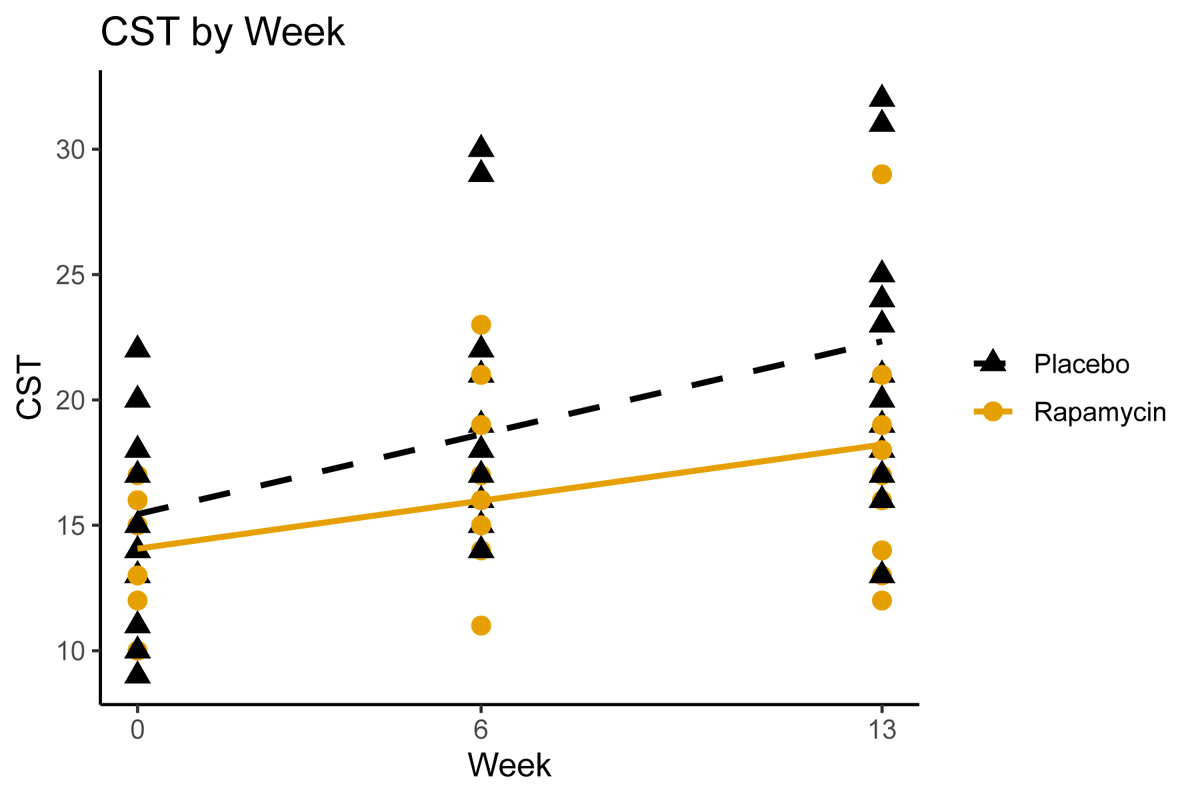
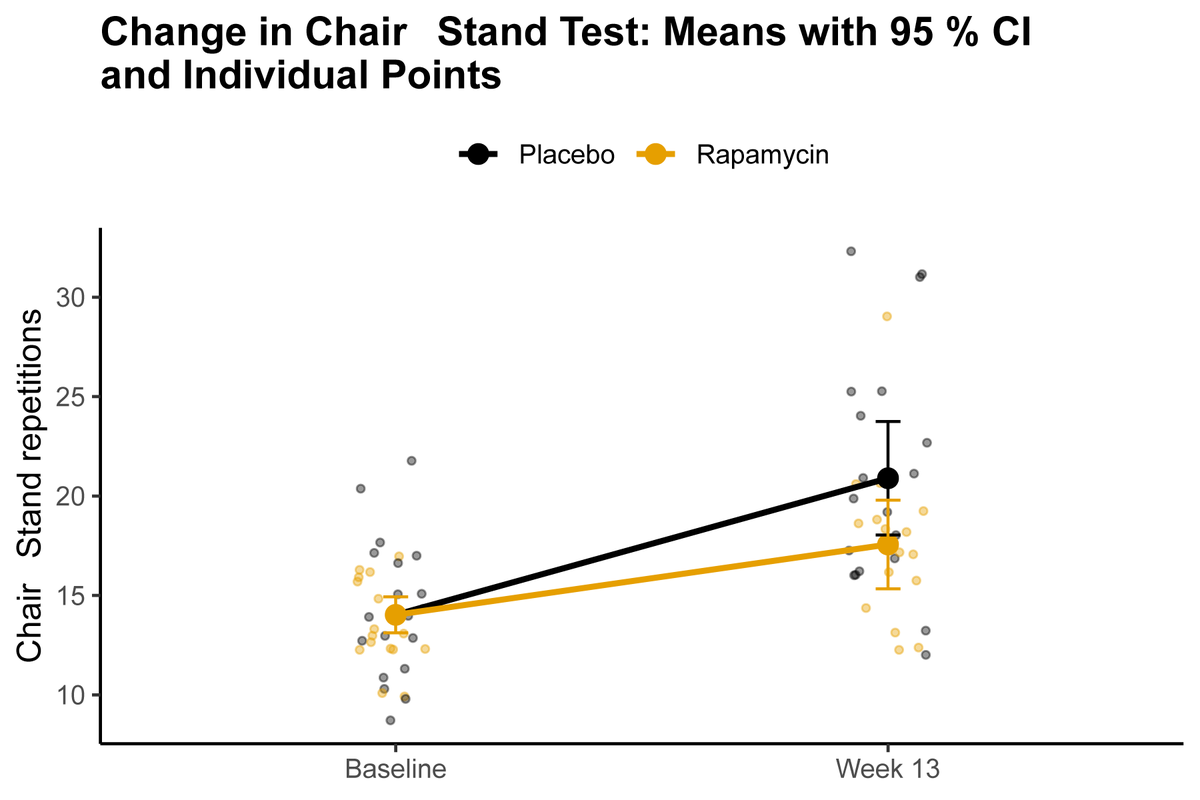
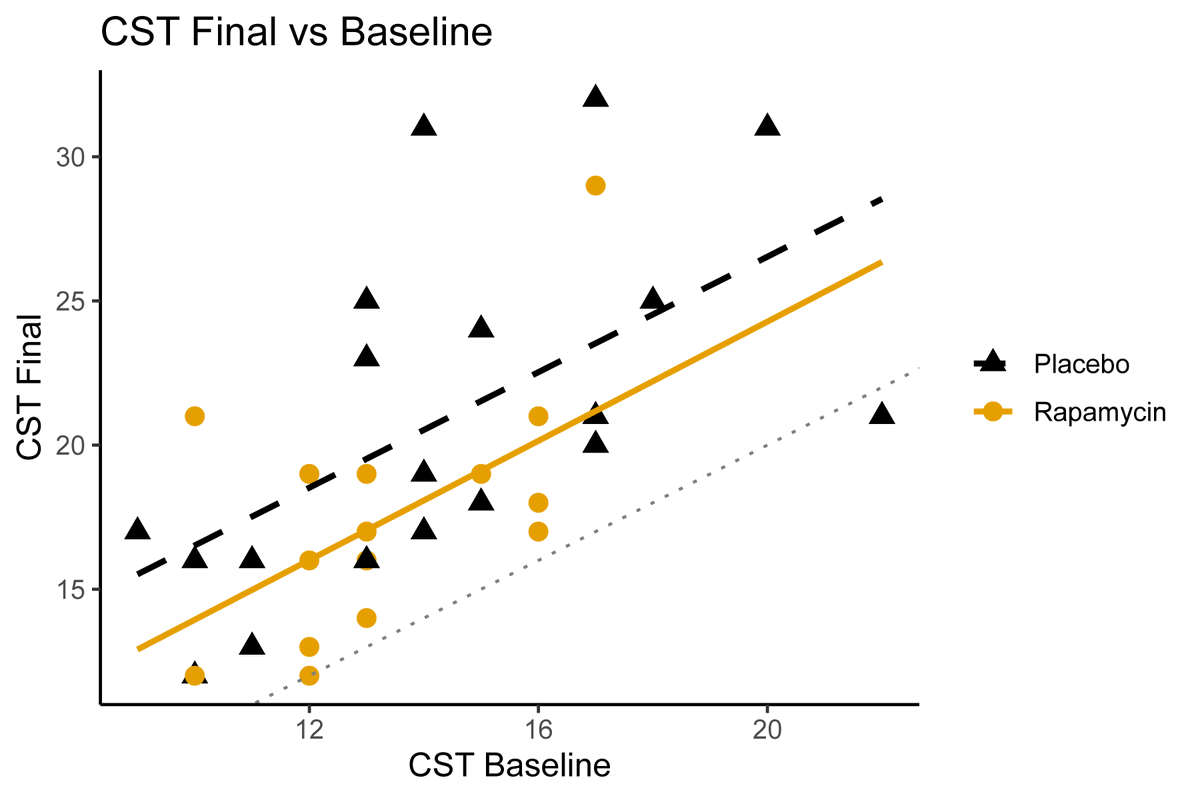
Our Rapamycin & Exercise clinical trial has just been published!
The topline result?
Rapamycin didn't help. Instead, it may have made things worse.
Here's what we found 🧵
https://t.co/vpy9bPrGDJ
To commemorate the Artemis II mission, the astronauts announced their suggestion to rename certain features on the Moon to honor the Orion spacecraft, named Integrity, as well as commander Reid Wiseman's late wife, Carroll.
How can the same "master regulatory" protein mTOR recognize different sets of targets to separate nutrient and growth factor signals?
Thrilled to share our new paper, in which we reveal how mTORC2 recognizes Akt.
🧵 on our new paper in Science:
https://t.co/PSZWMsEYbn
Excited to share our latest work out today in @MolecularCell, revealing a molecular link between succinate dehydrogenase and purine synthesis, connecting two fundamental metabolic pathways. Congratulations to first author @MushtaqNengroo! https://t.co/pRjAQpkvp6
Surprising result: AKT-mediated TSC2 phosphorylation is the predominant mechanism of hepatic mTORC1 induction by insulin but is dispensable for activation by feeding @Manning_BD https://t.co/alH4WTcyZb
FROM CELL DEATH TO REGENERATION: What if dying cells -come back to life? Now online @embojournal I https://t.co/eOKTg6qVnk , we aim to answer this question. Here is the journey. If you🩷science, please dont 🛑till the end of 🧵, I promise you will not regret. 1/n
10/10 Taken together, our study reveals mTORC1 as a cell cycle-regulated kinase complex. This has important functional implications for metabolism, cell growth and proliferation. We’re looking forward to following up on many interesting questions that come out of this work!
8/10 So how does the cell cycle regulate the TSC complex? This remains TBD, but we examined major known upstream inputs: Akt, MEK/Erk, and CDK4/6 signaling, and none of them are responsible, possibly suggesting there could be a novel, independent cell cycle input!
9/10 Interestingly, the mechanism of mTORC1 regulation during mitosis is different than during interphase. We found that the TSC complex is not required for suppression of mTORC1 during mitosis. Instead this occurs through changes in the subcellular localization of mTORC1 itself.
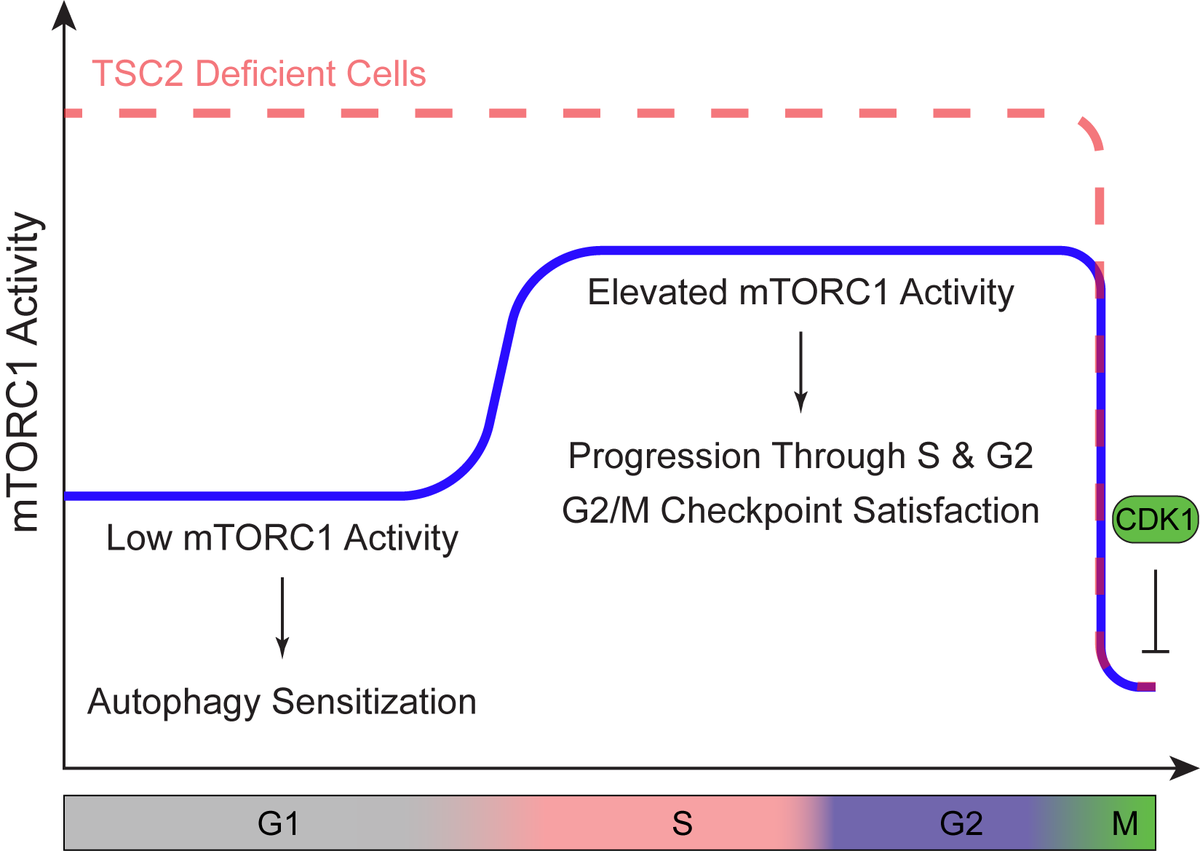
7/10 We found that the subcellular localization of the essential TSC complex component TSC2 changes throughout interphase in a manner that corresponds with the changes in mTORC1 activity. Deleting TSC2 abolishes the interphase oscillation in mTORC1 activity.
6/10 What is the mechanism of mTORC1 activity oscillation throughout the cell cycle? Many signaling inputs to mTORC1 control it’s activity through spatial regulation of an upstream negative regulator, the TSC complex.
1/10 The cell cycle mediates cell growth & division. Each phase has distinct biosynthetic requirements that are necessary for successful progression, indicating that phase-specific control of metabolism is essential. But how this occurs is largely unknown.
https://t.co/t5By3Xb964
5/10 mTORC1 is known to suppress autophagy, and we also found that low mTORC1 activity in G1 sensitizes cells to autophagy induction in response to partial mTORC1 inhibition or reduced nutrient levels.
4/10 In addition to promoting progression through G1, we find mTORC1 also promotes progression through S + G2 & is important to satisfy the G2/M checkpoint to allow entry into mitosis. Interestingly, mTORC1 is not required during mitosis, corresponding with its low activity then.
3/10 Given this observation, we wondered whether mTORC1 can have cell cycle-phase specific functions. We first asked whether mTORC1 is essential for progression through each phase of the cell cycle?
2/10 We studied the activity of the master metabolic regulator, mTOR Complex 1 (mTORC1), and found that it oscillates throughout the cell cycle, from highest in S and G2 to lowest in mitosis and G1.