Everyone obsesses over the entry.
The entry is not the hard part.
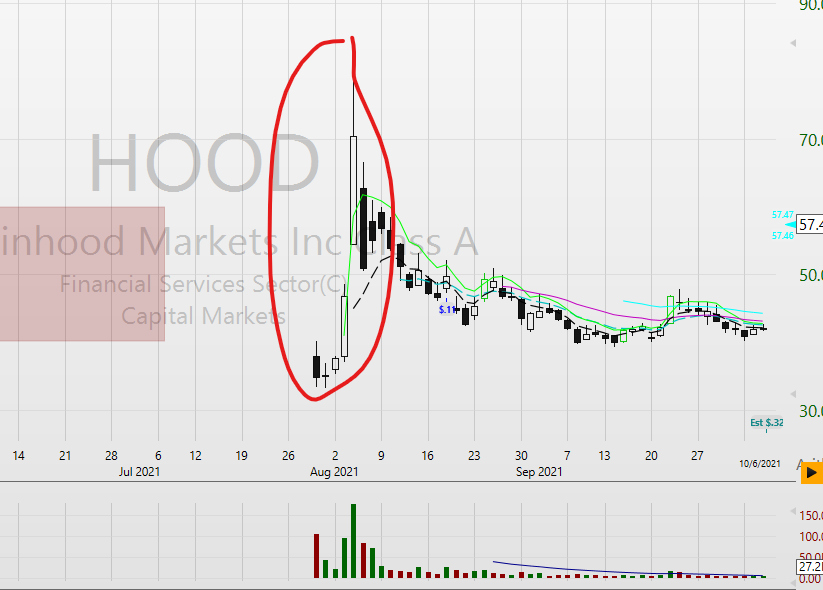
The hard part is the exit. Selling on a wiggle that meant nothing. Holding a loser because it "used to be a winner." Cutting a winner short because it looked toppy.
I've written up the complete rule-based sell system I use to take the emotion out of exits. Three rules, one daily routine, no real-time decisions.
Worked examples from nanocap parabolics to multi-year breakouts.
Free to read 👇
Två regler för trading som går emot vår mänskliga natur och som är avgörande och effektiva
1. Anta att du har fel ända till dessa att du fått bevis på att du hade rätt för ovanlighetens skull. Du vill bara att markanden ska bevisa att du har rätt. Vänta inte på att bli utstoppad. Om du köper ett utbrott och aktien bara "ligger där" eller tappar fart efter tio minuter, sälj direkt i de flesta fall. Agera på att marknaden inte bevisat att du har rätt, snarare än att den bevisat att du har fel.
2. Addera alltid till och ha hävstång på vinnare: sitt med nästan 100 % cash i sega marknader, för att sedan gå "all-in" med full margin när rätt mönster dyker upp.
Det är den ultimata tillämpningen av att pressa vinnarna – satsa bara stort när oddsen är extremt vinklade till din fördel.
Nobody tells you this: Dopamine from information gathering is a dangerous drug. It’s the dopamine from reading, planning, or learning, but never doing. Stop looking for more information and start acting on the information you already have. Get your dopamine from action.
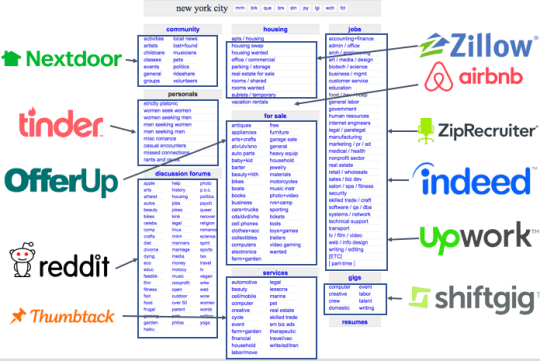
In 2006, every section of Craigslist was a $1b marketplace startup waiting to happen.
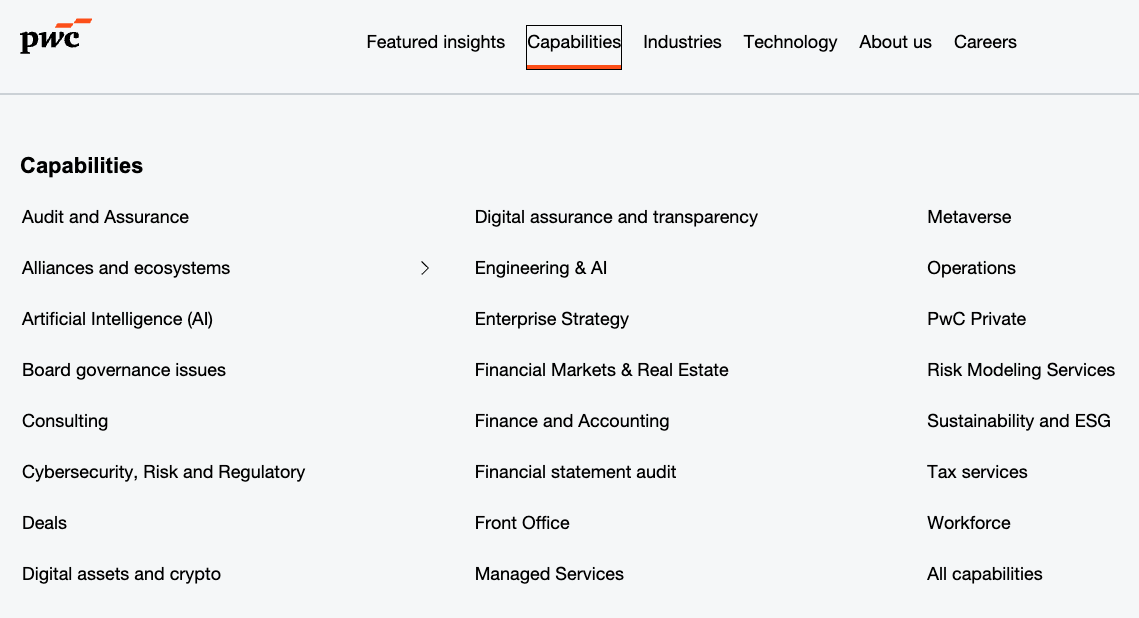
In 2026, every section of PWC's website is a $10b AI startup waiting to happen.
Kristjan Qullamaggie’s Entry Strategy Risk $1.50 to Make $45 (No Chasing... https://t.co/WKX0Xu2wy5 via @YouTube
This video is quite instructive on how to tell if a stock is “up too much” for the day. I routinely buy stocks up 5 or 10% on the day, but their average ranges might be 10-15% or more. It’s all relative to the stocks own volatility, not some generic percentage. Theres some good work out there by Van Tharp and others on volatility adjusted position sizing.
The BULL trap:
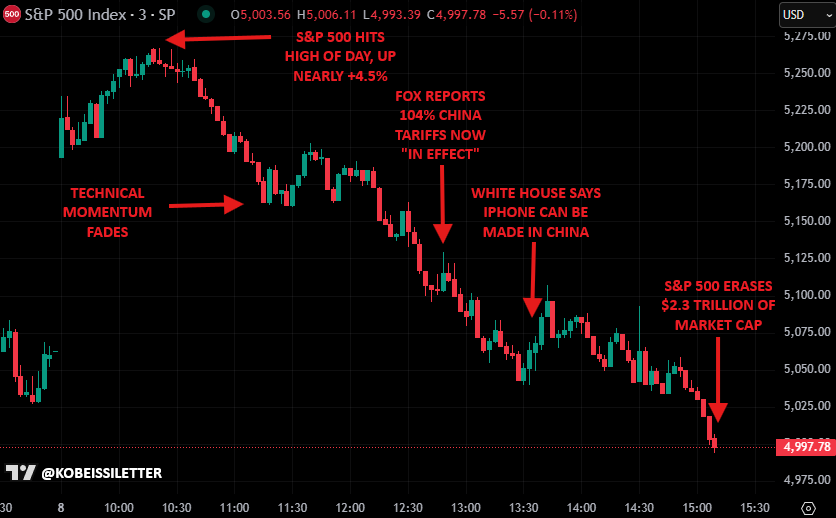
We just witnessed the biggest bull trap of 2025 with the S&P 500 erasing a ~4.5% rally in ~3 hours.
Between 10:30 AM ET and 3:15 PM ET, the S&P 500 erased -$2.3 TRILLION of market cap.
Bull traps are TEXTBOOK signs of a bear market.
(a thread)
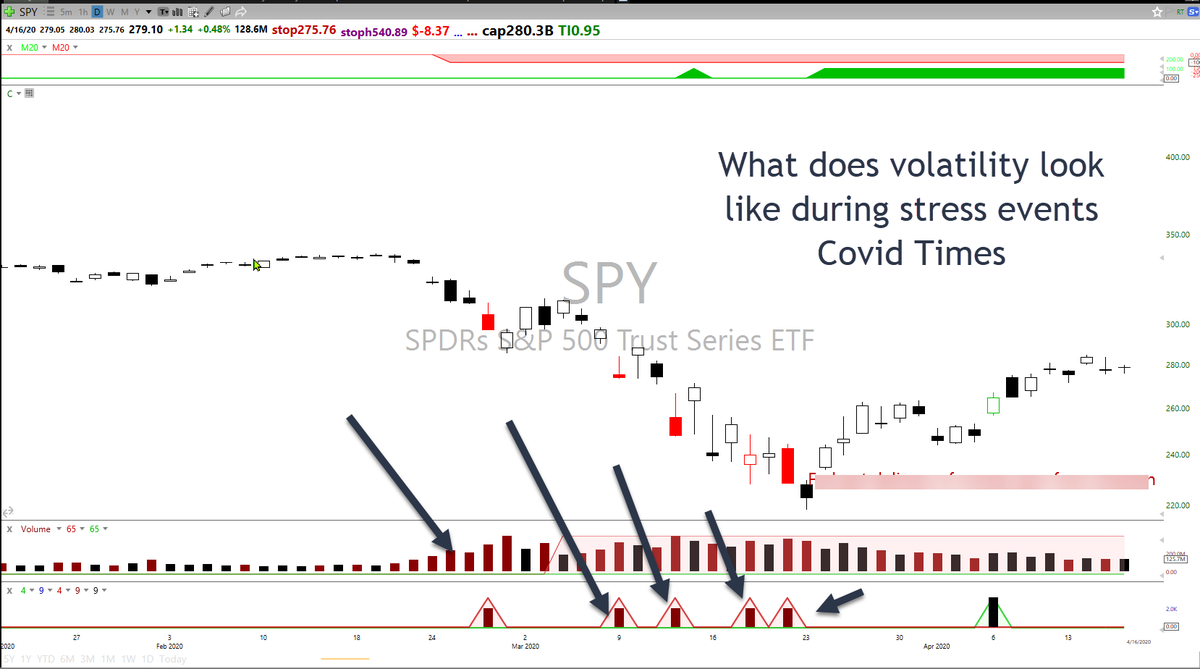
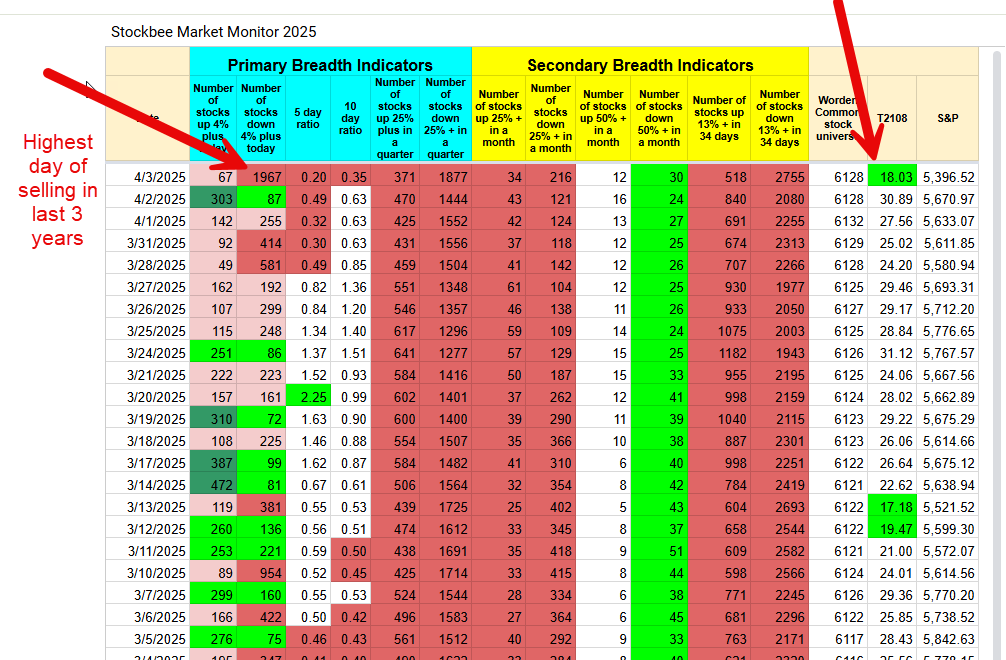
We’re now looking at 4 straight days where the S&P 500 $SPY saw a trading range over 5%. That kind of price swing has only happened three other times: 1987, 2008, and 2020.
Catalyst have both the function of changing the narrative and following it.
Most news items can be both good and bad, it often depends on what the market consensus is.
Often good news becomes a sell the news and bad news is already discounted.
1. Is the news way bigger/smaller than expected
->creates mispricing, but if not.
2. Is the news expected?
2.1. Is sentiment bias to one direction?
->(increase/decrease likelihood of sell the news)
2.2 Is the news giving clues in retrospect about a stock movement.
Truth is very often you will experience news following the crowd and sentiment.
For short opportunity, this is the behavior I want to see:
-> Flat on good, down on neutral, down huge if bad.
This is what we saw on $PLTR.
For a bottom in an asset I want to see it stabilize on bad news, grind higher on neutral and rip on good news.
News overall is one of the best tools to use for trading because it gives a level of nuance that is hard for algos to weight.