Excited to share our publication in @TheLancetOncol on the primary results from the UNITED study: a new paradigm in radiotherapy for patients with glioblastoma /1 @Sunnybrook@UofTDRO https://t.co/SDon3EOlEh
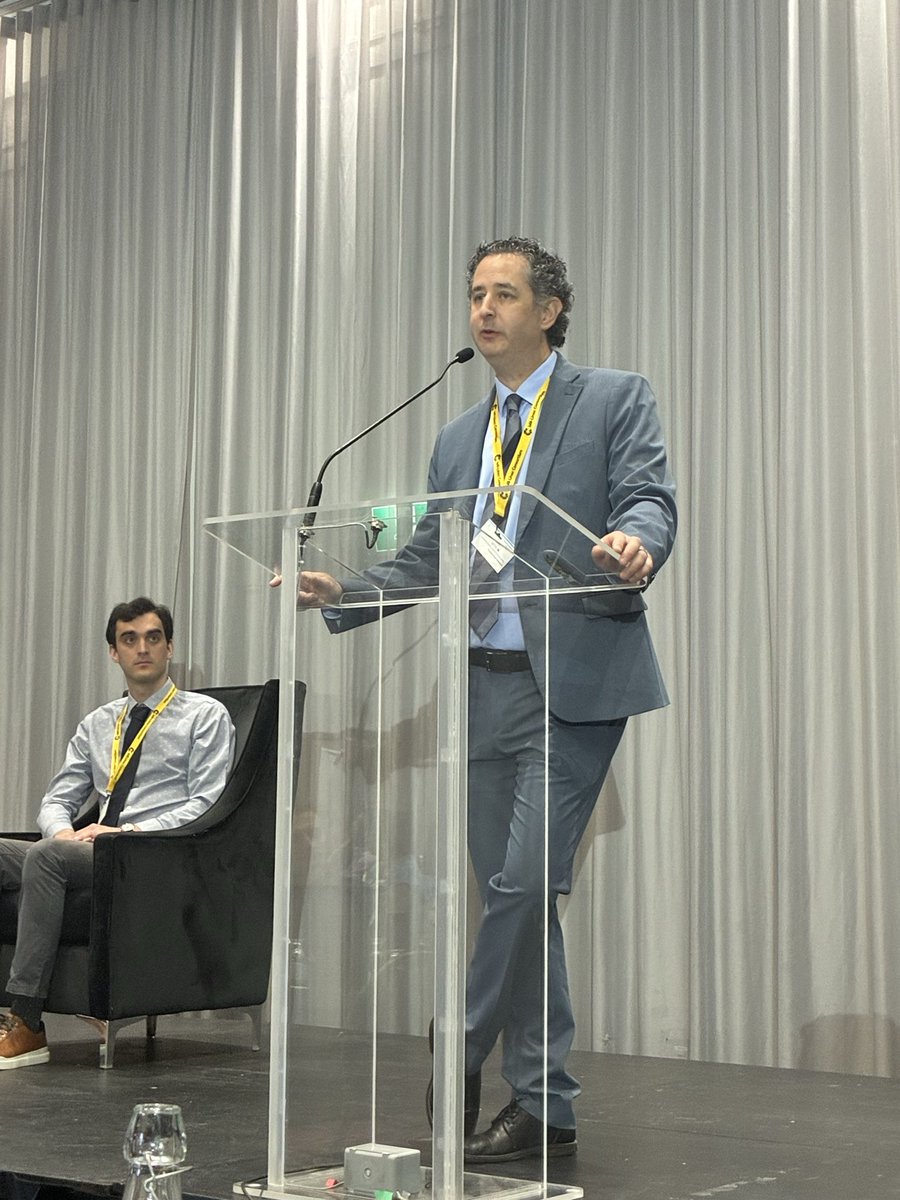
Our @Sunnybrook neuro-oncologist Dr Lim Fat @mjlimfat taking on a room of rad oncs at #SNO2026 to educate us on the impact of radiation volumes on lymphopenia during treatment for GBM
@DongNguyeb@StrijbosMichiel@EvanThomas84@druizuroonco My lord Dong, do you ever get tired or jumping into every thread about prostate cancer as the self proclaimed “expert in everything” with long winded diatribes? Get outside, find a hobby, enjoy life a little bit. You’ll be happier!
Understand the magnitude of what those Israeli passengers may have just prevented.
If the emerging reports are correct, an Omani pilot attempted to deliberately crash a passenger jet carrying roughly 180 people from Dubai to Tel Aviv, sending the aircraft into a terrifying plunge before Israelis on board overpowered and subdued him.
Had that plane gone down, regardless of where it crashed, this would not simply have been another aviation disaster.
It would have been a 9/11-scale terrorist attack involving an Emirati aircraft, Israeli civilians, an Omani pilot, Saudi airspace, and a region already engulfed in conflict.
Think about the military response that would have followed. Think about the countries that would have been dragged in. Think about the retaliatory chain reaction that would have been set in motion.
The consequences are genuinely impossible to calculate, but they would have been cataclysmic.
The Israelis who bravely took control of that situation did not merely save the lives of the people sitting beside them.
They may have prevented an event that would have rewritten the history of the Middle East, reverberated across the world, and cost an unimaginable number of lives.
There are moments when ordinary people, in the span of a few terrifying minutes, stand between the world as it is and a world permanently changed by catastrophe.
This may have been one of them.
I find this @JCO_ASCO article rather puzzling.
I treat glioblastoma routinely, and the premise that we are routinely giving prophylactic dexamethasone simply does not reflect contemporary neuro-oncology practice - at least not any practice I’m familiar with.
We use steroids when patients are symptomatic from tumor- or treatment-related edema, usually for the shortest period necessary, because they can produce rapid and sometimes dramatic symptomatic improvement. Of course we recognize the toxicities and taper aggressively when clinically feasible.
The emphasis on infection-related morbidity also feels overstated relative to my clinical experience. Significant infectious complications from short-term dexamethasone are uncommon, and many of us increasingly use steroid-sparing approaches, including Boswellia, when appropriate.
Most puzzling is presenting bevacizumab as a preferable steroid-sparing strategy. Bevacizumab is hardly benign: it carries meaningful toxicity, requires IV infusions and monitoring, and imposes its own burden on patients and quality of life.
Steroids should absolutely be used judiciously. But arguing against a version of clinical practice that many of us don't actually practice, and then proposing bevacizumab as the safer alternative - makes for a very odd article.
Congrats to Drs. Meredith Giuliani and Alex Louie on their 2026 @ASTRO_org honours!🎉Dr. Giuliani received the ASTRO Mentorship Award, and Dr. Louie was named a Fellow of ASTRO (FASTRO). Well deserved!
https://t.co/RSKf67DDpI
@TonyFelefly@PDBrownOnc No, 30/5 is the default unless we can’t meet brain minus CTV V30<10.5 cc then consider dropping the 27.5 or rarely 25/5. If 25/5 with residual tumor then boost on GK with an additional ~5/1
New findings in glioblastoma show how MR‑guided adaptive radiotherapy can reduce treatment volumes by 40% while maintaining outcomes and a 4% marginal failure vs 11% historically. A step forward in delivering precise care and helping protect healthy brain tissue.
👉 Read the full study in The Lancet Oncology: https://t.co/L9rF1TSGxV
*Study by Detsky et al., UNITED trial investigators at Sunnybrook Health Sciences Centre.
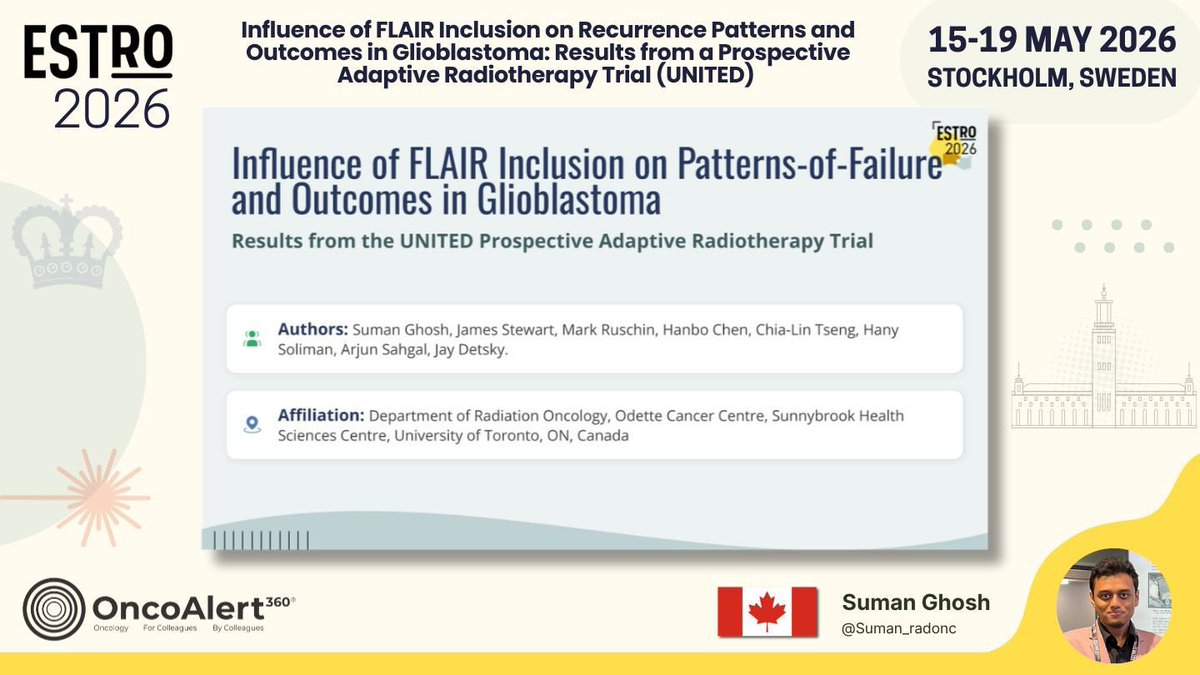
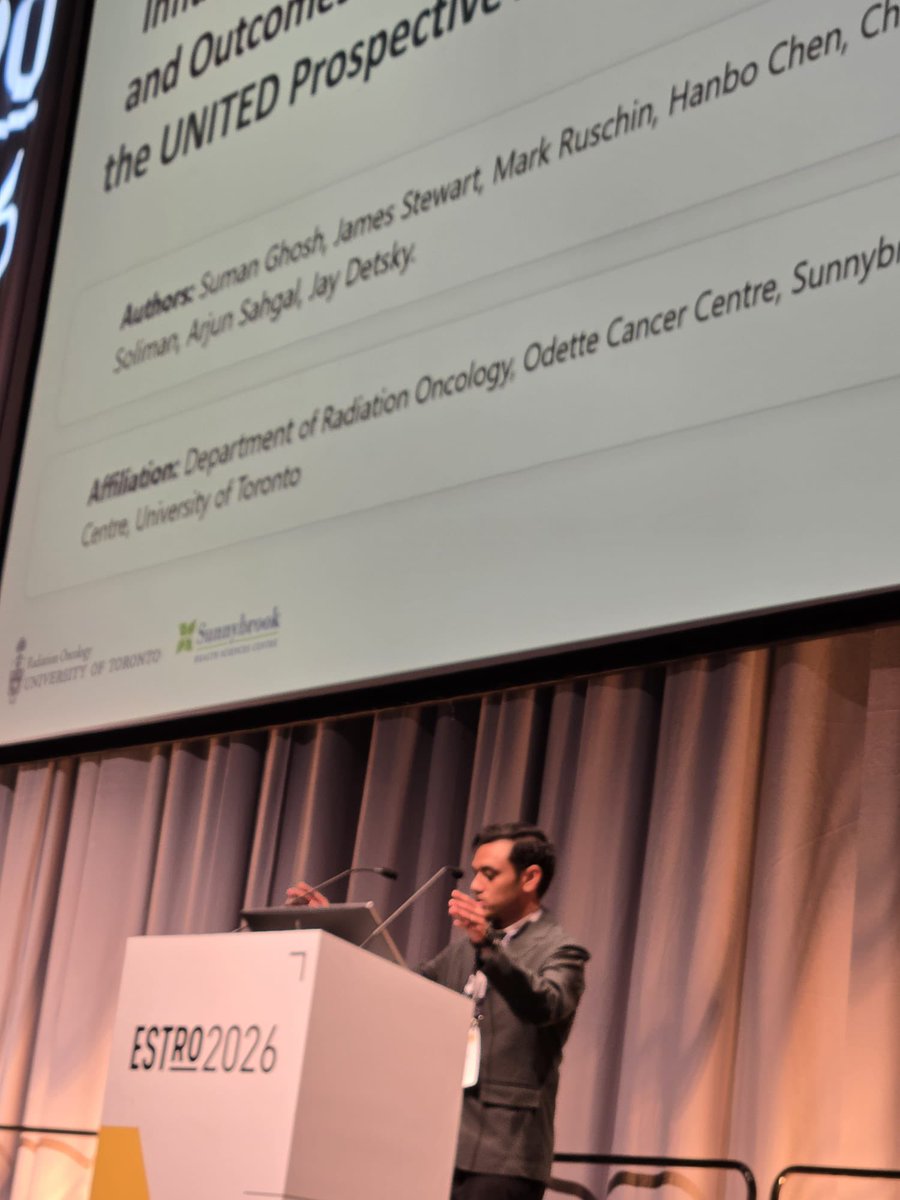
This morning at #ESTRO26 our incredible rad onc fellow Dr Suman Ghosh @Suman_radonc gave a plenary oral digging deep into the inclusion/omission of FLAIR signal from the UNITED study. Well done Suman!
@Sunnybrook is having a pretty good weekend. Here is a nice secondary analysis of UNITED just presented at ESTRO 2026 and published in Green journal. Suggests FLAIR chasing does nit impact margin failure rates.
@jaydetsky@SahgalArjun
“Influence of FLAIR inclusion on patterns-of-failure and outcomes in glioblastoma: results from the UNITED prospective adaptive radiotherapy trial - Radiotherapy and Oncology” https://t.co/qDO7Hrd6zR