If you're not sticking with traditional OOP and don't have a clear domain model, you might not need the repository pattern. Most of the JS/TS examples I've seen in the wild start out well-intentioned, but devolve into a mess:
https://t.co/diAbbrpzxj
You can now use your ChatGPT subscription in the Zed agent, with the same usage and rate limits you benefit from in Codex directly. We're grateful that @openaidevs continues to support subscription-based access for third-party tools, even as others move toward usage-based billing.
Late to the party, but I just discovered the 'blocking=render' script attribute. It’s perfect for hiding components that depend on client-side JavaScript to render properly.
Firefox is the only holdout, so support is already pretty good.
https://t.co/SZfntl8qma
Huge fan of @proxyman_app - one of those tools that is absolutely indispensable.
Incredible amount of features, fixes and improvements since I first started using it a couple of years ago.
Awesome support too, a no-brainer app for engineers.
It's wonderfully simple to create temporary directories in Node.
You can create them locally, with prefixes, or in the global temporary directory (where they'll be automatically cleaned up).
Our ACF plugin has been taken over forcibly by wordpressdotorg without our consent.
If you are a WP Engine, Flywheel or ACF PRO customer, you do not need to take any action and will continue to get the latest from the ACF team.
If you have a site managed elsewhere using ACF, in order to get ACF updates you must perform a 1-time download of the genuine 6.3.8 version via https://t.co/UNgWc8Axp0 to remain safe in the future. The update servers for wordpressdotorg are no longer controlled by the ACF team.
https://t.co/GH46pjUsCR
You’ve been trusting ACF for over a decade. The experts that maintain ACF will continue to support and enhance the capabilities that our users love and trust.
���✨ Woohoo 🎉🥳
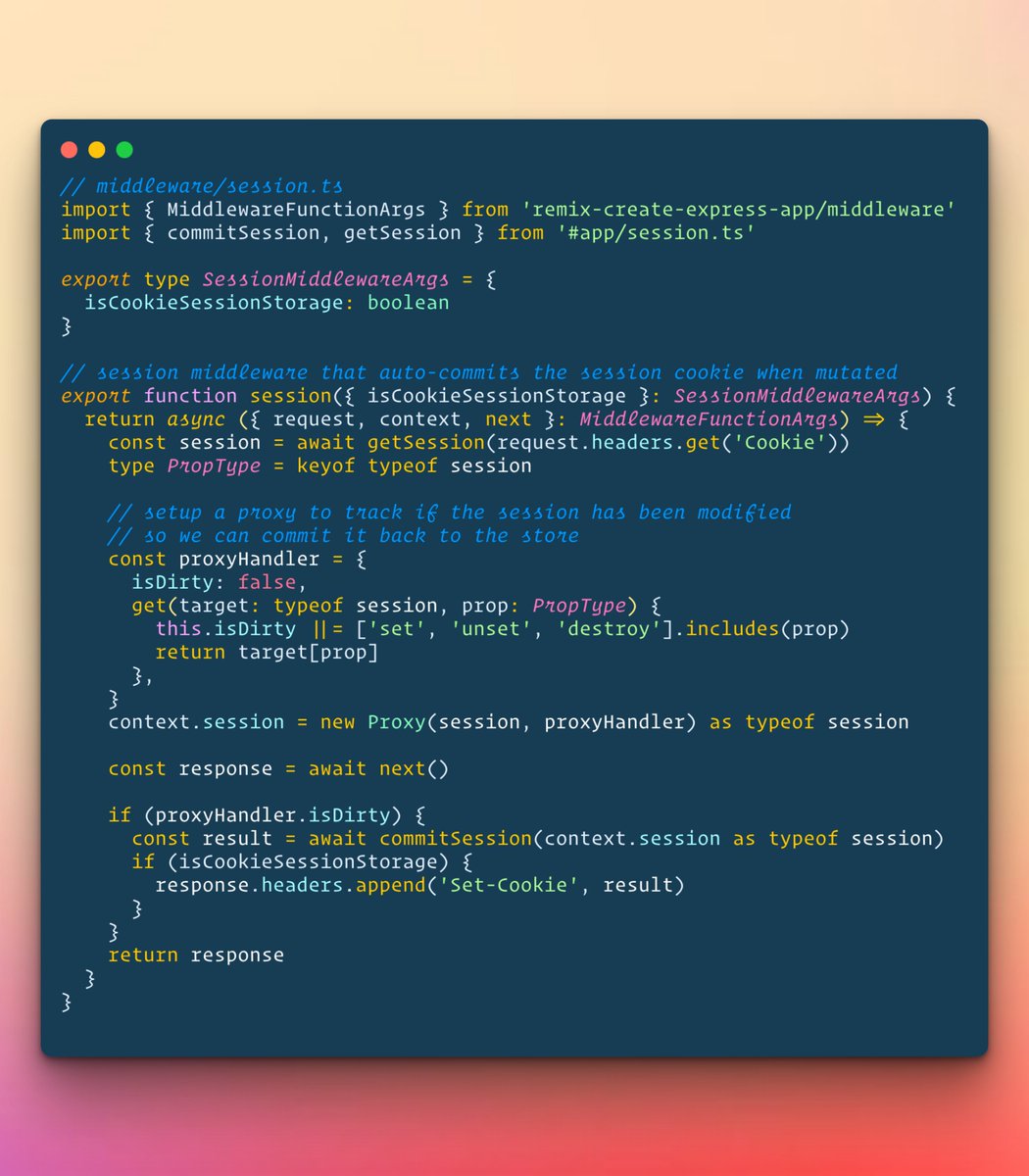
Proud to announce Remix Middleware (Unofficial). This is based on the Middleware RFC so should be compatible.
🏃♂️ Middleware run in sequence
🏊♂️ Loaders run in parallel
🪜 Response moves back up the middleware chain
Example session middleware with auto-commit.
I've been waiting ages for something like this:
https://t.co/nouKaDElOM
About a year ago I was bemoaning the lack of a cross-platform story for server rendering web components:
https://t.co/w4gXA757v8
This could unlock web components for a *far* larger audience.
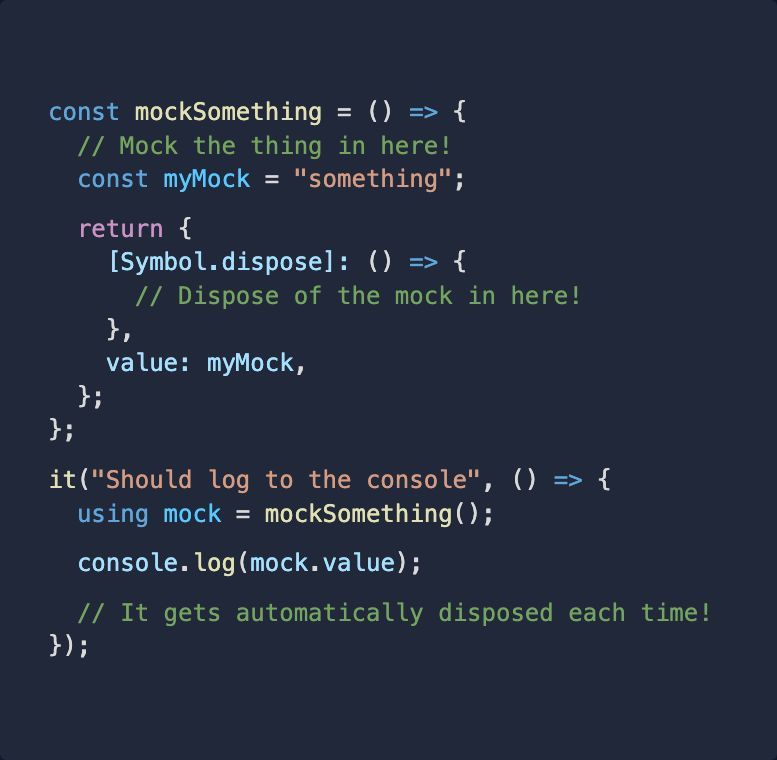
JavaScript's new 'using' keyword is awesome for mocking in tests.
It automatically disposes the 'mock' when it leaves scope. 🤯
No more beforeEach/afterEach...
Facts. If your code looks like this, you're probably missing error-handling, edge-cases, and/or doing things sub-optimally:
const user = await getUser(...)
await doSomething()
if (cond) {
await doOtherThing()
}
And adding those in makes your async/await code really messy.
Testing in jsdom is worse than useless: it's actively bad.
It's an environment that none of your users use, and often requires the code under test to change just to work in it - a complete waste of time and increase in complexity.
It's so easy to test in real browsers, do that!
This is a neat JS trick to allow consumers to use either object or array destructuring:
https://t.co/9IbDODybA2
Never forget that everything’s an object!
A few neat Git tips/tools I've picked up recently:
- `git-absorb`, which is great for addressing PR nits and auto-smushing changes into the relevant commit: https://t.co/lhAdVOBQgg
- The native rebase `updateRefs` flag for automatically rebasing a set of stacked branches/PRs when the tip changes: https://t.co/Y04UZT8pRJ
- `forgit` for even tighter fzf + git integration: https://t.co/Ltnezntp09
Highly recommended , especially `updateRefs`. No need for an external tool or manually working out the `--onto` commit hash 🎉
Chrome is shipping <img sizes="auto"> support 🥳 For lazy-loaded images with srcset, this allows the browser to use the layout width of the image in order to select the source url from the srcset.
https://t.co/UWbS2SdMks
For lazy-loaded images, CSS is often available before the image load begins. The browser can take the actual width of the image from CSS and use that as if it was the image's sizes.