father, husband. @uofcneph @uchicago come for the ICU-Nephrology, stay for #nephBBQ. figuring things out one CRRT machine and one rack of ribs at a time.
@kidney_boy Think about all the kidney disease this @uofcneph all-star team stomped out in 2002 . Lots of early high dose CRRT, fenoldapam to prevent AKI, and bicarb to prevent contrast associated AKI. but I too owe so much to Pat Murray- 3+ decades of leading critical care nephrology #lucky
@runningkidneys@runningkidneys Sigue corriendo y acumulando kilómetros. Tengo muchas ganas de volver a correr contigo pronto; tal vez en ASN-Denver, donde tu entrenamiento en altitud te será de gran ayuda. Encantada de que te guste la cortesía. #Running#Run4Kidneys 🫘 #850Challenge
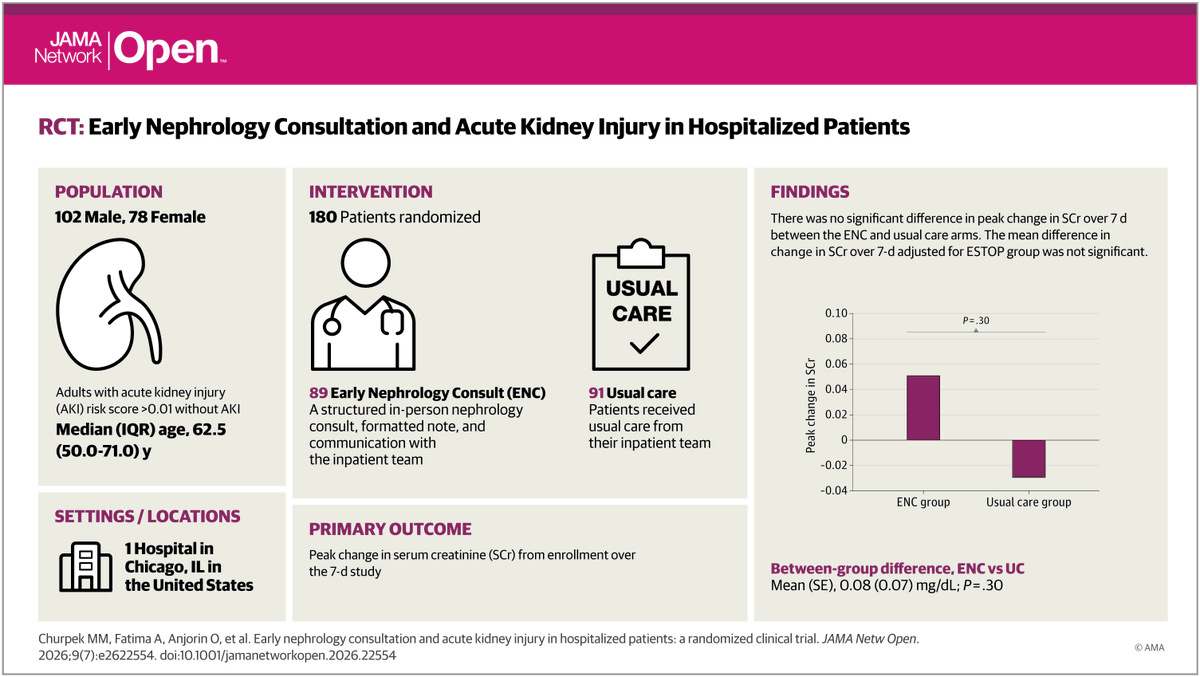
While not a positive study, it was a positive experience and we learned a lot. Thanks to all those @uofcneph and @UW_ICU_DataSci who helped make it happen. There will be more to come; the story of using ML-risk scores to trigger AKI care is not over....
It was a lot of work. Implementing a real-time machine-learning risk score in the EHR, identifying and enrolling high-risk patients before they had SCr-based AKI, randomizing them to a structured in-person nephrology consult. Excited to see it in press. https://t.co/0vEpCbKZVl
Inpatients at risk for #AcuteKidneyInjury identified by a machine-learning score did not benefit from early nephrology consultation, as changes in serum creatinine and outcomes were similar to usual care.
https://t.co/gSolombIRG
Today, we set up a whole new WiFi system in the house. It went as smooth as possible. But there was a 25-min period of total blackout, no WiFi, no nothing - so today I was just like those astronauts who were out of communication on the far side of the moon. Mission accomplished!
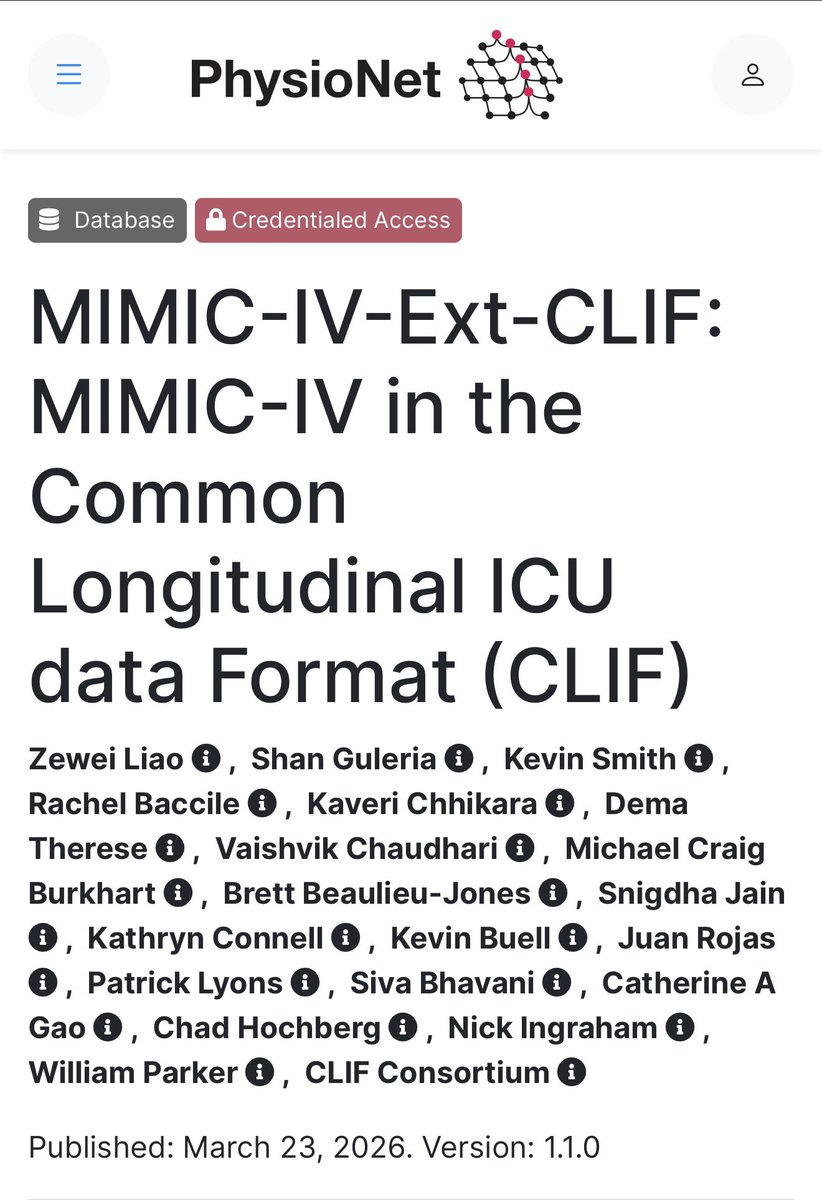
Thrilled to announce that MIMIC-IV-Ext-CLIF is now available on physionet!
Download today and accelerate your ICU data science- the Common Longitudinal ICU data Format (CLIF) consortium (1 M critical illness hospitalizations) will run any well coded project written using this resource!
@doc_BLocke@Nephro_Sparks@doc_BLocke a time lag between writing and public consumption is real. That is not the issue here. to me, this is a bad question that misinterprets the data and ignores that starting RRT based on KDIGO stage leads to more ESRD & that 40% enrollment never needed RRT at all...
@Nephro_Sparks I would have guessed the answer was about dialysis dependence but the endpoint was 90 days. I think LOS in ELAIN were longer because they dont send to LTACs as much there ... but this is a lousy question - not sure who vetted it
@Nephro_Sparks
@adamcifu I hope you send him off properly with a new set of turtle neck shirts and a nice "off-service" dinner at Twin Anchors for Ribs - https://t.co/szp6tEHNhF
#IYKYK
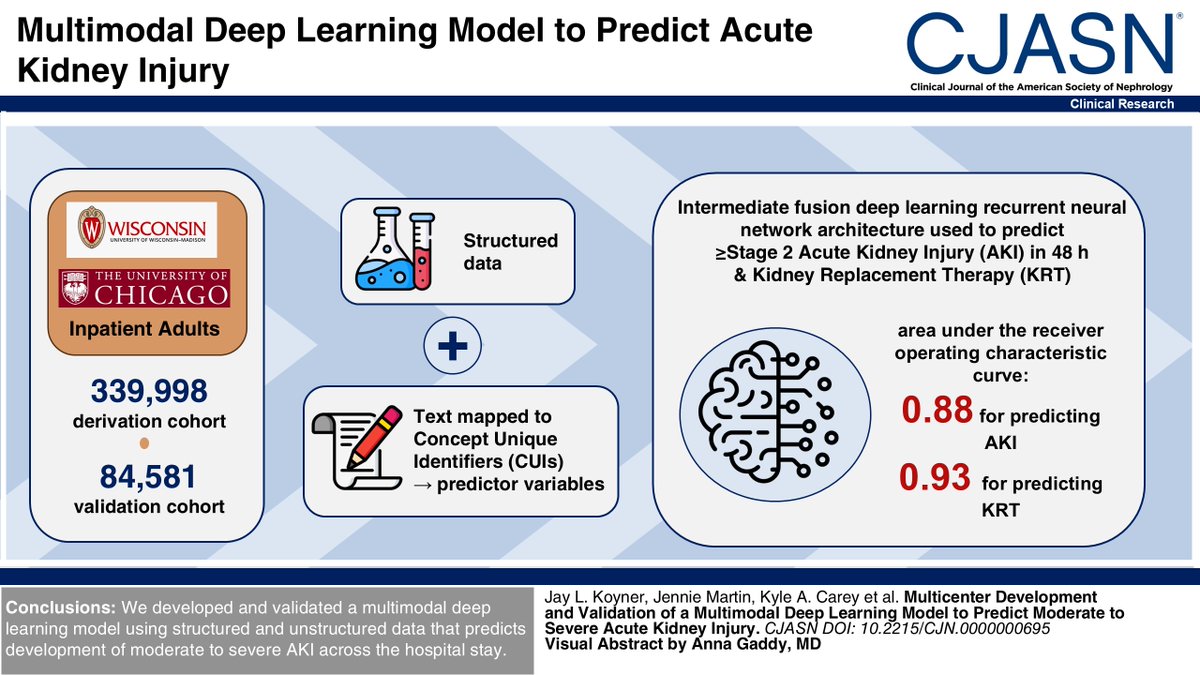
Excited to see this work, collaboration with @UW_ICU_DataSci@uofcneph, on our deep learning recurrent neural network to predict severe AKI 2 days earlier than creatinine, published in @asnpublications. It is already implemented and validation studies are actively enrolling.
Multimodal AKI risk score accurately identifies patients who will develop Stage 2 AKI over two days earlier than serum creatinine alone. https://t.co/HcOHraK9gP
#ASNCJASN
Multimodal AKI risk score accurately identifies patients who will develop Stage 2 AKI over two days earlier than serum creatinine alone. https://t.co/HcOHraK9gP
#ASNCJASN