A few months back I wrote about how Figma was the only "system of record" in the design industry.
This may very well change that.
https://t.co/jLcRv9RSAM
Claude Fable 5.1 is a beast at agentic CAD!
At Max effort it's the most capable model we've tested so far.
Here, inside Adam's harness in Fusion, it rebuilt the SO-101 gripper around the stock servo and mounted a real Pi Camera Module 3 from the official STEP.
A Figma widget I made as a side project ended up becoming Elsevier's first officially adopted design tool.
Design system drift is invisible until handoff, Elsevier’s scale makes it worse - 40 designers, 10+ products, and an ongoing brand transition.
The widget scans frames for design system usage, flags off-brand components and logs results with timestamps.
@dharmeshba A better test of your persona engine would've been feeding the same interview data to the other models as well.
Setting that equal baseline allows you to see how much of a difference your system prompt (of the persona engine) makes in the quality of output!
@vamsibatchuk Eager to know how you prompt to get the most accurate translation of your ideas. i.e details you define early on, and fine tuning which happens later. Real examples would be great :)
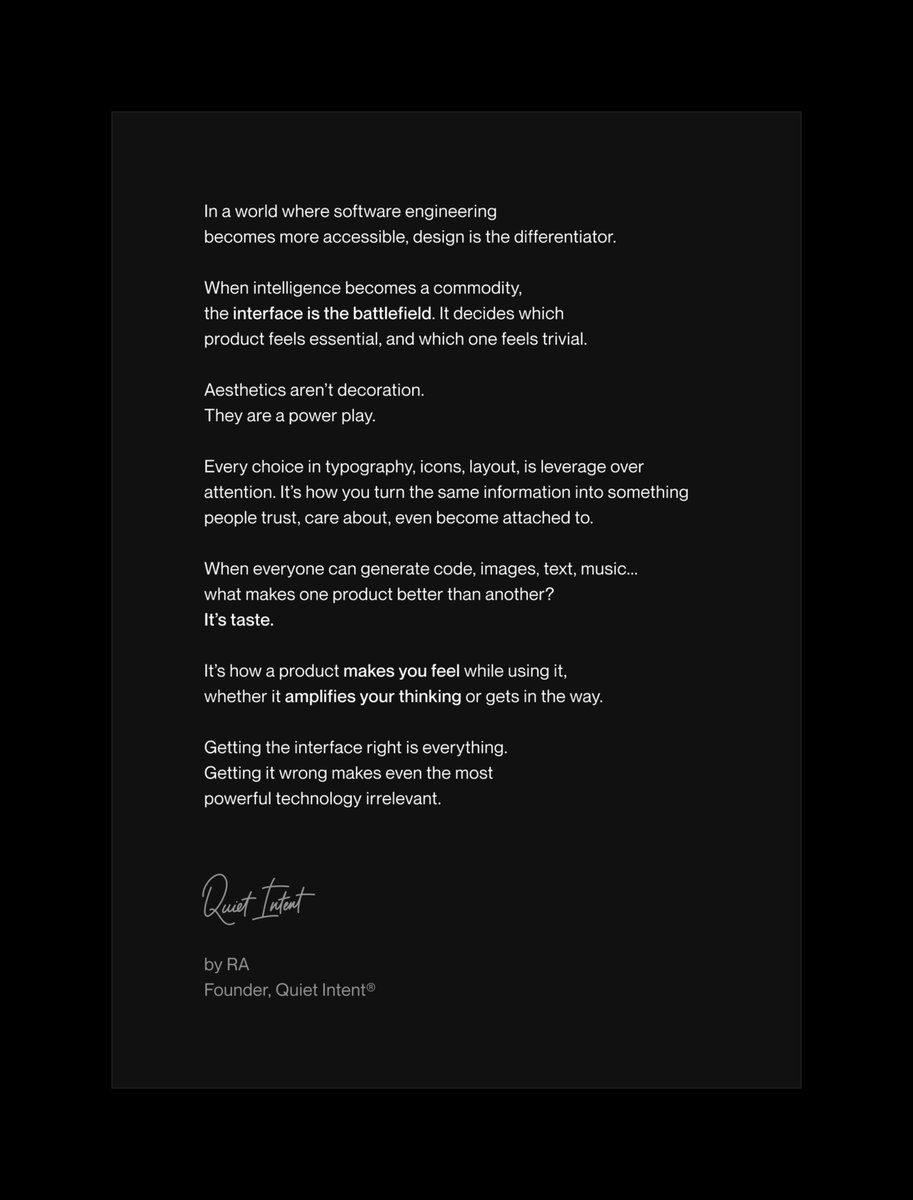
on future of AI interfaces:
future interfaces flow like water — meeting people how they actually think, not how we assume they should
some of us think in bullet points, some in conversations, others need to see everything mapped out visually. the magic happens when the interface adapts to match your specific cognitive style instead of forcing everyone through the same chat box
imagine AI that knows you process complex info better as a timeline, or that you prefer quick back-and-forth over long explanations. it shifts between chat, canvas, tables, whatever actually works for how you think, but acting on the same ground truth
we're moving from “here's one single-purposefully built interface, deal with it” to interfaces that genuinely fit how minds and teams operate. not just understanding what you want, but how you want to receive and work with it
the breakthrough isn't more features — it's interfaces that feel invisible because they match your natural thought patterns perfectly — the ideal form of “it just works.” it grows from something simple and universal, into forms that capture the beautiful complexities of individual minds
rigid UIs assume everyone thinks the same way. adaptive interfaces recognize that great tools should bend to the user, not the other way around
I’ve been using @perplexity_ai Spaces for my university research project.
2 suggestions to improve Spaces for researchers (+ all users):
1. Creation of sub-spaces / folders in a Space
While working, researchers need to hop between several topics at once - creating a different space every time is cumbersome to do and manage (especially while working on multiple projects concurrently). With this, I can create a Space for each project, and sub-spaces for various topics within it. Better organisation, easy to access past information.
2. Auto-generated thread titles according to content
Currently, the first question in a thread becomes its default title. Sometimes, it becomes too long to read (get’s truncated on mobile) and may not accurately represent rest of the thread. Crisp, auto-generated thread titles will help users navigate Spaces and sub-spaces better, and easily find threads they are looking for.
Congrats on building a powerhouse of a tool
@AravSrinivas@henrymodis@olegakbarov@_Tim_Collins