🚨 ايلون ماسك يصرح: الخطأ القاتل الذي يرتكبه سائقو السيارات الكهربائية في السفر الطويل.. ولماذا شحن السيارة إلى 100% يضاعف وقت رحلتك؟!
التعامل مع البطارية بنفس عقلية "خزان بنزين السيارة التقليدية" يكلفك ساعات ضائعة على الطرق السريعة! إيلون ماسك يوضح السر:
📌 الخدعة الفيزيائية التي لا يعرفها الكثيرون:
من 10% إلى 80%: الشحن يستغرق حوالي 20 دقيقة فقط، لأن مواقف الأيونات في البطارية تكون فارغة بالكامل وتستوعب التدفق السريع بأقصى طاقة (أعلى من 200 kW).
من 80% إلى 100%: تشبه محاولة إيقاف سيارة في موقف ممتلئ بنسبة 95%! الأيونات تبحث عن أماكن بصعوبة، وإذا ضغط الشاحن، تتسرب البلورات وتحدث كارثة تلف البطارية.. لذا يقوم نظام الحماية بإبطاء الشحن إلى قطرات بطيئة، فتخسر 30 إلى 40 دقيقة إضافية!
💡 القاعدة الذهبية للرحلات الطويلة:
اشحن حتى 80% وانطلق.. اقود حتى تصل إلى 10% ثم اشحن مجدداً. البقاء في "منفذ الطاقة العالي" يوفر وقتك ويجعل رحلتك أسرع بكثير!
احفظ التغريدة وشاركها مع أصحاب السيارات الكهربائية! 🧵👇
GPT-Live-1 is now available in the API.
Bring ChatGPT’s natural back-and-forth to your app, with voice agents that listen while they speak and work with the models and harness you choose.
The future of transport is safer, more enjoyable & gives you more time back
With theater, music & gaming apps on a 22" touchscreen, Cybercab offers you a space to be productive or unwind
Soon to be equipped with V5 Starlink hardware, too, for complete connectivity
Tesla Cybercab FSD computer vs. Waymo’s new Gen 6 computer.
Waymo’s computer takes up the entire trunk, while Tesla’s sits in the passenger-side footwell.
Waymo’s entire compute hardware (including cameras) reportedly costs around $20-25K, more than the entire cost of the Cybercab.
This is how Tesla will scale further than any other company.
Video Podcast is live.
Turn any doc, link, or idea into a two-host video show with studio scenes, multi-cam cuts, and B-roll. Ready in minutes.
Everyone else stops at audio. This is a show you can publish.
Try it: https://t.co/mwV67pFCDT
Q2 Shareholder Update → https://t.co/u0UcDOuMNa
Highlights
– Cybercab began production at Gigafactory Texas
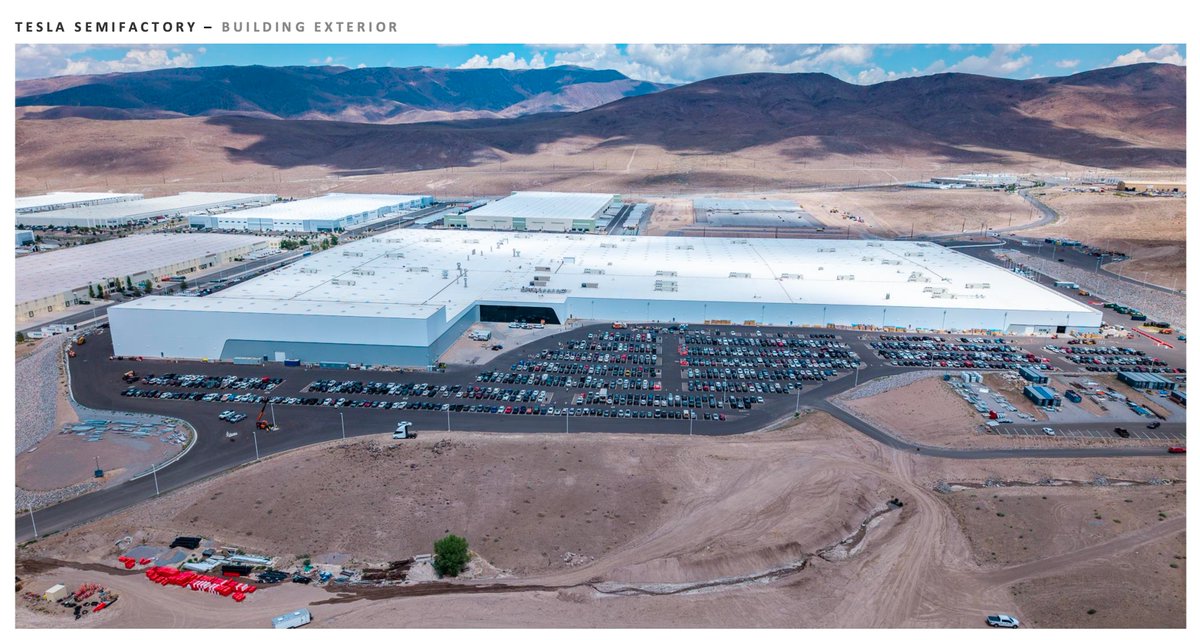
– Tesla Semi remains on track for volume production this year at our new factory in Nevada
– Making continued progress with battery pack capacity expansion (the main limiting factor to near-term vehicle production volume increase)
– Megafactory Texas is nearing completion (start of production planned for this year)
– More customers are now opting to subscribe to FSD at the time of vehicle purchase!
– Robotaxi rollout continued in the US. Now live in 7 major metros
– Construction of Optimus at Fremont Factory began after decommissioning the Model S & X lines. Planned production later this year
From here, there remains much hard work as we aim to revolutionize transportation, energy and productivity through our leading real-world AI. Scaling will be non-linear and we are focused on long-term value creation.
We’ve never been more optimistic about the future.
Automotive
– Record deliveries in several markets: South Korea, Australia, Colombia, Japan, Taiwan, Thailand, Portugal, the Philippines, Chile, Slovenia & Lithuania
– We launched the Model YL in the US in July and have seen a positive response from customers
Energy generation and storage
– Record energy storage deployments in EMEA, supported by record deployments from Megafactory Shanghai, which continues to ramp production
– On track to begin production of Megapack 3 & Megablock this year at our new Megafactory Texas
– Powerwall 3P (three-phase) is now available in Germany and is designed to meet the power needs of German homes with a single unit
Robotics
– Installing the first-generation lines for Optimus at Fremont Factory, where we expect to start production soon
– The initial Optimus builds will be used in our Optimus Academy for training data collection and further functionality development
– Additionally, we continued site development at Gigafactory Texas with building construction now in full swing
AI Training Compute
– More than doubled our onsite compute in Texas (in terms of MW of compute) during the first half of 2026
– Cortex 2 supports the development of both vehicle and humanoid robot autonomy software & will ramp further over the rest of the year
Battery
– Ramping new battery & material factories, including vehicle pack capacity in Berlin, cathode material production and lithium refining in Texas and LFP cells in Nevada for our energy storage products
– Increasing production of 4680 cells to support ramping Cybercab & Tesla Semi plus increased production of Model Y
Other Supporting Infrastructure
– Added over 2,400 net new Supercharging stalls, growing the network by 17% year-over-year
AI Software
– Started rolling out FSD v14 lite to early-access customers in the US & South Korea with AI3 hardware
This software build distills the driving behavior from AI4’s v14 series into both the camera & compute configuration of AI3, bringing destination options & speed profiles. It also addresses challenging driving scenarios with improved proactive & reactive responsiveness
AI Inference Compute
– Making progress on construction & equipment procurement for our semiconductor fab in Austin
Automotive and Other Software
– Rolled out Summer Release:
Self-Driving stats are now available in the mobile app
Grok can make phone calls, search & play music, and adjust climate controls, among other things
Automatic Navigation expands beyond home & work to support any destination based on personal habits and schedule
Robotaxi
– Started production of Cybercab, our purpose-built autonomous EV designed to be the workhorse of our Robotaxi fleet
– Began offering employee rides in Cybercabs on our GFTX campus in July
– Preparing for expansion of our Robotaxi service to additional US metros: testing, permitting & first responder training
– Expanded unsupervised rides to the entire Austin metro area & launched unsupervised rides in Miami, Orlando & Tampa in July
FSD Supervised
– Record net new subscriptions in Q2
– Record FSD attach rates in North America, with over half of new deliveries including FSD subscriptions
– Received additional approvals in Lithuania, Estonia, Denmark & Belgium, with customers in these countries driving over 50 million kilometers (31 million miles) on FSD as of July
Introducing NEO’s 25 Degrees of Freedom, tendon-driven hands — nearing or surpassing human-level dexterity, strength, speed, and reliability.
For seventy years, robotics worked around the hand problem. The humanoid bet is the reverse: it lives or dies at the fingertips.