We are extremely proud and thrilled to announce our very own Dr. Hotamışlıgil @ghotamis has been elected to the National Academy of Sciences!! Congratulations on this outstanding achievement and recognition 👏👏👏😊https://t.co/FczVnkTKru
Ladies and gentlemen - Our Atlas of Human Inflammation today out in @NatureMedicine 💫
Welcome on stage: The Cell as a Living Biomarker🩸
We Built an Inflammation Atlas of Circulating Immune Cells. By profiling more than 6.5 million peripheral blood mononuclear cells from 1,047 patients across 19 inflammatory and immune-mediated diseases using single-cell RNA sequencing, we generated a unified, high-resolution reference of immune cell states in human disease.
Despite decades of research, our understanding of Inflammation has largely remained fragmented, studied one disease at a time and often confined to specific tissues. We set out to take a different approach: to ask whether inflammation leaves a shared, measurable fingerprint at the systems level of circulating immune cells and whether this signal could be leveraged for Diagnostics and ultimately Precision Medicine.
Blood, unlike tissue biopsies, is accessible, repeatable, and scalable, making it an ideal substrate for liquid biopsy approaches. The key question was whether it also contains sufficient biological signal to capture disease-driving inflammatory mechanisms❓
Using interpretable machine learning approaches, specifically gradient boosted decision trees (GBDT) combined with SHAP explanations, we asked whether single cells, and ultimately patients, could be classified based solely on their blood immune transcriptomes. !!! Disease-associated gene expression signatures enabled accurate classification within the study cohort, reinforcing the concept that immune cells in circulation function as “Living Biomarkers”🩸
We are now working toward a diagnostic prototype that brings these concepts closer to clinical reality. Together with hospital and industry partners, we aim to develop Foundation Models of immune cell plasticity that can operate across diseases and settings, enabling patient stratification, therapy monitoring, and outcome prediction from blood alone.
Our long-term vision is a future in which a simple blood draw provides a systems-level readout of immune health, guiding diagnosis and treatment across inflammatory diseases.
Immune cells are already doing the sensing. The challenge and opportunity is to learn how to listen. Please find the Nature Medicine Paper here:
https://t.co/dHSQFVbCPk
Our scientists are close to a breakthrough in the fight against fatty liver disease 🔬
They are working on tiny models of the gut, liver and fat tissue to find new treatments for the condition, affecting one in five people in the UK.
Read more 👉 https://t.co/e3QaBtI6A4
'We are the future of the scientific community.'
A student from the University of Southampton is leading research to better understand fatty liver disease by creating 3D liver tissues in the lab.
Millie-Rose Doolan's work aims to uncover new treatments for this condition.
Happy to share our back-to-back papers in @Nature, presenting a new framework for understanding metabolism - using genomics rather than traditional biochemistry! This led to a systems-level understanding of both metabolic wiring and rewiring. @UMassChan
https://t.co/xqUUkOriko
I am beyond excited to share that you can now apply to observe a @wellcometrust#DiscoveryResearch shortlisting Committee! If you plan to apply to us in the next 2 years, apply to be an Observer now to better understand what happens once you click submit https://t.co/hk1YtFDWvJ
#Adiposetissue.org: New Knowledge Portal Enhances Obesity and Metabolism Research
The new platform https://t.co/mRlTSJxpRV, developed by #HelmholtzMunich, Karolinska Institutet, and Steno Diabetes Center Copenhagen, centralizes molecular and clinical data from 6,000+ individuals, unlocking new insights into obesity, weight loss, and metabolism.
👉https://t.co/ONjmEdIILj
Key facts:
🔹 67 integrated studies for robust analysis
🔹 User-friendly tools for researchers at all levels
🔹 Advanced modules for gene exploration & single-cell analysis
🔹 Future expansions: brown fat data, clinical cohorts & more
@helmholtz_diabc@karolinskainst@Stenodiabetes
#ObesityResearch #Metabolism #Bioinformatics #AdiposeTissue #Obesity #Diabetes #HI_MAGLeipzig
Exciting news for obesity research! 🎉
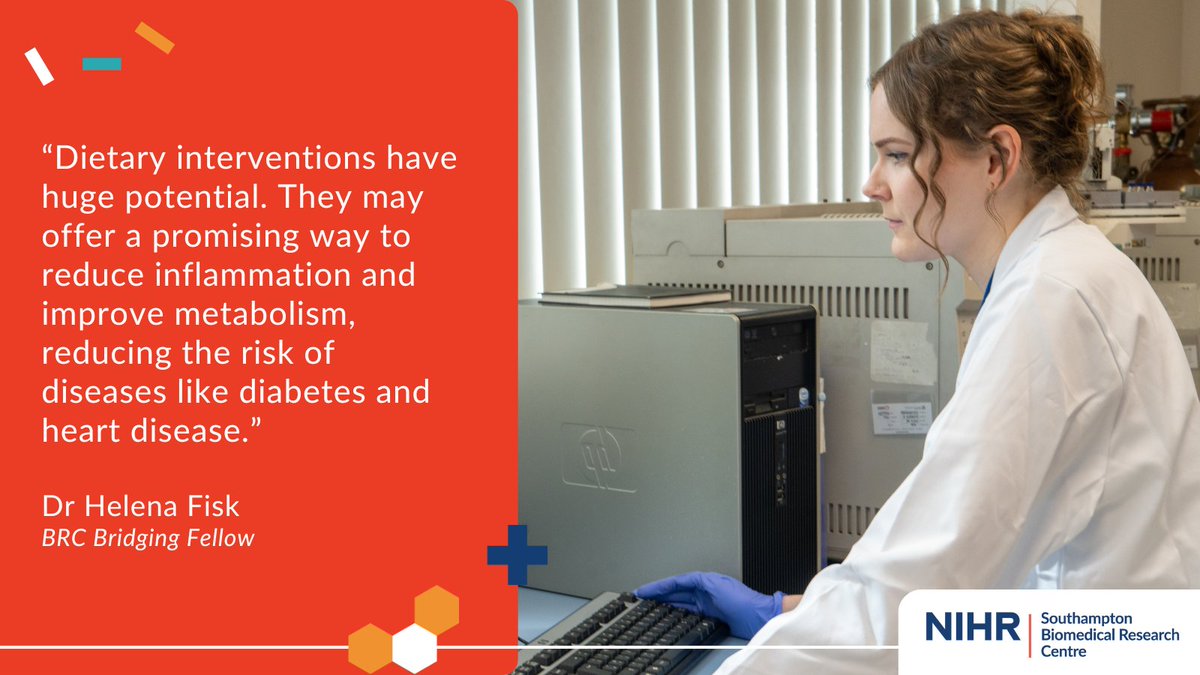
Our BRC’s @helena_fisk has secured funding from the @BBSRC iNutriLife Innovation Hub for a project with ‘huge potential’.
She is looking at new ways to improve obesity-associated inflammation.
Read more: https://t.co/5Q7dxyTX6K
Come work with the @MakowskiLab - we have an opening for a postdoc now and soon opening a lab manager and technician position. Here is the postdoc listing - please share! @UTHSC_Cancer
https://t.co/f01TaRVzw1
📢 Only a few days left to apply to our MRC DTP Programme in Translational Biomedical Sciences.
To find out more about our fully funded, 4 year (1 year MRes + 3 year PhD) Programme, and to apply, please click here:
https://t.co/WKIjjDLbFn
Are you looking for a PhD position in Biomedical Sciences? We are now recruiting for a series of studentships for our MRC DTP Programme in Translational Biomedical Sciences. For more info on the fully funded 4yr (1yr MRes + 3yr PhD) prog & to apply visit https://t.co/WKIjjDLbFn
PhD studentships available @SouthamptonBRC @UoS_Medicine Join projects focussing on interdisciplinary studies applying state-of-the-art computational and experimental methodologies to medical research, quantitative and qualitative data analysis. Details @ https://t.co/YZb11atzk4
We’re recruiting into our team! If you’d like to join a kind and supportive team working on glycemic trait genetics please apply! Job profile https://t.co/aZk48fPKaL