Závěr - nebudu zacházet do hloubky, rád na dotazy odpovím, ale v podstatě je na první pohled jasné, s jakým rizikem může člověk přehlédnout velice podstatnou věc, když na svém zdraví šetří.
Precizní medicína je o preciznosti. O jasných datech, evidence based přístupu a řešení. To jsem našel a jsem za to velice rád.
Vaše rodinná anamnéza je k ničemu.“
Řekl to doktor House ve scéně, kde zjistí, že rodiče pacienta nejsou jeho biologičtí rodiče.
Provokace. Která v genetické prevenci trefuje skutečný problém: rodinná anamnéza má slepá místa.
De novo variantu, kterou nemá ani jeden z rodičů, v rodokmenu neuvidíte. Neúplná penetrance může gen v rodině skrýt po celou generaci - nemoc se neprojevila, o riziku nikdo neví.
Adopce, dárcovské gamety nebo nejisté otcovství mohou znamenat, že rodokmen, který v ordinaci recitujete, geneticky není váš.
Rodinná anamnéza je důležitá. Je to ale informace, kterou si pamatujeme, interpretujeme, někdy zamlčíme, nebo ani nemáme jak zjistit.
Genom je typ informace, která neřekne, co se v rodině stalo, ale řekne, které varianty v té DNA jsou.
Nechci tím říct to, že genom nahradí anamnézu. Ovšem rozhodnutí už nemusí stát jen na tom, co o své rodině víme.
Genom ukáže terén, který z rodokmenu neuvidíte.
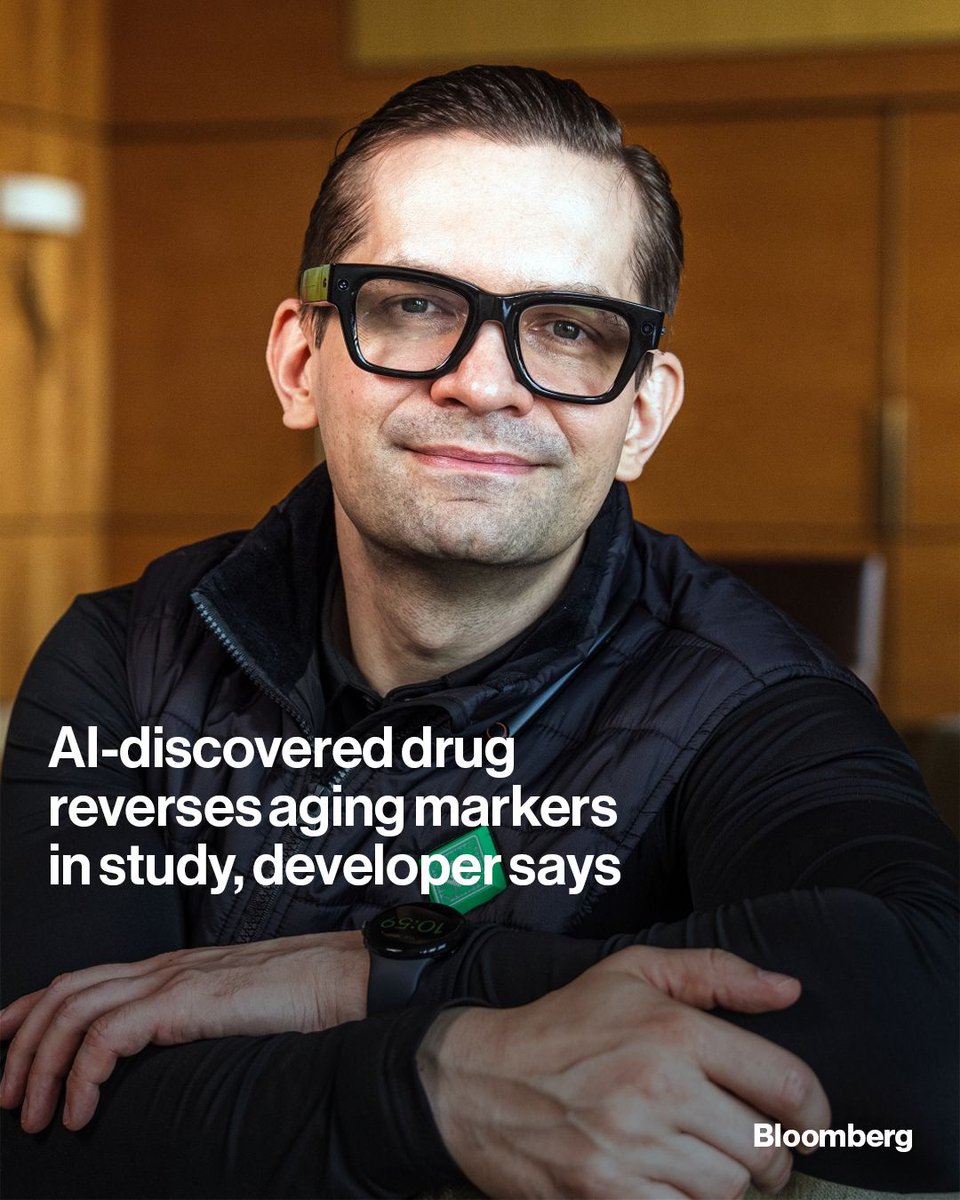
An experimental lung disease drug developed using artificial intelligence showed promise in reversing biological signs of aging, according to its developer Insilico.
Longevity enthusiasts have long embraced the repurposing of existing medications to delay aging. Read more: https://t.co/40sJIaIGdD
📷: Lam Yik/Bloomberg
The best time to understand your genome
is before you need it.
Before the diagnosis.
Before the adverse drug reaction.
Before a clinical decision has to be made under pressure.
Know your data.
Keep it.
Use it when it matters.
For the first time, scientists have mapped the complete brain and central nervous system of an adult male fruit fly — a key model organism in science. 🪰
Working alongside HHMI Janelia Research Campus and the scientific community, @GoogleResearch scientists and researchers used AI to combine millions of 2D images into 3D neural shapes, reconstructing a record-breaking 166,000+ neurons. This foundational map of the adult male fruit fly brain can help accelerate our understanding of the brain, and is a major milestone in neuroscience.
Most people who have done a DNA test think they already know all about their genome. They do not.
A typical consumer DNA test (the kind you spit into a tube to find out your ancestry) looks at a very small part of your DNA. Imagine you're checking a few streets in a city. It's useful, but you don't need to memorise the map.
Whole genome sequencing looks at all three billion letters of your DNA, which is more than ninety-five percent of it. This is in contrast to an exome test, which only covers one and a half percent of your DNA, or a standard panel test, which only looks at a few genes. It is the whole city, including the roads no one thought to check.
It's important to feel complete. In the largest recent study, which looked at more than 24,000 patients, whole genome sequencing found a clear genetic answer nearly twice as often as tests that only look at a small part of the DNA.
But data alone is not medicine. That is why it comes with a doctor: before testing, to explain what will and will not be looked at; afterwards, to turn variants into a plan, not a diagnosis.
Your genome doesn't change, so you can take the test again and again as science learns more.
It's normal to wonder what you might find. That's exactly why a doctor reads the map with you.
Drugmakers found a promising cure for the obesity epidemic and their stocks were rewarded for it. Now, investors are salivating over a new crop of companies tackling a more purely aesthetic problem: baldness. Read more: https://t.co/sbEsWPyXa8
📷️: Gabby Jones/Bloomberg
The revolution in pancreatic cancer is not just about the new, impressive FDA approved drug or the vaccine treatment. It's also about AI detection up to 3 years before it is currently diagnosed. https://t.co/760lOqE66C
Artificial intelligence companies OpenAI and Anthropic, along with more than 100 other tech and financial services organizations, warned that businesses and governments must do more to prepare for and defend against AI-enabled hacks https://t.co/3SbNYFN4QA
Reaktivace chronických virů během COVID-19
Chronické viry, které v těle spí desítky let, se během těžkého COVID-19 často probouzejí – a to i u lidí s normální imunitou.
Cole Maguire a kolegové z University of Texas at Austin ve spolupráci s konsorciem IMPACC to v srpnu 2026 ukázali v časopise Nature.
Sledovali 1 154 hospitalizovaných pacientů s COVID-19 (ještě neočkovaných) pomocí opakovaných multi-omických analýz, především RNA sekvenování z krve, výtěrů z nosu a plicních aspirátů, během hospitalizace a až rok poté.
Výsledky ukázaly tři klíčové body:
- Herpesviry (virus Epsteina-Barrové brzy po přijetí, cytomegalovirus a herpes simplex spíše později) a anelloviry se reaktivovaly a jejich přítomnost souvisela se závažností průběhu.
- Reaktivace se objevovala často i u imunokompetentních pacientů, ne jen při imunosupresi léky.
- V rekonvalescenci byla detekce anellovirů spojena s přetrvávajícími fyzickými obtížemi typickými pro long COVID, a to i po zohlednění věku, imunosuprese a původní závažnosti.
Studie ukazuje asociace, ale neprokazuje přímou příčinnou souvislost mezi reaktivací a klinickým průběhem.
Zjištění naznačují, že reaktivace chronických virů může přispívat k systémovému zánětu a dlouhodobým následkům. V budoucnu by jejich sledování mohlo pomoci lépe předvídat rizika a případně cílit péči u těžkých forem COVID-19 i long COVID. Zatím jde o podklad pro další výzkum, ne o hotový diagnostický nástroj.
DOI: 10.1038/s41586-026-10740-z
Nové nástroje už skoro nespletou čistě lidský text se strojovým, u smíšeného psaní ale pořád tápou.
Po letech nespolehlivých kontrol se zdá, že čistě lidský text už jde od čistě strojového odlišit mnohem jistěji.
To se týká redakcí, recenzentů i škol, protože neoznačené strojové psaní už není okrajová výjimka. V srpnovém článku z roku 2026 Miryamy Naddafové a Richarda Van Noordena v Nature autoři shrnuli vlastní zkoušky i nezávislá ověření nástrojů Pangram a GPTZero.
Redakce nástroje zkoušela na reálných článcích a recenzních posudcích a opřela se také o nezávislá ověření, včetně 495 lidských textů od výzkumné firmy Epoch AI a rozborů informatičky Marzeny Karpinské z univerzity Simon Fraser. Novější nástroje se učí na milionech párů lidského textu a jeho strojové napodobeniny, místo starších měřítek předvídatelnosti slov.
• V ověření Epoch AI neoznačil ani jeden z 495 lidských textů mylně za strojový. Podle vlastních dat Pangramu jde u angličtiny zhruba o čtyři omyly na sto tisíc textů. • Nástroje už vstupují do praxe: Americká asociace pro výzkum rakoviny jimi kontroluje recenzní posudky a konference NeurIPS po této kontrole odmítla 18 procent příspěvků. Podle Pangramu obsahoval loni nějaký strojový text každý osmý biomedicínský článek. • Když má umělá inteligence napodobit konkrétního autora, část strojových textů stále projde jako lidská. U smíšeného psaní údaj „sto procent umělé inteligence“ neznamená, že každý odstavec napsal stroj.
Zároveň platí, že nezávislé ověření vždy zaostává za nejnovějšími verzemi, takže dnešní čísla o přesnosti často pocházejí jen z vlastních firemních zkoušek.
Nástroje proto mohou sloužit jako první síto, ne jako konečné rozhodnutí. U čistě lidského a čistě strojového textu pomáhají odhalit hromadnou výrobu prázdných textů. U běžné jazykové úpravy s pomocí umělé inteligence ale pořád chybí jasná hranice a malá změna textu může hodnocení výrazně posunout.
Vážená maminko, vážený tatínku,
dovolujeme si Vás informovat o probíhajícím výzkumném projektu, který realizuje společnost
Sophgena a.s. ve spolupráci s akademickými a klinickými partnery, do kterého se může Vaše dítě
zapojit.
Projekt se zaměřuje na rozšíření možností novorozeneckého screeningu pomocí
moderních genomických metod, konkrétně celogenomového sekvenování (WGS – Whole
Genome Sequencing).
Účast v tomto projektu Vám může přinést důležité informace o zdravotním stavu Vašeho dítěte a přispět k jeho úspěšné léčbě a v některých případech i k
záchraně života.
Pokud máte zájem o více informací, napište mi na dna(at)https://t.co/HrFiFxvhTI nebo zprávu.
@DavidPuchovsky Čínske kamery (Hikvision/Dahua) sú v praxi „štandard“ napriek známym rizikám. Pri ruských ide o čerstvé obvinenie opozície vs. oficiálne popretie ministerstva – bez ďalších detailov (výrobca, sériové čísla alebo zmluva).
I almost posted that I carry a genetic variant that could kill me.
I had the slide to prove it.
Yesterday I asked why the same dose of cocaine doesn't land the same way.
Today the example is me.
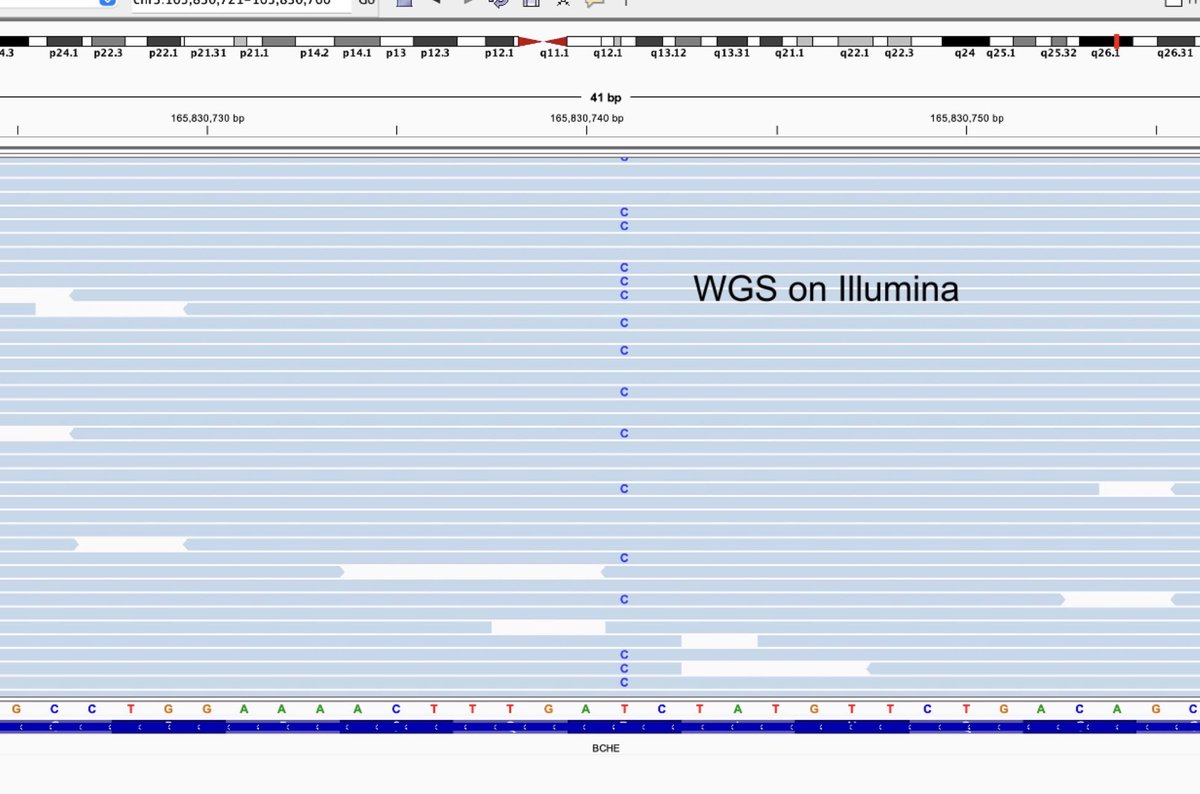
rs1799807 in BCHE - the "atypical" butyrylcholinesterase variant. Described as a natural loss-of-function allele. Often called one of the most important variants affecting cocaine metabolism.
Which isn't why this variant became clinically important. It has been recognized since the 1950s because of prolonged paralysis after succinylcholine anesthesia. Same enzyme. Same biology. The cocaine story came decades later. With far less behind it.
The screenshot is from my own genome.
Then I did what I keep telling everyone else to do.
I checked the evidence.
I'm heterozygous.
One copy.
Around 1 in 25 Europeans carries the same genotype. Plasma butyrylcholinesterase activity is typically reduced by about 30-40% - not absent. The "natural knockout" language comes from homozygotes.
And even there, it's an extrapolation from enzymology. Not a demonstrated mortality risk.
Somewhere along the way, both of those distinctions quietly disappeared.
Then came the bigger surprise.
For cocaine toxicity, there is still no prospective human cohort demonstrating that carriers like me have a higher measured risk of severe toxicity or death.
Not weak evidence.
Not conflicting evidence.
No clinically validated association.
The post I almost published was:
"I'm carrying a potentially lethal genetic variant."
The post that's actually true is:
"I'm carrying a genetic variant that hasn't earned that adjective."
Plausible mechanism. No outcome data.
That difference is exactly why I spent time reviewing BCHE, CES1, CES2 and CYP3A4.
Because this is how genomics usually goes wrong.
Not through fraud.
Not through bad sequencing.
But through a perfectly real variant, a perfectly real biological mechanism, and a story that runs just a little ahead of the evidence.
It happened to me.
With my own genome.
While working on an article about exactly this failure mode.
A genotype plus a plausible mechanism is a hypothesis.
Only phenotype, longitudinal observation, and clinical outcomes can turn it into knowledge.
That's the difference between a compelling story and evidence.
Sometimes the most interesting scientific result isn't what works.
It's what still doesn't - despite every reason it should.
Full article next week on the Sophgena a.s. blog.
PS: As a genomics nerd, I probably enjoyed this more than I should have - the variant is unmistakable. PacBio long reads, Illumina WGS, even WGS on my own cell-free DNA.
Perfect data.
The genome was easy to read. The evidence was the hard part.
Why does the same dose of cocaine make one person euphoric and send another to the ER?
Cocaine is almost a textbook case for pharmacogenomics. Its elimination relies primarily on hydrolysis by esterases whose functional genetic variants have been known for decades. If pharmacogenomics is going to work anywhere, it should work here.
Yet after more than 30 years of research, there is still no clinically validated genetic test.
That paradox intrigued me enough to go through the evidence gene by gene: BCHE, CES1, CES2, and CYP3A4 and separate what is actually supported by data from what has simply been repeated for years.
Sometimes the most interesting scientific result is not what works, but what still doesn’t, despite every reason it should.
Full article next week on the Sophgena blog
Perhaps the most important message of this study is not the identification of another risk locus, but the growing realization that our diagnostic categories may not reflect the underlying biology.
Schizophrenia and Alzheimer's disease may be linked by shared molecular pathways operating across decades of human life, with 16p11.2 representing one of the clearest examples.
As multi-omics, functional genomics, and longitudinal imaging continue to converge, neuroscience is gradually shifting from symptom-based diagnoses toward mechanism-based medicine.
The real opportunity is not simply to explain why schizophrenia increases dementia risk, but to uncover the biological trajectories that connect neurodevelopment to neurodegeneration and intervene long before either disease becomes clinically apparent.
https://t.co/Fj6EbZpFOX