The FIFA World Cup Round of 16 delivered extraordinary television audiences in the United States, but one number stood above all others: England vs. Mexico became the most-watched match of the tournament in the U.S., drawing 44.842 million viewers across Fox, Telemundo, and Peacock. That surpassed the 42 million who watched the United States face Belgium the following night and came remarkably close to the average audience for the NFL’s AFC and NFC Championship Games (47.4 million).
The figures reinforce a reality that has become increasingly evident over the past decade: Mexico is one of the biggest commercial driver of soccer television in the United States. The Mexican national team consistently delivers audiences that rival or exceed those of major American sporting events. Its appeal extends far beyond Mexican-Americans, reaching a broad Hispanic audience and an increasing number of general sports fans. For broadcasters, Mexico matches have become premium television properties capable of generating exceptional advertising revenue and attracting both English- and Spanish-language audiences simultaneously.
This commercial strength helps explain why the value of U.S. broadcasting rights for the 2030 FIFA World Cup is expected to increase dramatically, from approximately $485 million for the current cycle to projections approaching $2 billion. Networks recognize that marquee matches involving Mexico are among the tournament’s most valuable television assets, particularly in the world’s largest advertising market.
Mexico’s importance is even more significant when viewed in the broader context of American soccer economics. The United States is home to a huge Mexican origin diaspora. That demographic has long made El Tri a ratings powerhouse, regularly producing some of the highest television audiences for international soccer outside of the World Cup itself.
Beyond television, Mexico fuels the American soccer economy through ticket sales, sponsorships, merchandising, and tourism. Matches involving El Tri routinely fill stadiums across the 🇺🇸, often selling out venues with capacities exceeding 60,000 or 70,000 spectators. Few national teams anywhere in the world possess that level of commercial drawing power outside their own country.
https://t.co/LXYWNpZPwW
🏴 ❤️ 🇲🇽
🤝 England want to welcome Mexico to Wembley after uplifting Azteca trip
📅 FA exploring friendly feasibility
✅Match could become useful World Cup prep https://t.co/hP4QAuJEUF
De eso se trata el Mundial 🥹🇲🇽
Japones rompió a llorar tras la eliminación de su país, pero de inmediato, un grupo de brasileños lo fueron a consolar y los mexicanos lo pusieron a volar 🤝🫰🏻
🎥 @myt_guzman
Argentina, Brasil, Colombia, Ecuador y México van por la misma parte del cuadro.
España, Francia, Alemania, Portugal, Holanda y Croacia van por la misma parte del cuadro.
Tenemos una Copa América (con ilustres invitados) y una Eurocopa (con ilustres invitados) dentro de la Copa del Mundo y una Finalissima (esta si es la de verdad) entre los ganadores de cada cuadro para proclamar a la mejor selección del planeta.
BENDITA COPA DEL MUNDO 2026
NO TERMINES NUNCA!!!!
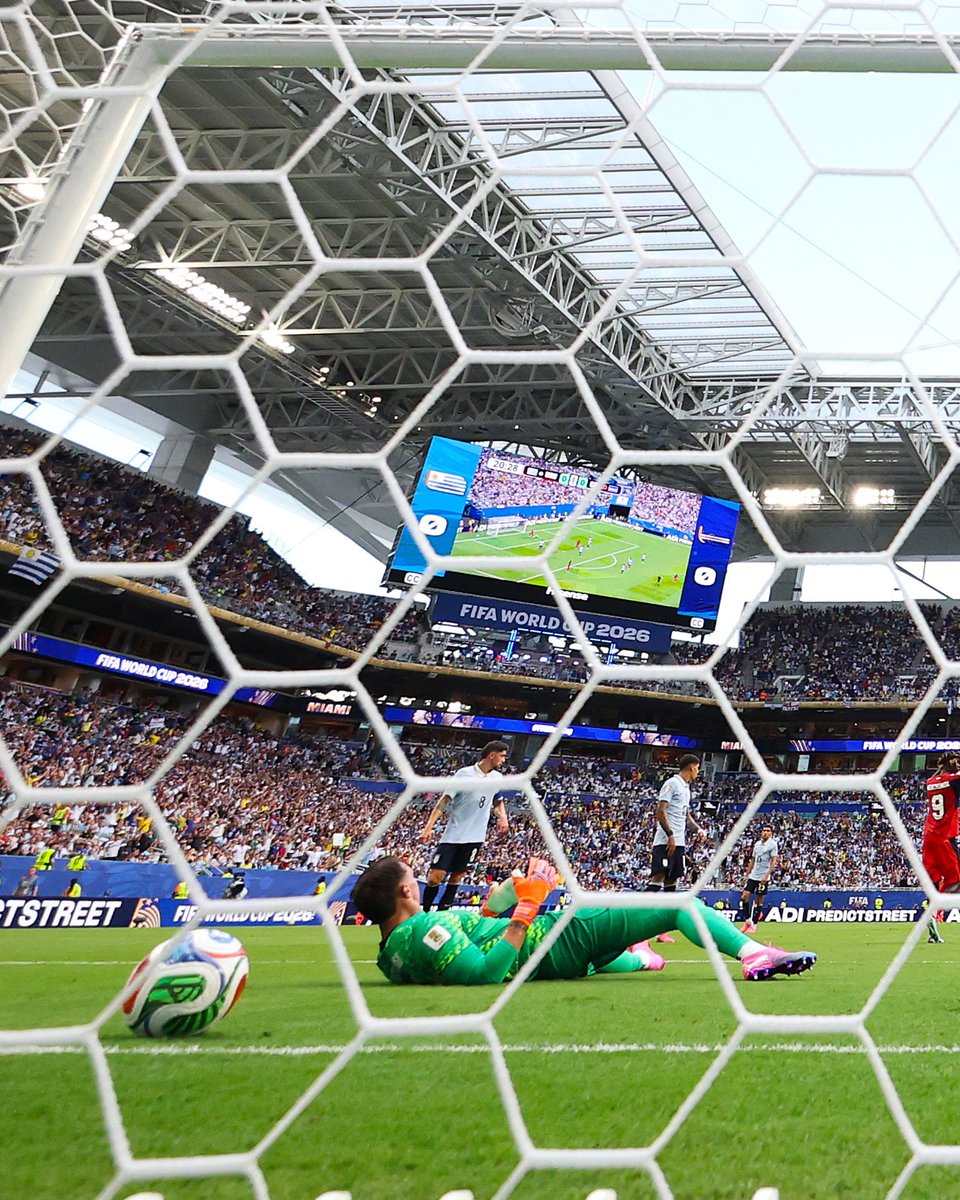
Fernando Muslera at the World Cup:
▫️ Spilled a header vs. Saudi Arabia, rebound was scored
▫️ Beaten by long-range free kick opener vs. Cabo Verde
▫️ Marooned off his line for the 2nd goal vs. Cabo Verde
▫️ Fumbled Alex Baena's shot vs. Spain, substituted at half time
🫥
Señores de @DSports@DSportsPE@DGO_Latam@DTVTotal con el mayor respeto todos los usuarios de América del Sur estamos reclamando, que sus narraciones del mundial resultan faltas de equilibrio como si fueran solo para Argentina, agradeceremos mayor respeto a toda su audiencia.
#OJOALDATO - Por SEGUNDA vez en TODA la historia de la Copa del Mundo una selección anfitriona cierra la fase de grupos con TRES victorias y CERO goles en contra. Hasta hoy, sólo lo había logrado Italia en 1990.
México se une a un club de MÁXIMA ÉLITE. Es la SEXTA selección en TODA la historia de la Copa del Mundo que gana sus tres partidos de la fase de grupos sin conceder un solo gol:
🇳🇱 Holanda 1974
🇧🇷 Brasil 1986
🇮🇹 Italia 1990
🇦🇷 Argentina 1998
🇺🇾 Uruguay 2018
🇲🇽 MÉXICO 2026
People will probably talk about Mexico’s structure, their 5-4-1, their discipline without the ball, and how organized they were against S Korea. And they should, because out of possession, Mexico were excellent. Maybe the best I have seen them look in a long time. It was pragmatic. It was clear. They protected the middle, gave S Korea a lot of possession without much penetration, and as a case study in defensive organization, it was really good.
But with the ball, it was painful. And that is the bigger idea. Mexico showed that defensive organization can keep you alive, but only brave first actions can let you play. The problem wasn’t just tactics. It was bravery. And I don’t mean bravery as “wanting it more.” I mean bravery as a specific football action. Can you receive and face forward? Can you drive at the next defender? Can you break the press with the first action after receiving?
Because that was the difference. When Mexico tried to build, S Korea forced them wide. Over and over again, Mexico would receive in the wide area facing backwards, and then either go back, lump it forward, or play some hopeless driven pass into the middle. Once the receiver’s first action was backwards, the possession was basically already dying. S Korea did not have to retreat or make a difficult decision. They could stay comfortable, keep Mexico in front of them, and wait for the next reset.
Compare that to England or Argentina. England had deep players who could start high and come back to the ball. They had players around the ball. They had players threatening behind. They created gaps on purpose so players could arrive when needed, or go when they could break it. And when England received, so many of their first touches went forward. Every touch seemed to put the defender on their heels a little bit. That is what Mexico didn’t have enough of.
The moments Mexico looked good were the moments where the first action was forward. Gallardo receives, takes two touches, and breaks the press. Brian Gutierrez receives and is able to break pressure. A player drives forward, and suddenly the whole situation changes. That is the moment. Not the formation. Not the possession percentage. The moment is: can the player receive and turn a safe possession into a threatening one?
That is why this matters beyond Mexico. A lot of teams are organized. A lot of teams can defend space, protect the middle, and survive for long stretches without the ball. But the next tier is having players who can turn structure into threat. Players who can receive under pressure and make the opponent defend them. Players who can take the first touch that changes the whole picture of the game.
Mexico defended like a serious team. But they did not attack with enough courage. And that is the difference between surviving the game and controlling it. Defensive organization can keep you alive. But if you want to actually play, someone has to receive, face forward, and make the opponent defend.
BBC Sport has a live World Cup knockout bracket updating after every match.
Some clever soul has made it so it automatically works out the 495 possible combinations of third-placed teams.
Right now?
Germany v Brazil
England v Portugal
Scotland v Japan
https://t.co/RnvFefXFtQ