Since this was published Saturday morning it’s been revealed that the Royal Navy’s entire available fleet of hunter-killer submarines is stuck in port unable to sail — all five Astute class subs currently laid up awaiting maintenance and other repair work. Leaves the UK’s sub-sea internet and power cables dangerously vulnerable to sabotage by the Kremlin
🚨🇸🇪 ÚLTIMA HORA: Suecia ha comenzado a repatriar a los inmigrantes que obtuvieron la residencia sueca pero no lograron integrarse en la sociedad occidental.
¿Apoyas la decisión de Suecia?
Maybe you’re over Diogo Jota’s death, but Andy Robertson isn’t.
Maybe you think disruption to pre-season physical prep is irrelevant, but Andy Robertson doesn’t.
Maybe you’ve forgotten that these lads are human beings, but Andy Robertson hasn’t.
Perspective.
#YNWA
Texas built the largest wind fleet in America.
More than 30,000 turbines, costing billions in subsidies, sold as clean, limitless energy.
But in February 2021, reality hit.
A historic cold outbreak froze the turbines. Power output across the state collapsed within hours.
The grid buckled.
Millions lost electricity.
Almost 1,000 people died.
And while politicians blamed gas lines and 'unexpected weather,' the data pointed to a grid that had grown dangerously dependent on wind.
Texas had the capacity. But it didn't have reliability.
Emergency generators fired up. Diesel. Gas Anything that worked.
The promise was clean energy.
The reality was blackouts, Texans freezing to death, and a grid one cold snap away from collapse.
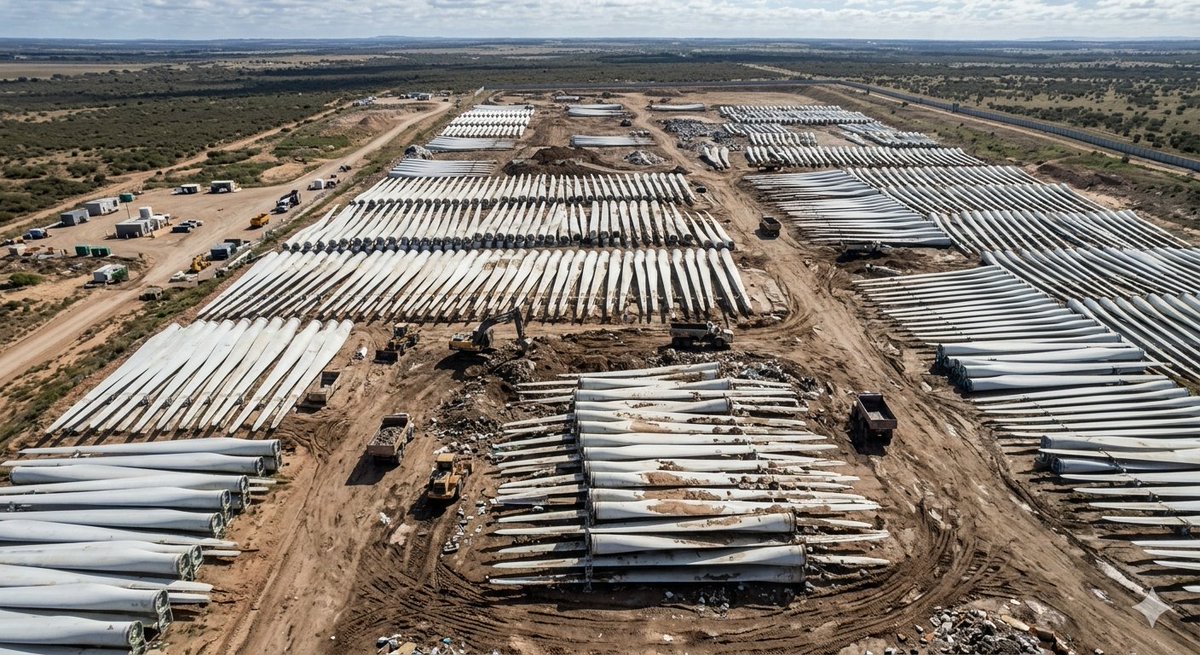
The world will have to deal with 43 million tons of decommissioned wind turbine blades by Net Zero in 2050.
To put that in perspective, it’s the equivalent weight of 215,000 locomotives. These blades are made of high-strength composites designed to survive decades of brutal weather, and they are notoriously difficult to recycle. They were built to last, but they weren't built to disappear.
Every turbine standing today will likely be decommissioned and replaced at least once before 2050. Without a cost-effective way to recycle fibre-reinforced polymers, the majority of these massive blades are destined for eternity - buried forever in turbine graveyards.
China, Europe, and the US will account for the vast majority of this waste, creating a mountainous industrial heartache that many Net Zero models simply haven't priced in.
But 43 million tons of purely composite blade waste every 20 years is a colossal physical reality.
Spring 2026 (01 March-26 April)
Seeing barren yellow grass everywhere? For good reason, we're currently seeing the driest Spring since 1997. The Broadstairs EA guage has only recorded 17.6mm's since the 1st March, this is exceptionally low.
Thanet however was far drier at this point back in 1893 where North Foreland had only registered 9.1mm's of Spring rainfall by the end of April!
In fact April 1893 saw absolute drought conditions at Broadstairs & North Foreland with no rain recorded...the rain falling in March.
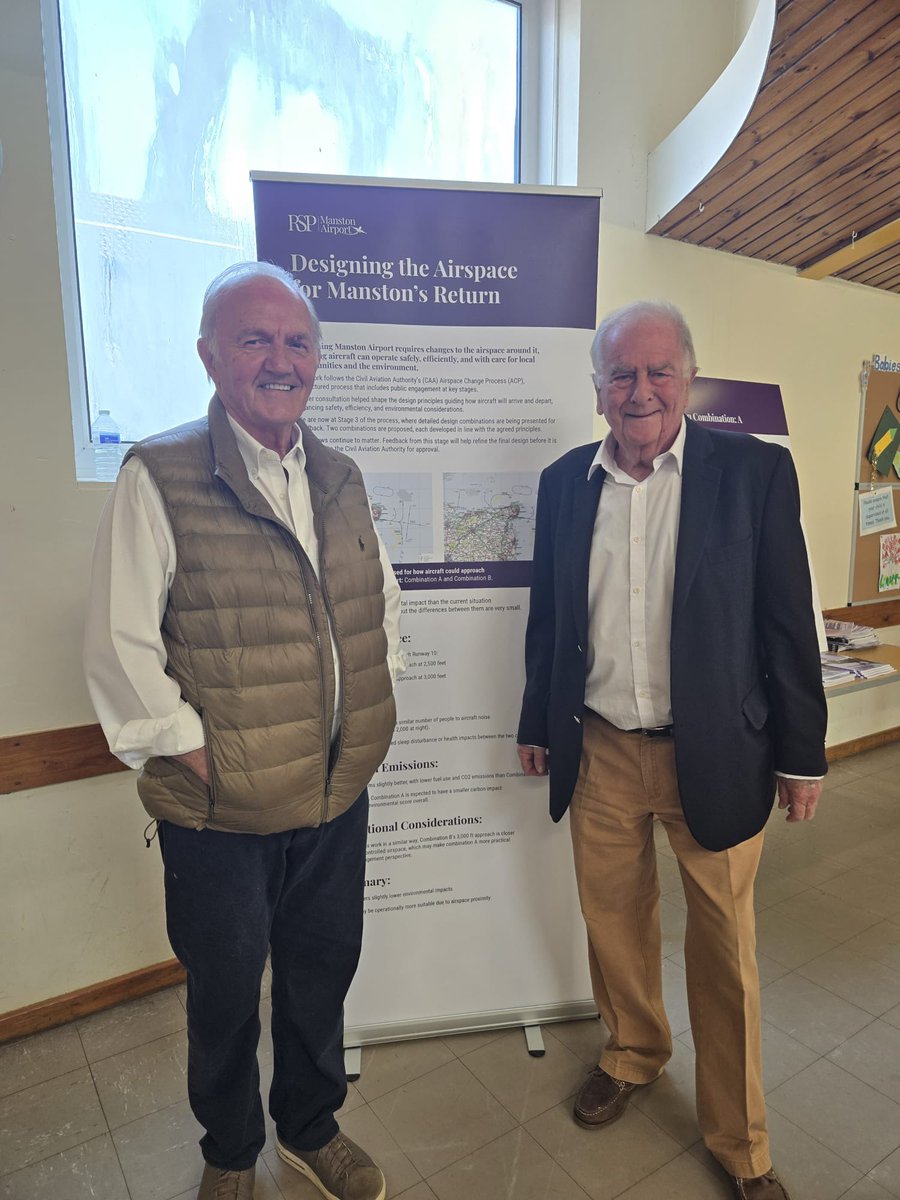
It’s a pleasure to welcome @SirRogerGale and members of the local community to our #Manston airspace change consultation event today in Herne Bay. Find out more about the consultation here: https://t.co/aaXrLb9PsP…
The UK Met Office has again been caught publishing temperatures from weather stations that don't exist.
An FOI revealed Lowestoft closed in 2010, yet the Met Office kept issuing official temperatures for it.
The office said they were using well-correlated neighboring stations, but the FOI revealed that this was a lie. The numbers were actually coming from a model that was inventing data from 'phantom' neighboring stations.
When exposed, the office quietly deleted years of readings for Lowestoft, as well as a number of other stations, and added a disclaimer saying their data is "for general interest only."
FOIs also show over one third of Met Office stations never existed, and that real high-quality sites like Colwood are ignored.
Also, more than 80% of the network is low-grade class 4 or 5, by WMO standards, giving 2-5C uncertainty.
This is the foundation of the UK's climate record – closed stations, imaginary stations and synthetic temperatures.
The Met Office isn't credible.