Reuters- Venezuela's oil exports rose 14% to 1.23 million bpd in April, the highest in more than seven years, fueled by more sales to the United States, India and Europe. https://t.co/k1EmvHFyZH
Almost 50% of the global crude supply growth through 2030 will come from Brazil, Guyana, Argentina & Venezuela
Latin America has a chance to emerge as a winner from today's geopolitical realignment thanks to it growing energy clout
my latest for @opinion
https://t.co/XN8J308cQV
Indian refiners are emerging as the largest buyers of Venezuelan crude oil, filling the void left by former top importer China as it cuts purchases following the US’ move to control the Latin American nation’s oil sales. https://t.co/yykahDtz44
Venezuelan Oil Exports Hit 6-Year High as India Fills China Gap
By Lucia Kassai
Indian refiners are emerging as the largest buyers of Venezuelan crude oil, filling the void left by former top importer China.
(Bloomberg) -- Indian refiners are emerging as the largest buyers of Venezuelan crude oil, filling the void left by former top importer China as it cuts purchases following the US’ move to control the Latin American nation’s oil sales.
Shipments to India soared by more than fourfold in March, surpassing those to the US, according to shipping reports compiled by Bloomberg and data from maritime intelligence firm Kpler Ltd. Countrywide exports now stand at 890,000 barrels a day, the highest since December 2019, the data shows.
Fueled by a tide of imported diluents — key additives used to thin heavy, tar-like crude so it can flow through pipelines — Venezuelan production continues to ramp up, in turn boosting flows. March imports rose to nine cargoes, compared with seven in February.
Indian refiners, including Reliance Industries Ltd., Hindustan Petroleum Corp. and Indian Oil Corp. have purchased a combined 343,000 barrels a day for loading in March. Indian companies may continue to tap Venezuela’s oil supplies to weather disruptions triggered by the conflict in the Middle East.
The traders have continued to move Venezuelan oil to storage tanks in the Caribbean. Close to 18 million barrels of crude oil were transported to the Bahamas, Curaçao and St. Lucia this year. Volumes have started to trickle out, with PBF Energy lifting a cargo from the Bahamas. In March, the vessel SFL Tiger loaded oil in Curaçao and signals Italy as its final destination.
Spanish energy group Repsol is planning to triple its crude production in Venezuela to 150,000 barrels per day within the next two years, the company's executive managing director of exploration and production, Francisco Gea, said on the sidelines of the CERAWeek energy conference in Houston on Tuesday.
#oott https://t.co/9c2ObHLQDu
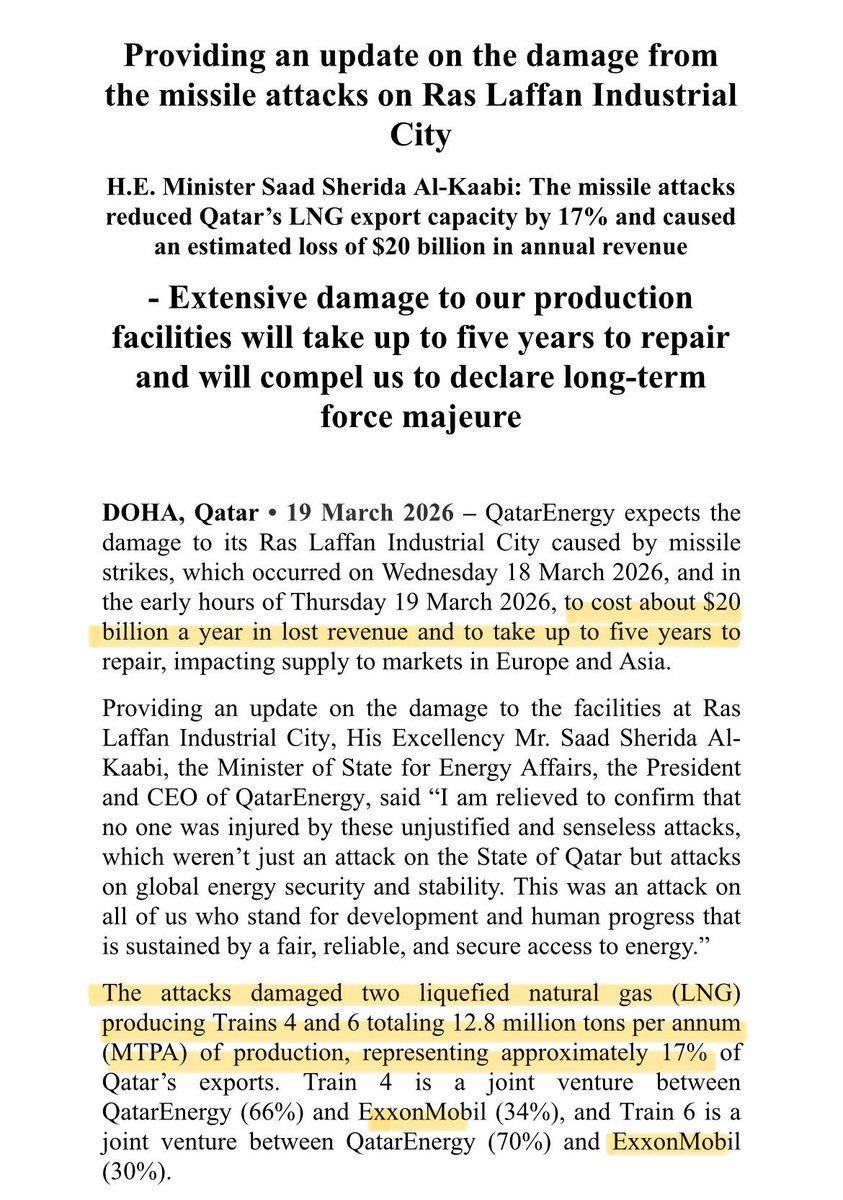
Qatar’s LNG outage is no longer temporary. With 17% of export capacity offline for 3–5 years, the market faces a structural supply shock, not just wartime disruption. #LNG#EnergyCrisis#GasMarkets
https://t.co/8Yar9hZUWl
Qatar state-owned LNG giant QatarEnergy has published a statement detailing the overnight damage, providing more granularity (particularly around the damage of the GTL plant).
the destruction of oil and gas production has begun...now there's no turning back for oil prices. Once long-term damage is done, production won't return to previous levels just because hostilities cease & marine traffic resumes
#Venezuela suddenly appears more investment-worthy, with prolonged US attacks on Iran roiling crude markets.
Some US oil firms held off endorsing President Donald Trump's idea of pouring money into Venezuela in the wake of the US' capture of President Nicolas Maduro on 3 January. ExxonMobil called Venezuela "uninvestable" then. Now that the same US aircraft carrier that supported the Maduro operation is embroiled offshore Iran, crude prices are soaring and supply is pinched, ExxonMobil is suddenly starting to look at getting "boots on the ground" in Venezuela, with its massive reserves of mostly heavy crude.
#oott https://t.co/3O8u9Ar87e
Well that’s one way to Make Venezuela’s Oil Great Again…by shutting traffic in the Strait of Hormuz and pushing oil prices into the $90s and $100s
https://t.co/0dXdhaPaQ6
Further ominous developments today. For first time, Iran successfully targeted oil/gas production facilities (rather than refining, terminals and storage):
Oil and gas field in the UAE (Shah) hit
Oil field in Iraq (Majnoon) attacked
Plus Saudi Arabia saw large drone swarms
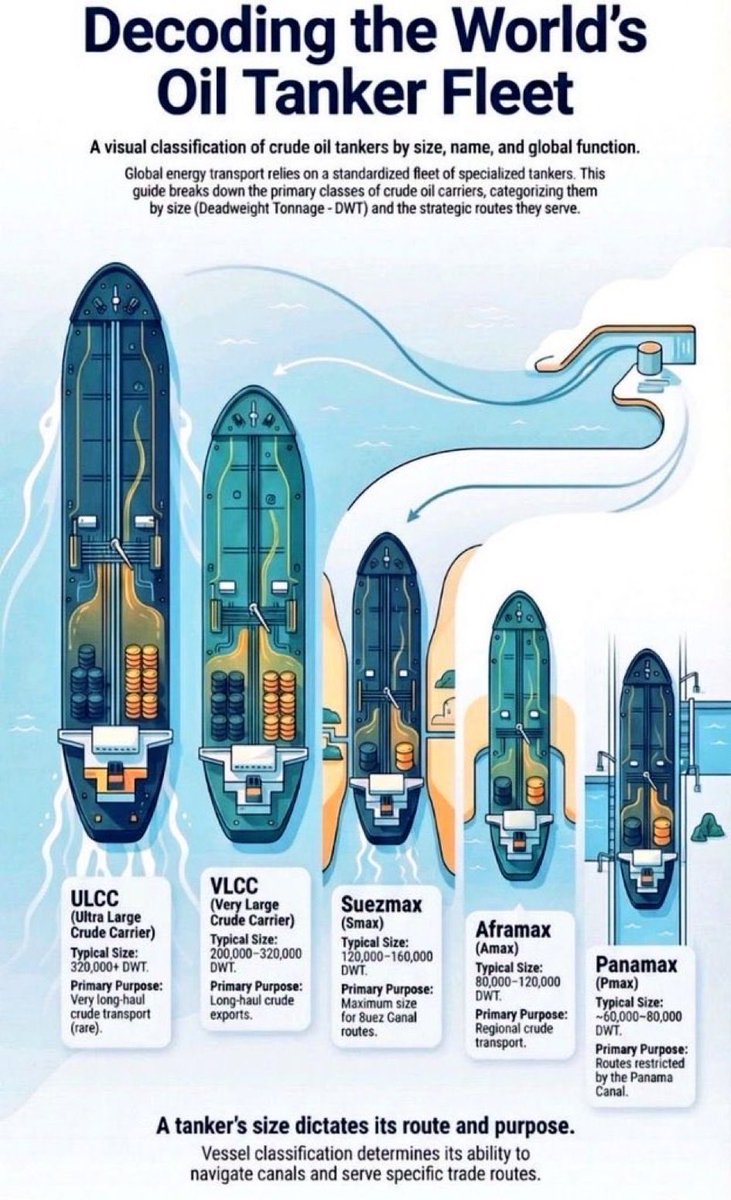
Visualized: Marine Shipping ⚓️ Oil Tankers by size, name and global function 🛢️
ULCC - Ultra Large Crude
VLCC - Very Large Crude
Smax - Suezmax
Amax - Aframax
Pmax - Panamax
#supplychain#logistics#marinetransport
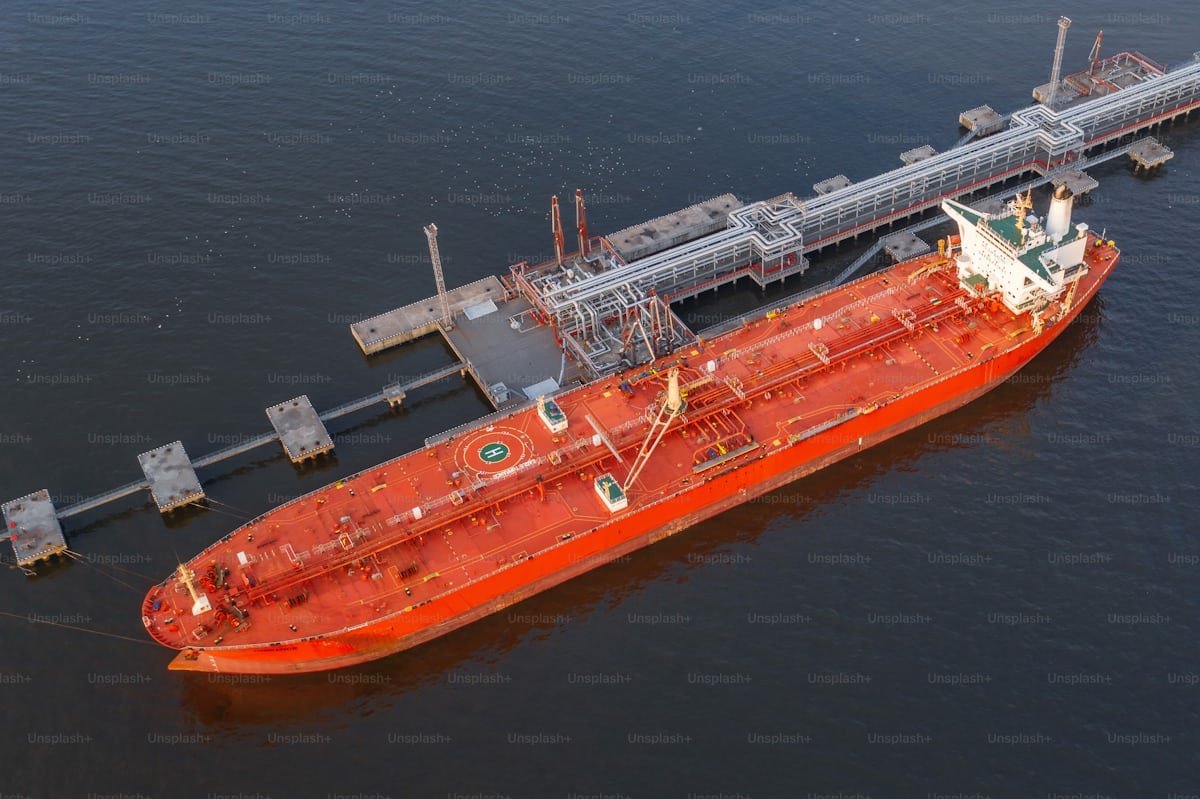
Saudi Aramco is loading simultaneously 5 crude oil tankers in Yanbu and Al Mujjaiz terminals on the Red Sea coast. I don’t think that’s happened ever before.
The next crisis: Ship fuel availability.
With Hormuz closed, bunker fuel prices are soaring. FO up 30% to $650/ton. DO has doubled to $1,200/ton. Some suppliers have stopped forward orders entirely .
~500,000 TEUs of container capacity is already stranded in the Gulf .
Ships need fuel to move. If they can't refuel, they can't leave. If they can't leave, the backlog becomes a permanent blockade.
The strait is closed. The fuel is running out. ⚓
Don’t be misled by the spectacle of fires burning in Tehran. These are not strikes on the Iranian people. These fires are not destroying ordinary commercial facilities.
Israel targeted oil depots under the control of the Islamic Revolutionary Guard Corps. For years the IRGC has used state oil assets as its private revenue stream. Instead of operating through a normal government budget, it was granted control over oil resources and the income they generate.
Those funds have financed the regime’s regional war machine—paying for proxy militias, purchasing weapons and equipment from China, and underwriting destabilization from Lebanon to Yemen.
Because these depots are controlled and guarded by security forces, they are part of the IRGC’s military logistics network. That makes them legitimate and necessary targets for anyone seeking to degrade the regime’s capacity to wage war.
The distinction is important. The strikes were directed at assets controlled by the Guard, not at the energy infrastructure that serves ordinary Iranians. The resources of Iran should belong to the Iranian people. For decades, the IRGC has treated them as its war chest.
The first strike on Iranian oil infrastructure just landed. Not on Kharg Island, where Iran loads crude for export. Not on the southern oil fields of Khuzestan, where crude comes out of the ground. On the Shahran fuel depot on the northern outskirts of Tehran, where gasoline and military fuel are stored for domestic distribution across a city of thirteen million people.
At least two of the depot’s eleven storage tanks are burning. Thick black smoke is visible from highways across the capital. Fuel is leaking from damaged tanks. The Iranian oil ministry says the volume in the targeted tank was “not high” and the situation is “under control.” The IDF confirmed the strike, describing it as a hit on fuel storage linked to the Iranian armed forces.
The targeting choice reveals the strategy that the fire obscures.
Iran’s oil export infrastructure sits in the south. Kharg Island handles roughly 90 percent of crude exports. Abadan, Bandar Abbas, and Isfahan house the major refineries with a combined capacity exceeding one million barrels per day. None of these have been struck. The coalition has the ability to hit them. It is choosing not to. Because destroying Iran’s export infrastructure would remove Iranian crude from global markets permanently, spike oil to $150 or beyond, and unite the Global South against an operation that was already condemned by 120 nations.
Instead, the coalition hit the domestic fuel supply.
The Shahran depot feeds Tehran. It feeds the trucks that carry food to markets. It feeds the vehicles that move IRGC personnel between command nodes. It feeds the generators that keep hospitals and water treatment operating when the power grid is degraded. Striking it does not change the global oil price. It changes life inside the capital for thirteen million people who are already living under the most sustained aerial bombardment of a major city since Baghdad 2003.
Iran produces roughly 2.8 million barrels per day but refines most of it domestically. The country imports gasoline because its refining capacity cannot meet internal demand even in peacetime. Sanctions have degraded refinery maintenance for decades. The Tehran refinery itself processes 250,000 barrels per day. If the Shahran depot that stores its output is burning, the distribution chain between refinery and consumer is broken even if the refinery itself is untouched.
This is the squeeze. The air campaign destroys military bases, airports, command bunkers, Basij facilities, and now fuel storage. The Hormuz closure blocks the imports that might compensate. The internet is at four percent of normal capacity. Domestic flights are grounded. The road network is under surveillance from commercial satellites that any adversary can access. And now the fuel that moves everything, military and civilian, through a country the size of Alaska is burning in a depot on the edge of the capital.
Iran’s oil ministry says the fire is under control. The fire in the depot may be. The fire in the country is not.
https://t.co/ULBgEzZ3A8
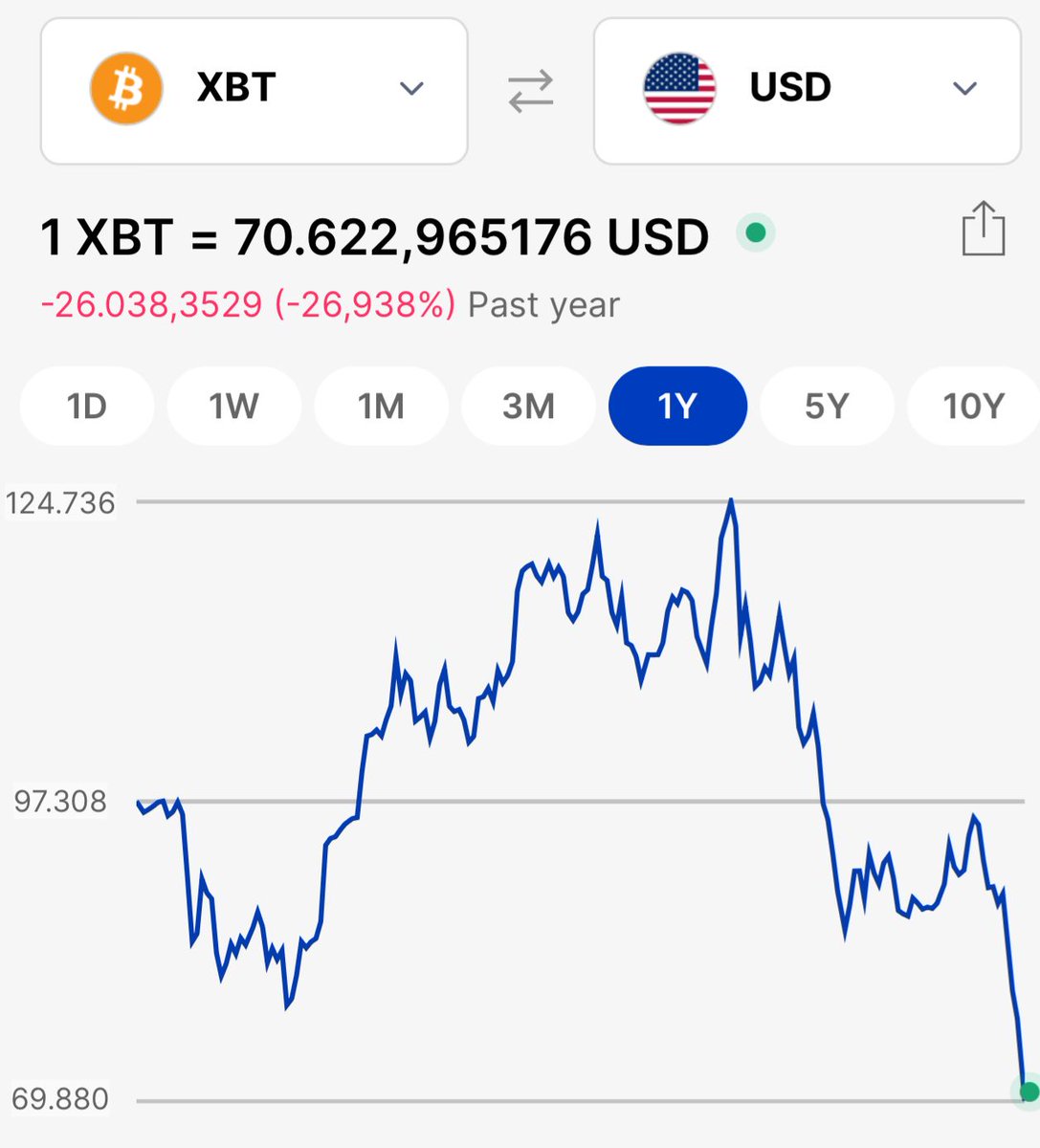
#ULTIMAHORA Mucha gente se pregunta por qué Bitcoin se está derrumbando📉 y la respuesta no está en el “sentimiento”, ni en el “ciclo”, ni en el FUD de siempre.
El problema es estructural ⚠️ y tiene que ver con cómo hoy se forma el precio.
• Antes, el precio de BTC se descubría principalmente on-chain, con oferta limitada y compradores marginales reales
• Hoy, el precio se define fuera de la cadena, en mercados financieros sintéticos
El punto clave es este 👇
👉 ya no manda la escasez, manda el papel.
Bitcoin nació con una promesa muy clara:
• Oferta finita (21 millones)
• Imposibilidad de rehypotecación
• Escasez real como base del valor
Eso funcionó… hasta que llegó Wall Street 🏦
El quiebre ocurre cuando se montan capas financieras encima del activo:
• Futuros liquidados en efectivo
• Perpetual swaps
• Opciones
• ETFs
• Préstamos vía prime brokers
• BTC “envuelto”
• Swaps de rendimiento total
Desde ese momento, el suministro de BTC dejó de ser económicamente escaso ❌
⚠️ No en la blockchain
⚠️ Sino en el proceso de formación de precios
¿Qué significa esto en la práctica?
• El mismo BTC puede respaldar múltiples instrumentos al mismo tiempo
• Se crean reclamaciones financieras sobre una misma moneda
• El “float” real se vuelve irrelevante
📌 Resultado:
Bitcoin pasa de ser un activo escaso a un activo dominado por derivados.
Y cuando eso sucede, la historia ya la conocemos 👇
Oro, plata, petróleo… todos vivieron el mismo proceso.
¿Cómo opera ahora el mercado?
1️⃣ Se crea BTC “de papel” ilimitado
2️⃣ Se vende en los rallies
3️⃣ Se provocan liquidaciones
4️⃣ Se recompra más abajo
5️⃣ Se repite el ciclo
No es especulación.
Es fabricación de inventario financiero.
Hoy, 1 BTC puede sostener al mismo tiempo:
• Una unidad de ETF
• Un contrato de futuros
• Un swap perpetuo
• La delta de una opción
• Un préstamo
• Un producto estructurado
👉 Seis derechos sobre una sola moneda
Eso no es un mercado libre.
Eso es un sistema de reserva fraccionaria aplicado al precio 🧩
Por eso Bitcoin ya no se mueve solo por halving, adopción o narrativa 🚨
Se mueve como un activo financiero más, atrapado en la lógica de derivados.
Y por eso, mientras esta estructura no cambie,
📉 la volatilidad a la baja seguirá apareciendo justo cuando “todo se ve bien”
El gráfico lo muestra claro.🧠📊
US oil capital Houston buzzes as industry limbers up for Venezuela oil rush
Houston firms eye Venezuela's vast oil reserves amid political uncertainty
Smaller investors see Venezuela as high-risk, high-reward opportunity
US sanctions complicate oil trade, investment in Venezuela
#oott https://t.co/L8n5G7BLeG