Most precision manufacturing and industrial tasks will never be solved with generic data; they demand their own sensor, data-collection, and end effector stack.
Our incredible team at @starpilotai has been pushing the limits on physical AI capture for highly precise, expert-led tasks, and we’re partnering with major labs and robotics companies to make this reality.
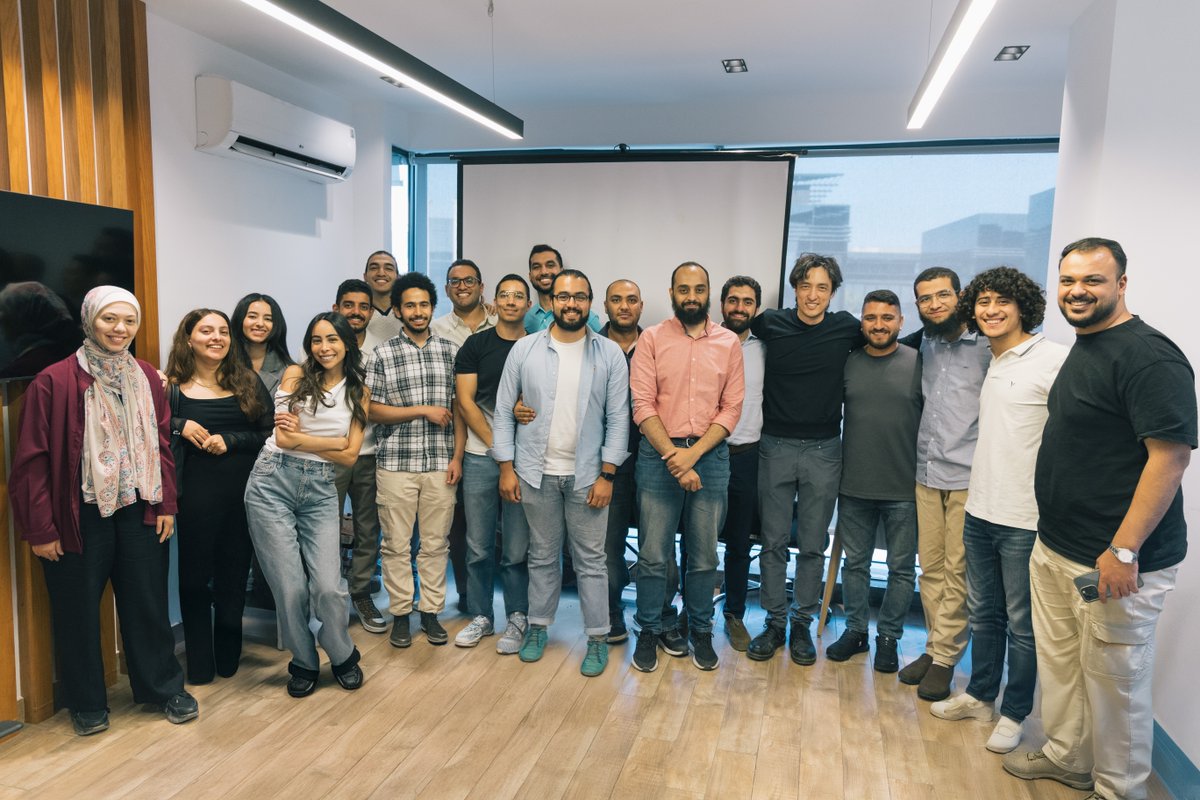
#BTS of our data factory where we collect expert data at scale to train the next billion robots. 100K+ hrs of precision tasks. Touch-rich, spatially complete, verified by researchers & ready to train on.
Stay tuned as we map the next frontier of AI, one capture at a time
Building out the world's largest embodied, industrial dataset with our team @ Starpilot. Will be releasing samples & more information over the coming weeks, stay tuned.
If everyone you’re competing with works just as hard and acts logically with the same resources...
then the winner is whoever has the most accurate model of reality (i.e. free from emotion & dogma)
@legojuliusc @bluethewolf44 Customers may not want to design a toy from scratch, so they’ll use our free AI to help concept it.
Then once they’re happy, it will go to our artists to refine & actually make it
AI is a tool for customers to easier communicate their vision to our artists
@camillefartnite We have 3D artists do a refinement pass on the figure you select, then we have a team of professional sculptors & painters make it.
Will post a BTS video soon!
Just wrapped up a great session here with Nodogoro, diving into the exciting (and increasingly accessible!) world of AI & robotics.
My team & I got to present what we’re building at Alcove, product strategy, and how we’re approaching affordable robotics.
The energy and projects shared were awesome – so many talented builders in one place!
Startup success is a function of number of iterations X team learning rate.
Robotics is typically hard because cost per iteration is SO HIGH (both in terms of time & money)
Legacy companies are constrained to building AI copilots.
Startups have the opportunity to build fullstack, end-to-end AI solutions that are 10x, or even 100x, better because they are not tied to the old way of doing things.
The next decade of B2B software will be defined by the startups that seize this moment.
I've been thinking a lot about the 𝗜𝗻𝗻𝗼𝘃𝗮𝘁𝗼𝗿'𝘀 𝗗𝗶𝗹𝗲𝗺𝗺𝗮 lately, and I'm convinced we're in the middle of a new, more potent version of it.
The established B2B players, the ones who were dominant before 2024, are in a bind.
They see the power of AI and automation, and they know they need to adapt to survive.
But they won't. Why?
Because their entire ecosystem is built around training and selling to skilled CAD professionals. A truly disruptive AI would be an existential threat.
This creates an incredible opportunity for startups. (founders, builders, etc.)
@nickhATX Yes- but I would also argue that there’s never been a better time to double down & hire more engs to grow your business since the pie can get much, much bigger
Engineering jobs aren’t going away.
But we are in a transition period.
Companies are starting to realize that their current projects don't need as many engineers to maintain.
But they're not yet thinking big enough in terms of scale & the kinds of opportunities that are now possible to pursue (e.g. robotics, healthcare, energy, environment, etc.)