A final judgment. The Court rejects the SEC’s suggestion that Ripple acted recklessly and she reminds the SEC that this case did not involve any allegations of fraud or intentional wrongdoing, and no one suffered any financial harm. She rejects the SEC’s absurd demand for $2B in fines and penalties. We respect the $125M fine the Court has imposed for certain historic sales to sophisticated third parties.
For those who don't understand what Chevron Deference is, and why SCOTUS ended it, here's the long and short of it:
A family fishing company, Loper Bright Enterprises, was being driven out of business, because they couldn't afford the $700 per day they were being charged by the National Marine Fisheries Service to monitor their company.
The thing is, federal law doesn't authorize NMFS to charge businesses for this. They just decided to start doing it in 2013.
Why did they think they could away with just charging people without any legal authorization?
Because in 1984, in the Chevron decision, the Supreme Court decided that regulatory agencies were the "experts" in their field, and the courts should just defer to their "interpretation" of the law.
So for the past 40 years, federal agencies have been able to "interpret" laws to mean whatever they want, and the courts had to just go with it.
It was called Chevron Deference, and it put bureaucrats in charge of the country.
It's how the OHSA was able to decide that everyone who worked for a large company had to get the jab, or be fired.
No law gave them that authority, they just made it up.
It's how the ATF was able to decide a piece of plastic was a "machine gun".
It's how the NCRS was able to decide that a small puddle was a "protected wetlands".
It's how out-of-control agencies have been able to create rules out of thin air, and force you to comply, and the courts had to simply defer to them, because they were the "experts".
Imagine if your local police could just arrest you, for any reason, and no judge or jury was allowed to determine if you'd actually committed a crime or not. Just off to jail you go.
That's what Chevron Deference was.
It was not only blatantly unconstitutional, it caused immeasurable harm to everyone.
Thankfully, it's now gone.
We haven't even begun to feel the effects of this decision in the courts. It will be used, for years to come, to roll back federal agencies, and we'll all be better of for it.
And that's why politicians and corporate media are freaking out about it.
CHEVRON DOMINANCE
Technology is about to accelerate.
Because Chevron deference is over.
And regulators can't just make up laws anymore.
So, countless new startups just became feasible.
This is often spoken about in the abstract, so let's do three examples and two visuals.
THREE EXAMPLES
1) Genomics. Did Congress explicitly give FDA authority to regulate genetic tests in a bill like Kefauver-Harris (1962) or PDUFA (1992)? No, it did not. But in the early 2010s, FDA attacked 23andMe and forced them to take personal genomic tests offline. Implicitly, this was under Chevron.
2) Nuclear power. Did Congress explicitly give EPA and NRC the authority to implement ALARA? No, it did not. But these agencies came up with this "as low as reasonably achievable" standard, forcing nuclear energy to become as expensive as other energy sources by spending all the cost-savings on "safety." Implicitly, this was under Chevron too.
3) Cryptocurrency. You guessed it. Did Congress explicitly give the SEC authority to regulate crypto? No, it did not. Cryptocurrencies didn't exist when the 1933 and 1934 acts were written. However, the SEC says it has regulatory authority over crypto, even when Congress is deliberating on bills to the contrary. Implicitly, that claim of SEC authority too was under Chevron.
In other words: if a regulator can't point to the law that gives them the power, they may not have the power. And you might be able to win in a court of law.
So! For technology, the overruling of Chevron could literally reopen innovation in the physical world. This is on par with the 1991 opening of the Internet to commercial traffic. It deprecates the 20th century regulatory state. All the safety theater and security theater that they optimize for sounding good while actually being bad now has to face judicial scrutiny.
TWO VISUALS
How to visualize something as abstract as Chevron reversal? Well, Chevron is the company on which the 1984 Chevron deference case is actually based. And its logo had the arrows pointed down. But now that Chevron has been reversed, we're headed up.
And that's one way to visualize what reversal means: from Chevron deference to Chevron dominance. Because rule-of-law now dominates the lawless regulatory state. If the regulator isn't specifically authorized by statute, they can't invent some regulation to stop your innovation.
But there's a second way to visualize the reversal of Chevron: regulators just got disarmed, in the most literal sense. Because ultimately a regulation is a threat of state force. If you disobey one of a regulator's made up rules, they eventually get a cop to point a gun at you, implicitly or sometimes very explicitly.
^ The photo above is from the 2010 FDA raid on Rawesome Foods for selling raw milk to club members that consciously opted in to eating and drinking foods of their own choice. This may have also been done under Chevron deference because FDA only has the right to regulate interstate commerce, and not commerce within one state (which is all that Rawesome was apparently doing at that time).
To be clear, I don't have a position on raw milk other than I do think people should be able to choose their own foods. In their lawsuit against the Farm To Consumer Legal Defense Fund, FDA strongly disagreed, contending that "there is no generalized right to bodily and physical health" and you "do not have a fundamental right to obtain any food they wish.” These are real quotes from the now-defanged regulators; see the PDF link below.
Anyway — now you get a sense of how big a deal the Chevron reversal is, and how out of control regulators can get. The Chevron reversal strips regulators of the ability to make up random rules. It calls all their existing made-up rules into question. And it gives you the power to ask where in the law it says they can make up some new rule.
You know that saying — the only way they can stop you is to shoot you? Well, now they can't shoot you as easily. So we're going from Chevron deference to Chevron dominance.
I can already feel the T-levels across tech increasing.
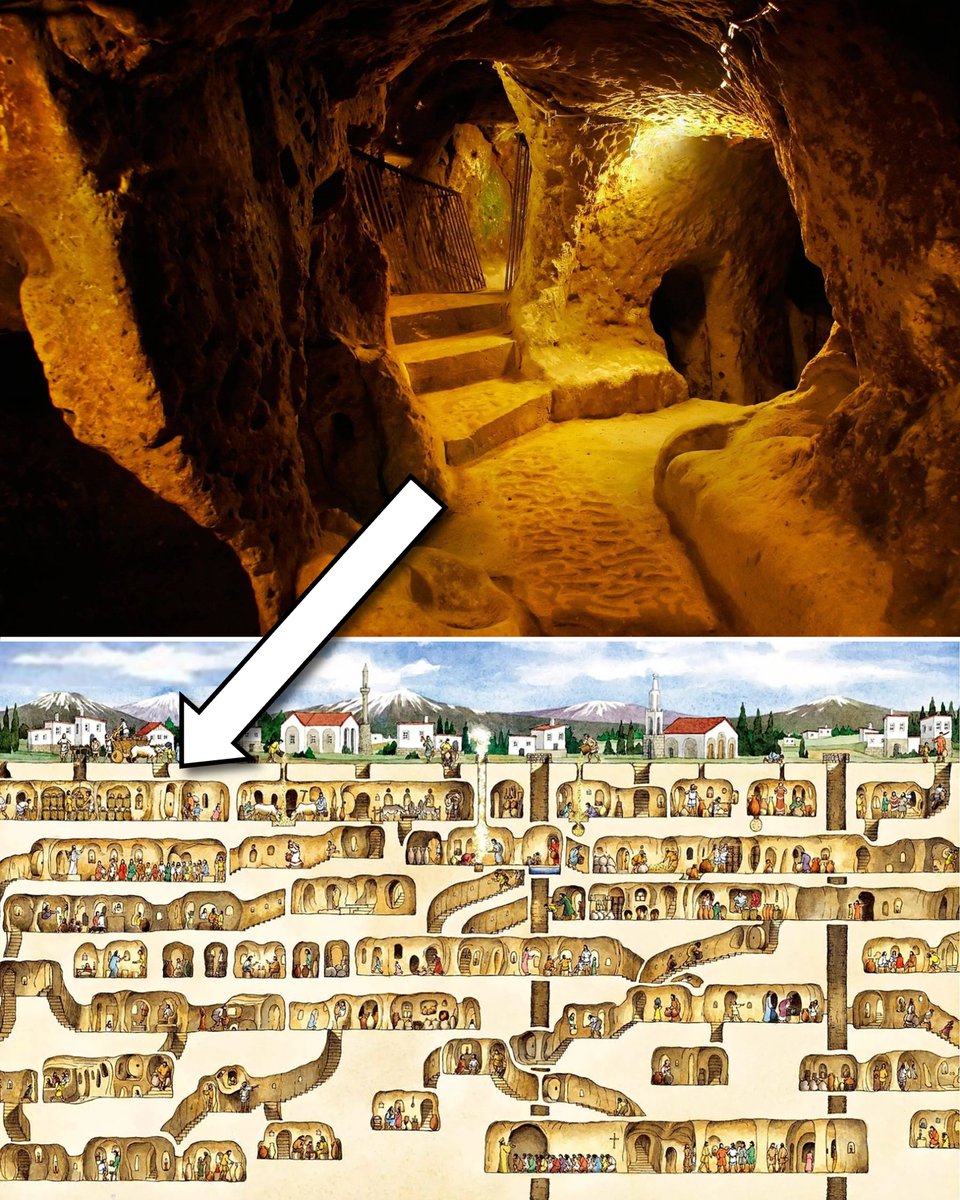
In 1963, a man noticed his chickens disappearing through a hole in his basement.
He knocked through the wall, revealing what is hard to believe: a 20,000-person city, deep below ground.
It was built by Christians over 1,000 years ago... (thread) 🧵
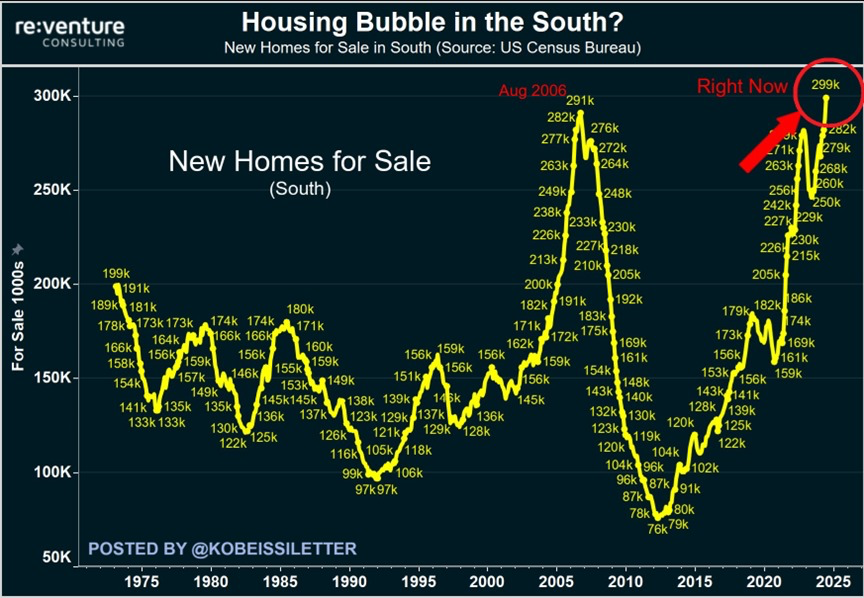
BREAKING: There are now a record 299,000 new homes for sale in the Southern US states, according to Reventure.
This is even higher than in 2006, a year before the housing market crash began.
The number of new houses for sale in the South has nearly DOUBLED in just 4 years.
Meanwhile, new home sales have officially dropped below pre-pandemic levels for the first time.
It would take ~9 months current new inventory to sell if it sold at the current pace without new inventory coming to the market, 2nd longest duration since 2009.
Is the housing run coming to an end?
🎮 The RDYX cup (feat. @coinlist) is LIVE: https://t.co/xnoXTUfarE
Compete across 3 gaming stations & earn special $RDYX presale whitelists + rewards.
Be early and get a points multiplier ;)
Here's how you can participate in one of the biggest gaming events of the year ⬇️