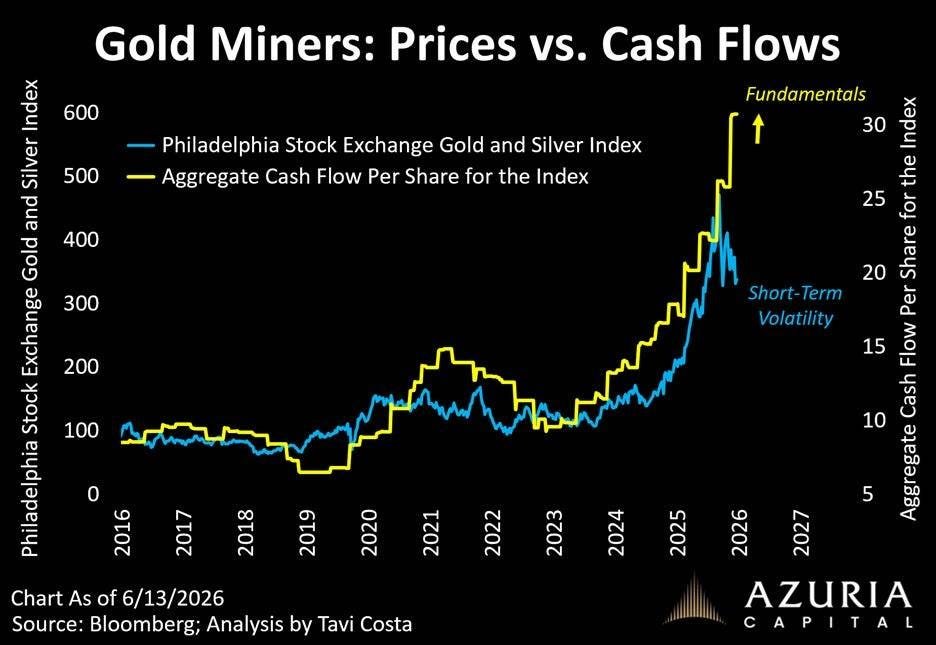
Today was a good reminder that despite the recent pullback in metal prices, miners continue to generate margins that would have seemed extraordinary just a few years ago.
Act accordingly.
https://t.co/LgqMHVxLkh
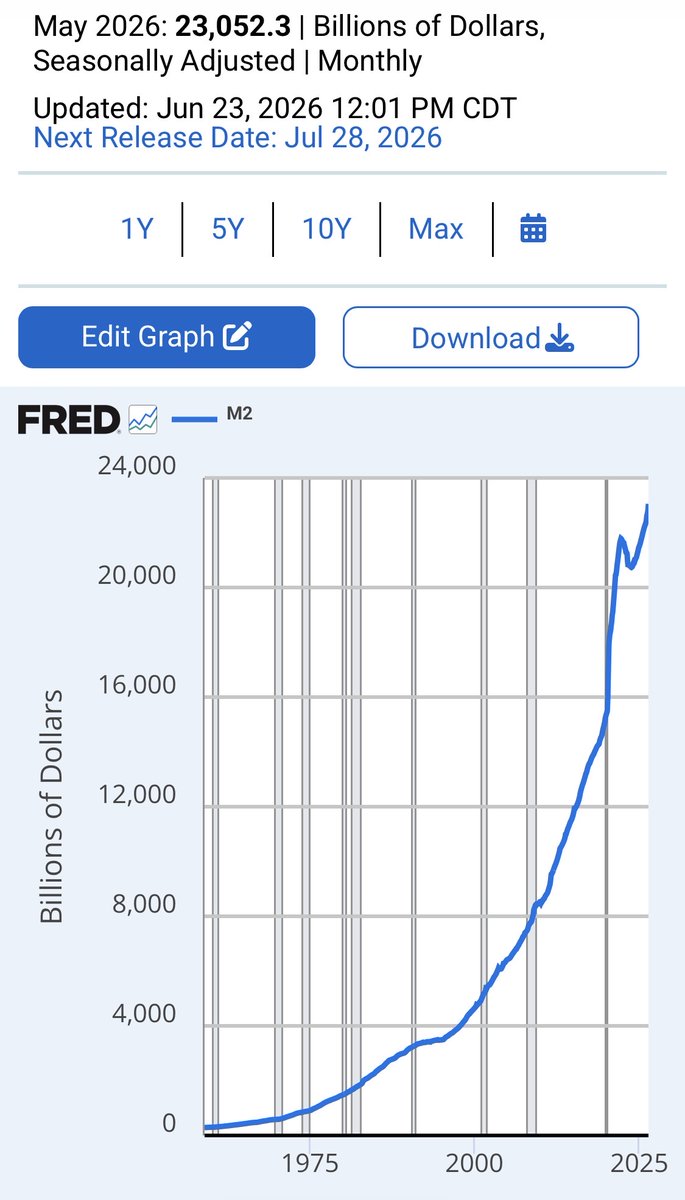
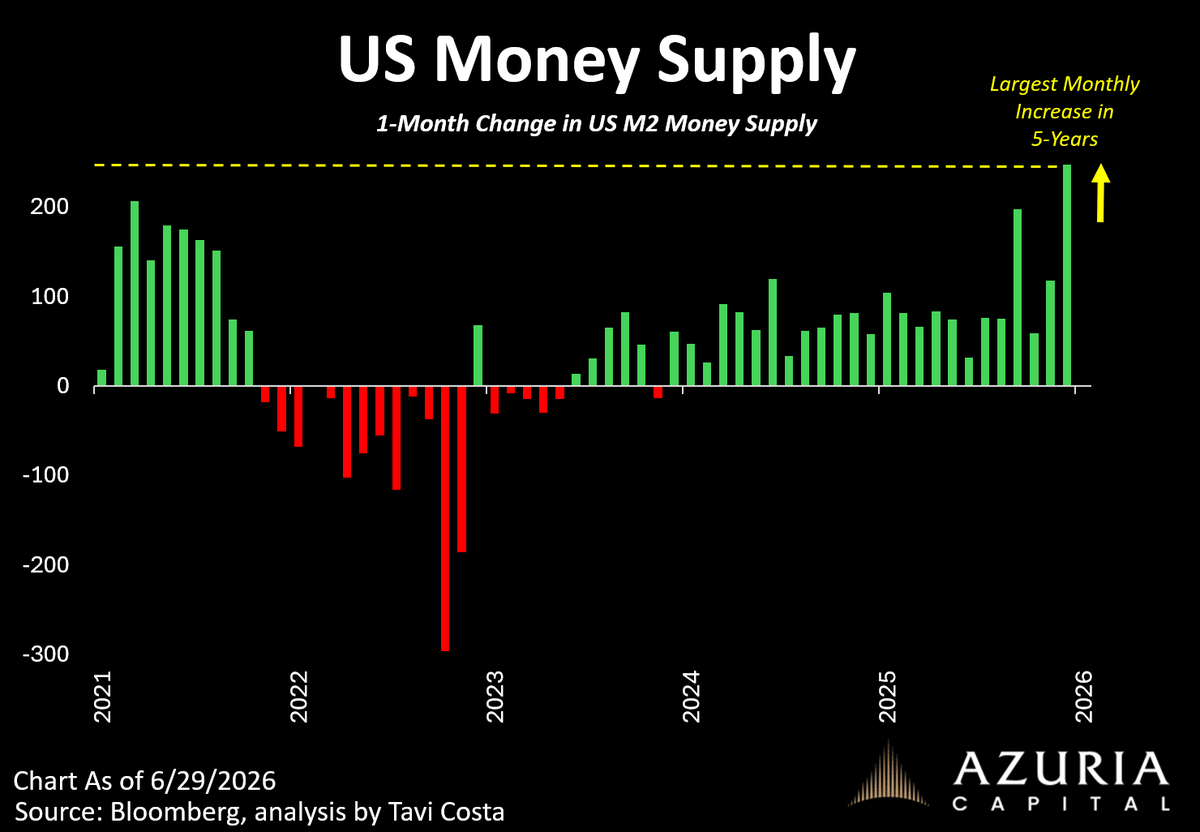
🚨US M2 MONEY SUPPLY JUMPS $250 BILLION IN MAY TO NEW ALL-TIME RECORD HIGH OVER $23 TRILLION⚠️
⚡️M2 increased Month over month from $22.8 Trillion in April to $23.052 Trillion in May:
The U.S. government ran a budget deficit in May of $293 billion, well above estimates and up 32% from a year earlier. The government also paid a record $133 billion in interest, a 44% YoY jump. Annualized, that's $1.6 trillion in interest, 30% of tax receipts! Disaster awaits!
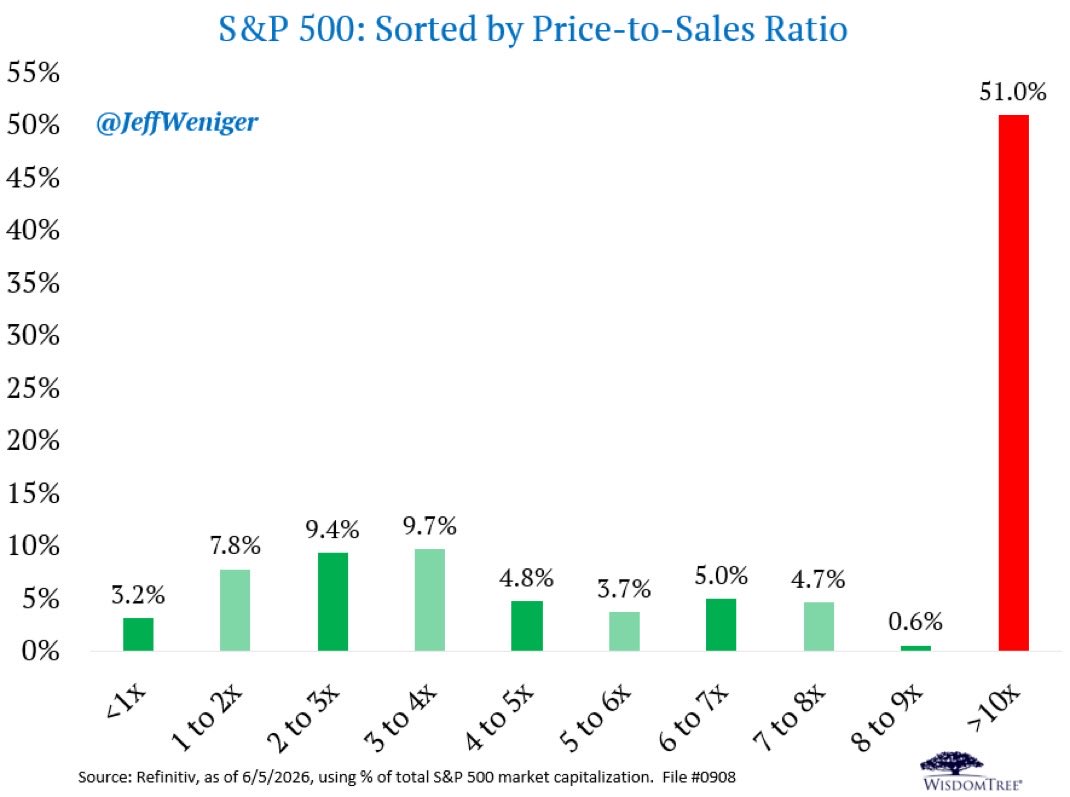
51% of the S&P 500's market cap is in stocks trading above 10x sales.
Half the index.
In 2002, after Sun Microsystems crashed 90%, CEO Scott McNealy famously said this about his own stock at 10x sales:
"At 10x revenues, to give you a 10-year payback, I have to pay you 100% of revenues for 10 straight years in dividends. Zero costs. Zero R&D. Zero taxes. Zero employees. What were you thinking?"
He was explaining why investors had been insane to pay it.
Today, half the S&P 500 trades there.
Different decade. Same math.
The job engine that carried this expansion is running in reverse.
Small business drove 50% of all net job creation over the past 5 years. Now look at the right side of this chart. Their hiring has gone negative the last two quarters while the total stalls out near zero.
UBS: "US Payrolls Beat May Not Reflect Genuine Reacceleration: The upside surprise in May payrolls (172k vs ~87k consensus/95k UBS) appears concentrated in a few sectors with clear calendar and seasonal tailwinds, rather than broad-based strength. The largest contributor was leisure & hospitality (+70k), far above its recent trend, consistent with UBS’s expectation that the timing of Memorial Day pulled hiring forward into May from June. Local government (+55k) was another key driver, likely reflecting smaller-than-usual seasonal education outflows and stronger non-education hiring, in line with UBS’s upside risks around state/local dynamics. Healthcare (+35k) and social assistance (+12k) provided steady baseline gains. Meanwhile, financial activities (-22k) detracted meaningfully. Putting it together, the beat looks largely explained by timing distortions (holiday effects), public-sector swings, and steady services hiring, rather than a genuine reacceleration in underlying labor demand — reinforcing expectations that some of this strength may unwind or revise lower in coming months."
"
: