Getting more life out of Medicare's Part A trust fund would mean cuts to Part A spending (benefit or payments cuts), more revenues (payroll taxes or other revenues) or a bit of both, but either could be a hard sell for Congress. The pressure may be off for now, but not forever.
The 2026 Medicare Trustees report is out. Lots of important numbers in here, as always, but the one many people focus on is the year when the Part A trust fund reserves will be depleted: 2033, same as last year, but now 7 years away instead of 8. https://t.co/gYIbSiGU3X
🚨CMS has announced that the BALANCE model for GLP-1 obesity coverage will not launch in Medicare in 2027 and the Bridge demo will run through 2027 (it was set to run from July-Dec '26). This could add billions in Medicare spending in 2026/27 since the gov't is footing the bill.
Today is the deadline for Medicare Part D plans to apply to participate in the BALANCE model for Medicare GLP-1 obesity drug coverage. Without robust plan participation, the model will not move forward in Medicare in 2027. See our @KFF brief for details. https://t.co/MzPE6nl6u1
@xpostfactoid Yes. Unclear whether Trump’s new leaders at the health agency will drive a hard bargain in the negotiation process or adopt a more industry-friendly stance - in addition to overall uncertainty around how the incoming administration will proceed with the negotiation program.
🚨 Round 2 of Medicare's drug price negotiation program just kicked off with the popular diabetes and obesity drugs Ozempic and Wegovy at the top of the list of selected drugs. https://t.co/AwiUT8ssD1
The outgoing Biden administration has proposed this change to allow Medicare to cover anti-obesity drugs, but we don’t know yet whether the incoming Trump administration will decide to finalize this proposal.
Medicare price negotiation could play a key role in increasing affordability and access to these drugs. This matters not just for those currently using these drugs, but who would in the future if Medicare coverage expands to cover obesity drugs, which is currently prohibited.
Our newly updated FAQs address several questions related to Medicare’s new drug price negotiation program and details related to implementation for 2026: https://t.co/JmvhCD0qth
CMS faces a Feb. 1 deadline to submit proposed prices to manufacturers for certain Part D drugs. These 3 KFF charts spotlight key elements of the Medicare drug negotiation process — including the timeline, public opinion and what it means for beneficiaries:https://t.co/ve8VVLDJg9
If spending on Leqembi ranks it among other top-selling physician-administered drugs, it could eventually qualify for negotiation under Medicare’s new drug price negotiation program – but not until 2036 at the earliest – 13 years after FDA approval. https://t.co/JmvhCD0qth
The FDA has granted full approval to a new Alzheimer’s drug, Leqembi, leading to broader coverage under Medicare. This is good news for Alzheimer’s patients, since without coverage, patients would face the full list price, currently set at $26,500.
At the same time, broader coverage will lead to higher Medicare spending, though how much higher will depend on how many Alzheimer’s patients actually take the drug, a big unknown at this time.
https://t.co/8tEg5QxZEr
2) Stemming from the #InflationReductionAct provision requiring drug companies pay a rebate to Medicare if drug prices increase faster than inflation, @CMSgov announced that coinsurance on 43 Medicare Part B drugs would be reduced in the next quarter https://t.co/HAp84uKGwD
Big day in Medicare drug policy news related to
1) the new Alzheimer’s drug Leqembi, and
2) implementation of the drug rebate provision in the #InflationReductionAct
Broader coverage of this drug under Medicare would increase access for a subset of the 6.7 million people in the US with Alzheimer’s disease, but also raises cost concerns in light of the drug’s $26,500 list price
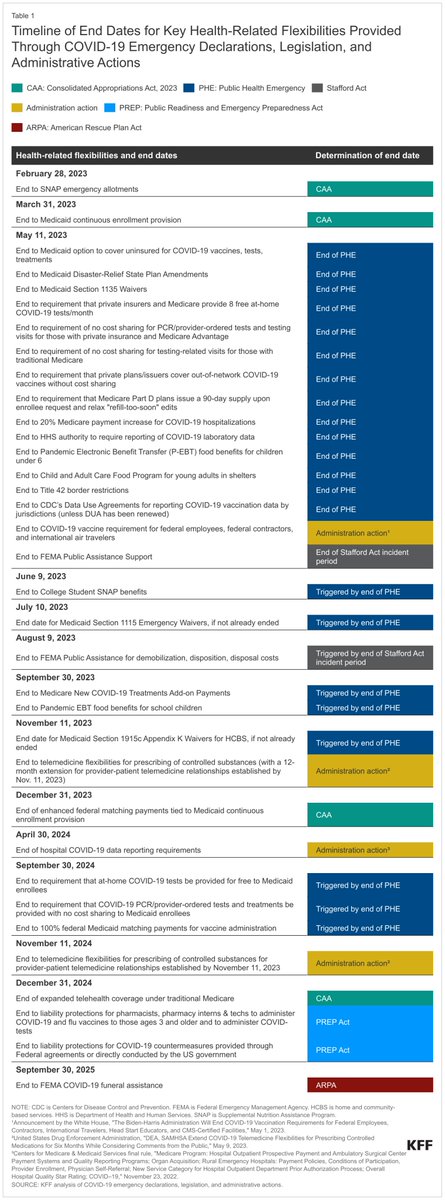
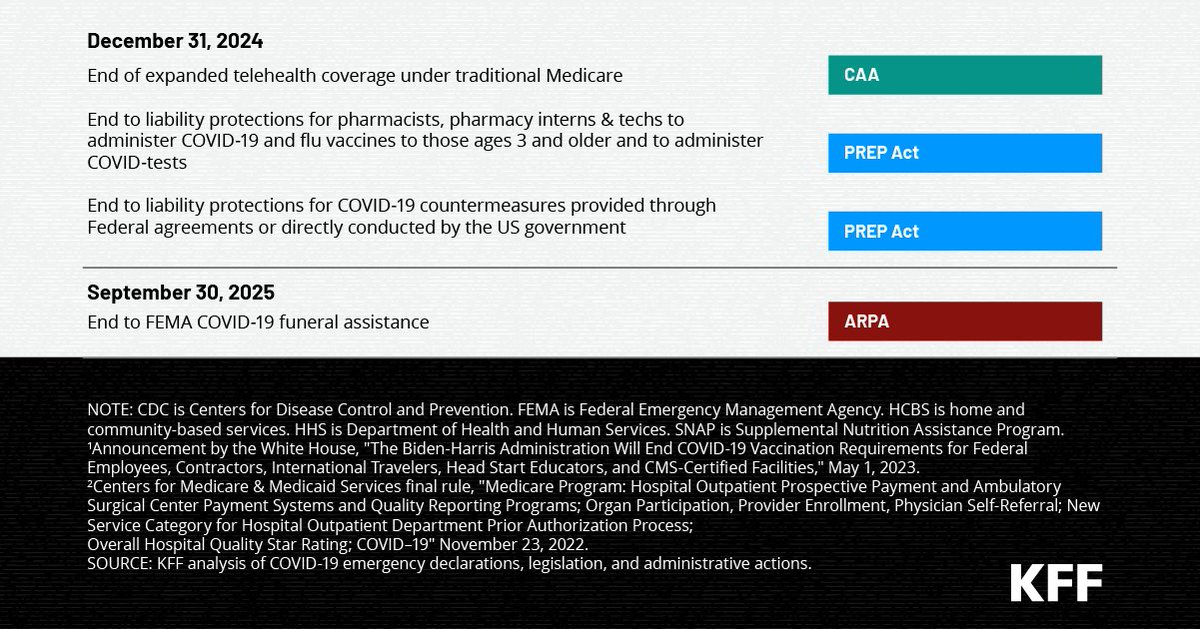
Although the #COVID19 public health emergency officially ended yesterday, several health-related flexibilities triggered by the PHE and other regulatory actions remain in place. Our timeline tracks these flexibilities and their end dates. https://t.co/0JcRLNuQs4
In just a few hours, at 11:59pm, the #COVID19 public health emergency in the U.S. will end, bringing with it the end to several flexibilities and pandemic provisions. Here's our timeline of what ends when, w/@jcubanski@cynthiaccox, jen_tolbert.
https://t.co/viqsol9PdA
At 11:59pm this Thursday, May 11, the #COVID19 public health emergency will end and along with it a whole host of flexibilities, many in place for 3+ years. Our @KFF timeline tracks what's ending and when w/@jenkatesdc@cynthiaccox and Jen Tolbert https://t.co/0JcRLNuQs4
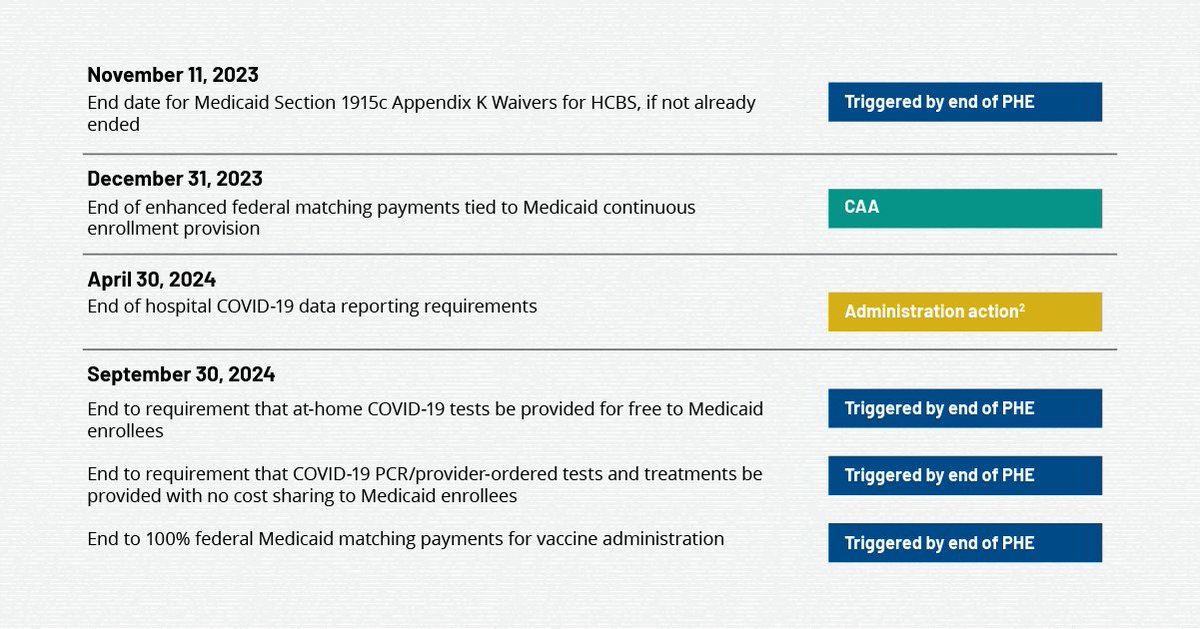
2024 will bring another round of expiring flexibilities and requirements, including:
- the end of hospital COVID-19 data reporting requirements
- the end of the requirement for coverage of at-home COVID tests for free under Medicaid