@Jess4Lowestoft@IJM@jessphillips as of the time of writing, 0.004237% of the people who saw this tweet liked it.
we’re all feeling very represented by this MP aren’t we
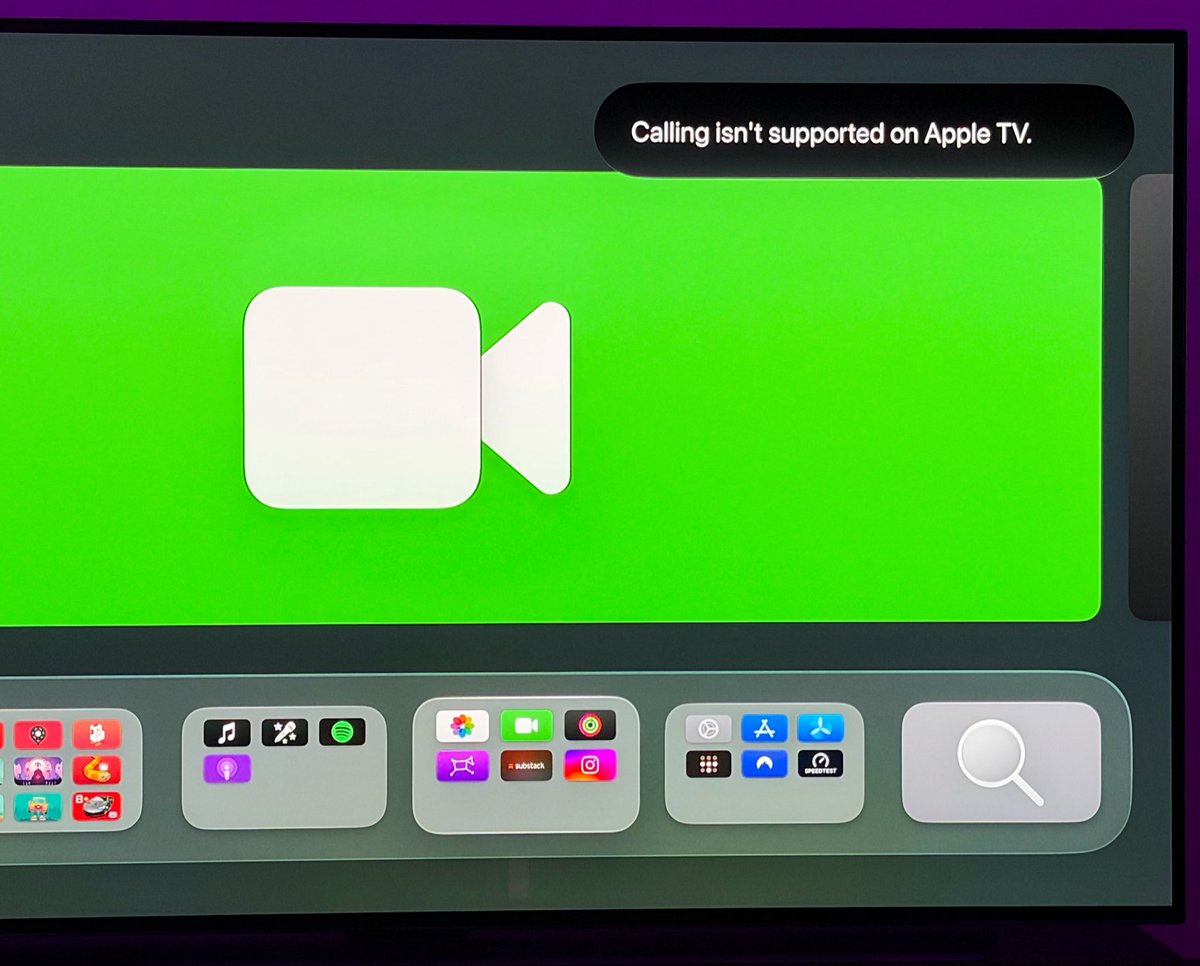
The @Airbnb app is no longer supported on Apple TV, and yet it’s still somehow in the @AppStore’s Editors’ Choice category…
I’m really loving the superb level of curation @Apple,l
@pwnlambda It’s dangerous only as long as this remains in private hands. As soon as it’s public, people can jailbreak and install tweaks to patch these vulnerabilities—as has always been the case in the past.
@jacobeverly@peter_szilagyi Does abliteration reduce model performance? I've been using GLM-5.3 with a pre-filled context to avoid having to take any such hit.
I think we're talking past each other a little. I agree that we can't conclusively establish that nobody has ever noticed these errors before. My objection is to the jump from that uncertainty to “several people probably did discover it, posted it on the internet and were ignored”.
Those are different claims. The possibility of an earlier discovery doesn't, by itself, establish that one probably happened.
The post describes how the errors were identified and gives specific findings that can be checked. The suggestion that someone previously documented them, that those documents entered the training data, and that they influenced this particular output is still hypothetical. It could be true, but I don't see what makes it the probable explanation.
And the same uncertainty would apply to a human discovery. Someone might always have got there first and left no surviving record. That's worth acknowledging when making an absolute claim about novelty, but it doesn't really tell us anything about this particular case.
Earlier work would obviously matter if it turned up. But there's a distinction between saying “we can't be completely certain this is new” and saying “several people probably already discovered it”. I agree with the former. It's the latter that I don't think you've justified.
You're assuming (1) that the material was actually included in the model's training data, (2) that the relevant information was retained through subsequent training, and (3) that it causally contributed to the output in question.
But even if all three were true, there's still a distinction between independently arriving at a discovery and reproducing something previously encountered.
An LLM could independently rediscover something that was documented decades ago, just as it could arrive at something genuinely novel by reasoning from existing knowledge.
The absence of search results doesn't prove novelty, but the possibility that something was once in a training dataset doesn't prove prior discovery, let alone that the model's output was derived from it.
@flowirin@theblazehen Well how exactly would they get into the LLM's training dataset if they were lost forever?
The idea is poetic, but I'm not so sure.
@camsoft2000 You can already do basically the same thing with TCA, just noninteractively. UI/core separation is implicit in TCA, so agents can simply write TCA tests for each feature and snapshot tests for the UI. Unless you want interactive testing too, there’s no need for a second frontend.
first thing I'm doing when my iPhone Duo gets jailbroken is displaying an ebook's cover on the outer display while reading on the inner display.
the performative reading shall be glorious.
@DimkoyDimkoy@alexito4 I haven’t yet—but I’m currently in the middle of a massive performance audit of the whole thing after porting over TCA26 concepts and deprecations. Hopefully I’ll have it ready for an initial 0.1.0 release with those comparisons relatively soon.