📚If you like to have easy access to the Westminster Standards on your iPhone-- I'm working on a new app that could help with it. If you want to beta test on an iPhone, text (or DM) me your email address.
The bi-partisan Cruz/Cantwell bill is, by far, the most comprehensive, well constructed, and well written piece of legislation that has been brought forward in the 7 years that the “college sports powers that be” have been lobbying Congress. This bill is our best (and possibly only) opportunity to preserve and protect our college sports system.
It also has a very good chance to pass and become law.
If a stakeholder has a specific issue with the bill, then they should be transparent and constructive. Their input will be welcomed.
At the end of the day, nobody is going to get exactly everything they want, but we can all work together to find a solution that everyone can live with.
Back-room arm twisting, shadowy lobbying, obstructionism, and obfuscation of facts (all motivated by selfish agendas) is counter productive, and is the very reason that we have found ourselves in the mess that we college spots have become. Put all of the cards on the table, and let’s make a deal!
Be an honest broker, act with integrity, be forthright, grow up, be a professional, and set selfish interest aside to do what benefits the greater good and preserves this Great American Institution.
@irishpresby@ZacharyGarris How could he be convicted of the second charge if they didn’t admit any evidence for the second charge? Were the tweets shown the reasons given for the verdict or were those just your example? Trying to understand the conclusion.
@RyanHurst171 Correct! The PCA is the actual grass roots Presbyterian denomination. So as a PCA pastor in another Presbytery, I look forward to the appeal to the higher court the SJC.
Being a pastor is hard to explain unless you’ve stood in the pulpit yourself.
One week you’re walking with a family through their darkest valley.
The next, they’re gone without a word.
You’ll be praised and misunderstood, often by the same people in the same month.
Some days you see God move and go home full. Other days you lie awake rehearsing every word, wondering what you missed.
Everyone has an opinion of how you should pastor. You quickly learn you cannot preach with one eye on the crowd.
But then..a soul saved, a marriage mended, a grieving heart given comfort.
And suddenly you remember why you answered the call.
Ministry is heavy. But it’s a high calling.
And it’s worth it all.
Pastors & Church Planters: who is thinking creatively and strategically about buying and financing a church’s first building?
I ask because we are no longer in the golden age of planting (1995-2015), and there just aren’t nearly the nationwide resources that there used to be. And for churches/plants in the (expensive) post-Christian West, we don’t have any large, local anchor churches to fall back on either. (Eg, our presbytery has only about 35 churches spread out across CO, WY, & MT, but it’s been at least 20 years since ANY have purchased property).
All that to say, this is a HUGE impediment to long-term planting where it’s needed most, and I’ve yet to find really ANYONE taking it seriously. What am I missing? Who do I need to connect with?
#PCAGA
@irishpresby After reading Reformed Christian Politics (Thank you btw) I’ve been trying to think through rebranding names like maybe “Classical Protestant Federalism.”
There is some discussion about seminary size and growth because of @ryanburge's recent post on this site, and his @Substack article (which has tons of helpful and accurate info). @ReformTheoSem is the only confessional reformed seminary in the top 20 largest seminaries. Ryan's stats are from the ATS SIR and based on FTE (full time equivalent) students.
But FTE is not the gold standard for institutional comparison. In fact, Bob Cara, my Provost and a recognized expert in accreditation says: “For grad schools, FTE based on one semester is virtually useless to compare across schools." Just for fun, I asked AI to to tell me all about FTE, and this was its conclusion: “While FTE is a helpful metric for internal planning and funding distribution, its inconsistencies across institutions make it unreliable for direct comparisons between schools. To get a clearer picture of enrollment, FTE should be used alongside other metrics, such as total credit hours (TCH), headcount, retention rates, and graduation rates.” That’s actually not a bad conclusion! Score one point for AI.
To illustrate the limitations of FTE as a measure, RTS was ranked 18th in the top 20 of FTE list that Ryan produced on his graph. But we have a higher annual enrollment, teach more credit hours, and twice the residential credit hours of the school ranked 10th in FTE!
TCH is the gold standard in determining the comparative size of seminaries and graduate schools. It is the measure preferred by the Evangelical Seminary Deans' Council (ESDC). I'll write more on this soon.
Chancellor @LigonDuncan will post on this soon, but these numbers do not reflect the reality at @ReformTheoSem. We are seeing overall growth, especially among the MDiv degree (20% growth since 2007). At @RTSCharlotte, for example, this academic year will finish either second or third highest all time for total credit hours--only behind the post-COVID year when most graduate programs spiked.
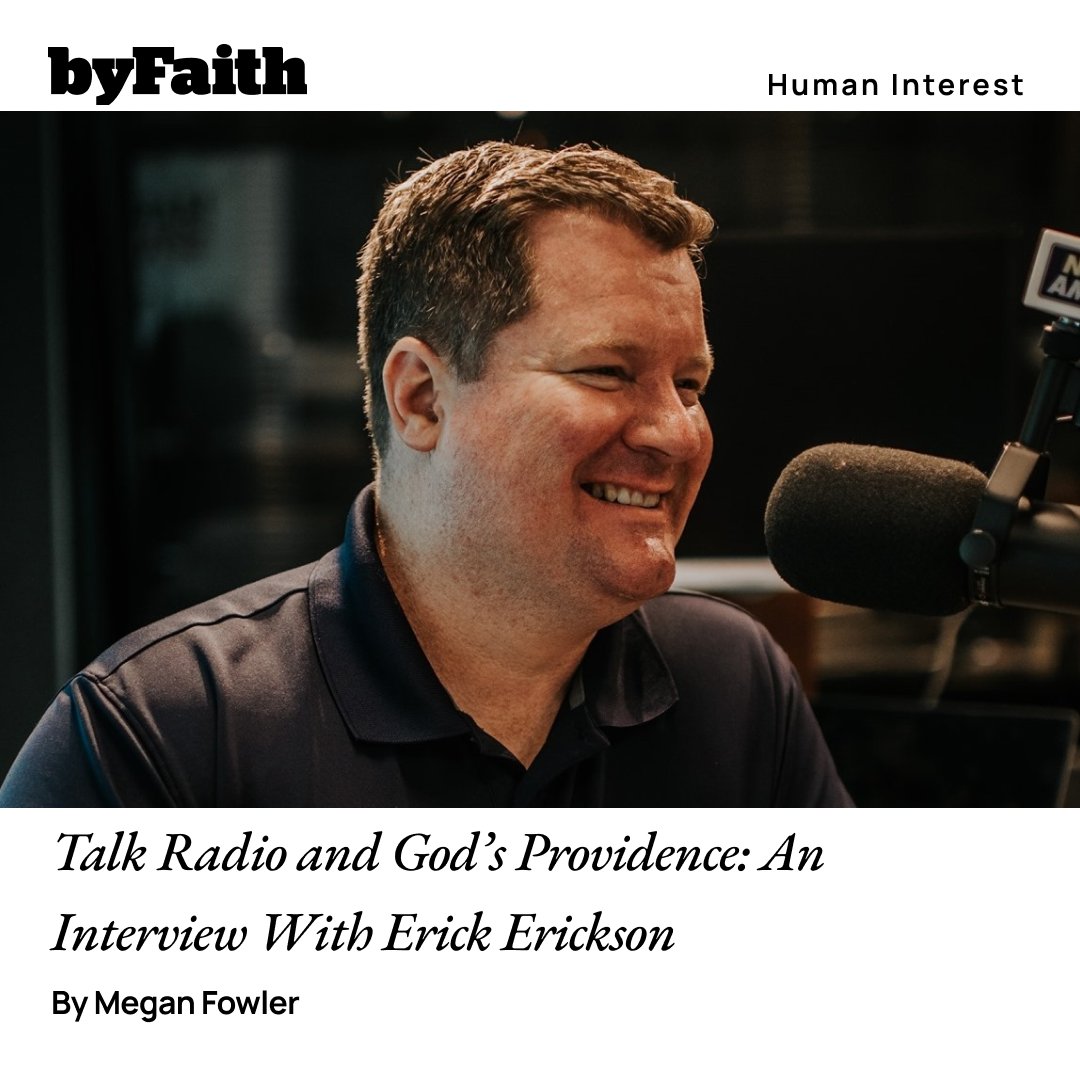
I really like listening to @EWErickson. He’s a balanced and honest conservative who is able to retain his sources in Washington from both Left and Right.
“He’s about to start his morning prayers. Send ten email notifications. Now send a sudden mental fixation on an embarrassing situation from 15 years ago. Good.
Now have the infant violently poop everywhere. More. More poop.”