¿Cómo presentarle la Odisea a alguien que no la ha leído? Se suele decir: La Odisea cuanta la historia de un hombre que, tras una larga guerra de años, quiere volver a su hogar, pero se demora muchos años más, entre aventuras, penurias y peripecias de todo pelaje. Finalmente lo consigue, mata a los usurpadores y recupera su trono, su palacio y el amor de su esposa. Lo cual es más o menos cierto, pero simplifica tremendamente la compleja arquitectura del poema. Hay dos formas, a mi juicio, de enfrentarse a esta obra: con la impaciencia de los pretendientes o con la paciencia de Penélope. Homero es hospitalario y admite ambas clases de lectores. Pero a la larga quienes reciben más dones son los segundos.
De esa impaciencia tan adolescente que busca la aventura a toda costa también parecían participar los antiguos (y no tan antiguos) filólogos, a quienes les fastidiaban los primeros cuatro cantos en que Telémaco va en busca de noticias de su padre, el tramo conocido como la "Telemaquia", y por tal razón encontraban espurio todo eso. Diríase que también les frustraba el hecho de que Homero, al comenzar la plática con la musa, anuncia una cosa para postergarla a continuación. Lo contrario de la Ilíada, donde la prometida "cólera de Aquiles" se entrega casi al instante y con urgencia. Pero la Odisea no da comienzo con un Odiseo que tiene a Ítaca como su meta e ideal, para poner en marcha la maquinaria del viaje de regreso. Antes bien, los lectores aterrizamos desde el principio en la propia Ítaca, que es el epicentro del poema. Una "pedregosa Ítaca" cotidiana, palmaria y hasta triste, donde campan los desmanes de los pretendientes en palacio y todo es desorden e injusticia. Y donde Telémaco, que es a un tiempo personaje y lector de la Odisea, busca su lugar en la trama y en la vida.
Homero comienza pidiéndole a la musa que le cuente algo de "un hombre". Como quien dice: "oye, ¿qué fue de Fulano?". Pero a continuación ese hombre no aparece por ningún lado. Por contra, en esos primeros cuatro cantos, el personaje de Odiseo se va construyendo como una ausencia. Y aquí tenemos una de las ideas que vertebran el poema, siempre obsesivo en torno a la memoria y su lucha contra el olvido: vivimos porque alguien se acuerda de nosotros, o piensa en nosotros. Y esa memoria es lo que impide que nos convirtamos en una casa vacía con las luces apagadas. Muchos cantos después, cuando el propio Odiseo viaja al Hades y habla con el alma de su madre muerta, le pregunta si hay alguien en Ítaca que se acuerde de él. Como quien teme convertirse en sueño, en olvido, en Nadie.
Por supuesto, el lector adolescente que ansía sirenas, cíclopes y lestrigones obtendrá lo que buscaba. Casi escuchamos a Homero decir: "Aquí tienes tus sirenas, tus cíclopes y tus lestrigones. Que los disfrutes". Pero con el tiempo ese lector, si se deja llevar por el tesón de Penélope, descubrirá que la Odisea es el gran poema de la conversación junto al hogar en las noches largas e insomnes, al calor de la hospitalidad. Donde el mar y sus monstruos no es tanto el espacio habitado como un rumor recordado. Y es ese recuerdo convertido en narración lo que le confiere su sentido.
@simyo_es@MotorolaESP En caso de ganar el teléfono, lo usaría para comunicarme con calidad y calidez con mi familia y mis amigos, para hacer buenas fotos y vídeos de todos los lugares adonde vaya durante este verano y para navegar por internet con rapidez y seguridad.
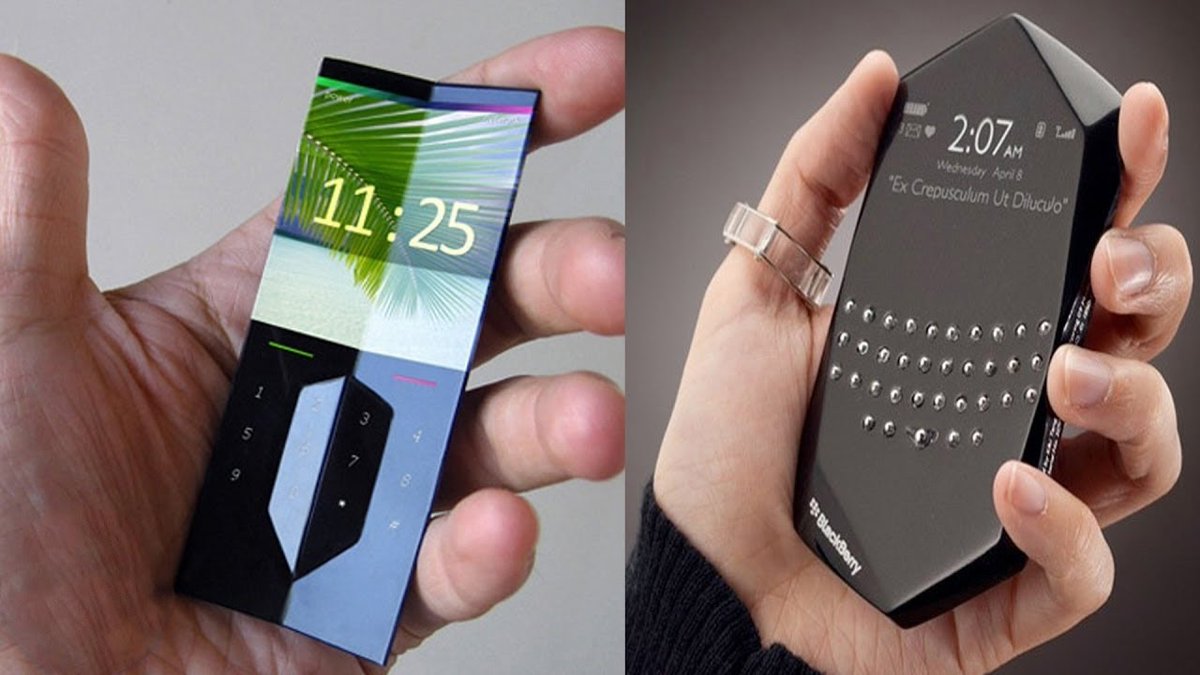
¡SORTEAMOS UN MOTOROLA MOTO G77 5G!
Ese Motorola como mola, se merece una ola 🙌
¿Lo quieres? 😉
- Sigue a @simyo_es y a @MotorolaESP
- RT a este Tweet
- Dinos qué harás este verano con simyo y tu nuevo móvil usando #simyoConMotorolaMola
Hasta el 17/06 a las 23:59h. Bases: https://t.co/Q87Ki93pv6
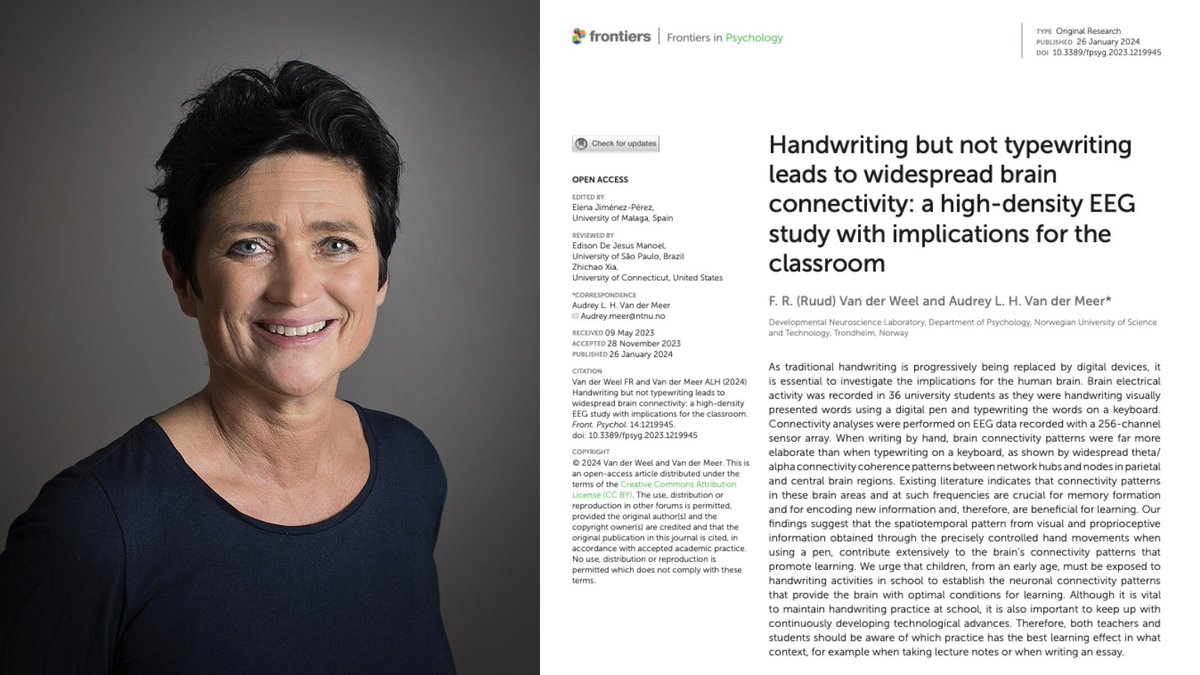
A Norwegian neuroscientist spent 20 years proving that the act of writing by hand changes the human brain in ways typing physically cannot, and almost nobody outside her field has read the paper.
Her name is Audrey van der Meer.
She runs a brain research lab in Trondheim, and the paper that closed the argument was published in 2024 in a journal called Frontiers in Psychology. The finding is brutal enough that it should have changed every classroom on Earth.
The experiment was simple. She recruited 36 university students and put each one in a cap with 256 sensors pressed against their scalp to record brain activity. Words flashed on a screen one at a time.
Sometimes the students wrote the word by hand on a touchscreen using a digital pen, and sometimes they typed the same word on a keyboard. Every neural response was recorded for the full five seconds the word stayed on screen.
Then her team looked at the part of the data most researchers had ignored for years, which is how different parts of the brain were communicating with each other during the task.
When the students wrote by hand, the brain lit up everywhere at once.
The regions responsible for memory, sensory integration, and the encoding of new information were all firing together in a coordinated pattern that spread across the entire cortex. The whole network was awake and connected.
When the same students typed the same word, that pattern collapsed almost completely.
Most of the brain went quiet, and the connections between regions that had been alive seconds earlier were nowhere to be found on the EEG.
Same word, same brain, same person, and two completely different neurological events.
The reason turned out to be something nobody had really paid attention to before her work. Writing by hand is not one motion but a sequence of thousands of tiny micro-movements coordinated with your eyes in real time, where each letter is a different shape that requires the brain to solve a slightly different spatial problem.
Your fingers, wrist, vision, and the parts of your brain that track position in space are all working together to produce one letter, then the next, then the next.
Typing throws all of that away. Every key on a keyboard requires the exact same finger motion regardless of which letter you are pressing, which means the brain has almost nothing to integrate and almost no problem to solve.
Van der Meer said it plainly in her interviews.
Pressing the same key with the same finger over and over does not stimulate the brain in any meaningful way, and she pointed out something that should scare every parent who handed their kid an iPad.
Children who learn to read and write on tablets often cannot tell letters like b and d apart, because they have never physically felt with their bodies what it takes to actually produce those letters on a page.
A decade before her, two researchers at Princeton ran the same fight using a completely different method and ended up at the same answer. Pam Mueller and Daniel Oppenheimer tested 327 students across three experiments, where half took notes on laptops with the internet disabled and half took notes by hand, before testing everyone on what they actually understood from the lectures they had watched.
The handwriting group won by a wide margin on every question that required real understanding rather than surface recall.
The reason was hiding in the transcripts of what the two groups had actually written down.
The laptop students typed almost word for word, capturing more total content but processing almost none of it as they went, while the handwriting students physically could not write fast enough to transcribe a lecture in real time, which forced them to listen carefully, decide what actually mattered, and put it in their own words on the page.
That single act of choosing what to keep was the learning itself, and the keyboard had quietly skipped the choosing and skipped the learning along with it.
Two studies. Two countries. Same answer.
Handwriting makes the brain work. Typing lets it coast.
Every note you have ever typed instead of written went into your brain through a thinner pipe. Every meeting, every book highlight, every idea you captured on your phone instead of on paper was processed at half depth.
You did not forget those things because your memory is bad. You forgot them because typing never woke the part of the brain that would have made them stick.
The fix is the thing your grandmother already knew.
Pick up a pen. Write the thing down. The slower road is the faster one.
Hay un momento, en Odisea 23.209, donde por fin Penélope reconoce a Odiseo, cuando sentimos de pronto gravitar el largo tiempo perdido, esa juventud en común que nunca fue, los días que se suceden en la anodina Ítaca, vivir, envejecer juntos: todo lo arrebatado.
Al final resulta que la guerra, las travesías llenas de portentos, las sirenas, los monstruos, el cíclope, Circe, Calipso... Todo cuanto el lector ha disfrutado no dejaba de ser la forma que tomaba el vacío. Homero, gran poeta, no recurre al énfasis innecesario, no interpela al lector con un patetismo lacrimógeno ni hace que la hija de Icario pronuncie un gran discurso sobre la fugacidad. Ella lo deja caer con unas pocas y sencillas palabras. Como la vida misma, deja fluir la leve amargura que se cuela entre las grietas de la alegría.
Ambos han llegado al fin de sus respectivas odiseas, pero ambos han llegado tarde. Odiseo de sus navegaciones; Penélope de su tejer y destejer la tela, como un pensamiento. Acaso es la gran arquitecto, la que sostenía todo sin cuidarse de esperanza alguna. Y su vigilia también se parece mucho a la soledad del poeta.
El pasaje pertenece a mi traducción de la Odisea (La Oficina 2024).
Más que diagramas, es un ecosistema de innovación. Miro permite mapear flujos de trabajo complejos de forma interactiva. ¡Lleva tus tutorías al siguiente nivel! 🚀
🔗 https://t.co/t9JJW5zWDR
#Miro#InnovaciónEducativa#DesignThinking#EdTech
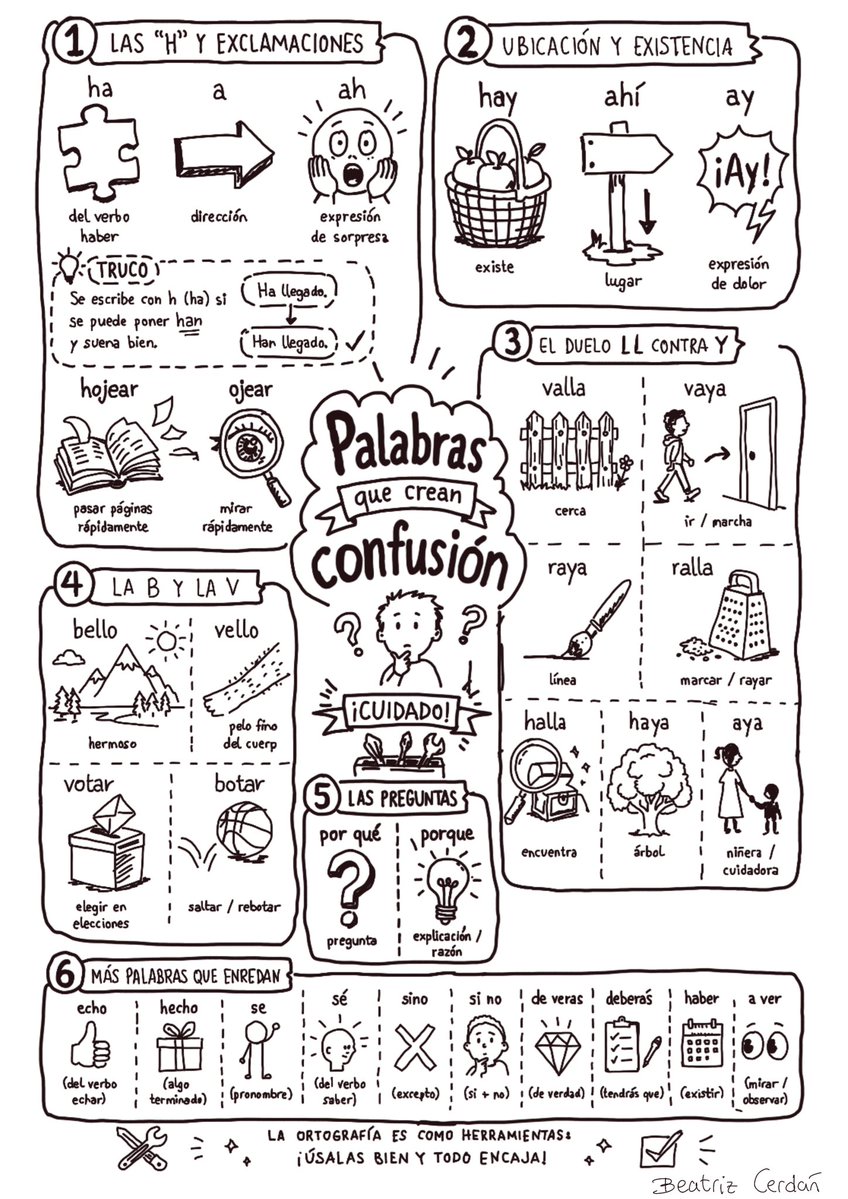
@ClaseEnLlamas Es muy interesante este resumen terminológico. ¿Podrías pedir a NotebookLM que corrija las palabras mal escritas? Hay expresiones que es imposible entenderlas. Gracias.
Llegaste al final 🧵
Si te gustó, favor Retuitea, dale Me Gusta al 1er tweet y Sígueme.
@_IntelArt
Ayuda a q más personas lean este hilo y sepan del Laboratorio de Google y sus más de 23 poderosas herramientas GRATUITAS.
https://t.co/YiuVxELik8
ARTÍCULO RECOMENDADO.
Me dolió mucho tener que escribir este artículo sobre la situación real del español en el mundo, pero alguien lo tenía que decir. Y ya está dicho. Todo cuanto señalo aquí es simplementa la pura verdad.
LA LENGUA SUSURRADA, de Manuel Vilas.