My Stanford course 𝗧𝗵𝗲 𝗠𝗼𝗱𝗲𝗿𝗻 𝗦𝗼𝗳𝘁𝘄𝗮𝗿𝗲 𝗗𝗲𝘃𝗲𝗹𝗼𝗽𝗲𝗿 starts next Tuesday.
This Github repository will hold all the assignments (and has the ones from last year).
Bookmark it. See you next week.
https://t.co/b6o254kwon
Anthropic ha lanzado una guía de 37 minutos para construir Agentes de IA que automatizan una empresa entera.
Gratis. De los ingenieros que construyeron Claude.
Agentes que trabajan, se reparten tareas y ejecutan todo solos.
Subtitulado al español.
Guárdate este post. 🔖
@lennysan@bot I’d love use @bot to help me grow https://t.co/UvkI4MmGEV a side project I’ve been building. @Preffer_app is a platform where people can organize/share their preferences and discover new experiences.
My next challenge is growth. I want to see if AI can help me find first 1K users
The future of engineering, design, and product management is Product Builders.
I got the CPO of $3.4B Freshworks ($FRSH) to show me:
0:00 Why PM, designer & engineer titles die
2:31 The Product Builder role
4:03 Data first vs AI first
5:07 The AI PDLC
6:59 PRD Genie
9:59 Why Cursor
13:04 The 12-step process live
17:25 The agent asks PM questions
19:08 Why he switched to Grok
22:46 The finished PRD
24:41 Can you trust an AI PRD?
27:02 PRD to prototype in Figma Make
35:43 Where judgment still matters
37:14 Inside Agent Studio
43:52 The Slack agent demo
49:45 Freshservice MCP + Claude
57:01 PM ratio went 1:20 to 1:1
59:24 Roadmap for CPOs
1:02:21 How Freshworks hires AI PMs
45 minute masterclass on prioritisation without teaching a single prioritisation framework. Because it's not frameworks that make you good at prioritisation it's understanding the following core concepts:
1. Every prioritisation framework is made of the same four dimensions: value, cost, urgency and confidence.
2. They're not evenly weighted - nor are they always applicable. Sometimes urgency might be irrelevant, other times it's a burning platform and the overriding component.
3. Urgency changes over time and it has a knock on impact to value and effort. Something might be easy now but harder over time (eg tech debt). There might also be a market window, miss that and value could go to 0. Companies overlook urgency and that's exactly why foundational work never reaches the top of the backlog.
4. Ignorance tax is the cost you pay when you chase shiny objects and neglect confidence. New ideas look great because we don't actually understand the challenges associated with them. Confidence is your defence against over inflating the upside and being optimistic on effort.
5. Value is contextual and it gets defined by your strategy. Most companies don't have a prioritisation problem, they have a strategy problem.
6. Prioritisation happens in layers. Nobody can stack rank 600 things (and if you can I want to know how!) What you can do is prioritise between 3 outcomes based on your strategy, then between half a dozen opportunities, then 3 different solutions.
Full deep dive with real world examples (and my bad handwriting) - plus link to a mega spreadsheet of prioritisation frameworks in the description: https://t.co/8gKZszo2tI
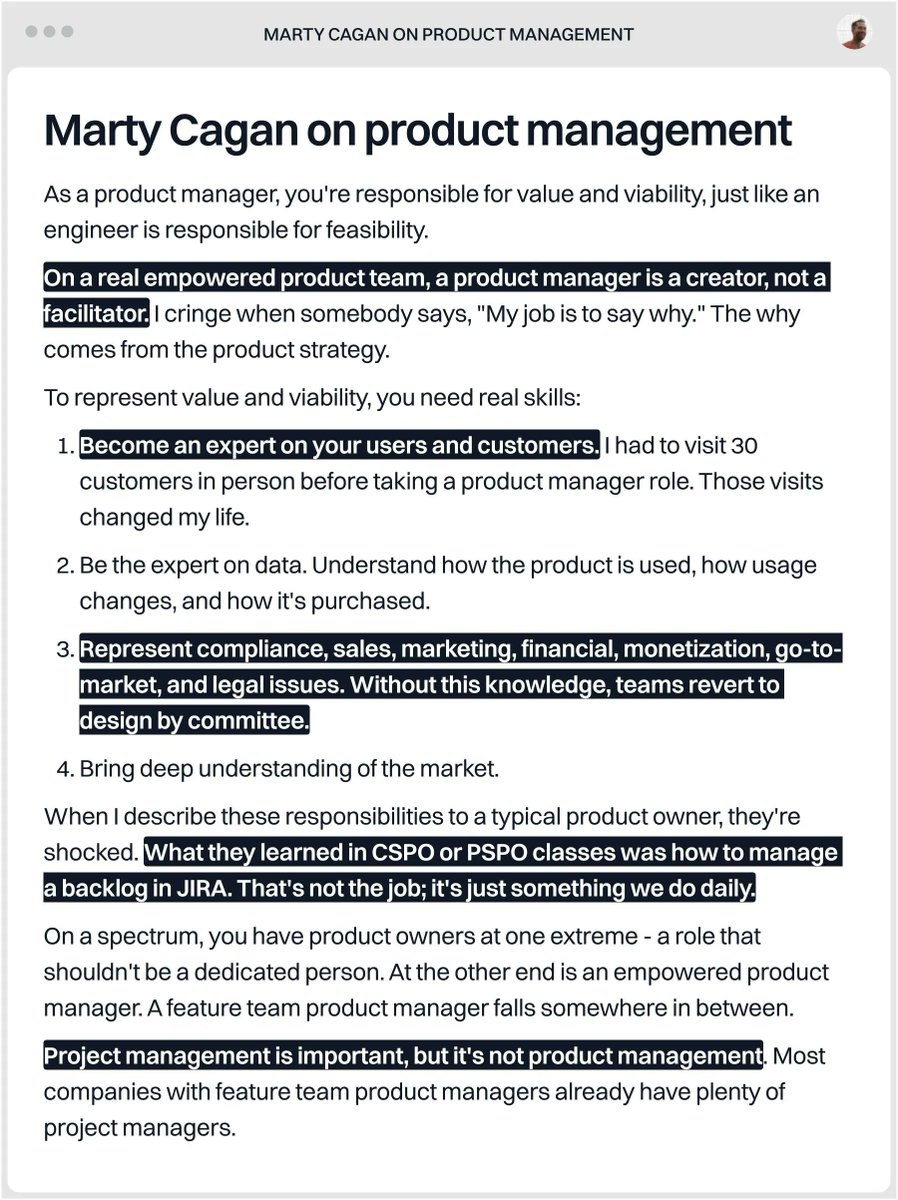
Marty Cagan on product management
AI creates a new fake PM: the facilitator who pastes Claude into the PRD.
Same trap, new tool:
- Old fake job: manage the Jira backlog
- New fake job: let agents make slop
- Real job (unchanged): own value + viability, with judgment
Origin, our code hosting platform, is now live.
It's fast, easy to use, and deeply integrated with Cursor.
Get started by syncing your repos from GitHub.