@NateSilver538 We are witnessing age related decline in performance. In the history of mankind no one has ever avoided that. President Biden is a really good man who is just too old to run again.
@drjohnm@kaulcsmc Jumping to conclusions is never a good idea. Lots more to be learned about hemodynamic support in cardiogenic shock. Disappointing that people are concluding way too much after DanGer.
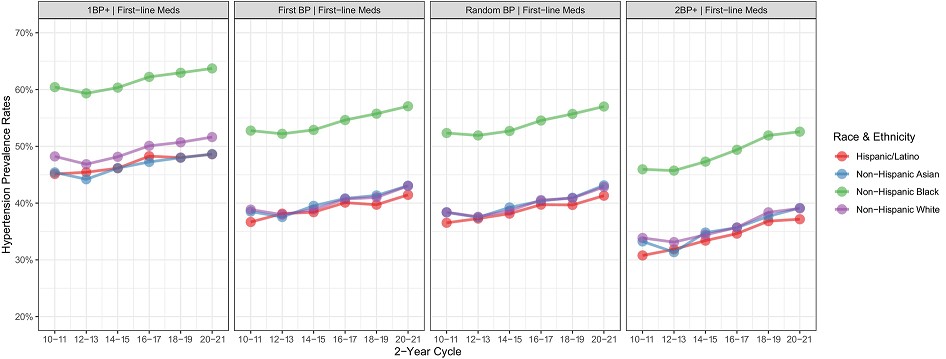
Analysis of our regional real-world data showed rising hypertension prevalence and persistent racial disparities, providing a local call to action. Our analysis could be a model for other health systems. #AHAJournals@jeb1426@yuan_lu1@hmkyale https://t.co/AYKibfjYIf
@RichardLehman1@dafraile@raj_mehta@stokemacca@sfinnikin What an important insight - "let time decide." In America, so much primary care has shifted to urgent care settings with poor follow-up that making a decision over time isn't an option. One has to either jump to a conclusion, or drop the opportunity to make a decision over time.
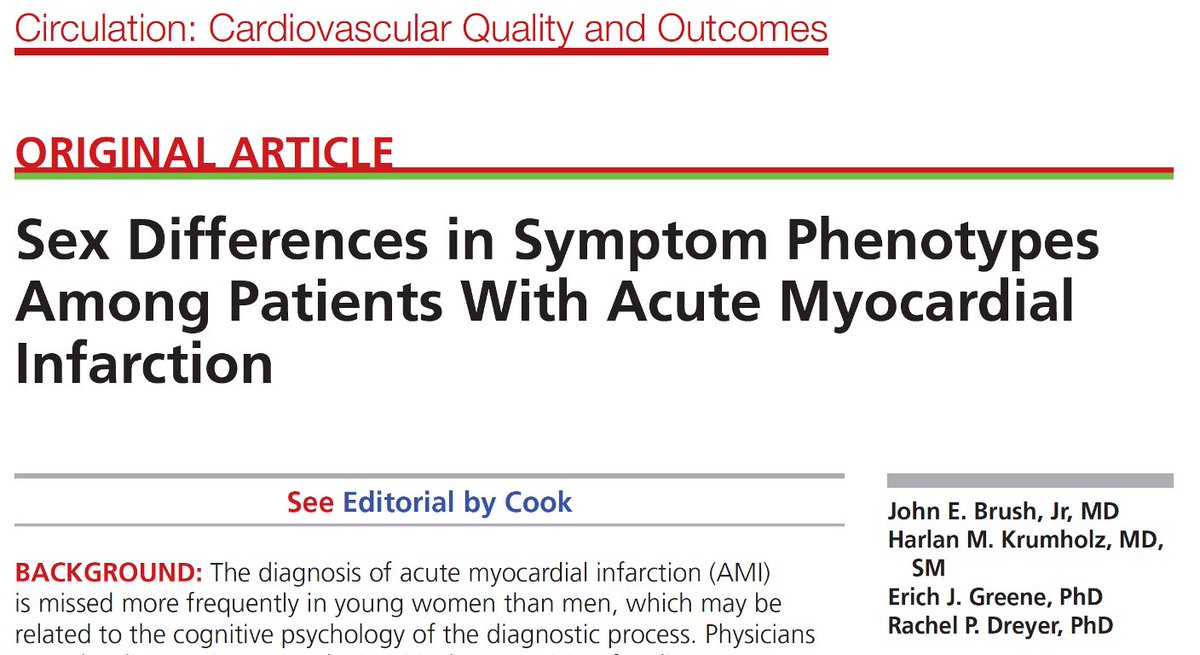
1/ A privilege to work with @hmkyale, @yuan_lu1,@RachelDreyerPhD, et al, looking at symptom phenotypes. Experts recognize diagnostic possibilities because they resemble memories called exemplars, which are mental representations of how features cluster as phenotypes.
4/ In STEMI pts with D2B time ≥90 minutes or no PCI, women had more symptom phenotypes than men overall and in the young patients, but not in the older patients. Initial recognition of diagnostic possibilities is important for D2B times and may be more difficult in women.
3/ Next we combined VIRGO and Silver AMI patients to look only at STEMI pts. Women had more symptom phenotypes, more symptoms on average and longer D2B times. Women had chest pain, but had more symptoms other than chest pain. Nausea was particularly prominent in young women.
2/ We examined the VIRGO and Silver AMI registries because these studies had details on symptoms in AMI patients. We examined how the symptoms clustered as symptom phenotypes and found that women, both young VIRGO and older in Silver, had more symptom phenotypes than men.
4/ In STEMI pts with D2B time ≥90 minutes or no PCI, women had more symptom phenotypes than men overall and in the young patients, but not in the older patients. Initial recognition of diagnostic possibilities is important for D2B times and may be more difficult in women.
3/ Next we combined VIRGO and Silver AMI patients to look only at STEMI pts. Women had more symptom phenotypes, more symptoms on average and longer D2B times. Women had chest pain, but had more symptoms other than chest pain. Nausea was particularly prominent in young women.
2/ We examined the VIRGO and Silver AMI registries because these studies had details on symptoms in AMI patients. We examined how the symptoms clustered as symptom phenotypes and found that women, both young VIRGO and older in Silver, had more symptom phenotypes than men.
1/ A privilege to work with @hmkyale, @yuan_lu1,@RachelDreyerPhD, et al, looking at symptom phenotypes. Experts recognize diagnostic possibilities because they resemble memories called exemplars, which are mental representations of how features cluster as phenotypes.
@hmkyale@YaleMed@YaleCardiology@yuan_lu1@CircOutcomes@amjmed@AmJCardio 4/ In STEMI patients with either D2B time ≥90 minutes or no PCI, women had more symptom phenotypes than men in all pts and in the young patients, but not in the older patients. Initial recognition of dx possibilities is important for D2B times and may be more difficult in women.
@hmkyale@YaleMed@YaleCardiology@yuan_lu1@CircOutcomes@amjmed@AmJCardio 3/ Next we looked at VIRGO and Silver AMI to look only at STEMI patients. Women had more symptom phenotypes, more symptoms on average and longer D2B times. Women had chest pain, but had more symptoms other than chest pain. Nausea was particularly prominent in young women.
@hmkyale@YaleMed@YaleCardiology@yuan_lu1@CircOutcomes@amjmed@AmJCardio 2/ We examined the VIRGO and Silver AMI registries because they had detaileds on symptoms in patients with AMI. We examined how the symptoms clustered as symptom phenotypes and found that women, both young VIRGO and older in Silver, had more symptom phenotypes than men.
@EiranGorodeski@HFSA Maybe a HTN/HF specialist: combining hypertension expertise with CHF expertise. Similar needs: timely follow up, attention to detail, and application of proven therapies.