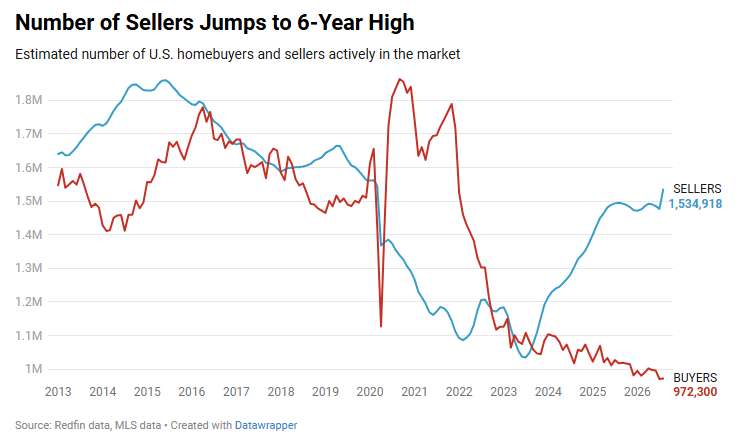
🇺🇸 US housing affordability keeps getting worse with the 30-year fixed mortgage rate hitting 7.49% for the first time in 2.5 years.
In 2021, $500,000 mortgage was $1800/month.
In 2026, $500,000 mortgage is $4,000/month.
Thats a $2,200 more every month for the same home.
BREAKING: The average sales price for a new single-family home fell -$47,700 MoM in August, or -9.1%, to $478,700, the largest monthly drop on record.
This is the lowest level since August 2024 and the 2nd-lowest level since September 2021.
The decline was driven by a shift toward lower-priced homes, as builders cut prices and offered incentives to clear inventory.
This comes as sales of homes under $300,000 rose to 22% of total sales last month from 19%, while sales of homes priced at $1 million+ fell to 4% from 6%.
As a result, total new home sales jumped +6.4% MoM, to 684,000, their highest since December 2025.
Meanwhile, median sales price fell -$24,200 YoY, or -5.8%, to $393,700, the 2nd-lowest reading since July 2021.
US home prices are falling to keep sales alive.
The average interest rate on a 30Y mortgage is up to 7.45%, its highest level in 3 years.
This officially pushes the payment on a $500,000 mortgage to $3,479/month.
By comparison, the same mortgage came with a payment of $2,995/month just 7 months ago.
That's an additional $5,813/year in mortgage interest expense for homebuyers.
Mortgage rates are now up +150 basis points since late-February.
🚨 THIS IS INSANE.
US 30-year bond yield just hit 5.402%, its highest level in 22 years.
It has been trading above 5% for 79 straight days now, the longest stretch since 2007.
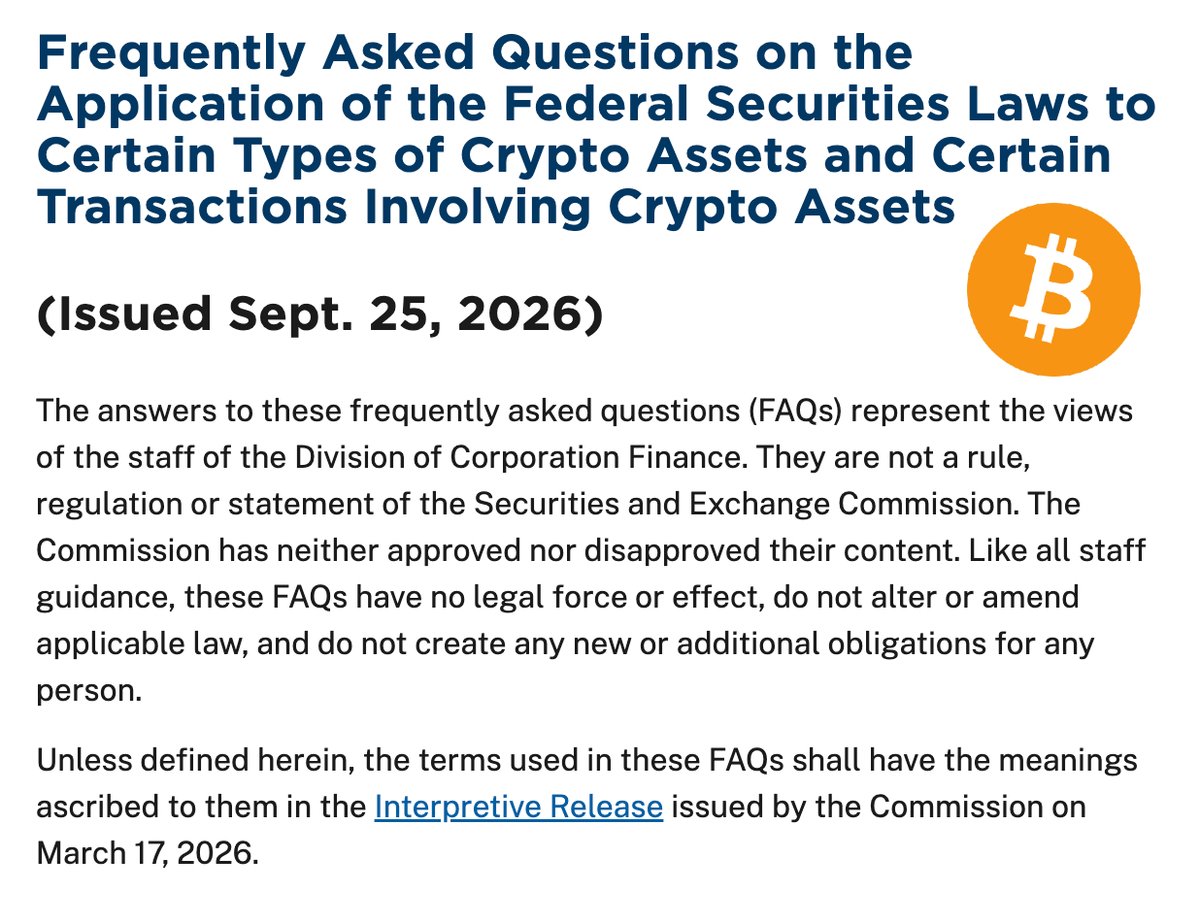
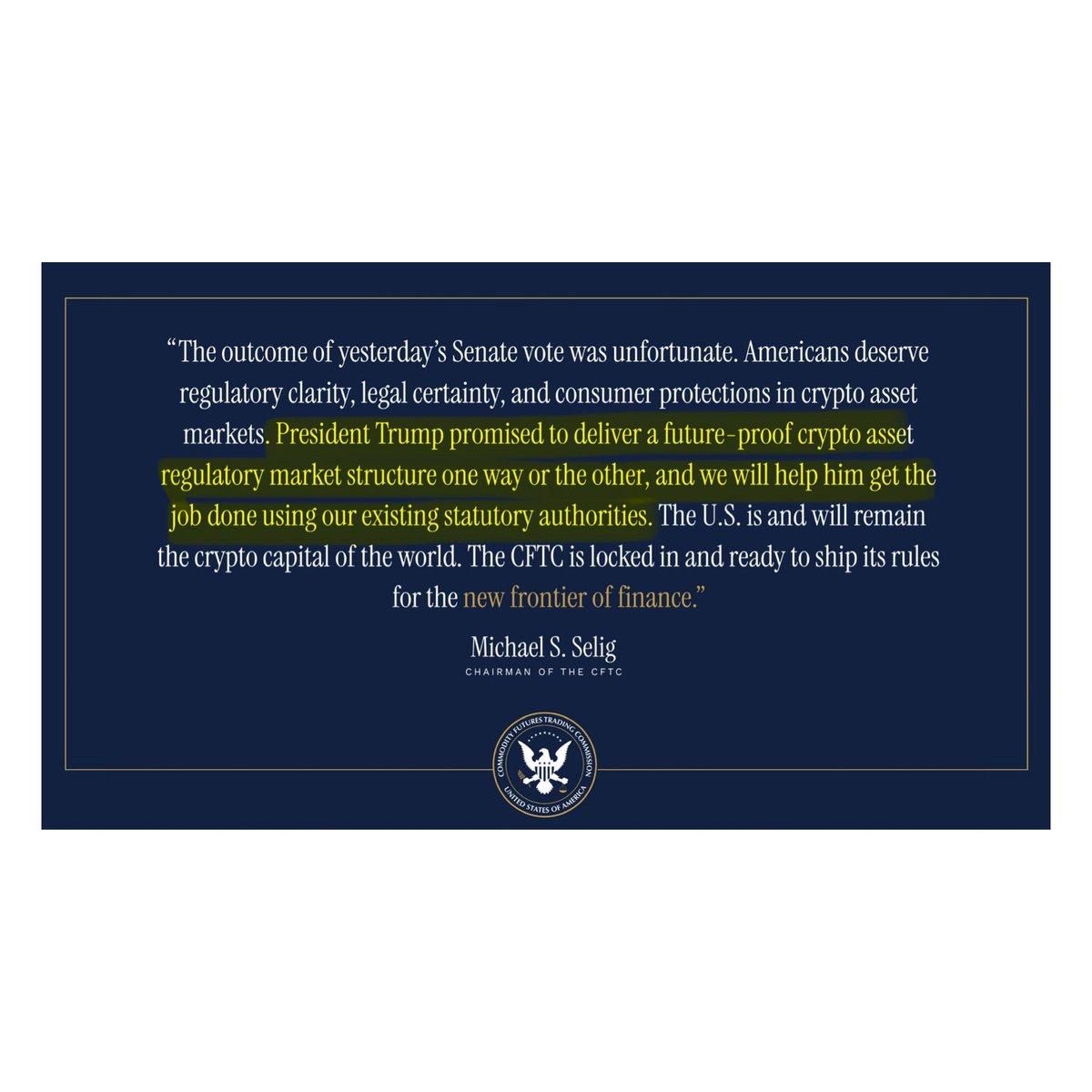
It’s GO TIME. The @CFTC is utilizing its existing statutory authorities to establish a crypto asset regulatory market structure. @POTUS promised clear rules of the road for crypto and we are shipping them.
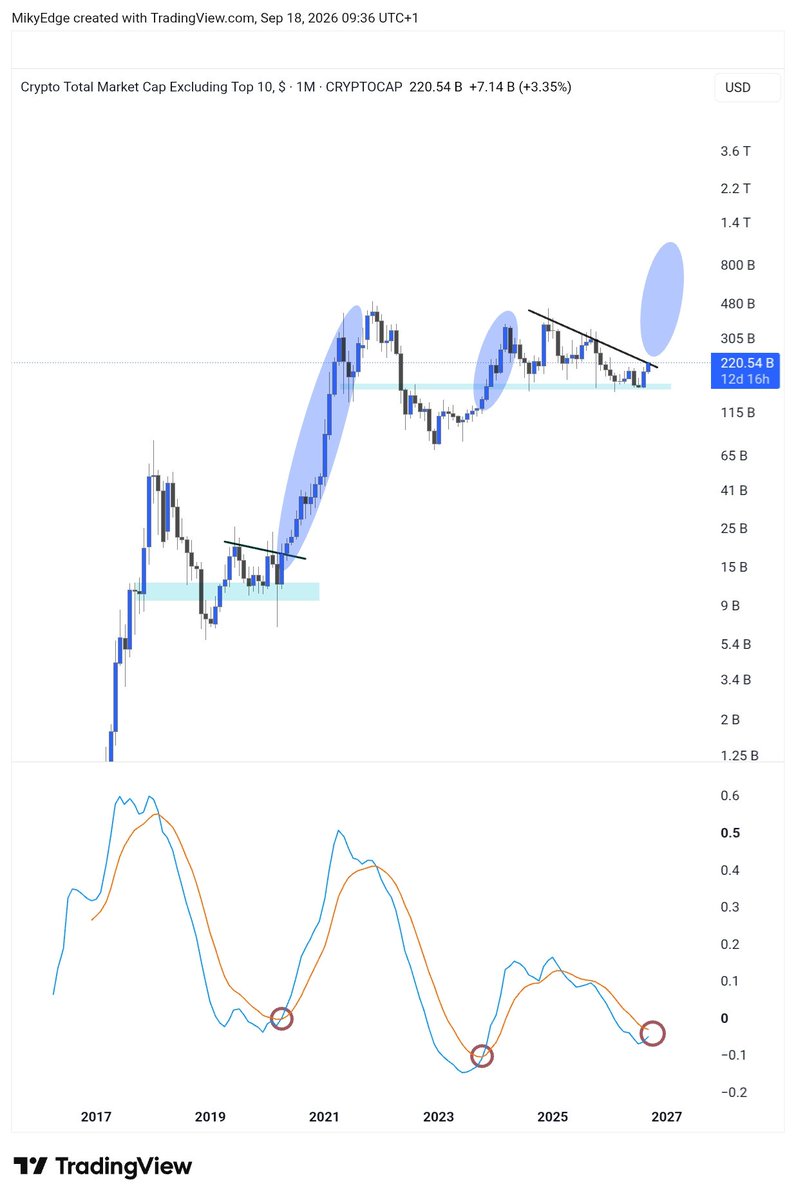
#Altcoins
OTHERS are breaking out of this monthly pattern.🤯
When this happened in 2016 and 2020, it was followed by a legendary bullrun for Altcoins.
I told you all this weeks ago, everything’s going to plan, folks.
We're facing the biggest Altcoinseason in years.💯
#Altcoins
Others are on the verge of their biggest breakout in 6.5 years.
In past cycles, this breakout has signaled the official start of a Altcoin bull market.
I can't even tell you how exciting this is.
🚨TWO MAJOR CRYPTO BILLS CLEAR HOUSE COMMITTEES
1. American Reserve Modernization Act of 2026
2. Digital Asset Tax Certainty Act
Both bills now advance toward a full House vote before moving to the Senate if approved.
Even with the CLARITY Act stalled, Congress is still moving forward on other major crypto legislation.
SEC and CFTC also moving ahead with crypto rules under existing law.
These bills could boost crypto adoption by giving investors clearer tax rules and strengthening Bitcoin's role as a US strategic reserve asset.
Key Provisions of American Reserve Modernization Act of 2026:
1. Creates an official US Strategic Bitcoin Reserve
2. Government Bitcoin must generally be held for at least 20 years
3. Federal agencies must report their Bitcoin and crypto holdings
4. Treasury must publish regular reports and audits
5. Other crypto held by government could be sold to buy Bitcoin or reduce debt
6. Government would study ways to acquire more Bitcoin without raising taxes or borrowing.
7. Protects the right to buy, hold, transfer and self-custody Bitcoin.
US government holds around 328,000 Bitcoin, and this bill could keep that BTC locked up for years while allowing the government to acquire more.
Key provisions of the Digital Asset Tax Certainty Act:
1. Tax relief for crypto fees under $10
2. New rules for mining and staking income
3. Clearer tax rules for stablecoins
4. Wash-sale rules extended to crypto
5. Crypto lending treated more like traditional securities lending
6. Changes to crypto broker reporting requirements.
JUST IN: 🇺🇸 SEC Chairman Paul Atkins says "We will act decisively within the SEC’s statutory authority to deliver certainty for American investors and for the entrepreneurs shaping our technological future." 👀
🚨 IS THE WORLD HEADING TOWARD A GLOBAL BOND CRISIS?
Japan's 10-year yield just hit 3.03% for the first time since 1996. Its 20-year yield is at 30-year high while the 30-year and 40-year are at record highs.
The UK's 10-year yield is at its highest since 2008. Its 30-year yield is at its highest since 1998.
France's 10-year yield is back to levels last seen around 2008. Germany's 10-year is at its highest since 2011.
The US 10 and 30-year yields are at a 19-year high.
This isn't happening because of one country's problem.
It's happening across almost every major government bond market at the same time.
Part of this is central banks.
The ECB just hiked rates again in September. Markets now see more than a 50% chance the Fed hikes this month too, and expect the Bank of Japan to raise its rate to 1.25%.
Rate hikes only explain part of this.
Long term yields also carry something called a term premium, extra compensation investors demand for holding debt over many years when inflation, government borrowing, and market risk are uncertain.
That premium has been rising too, especially in Japan, France, and the UK.
Here's what makes this cycle different from anything before it.
Global government debt is now close to 94% of world GDP, and the IMF expects it to hit 100% by 2029.
Global governments are now spending almost 3% of world GDP on interest payments alone, up from 2% just four years ago.
At the same time, AI is becoming a major source of new debt demand. The five biggest US tech companies are expected to spend around $697 billion this year on AI infrastructure.
A growing share of that is now funded through debt, and private credit funds are financing a lot of it, this AI segment alone went from 17% of private credit deals a few years ago to over a third of all deals in 2025.
This is why rising yields matter so much right now.
Higher yields raise the cost of that same AI debt. They raise mortgage rates, and most US homeowners are locked into rates under 4%, so higher rates freeze up home buying and selling instead of forcing existing owners to pay more immediately.
They raise borrowing costs for governments already struggling to manage existing debt.
They raise the discount rate used to value stocks, which hits expensive, high growth companies the hardest.
This doesn't automatically mean stocks, gold, silver, and crypto all crash together.
Gold can actually rise if people start worrying about government debt and inflation instead of just reacting to higher yields.
It does mean every part of the financial system is now more exposed to the same risk at the same time, government budgets, mortgages, corporate debt, private credit, and stock valuations all get squeezed by the same rising cost of money.
The real question isn't whether yields are high.
It's whether this keeps building slowly, or whether one weak bond auction, one political shock, or one forced sale turns this into something faster and much harder to control.
BREAKING: 🇺🇸 U.S. House Financial Services Committee is set to review a bill on Sept 16 to create a Strategic Bitcoin Reserve at the U.S. Treasury.
The bill also proposes a separate reserve for other digital assets.
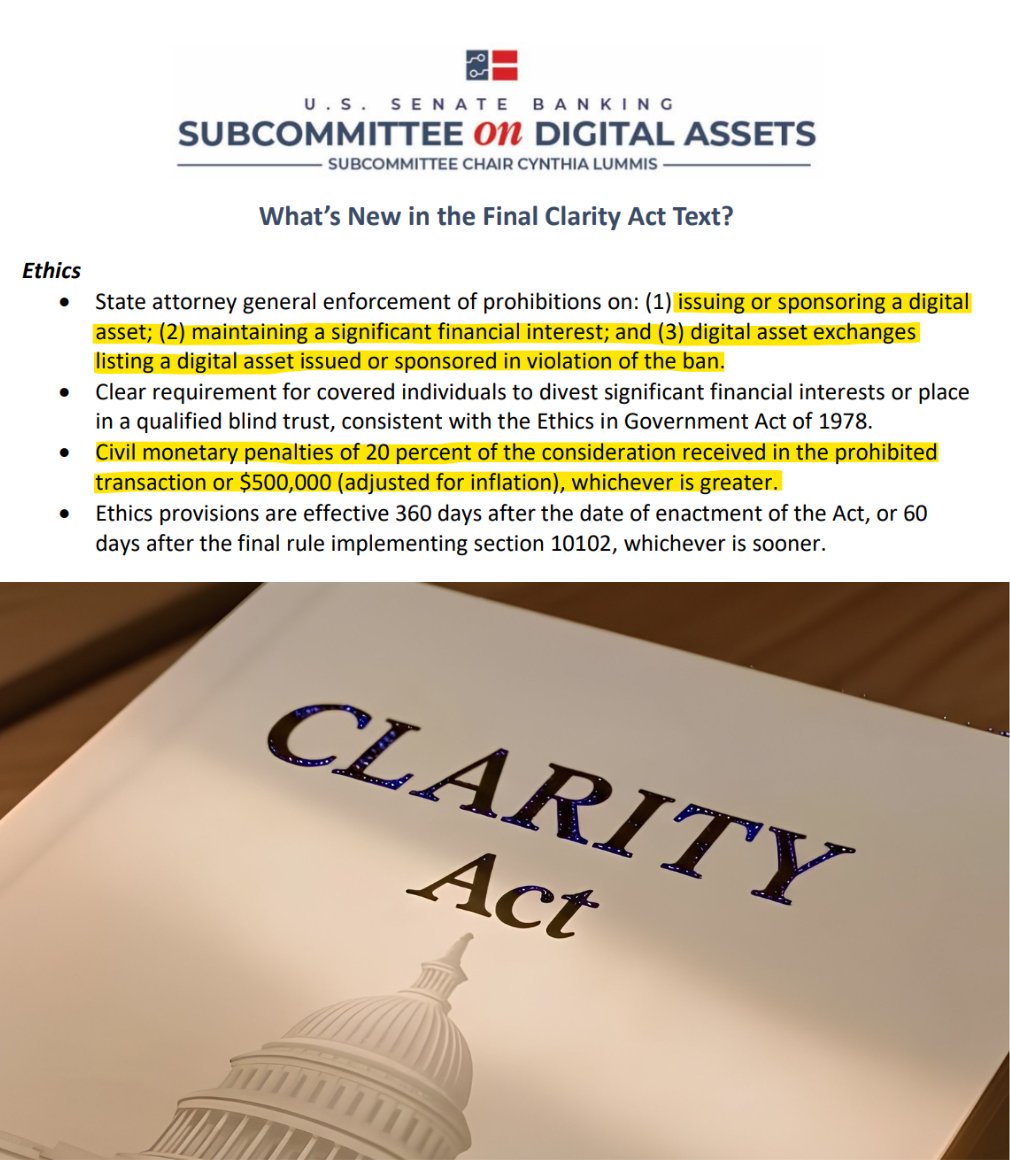
New CLARITY Act ethics provisions backed by President Trump:
1. Covered federal officials must divest significant digital-asset holdings or place them in a qualified blind trust.
2. State attorneys general can enforce bans on officials issuing, sponsoring or holding significant interests in digital assets.
3. Exchanges cannot list digital assets issued or sponsored in violation of these rules.
4. Violations carry penalties of 20% of the transaction value or $500,000, whichever is greater.
The rules take effect no later than 360 days after enactment.
INSANE VOLATILITY COULD HIT MARKETS NEXT WEEK
The Fed announces its rate decision on September 16, with markets pricing in 85% chance of a hike.
Higher rates could tighten liquidity in markets. Bond markets have already shown signs of stress for months, but AI stocks have kept the S&P 500 rally going. S&P reached its all time high on August 13, crossing $7800.
Now, those same AI stocks are under pressure as major AI leaders call for slower development. This could directly hurt investor confidence.
If those calls lead to lower spending, the pressure could spread to equipment suppliers, construction companies and other businesses benefiting from the AI boom.
Alongside this, the much awaited CLARITY vote is scheduled for September 15, adding another major event for crypto.
If the Senate moves forward, it could help bring trillions of dollars in assets onchain over time and attract institutional money.
Crypto’s rally picked up after Treasury announced larger bond buybacks on August 19, raising hopes of more liquidity entering markets.
Further rate hikes and a stalled bill could weaken that support, putting both stocks and crypto under pressure.
As an investor, you have to ask yourself:
President Trump effectively made rate CUTS a pre-condition for his next Fed Chair.
Will Fed Chair Warsh actually raise interest rates in his first rate move since being appointed Fed Chair by President Trump?
We think markets are overestimating the chance of a September hike.