며칠전부터 자꾸 Hermes 에이전트에 신경이 쓰인다.
사실 OpenClaw가 좀 더 오래 시장을 장악할 줄 알았는데, 아직 검증은 안됐지만 강력한 경쟁자가 들어온 것 같다.
미국에 NousResearch라는 팀이 있다. Nous Research는 오픈소스 AI 분야에서 가장 앞서가는 스타트업/연구 팀 중 하나이고. 사용자가 직접 제어할 수 있는 “user-aligned(사용자 정렬)” 모델로 큰 주목을 받고 있다.
그들이 만든 Hermes Agent가 89개 실제 작업 테스트에서 Claude Code와 OpenClaw를 앞질렀다. 점수만 높은 게 아니라 "바닥"이 높았다. 매번 더 많은 작업을 안정적으로 완료했다는 뜻이다.
그럼 왜 그런 결과가 나왔을까? 핵심은 하네스다.
하네스는 AI 모델을 감싸는 틀이다. 같은 Opus 4.6이라도 어떤 하네스에 넣느냐에 따라 결과가 달라진다. Hermes의 주장은 "우리 모델이 더 좋다"가 아니다. "같은 모델을 더 잘 쓰는 구조를 만들었다"는 거에 의미가 있다.
그 구조의 핵심은 학습 루프라는 핵심 기술이다.
Claude Code는 매번 새로 시작한다. OpenClaw는 MEMORY.md로 기억을 수동 관리한다. 기억을 유지하게 셋팅을 하는 것은 여전히 인간 몫이다.
Hermes는 시스템이 조금 다르다. 복잡한 작업이 끝나면 에이전트가 자율적으로 재사용 가능한 스킬을 생성하고 저장한다. 뭘 기억할지, 뭘 스킬로 만들지 에이전트가 스스로 판단하는 구조다.
공식 설명 그대로 "built-in learning loop", "autonomous skill creation", "skills self-improve during use." 인간이 아무것도 안 해도 에이전트가 점점 영리해진다.
커뮤니티에서는 Hermes를 "Claude Code 스타일 CLI와 OpenClaw 스타일 메시징 에이전트의 중간"으로 부르기도 한다. 둘 다 되려 한다는 뜻이다. 터미널에서도, 텔레그램에서도, VPS에서도. v0.2.0 출시 이후 빠르게 스타 10,000개를 넘겼고, 현재 22,000개를 돌파했다.
개인적으로도 이 전략은 영리하다고 생각한다. 사람들은 "3% 더 똑똑한 모델"보다 "나를 기억하는 에이전트"라는 스토리에 더 끌린다. Hermes의 슬로건 "The agent that grows with you"는 성능이 아니라 나와 에이전트의 관계를 판다.
AI 에이전트의 다음 전쟁터는 모델 성능이 아니다. 얼마나 빠르게 배우고, 얼마나 오래 기억하느냐가 아닐까?
그리고 개인 맞춤 에이전트 브랜드가 점점 다가오는 느낌이다.
나도 오늘 한번 설치하고 돌려보려고 한다.
LLM Knowledge Bases
Something I'm finding very useful recently: using LLMs to build personal knowledge bases for various topics of research interest. In this way, a large fraction of my recent token throughput is going less into manipulating code, and more into manipulating knowledge (stored as markdown and images). The latest LLMs are quite good at it. So:
Data ingest:
I index source documents (articles, papers, repos, datasets, images, etc.) into a raw/ directory, then I use an LLM to incrementally "compile" a wiki, which is just a collection of .md files in a directory structure. The wiki includes summaries of all the data in raw/, backlinks, and then it categorizes data into concepts, writes articles for them, and links them all. To convert web articles into .md files I like to use the Obsidian Web Clipper extension, and then I also use a hotkey to download all the related images to local so that my LLM can easily reference them.
IDE:
I use Obsidian as the IDE "frontend" where I can view the raw data, the the compiled wiki, and the derived visualizations. Important to note that the LLM writes and maintains all of the data of the wiki, I rarely touch it directly. I've played with a few Obsidian plugins to render and view data in other ways (e.g. Marp for slides).
Q&A:
Where things get interesting is that once your wiki is big enough (e.g. mine on some recent research is ~100 articles and ~400K words), you can ask your LLM agent all kinds of complex questions against the wiki, and it will go off, research the answers, etc. I thought I had to reach for fancy RAG, but the LLM has been pretty good about auto-maintaining index files and brief summaries of all the documents and it reads all the important related data fairly easily at this ~small scale.
Output:
Instead of getting answers in text/terminal, I like to have it render markdown files for me, or slide shows (Marp format), or matplotlib images, all of which I then view again in Obsidian. You can imagine many other visual output formats depending on the query. Often, I end up "filing" the outputs back into the wiki to enhance it for further queries. So my own explorations and queries always "add up" in the knowledge base.
Linting:
I've run some LLM "health checks" over the wiki to e.g. find inconsistent data, impute missing data (with web searchers), find interesting connections for new article candidates, etc., to incrementally clean up the wiki and enhance its overall data integrity. The LLMs are quite good at suggesting further questions to ask and look into.
Extra tools:
I find myself developing additional tools to process the data, e.g. I vibe coded a small and naive search engine over the wiki, which I both use directly (in a web ui), but more often I want to hand it off to an LLM via CLI as a tool for larger queries.
Further explorations:
As the repo grows, the natural desire is to also think about synthetic data generation + finetuning to have your LLM "know" the data in its weights instead of just context windows.
TLDR: raw data from a given number of sources is collected, then compiled by an LLM into a .md wiki, then operated on by various CLIs by the LLM to do Q&A and to incrementally enhance the wiki, and all of it viewable in Obsidian. You rarely ever write or edit the wiki manually, it's the domain of the LLM. I think there is room here for an incredible new product instead of a hacky collection of scripts.
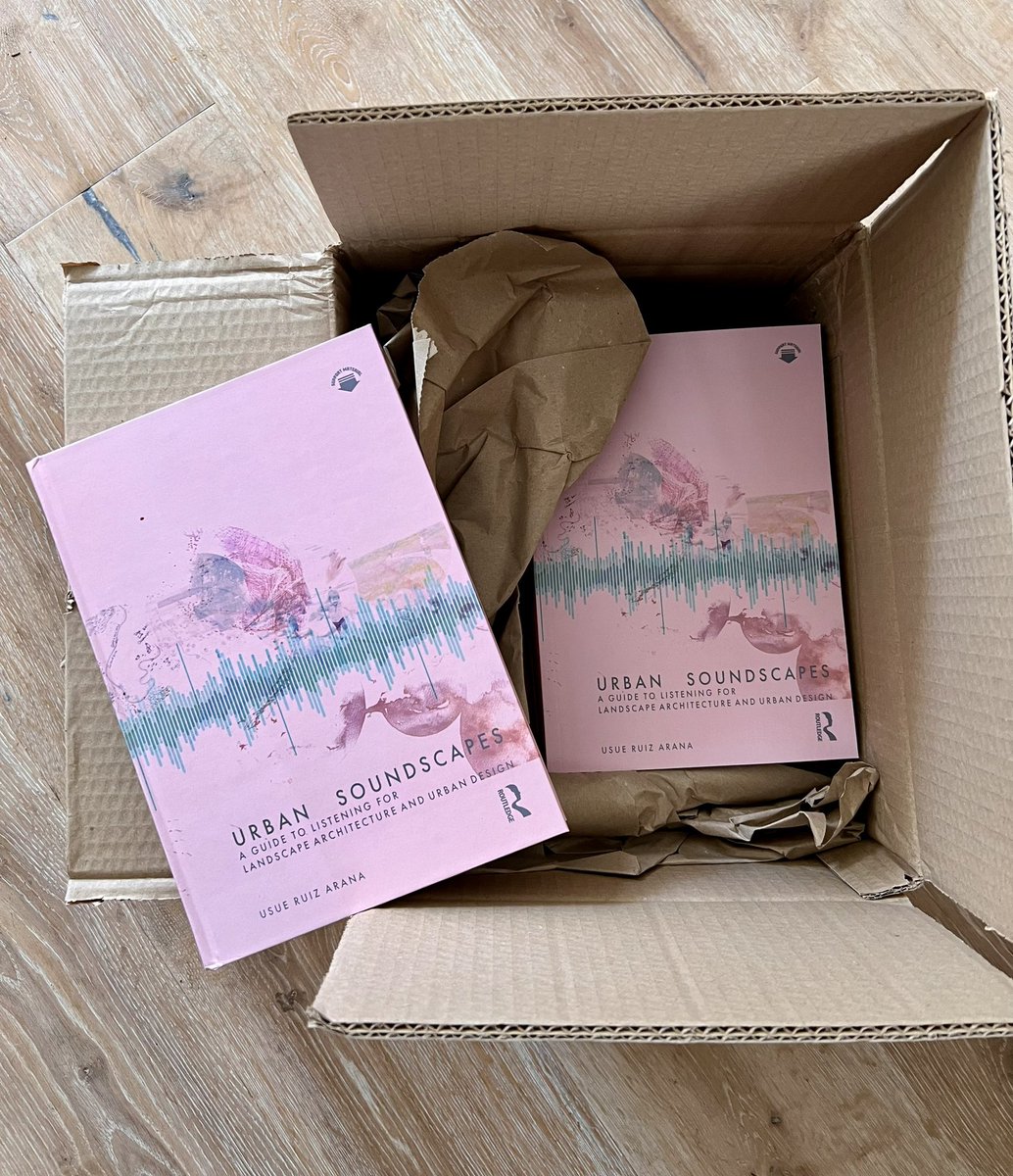
Exciting to receive printed copies of Urban Soundscapes this morning! Out to the world 30th April and of interest to all listeners in built environment disciplines. You can read a preview of the book in link below https://t.co/pxF532A6xp